
Valve Fugitive Emission Control: ISO 15848 vs. TA Luft
In modern industrial production systems, controlling fugitive emissions has become a key issue in environmental compliance and safety management. As global environmental regulations tighten, industries such as chemical manufacturing, petroleum refining, natural gas processing, and fine chemicals are placing increasingly stringent demands on the sealing performance of their equipment. Valves, pump bodies, and pipeline connections, as primary leakage points, often release small, continuous, and nearly undetectable emissions that can have profound impacts on both environmental quality and operational safety. Establishing a unified, quantifiable, and internationally comparable evaluation framework is therefore essential.
Against this backdrop, the ISO 15848-1 standard and Germany's TA Luft regulations have gradually emerged as the global benchmarks for fugitive emission control in the industrial sector. These standards provide clear performance evaluation frameworks and technical guidance for industrial valves and sealing systems, respectively from the perspective of international standardization and national regulatory limits. Meanwhile, with the development of high-performance sealing materials and structural designs, low-leakage or even near-zero-leakage solutions have become mainstream in engineering applications, laying a solid foundation for achieving higher levels of environmental protection and industrial safety.
What Are Fugitive Emissions?
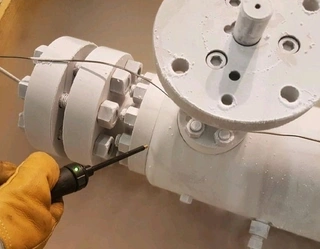
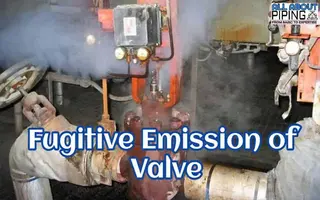
Fugitive emissions refer to small, unintentional, and uncontrolled leaks of gases, liquids, or vapors from industrial equipment or processes. These leaks commonly occur during fuel extraction, processing, or transportation and are primarily associated with valves, flanges, storage tanks, and pipelines.
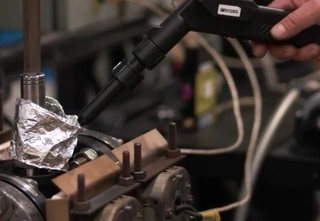
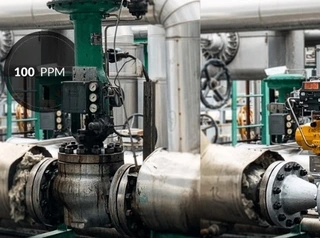
The substances released in fugitive emissions include gases such as methane and carbon dioxide, as well as liquids such as oil and water. Because these emissions are often invisible and odorless, industrial personnel typically cannot detect them directly. Therefore, emission quantities must be quantified using specialized measurement equipment, with common units including ppm (parts per million) or mg/s·m (milligrams per second per meter).
Environmental and Health Impacts of Fugitive Emissions
Fugitive emissions have significant environmental effects. They degrade air quality, exacerbate global warming, and contribute to smog formation. Harmful gases released by industrial facilities accumulate in the atmosphere, enhancing the greenhouse effect.
For human health, fugitive emissions pose serious risks. Workers and nearby residents exposed to these gases may develop respiratory or cardiovascular diseases. At higher concentrations, these emissions also present an explosion hazard, potentially causing casualties and property damage.
Main Sources and Causes of Fugitive Emissions
Industrial facilities are the primary sites of fugitive emissions, particularly chemical plants and refineries. Valves account for approximately 50–60% of total emissions in these facilities, with valve stem seals playing a critical role in leak prevention.
The causes of fugitive emissions include:
Equipment wear or failure leading to seal deterioration.
Design defects preventing effective system closure.
Improper installation of seals, creating leakage paths.
Insufficient maintenance, allowing minor issues to escalate.
Pressure control failure, causing media to escape through seals.
Importance of Preventing Fugitive Emissions
Preventing fugitive emissions is vital for three main reasons:
Environmental Protection: Effective sealing solutions reduce air pollution and greenhouse gas emissions, safeguarding ecosystems.
Cost Savings: Gas leaks reduce production efficiency, waste valuable resources, and increase operational costs. Minimizing leakage directly enhances economic performance.
Safety: Harmful emissions endanger worker health and the surrounding population. Controlling leaks reduces the risk of explosions and poisoning.
Overview of Fugitive Emission Control Regulations
To manage fugitive emissions, regulatory frameworks impose stringent requirements on industrial processes, ensuring that facilities meet environmental and health standards while promoting clean production systems.
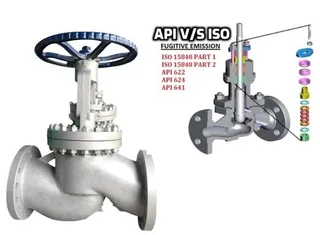
Globally, the two most important fugitive emission standards are ISO 15848-1 and Germany's TA Luft. Both aim to protect air quality, yet they adopt different approaches for valve performance evaluation and certification. Engineers and equipment managers must understand both systems to ensure compliance.
Detailed Introduction to ISO 15848-1
ISO 15848, developed by the International Organization for Standardization, specifically addresses fugitive emissions from industrial valves, providing a highly systematic testing and classification framework.
1. ISO 15848-1 Overview
ISO 15848-1, formally titled “Industrial valves – Measurement, testing, and qualification procedures for fugitive emissions”, was established in 2006. It emerged in response to increasing industry demands for sustainable valve solutions and environmental emission control. The standard addresses the previous lack of unified guidelines for assessing valve leakage and its environmental impact.
ISO 15848-1 is a type-testing certification standard applicable to the entire valve system, not just localized sealing areas. All sealing components participate in type testing, with the entire valve—including body seals—subject to evaluation based on pressure, temperature, durability, and sealing performance.
2. ISO 15848-1 Testing Methodology
ISO 15848-1 specifies testing procedures using helium or methane to assess valve sealing performance. The testing process is comprehensive, typically lasting one to two weeks. Key test requirements include:
Leakage testing at room temperature, combined with evaluation of pressure, temperature, mechanical durability, and sealing performance.
Temperature ranges from -196°C to +400°C to verify material creep, relaxation, and stability under extreme conditions.
3. ISO 15848-1 Leakage Classes
Sealing performance under ISO 15848-1 is divided into three classes, ranked from tightest to least stringent:
- Class A: Lowest environmental leakage level, with Class AH leakage ≤ 10⁻⁵ mg/s·m, suitable for bellows-sealed valves or high-performance PFA-lined valves.
- Class B: Class BH leakage ≤ 10⁻⁴ mg/s·m, applicable to high-quality live-loaded packing systems.
- Class C: Class CH leakage ≤ 10⁻³ mg/s·m, for standard industrial valves.
4. ISO 15848-1 Durability Classes
ISO 15848-1 also specifies mechanical cycle durability levels:
- CO1: 500 operating cycles, for general utility valves.
- CO2: 1,500 cycles.
- CO3: 2,500 cycles, for critical process valves.
For control valves, CC1–CC3 classifications are used.
5. ISO 15848-1 Standard Structure
ISO 15848 consists of two main parts:
Type-testing classification and certification procedures.
Production acceptance testing, which uses helium for leakage detection at room temperature on certified products, without applying mechanical motion.
What's is German TA Luft?
Unlike ISO 15848, which is an industry-driven voluntary international standard, TA Luft is a legally enforceable German environmental regulation.
1. TA Luft Overview
TA Luft, or Technische Anleitung zur Reinhaltung der Luft (Technical Instructions on Air Quality Control), is a national German regulation designed to control industrial air emissions. Established in 1964, it served as the primary standard for evaluating fugitive emissions from valves before ISO 15848 was introduced in 2006. TA Luft is complemented by the VDI 2440 guideline, which provides detailed technical references for valve compliance.
2. TA Luft Testing Requirements
TA Luft emphasizes strict emission thresholds. Under this framework, valves operating at 250°C must meet stringent leakage limits, typically ≤ 10⁻⁴ mbar·l/s·m. Valves failing to meet this requirement cannot be classified as high-quality and are generally not permitted for use in German industrial facilities.
TA Luft primarily focuses on the valve stem seal rather than the overall valve system. Third-party witnessing is generally not required.
3. TA Luft Certification
According to VDI 2440, compliance can be assumed if a metallic bellows combined with safety-loaded packing or equivalent sealing structures is used.
It is important to note that TA Luft does not specify mechanical or thermal cycle testing. Therefore, it does not systematically evaluate long-term valve performance under dynamic operating conditions. Test cycles are typically short, generally lasting one to two days.
Comparison Between ISO 15848 and TA Luft
Scope: ISO 15848 covers the entire valve system, including body seals and all components, whereas TA Luft focuses primarily on the stem or packing seal system for compliance determination.
- Testing System: ISO 15848 provides a unified, quantifiable, and comparable classification system, including three sealing classes (A, B, C) and multiple durability levels. TA Luft only sets leakage thresholds without grading or strictly standardized test conditions.
- Testing Rigor: ISO 15848 evaluates valves across multiple dimensions, including pressure, temperature, and durability cycles. Mechanical and thermal cycling verifies long-term sealing performance. Class A valves typically achieve leakage levels an order of magnitude lower than TA Luft limits at 250°C. TA Luft relies solely on leakage thresholds without standardized mechanical or thermal cycling requirements. Testing conditions and validation methods are partially determined by the manufacturer, which may lead to variability between products.
- Standard Type: ISO 15848 is an internationally recognized standard widely adopted for fugitive emission control. TA Luft is a national German regulation, primarily applicable in Germany and some European regions.
Standard Selection in Engineering Practice
In practice, the choice of standard often depends on local regulatory requirements and client specifications.
ISO 15848, due to its comprehensive scope and comparability, has become the preferred standard in international engineering projects. Many engineering firms mandate ISO 15848 certification for new projects.
TA Luft remains relevant for German and certain European facilities operating under environmental permits. Some clients may also use it based on legacy project specifications.
Valves certified to ISO 15848 offer multiple advantages:
Products from different manufacturers can be directly compared based on a unified classification.
The entire valve system is tested, not just localized sealing areas.
Mechanical and thermal cycling validates long-term sealing performance.
Sealing Solutions and Magpie Products
Sealing components play a central role in preventing fugitive emissions in industrial systems. Achieving ISO 15848-1 Class AH or BH certification is challenging for valve manufacturers. Materials like PTFE can deform or experience stress relaxation under long-term loads, and conventional packing structures may lose sealing force over time, increasing leakage risk.
To address this, engineering procurement often uses high-density, molded PFA materials to reduce gas permeation and enhance overall sealing stability. In highly corrosive media, such as acidic or chlorinated environments, these high-performance sealing structures can significantly reduce fugitive emissions, maintaining Class AH or BH performance over the long term.
Magpie provides advanced sealing solutions aimed at improving industrial safety and sustainability. Their high-performance seals are customized for specific pressure, temperature, and chemical media requirements, and Magpie offers professional installation and maintenance guidance to effectively minimize fugitive emissions.
Limitations of Using Certified Packing Alone
Many products in the market are labeled as “TA Luft packing.” However, using these sealing structures alone does not guarantee long-term zero-leakage performance. Overall sealing effectiveness depends on multiple factors:
The surface finish of the valve stem directly affects sealing. Rough surfaces can create leakage paths.
Dimensional tolerances between the packing and stem are critical; excessive clearance increases leakage risk.
Assembly quality directly impacts seal reliability. Improper installation can lead to early failure.
Therefore, using “TA Luft packing” alone cannot ensure long-term valve sealing reliability. Engineers should select products that are certified as part of the complete valve system.
Conclusion
With environmental regulations tightening, controlling fugitive emissions has become a core metric in valve design and selection. Valves certified to ISO 15848-1 or TA Luft standards can effectively reduce environmental pollution risks, improve operational safety and reliability, and minimize economic losses and compliance risks associated with leaks.
Today, industrial facilities increasingly treat “zero leakage” as a regulatory requirement rather than merely best practice. Valves account for approximately 60% of total facility fugitive emissions, and as environmental policies become stricter, these devices are subject to increasing regulatory scrutiny. Engineers must thoroughly understand the characteristics of different standard systems and select appropriate products and certification levels according to project requirements.
Send your message to this supplier
Related Articles from the Supplier

Related Articles from China Manufacturers

How to Cut Fugitive Emissions from Control Valves
- May 22, 2026
Fugitive Emissions Control in Industrial Valves
- May 06, 2026
Related Products Mentioned in the Article


Supplier Website
Source: https://www.magpievalves.com/media-hub/valve-fugitive-emission-control-iso-15848-vs-ta-luft.html