Electronic Measuring Instruments

Industry Definition & Scope

The Electronic Measuring Instruments industry encompasses the design, manufacturing, and distribution of devices that utilize electronic principles to quantify electrical parameters, signals, and physical phenomena. These instruments convert measurable quantities into electrical signals for precise analysis, display, and recording. Serving as fundamental tools across electronics R&D, manufacturing, maintenance, and scientific research, this industry is essential for technological advancement and quality assurance in virtually all modern industrial sectors.

Key Product Categories

By Measurement Function & Application:

  • Signal Analysis Instruments: Oscilloscopes, spectrum analyzers, signal analyzers, and vector network analyzers for analyzing waveform characteristics, frequency content, and signal integrity.

  • Electrical Parameter Meters: Digital multimeters, LCR meters, clamp meters, insulation testers, and power analyzers for measuring voltage, current, resistance, capacitance, inductance, and power quality.

  • Signal Generation Equipment: Function generators, arbitrary waveform generators, RF signal generators, and pulse generators for producing precise test signals.

  • Frequency & Time Measurement Devices: Frequency counters, universal counters, time interval analyzers, and clock synthesizers for measuring time-related parameters.

  • Circuit & Component Test Equipment: Semiconductor parameter analyzers, curve tracers, logic analyzers, and protocol analyzers for validating electronic components and circuit behavior.

  • EMC/EMI Test Equipment: Conducted and radiated emission test systems, immunity testers, and pre-compliance test instruments for electromagnetic compatibility testing.

  • Data Acquisition Systems: Modular and benchtop systems with analog/digital inputs for collecting and logging data from sensors and transducers.

By Technology & Form Factor:

  • Benchtop Instruments: Laboratory-grade equipment offering high precision and comprehensive functionality for R&D and calibration labs.

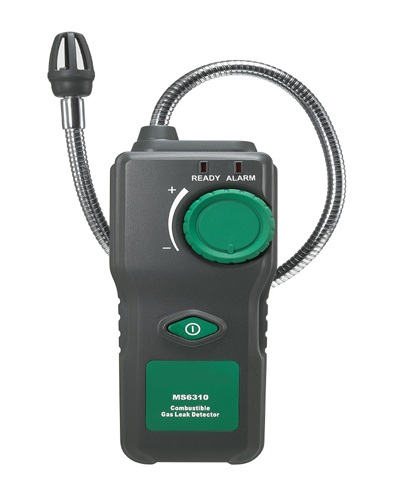
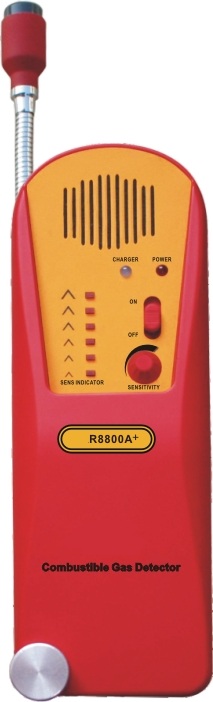
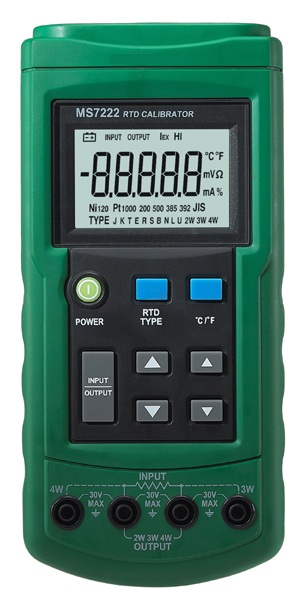
  • Portable/Handheld Instruments: Battery-powered, field-serviceable devices for on-site measurements, maintenance, and troubleshooting.

  • Modular Instruments (PXI, VXI, AXIe): Card-based systems offering high-speed, synchronized measurements for automated test systems.

  • USB/Network-Connected Instruments: Compact devices leveraging computer processing and display, ideal for education and distributed measurements.

  • Embedded Measurement Solutions: Integrated measurement modules designed for incorporation into larger systems or production test fixtures.

Technology & Innovation Trends

  • High-Speed & High-Bandwidth Capabilities: Development of oscilloscopes and analyzers with bandwidths exceeding 100 GHz to keep pace with advanced semiconductor and communication technologies (e.g., 5G/6G, PCIe Gen6).

  • Software-Defined Instrumentation: Increasing reliance on software for core functionality, enabling flexible instrument reconfiguration and easier feature upgrades.

  • Artificial Intelligence & Machine Learning Integration: Use of AI for automated instrument setup, anomaly detection in signal patterns, predictive maintenance, and intelligent data analysis.

  • Advanced Connectivity & IoT Enablement: Native support for cloud connectivity, remote operation, and seamless data sharing via Ethernet, Wi-Fi, 5G, and standard industrial protocols.

  • Convergence of Measurement Domains: Integration of multiple instrument functions (e.g., oscilloscope, spectrum analyzer, DMM) into single platforms for simplified workflows.

  • Improved Usability & Visualization: Touchscreen interfaces, advanced display technologies, and intuitive software for faster insights from complex data.

  • Enhanced Portability & Power Efficiency: Design innovations enabling high-performance measurements in battery-operated, compact form factors for field applications.

Global Market Drivers

  • Proliferation of Advanced Electronics: Growth in consumer electronics, IoT devices, automotive electronics, and industrial automation driving demand for design validation and production test.

  • Expansion of Wireless Communications: Deployment of 5G networks, satellite communications, and advanced RF systems requiring sophisticated test and measurement solutions.

  • Semiconductor Industry Advancement: Development of smaller process nodes, advanced packaging (Chiplets, 3D-IC), and novel materials necessitating precise parametric analysis.

  • Electric Vehicle & Energy Infrastructure Development: Need for testing power electronics, battery management systems, charging infrastructure, and grid integration components.

  • Aerospace & Defense Modernization: Requirements for testing radar, electronic warfare, avionics, and secure communication systems.

  • Research & Development Investment: Sustained funding in basic sciences, quantum computing, photonics, and materials research relying on precision measurement tools.

  • Manufacturing Quality & Yield Optimization: Industry 4.0 initiatives emphasizing data-driven process control and zero-defect manufacturing, increasing need for in-line and post-production testing.

Industry Value Chain

  • Component & Semiconductor Suppliers: Producers of high-performance ADCs/DACs, amplifiers, oscillators, ASICs, FPGAs, and display modules.

  • Instrument Design & Manufacturing: Companies specializing in hardware design, signal processing algorithms, software development, and final assembly.

  • Software & Application Solution Providers: Developers of instrument control software, data analysis tools, and industry-specific application software.

  • Calibration & Metrology Services: Accredited laboratories providing traceable calibration, performance verification, and repair services.

  • Distribution Channels: Direct sales forces, authorized distributors, online marketplaces, and rental companies.

  • System Integrators & Solution Providers: Firms that build custom test systems and turnkey solutions for specific end-user applications.

  • End Users: Electronics manufacturers, telecommunications companies, automotive suppliers, aerospace contractors, research institutions, universities, and service providers.

Key Industry Challenges

  • Extreme R&D Intensity & Cost: Continuous need for significant investment to keep pace with the measurement requirements of rapidly evolving technologies.

  • Short Product Lifecycles & Time-to-Market Pressure: Rapid technological obsolescence requiring frequent product introductions and updates.

  • Intense Global Competition: Presence of established multinational corporations, specialized niche players, and low-cost manufacturers creating pricing pressures.

  • Supply Chain Complexity: Dependence on specialized, sometimes single-source, components leading to vulnerability during shortages or geopolitical disruptions.

  • High Calibration & Support Requirements: Need for extensive global service networks and ongoing technical support for complex instruments.

  • Balancing Performance vs. Cost: Difficulty in delivering advanced performance at price points accessible to a broad range of customers, including educational institutions and small businesses.

  • Talent Acquisition & Retention: Shortage of engineers with deep expertise in high-frequency analog design, DSP, and measurement science.

Future Outlook

The industry is evolving towards more intelligent, connected, and integrated measurement ecosystems.

  • Pervasive Connectivity & The Cloud Instrument Paradigm: Instruments will increasingly function as network endpoints, with data processing and analysis moving to cloud platforms.

  • Democratization of High-End Measurement: Advanced capabilities, previously available only in expensive benchtop instruments, will become accessible in portable and affordable formats.

  • Convergence with Data Science: Measurement will become inseparable from data analytics, with instruments providing not just raw data but actionable insights and predictive outcomes.

  • Expansion into New Physical Domains: Growth in instruments for measuring quantum states, biophysical signals, and environmental parameters using electronic sensing techniques.

  • Autonomous Self-Calibrating & Self-Diagnosing Instruments: Embedded intelligence will enable instruments to maintain their own accuracy and predict service needs.

  • Sustainable Design & Manufacturing: Increased focus on energy efficiency, reduced hazardous materials, recyclability, and longer product lifespans.

  • Embedded & In-Situ Measurement: Proliferation of measurement capabilities directly integrated into products and manufacturing equipment for real-time health and performance monitoring.

Electronic Measuring Instruments Product List

Refine your results:
About results

Videos of Electronic Measuring Instruments

More About Electronic Measuring Instruments

Related searches of Electronic Measuring Instruments

Related Blogs of Electronic Measuring Instruments