
How to Cut Fugitive Emissions from Control Valves
In industrial production, control valves are critical components connecting process systems to the external environment. This connection, however, makes control valves one of the primary sources of fugitive emissions in plants. Leaks from these valves not only impact operational efficiency but may also directly harm the environment. With increasingly stringent environmental regulations, companies must pay closer attention to the selection, design, and maintenance of control valves to minimize the risk of greenhouse gas leaks, such as methane, while improving energy efficiency. This article systematically examines the environmental role of control valves, covering the causes of fugitive emissions, limitations of traditional valves, new zero-leak designs, and energy and water management, providing engineers and industrial managers with practical guidance for informed decision-making.
Severity of Fugitive Emissions from Control Valves
Understanding the importance of environmentally conscious control valve design starts with recognizing the severity of fugitive emissions. Three key aspects—basic definitions of fugitive emissions, the alarming state of methane release, and increasing regulatory pressure—jointly drive the need for improved control valve designs.
1. What Are Fugitive Emissions?
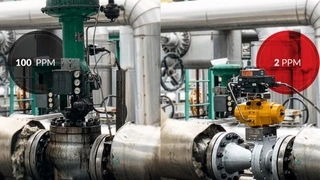
Control valves serve as interfaces between industrial process systems and the external environment. Such interfaces can result in fugitive emissions, which are unintended leaks from the system. The scale of these leaks varies widely, ranging from negligible levels (below 3 ppm) to problematic concentrations (exceeding 500 ppm, which violates U.S. Environmental Protection Agency [EPA] standards).
Recognizing the impact of these leaks is critical, as fugitive emissions affect overall plant efficiency and pose environmental risks, particularly when the process involves volatile organic compounds (VOCs).
2. The Alarming State of Methane Emissions
Methane, alongside carbon dioxide (CO₂), is a primary greenhouse gas of concern in climate discussions. Methane has 28 times the global warming potential of CO₂ and constitutes a significant portion of fugitive emissions in the oil, gas, and chemical industries.
Data shows that 570 million tons of methane are released into the atmosphere annually, accounting for 20% of total greenhouse gas emissions. Of this, 20% originates from the fossil fuel sector, and 60% of the fugitive emissions come from valves—equivalent to approximately 85.5 million tons of methane per year.
3. Growing Regulatory Pressure
Organizations like the Environmental Defense Fund (EDF) and government agencies such as the EPA have increasingly pressured industries to reduce fugitive emissions from control valves. As a result, implementing effective mitigation measures has become a high-priority concern for companies.
The good news is that smart control valve designs can substantially reduce fugitive emissions. The following sections detail the seriousness of the issue and how engineers can manage risks through informed valve selection.
Primary Sources of Valve Leaks and Relevant Standards
Having established the significance of fugitive emissions, it is important to analyze the specific sources of valve leaks and the applicable standards. Packing materials, commonly used types and properties, and their configurations form the three key areas for understanding leak mechanisms and control strategies.
1. Packing as the Main Leakage Path
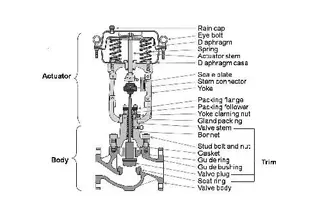
EPA data indicates that 80% of valve emissions escape through packing material sealing the valve stem. Packing must satisfy two seemingly contradictory requirements: it must be flexible enough to allow smooth valve operation without excessive resistance while being robust enough to maintain a reliable seal and minimize leaks.
ISO 15484 provides a standardized framework for measuring and rating valve fugitive emissions, offering a consistent approach to assessing valve performance.
2. Common Packing Materials and Their Properties
Depending on application requirements, most industrial control valves use one of the following packing materials:
- Polytetrafluoroethylene (PTFE/Teflon): Resistant to most chemicals and temperatures, offering a durable, low-friction, and easily maintainable option.
- Graphite: Low friction, durable, chemically resistant, and capable of withstanding high pressures, providing excellent sealing and thermal conductivity.
- Specialty plastics: Highly resilient under extreme conditions and chemically inert in most cases, maintaining performance where other materials may fail.
Material selection reflects the properties of the conveyed medium, including volatility and corrosiveness. Different applications require tailored packing designs and materials to reduce fugitive emissions effectively.
3. Packing Configurations
Most valves employ a V-shaped O-ring packing around the stem to achieve a tight seal. Another effective design is live-loaded packing, where springs maintain continuous pressure on the stem to preserve seal integrity.
Metal bellows seals offer the lowest leakage rates among all valve designs. These precise seals are crucial when transporting hazardous or toxic media, such as chlorine or explosive hydrogen. Other than metal bellows, no valve can completely eliminate fugitive emissions, making compliance with standards essential for personnel and environmental safety.
Limitations of Traditional Globe Control Valves
Among various valve types, traditional globe control valves are significant contributors to fugitive emissions due to their widespread use. Their inherent design limitations, current leakage rates, and maintenance challenges reveal the shortcomings of traditional globe control valves in meeting modern environmental standards.
1. Inherent Design Limitations
The oil and gas industry faces mounting pressure to prevent atmospheric emissions. As methane emission regulations become more stringent, the demand has grown for valves that are leak-free, require no adjustment or packing maintenance, and can measure emissions down to 2 ppm.
Achieving net-zero emissions with traditional globe control valves can hinder organizational methane reduction targets. These valves were patented when environmental concerns were not a priority, and their core designs have remained largely unchanged since inception.
2. Current Leakage Status
Methane leakage from these valves typically measures around 500 ppm. The most common mitigation approach is for maintenance personnel to tighten the packing during scheduled maintenance. While this can slightly reduce emissions, it is labor-intensive, costly, and only partially effective.
3. Maintenance Cost and Efficiency Issues
Regular maintenance, while necessary, is inherently reactive and inefficient. Even advanced technology requires ongoing preventive maintenance to minimize fugitive emissions. This reality underscores the importance of proactively addressing leakage, as control valves are a major emission source.
Zero-Leak Design in New Control Valves
In response to emissions issues from traditional globe control valves, engineers have adopted entirely new design approaches. Three core breakthroughs, ground-up redesigns, patented stem sealing technology, and adherence to certification standards, define the zero-leak control valves of today.
1. Ground-Up Redesign
New valves provide a practical solution for replacing inefficient, high-leakage, and maintenance-heavy globe control valves in the field. Engineers have not merely improved existing designs; they have started from scratch.
These redesigned valves achieve zero recorded methane leakage in the field, feature streamlined flow paths to reduce cavitation, provide precise flow control, and are more compact and lightweight than traditional globe control valves.
2. Patented Stem Sealing Technology
A key differentiator is the patented stem sealing system—a redesigned spring-energized seal stack that prevents methane leakage and eliminates the need for in-field adjustments.
This technology contributes to ISO 15848-1 and API 641 Class A certification, where the leakage standard is 50 ppm or lower.
3. Significance of Certification Standards
ISO 15848-1 and API 641 are internationally recognized standards for testing valve fugitive emissions. Achieving Class A certification ensures that valves maintain extremely low leakage under stringent testing conditions, providing reliable environmental performance in industrial applications.
The Role of Control Valves in Energy Efficiency
Beyond reducing fugitive emissions, control valves play a vital role in enhancing energy efficiency. Three critical dimensions illustrate this relationship: flow regulation and energy consumption, the importance of correct valve selection, and the advantages of variable flow control.
1. Flow Regulation and Energy Control
Control valves influence energy efficiency, the most significant aspect of their environmental impact. In industrial processes, they regulate fluid flow, directly affecting system energy consumption.
For example, in heating or cooling systems, properly functioning valves ensure the correct volume of hot or cold fluid reaches target areas.
2. Importance of Correct Valve Selection
Correct valve sizing and maintenance reduce energy waste. Oversized valves allow fluid to exceed demand, increasing energy consumption. Conversely, undersized valves create high pressure drops, forcing pumps or compressors to work harder and consume more energy.
Modern control valves are designed with energy efficiency in mind, employing advanced technologies to precisely control flow and use only the necessary fluid, reducing energy use and overall carbon footprint.
3. Advantages of Variable Flow Control
Variable flow control valves adjust flow according to real-time process requirements. This flexibility allows better combustion control, reducing emissions. Industrial enterprises using such valves can meet strict environmental regulations while contributing positively to sustainability.
Applications of Control Valve in Reducing Pollutant Emission
Applications in Chemical and Power Industries: Control valves are essential for minimizing emissions in chemical manufacturing, power generation, and oil and gas sectors. By precisely regulating chemical, fuel, and exhaust flow, harmful pollutant emissions are minimized. In power plants, control valves regulate the flow of coal, natural gas, or other fuels into boilers. Properly calibrated valves ensure efficient combustion, reducing greenhouse gases such as CO₂ and pollutants like sulfur dioxide and nitrogen oxides.
Combustion Process Optimization: By precisely controlling the fuel-to-air ratio, control valves improve combustion completeness, enhancing energy efficiency and reducing emissions of unburned byproducts.
Control Valve Lifespan and Environmental Impact
Environmental Value of Durability: A longer valve lifespan reduces replacement frequency, decreasing waste from discarded valves. High-quality valves, constructed from premium materials and engineered for harsh environments, typically last longer than other options, reducing environmental impact through fewer replacements.
Environmental Considerations in Material Selection: Valve material selection influences performance, lifespan, and post-use recyclability. Corrosion- and wear-resistant materials extend service life, reduce replacement frequency, and lower overall environmental impact.
Conclusion
Control valves are integral to industrial systems, and their environmental performance directly affects corporate compliance and sustainability. From traditional valves with 500 ppm leakage to modern designs achieving 0 ppm, control valve technology is undergoing a transformative shift.
By adopting advanced sealing technologies, selecting appropriate materials, implementing scientific maintenance strategies, and using internationally certified products, industrial enterprises can significantly reduce fugitive emissions, enhance energy efficiency, minimize waste, and make meaningful contributions to environmental protection. Under increasingly stringent environmental regulations and growing social responsibility expectations, investing in environmentally conscious control valves is not just a compliance measure—it is a strategic choice for sustainable development.
Send your message to this supplier
Related Articles from the Supplier

How to Cut Fugitive Emissions from Control Valves
- May 22, 2026

How to Enhance Pneumatic Actuator Switching Speed
- Jul 09, 2024
Related Articles from China Manufacturers

How to Deal With Mildew
- Jul 07, 2016

How to select Kids backpacks
- Jul 29, 2016

How to Use Trolley Bag Correctly
- Dec 29, 2015

How to Maintain the Backpack
- Dec 29, 2015

How to Select a Bag
- Dec 29, 2015

How to Choose Cosmetic Bags
- Dec 29, 2015

How to Identify a Fake Bag
- Dec 29, 2015

How to Remove Mildew Spot in Kids Trolley Bag
- Apr 25, 2016
Related Products Mentioned in the Article

Supplier Website
Source: https://www.valvecontrol.cn/news/how-to-cut-fugitive-emissions-from-control-valves.html