The Sensors Industry encompasses the design, manufacturing, and application of devices that detect and respond to physical, chemical, or biological inputs from the environment. A sensor converts a measurable parameter (such as temperature, pressure, motion, light, or chemical composition) into an electrical signal that can be read by an instrument or system. This industry is foundational to modern technology, serving as the critical interface between the physical and digital worlds. Its scope spans from discrete commodity components to sophisticated, intelligent sensor systems integrated into nearly every sector of the economy.
By Measured Property:
Temperature Sensors: Thermocouples, RTDs (Resistance Temperature Detectors), thermistors, infrared sensors.
Pressure Sensors: Piezoresistive, capacitive, MEMS-based pressure sensors.
Motion & Position Sensors: Accelerometers, gyroscopes, magnetometers (together forming Inertial Measurement Units - IMUs), proximity sensors, encoders.
Image Sensors: CMOS (Complementary Metal-Oxide-Semiconductor) and CCD (Charge-Coupled Device) sensors for cameras and machine vision.
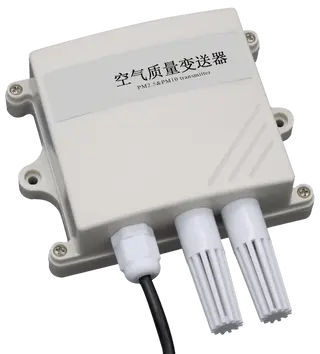
Environmental & Gas Sensors: Humidity sensors, gas sensors (for CO2, VOC, methane, etc.), particulate matter (PM2.5/PM10) sensors.
Optical & Light Sensors: Photodiodes, ambient light sensors, LiDAR sensors.
Biosensors & Chemical Sensors: Used for medical diagnostics, food safety, and environmental monitoring.
Flow & Level Sensors: For measuring liquid or gas flow rates and tank levels.
By Technology & Integration Level:
Discrete/Standalone Sensors: Single-function components.
Micro-Electro-Mechanical Systems (MEMS): Miniaturized mechanical and electro-mechanical elements integrated on silicon, enabling mass production of sensors like accelerometers and pressure sensors.
Smart/Intelligent Sensors: Sensors with embedded microprocessors that provide onboard signal processing, digital output, and self-diagnostic capabilities.
Miniaturization & MEMS/NEMS Proliferation: Continuous reduction in size, power consumption, and cost, enabling integration into wearables, IoT devices, and medical implants.
Sensor Fusion & Edge AI: Combining data from multiple sensors (e.g., IMU, camera, radar) and processing it with AI algorithms at the edge to derive higher-level context and insights (e.g., activity recognition, predictive maintenance).
Advanced Material Science: Development of new sensing materials (e.g., graphene, nanomaterials) for higher sensitivity, selectivity, and stability in harsh environments.
Wireless & Energy-Harvesting Sensors: Growth of battery-less or self-powered sensors using energy harvested from vibrations, light, or temperature differences, crucial for large-scale IoT deployments.
Biometric & Health Monitoring Sensors: Rapid advancement in non-invasive sensors for continuous health monitoring (glucose, blood pressure, hydration, biomarkers) in consumer and medical devices.
Digital Twins & Predictive Analytics: High-fidelity sensor data streams are the lifeblood of digital twin models, enabling real-time simulation, monitoring, and predictive maintenance of physical assets.
Enhanced Robustness & Environmental Tolerance: Development of sensors that can operate reliably in extreme conditions (high temperature, radiation, corrosive atmospheres) for automotive, aerospace, and industrial applications.
Explosion of the Internet of Things (IoT): Billions of connected devices require sensors as their primary data-collecting organs, driving massive volume demand.
Automotive Revolution (ADAS & Electrification): The shift towards autonomous driving and electric vehicles dramatically increases the number and sophistication of sensors per vehicle (LiDAR, radar, current sensors, battery monitoring sensors).
Industry 4.0 & Smart Manufacturing: The drive for automation, process optimization, and predictive maintenance in factories fuels demand for industrial-grade sensors (vision, position, pressure, vibration).
Consumer Electronics Innovation: Smartphones, wearables, and smart home devices integrate an ever-increasing array of sensors (e.g., ToF cameras, health sensors, environmental sensors).
Healthcare Digitalization & Remote Patient Monitoring: The trend towards preventative and decentralized care is accelerating the adoption of medical and wearable biosensors.
Environmental Monitoring & Regulations: Stricter air/water quality regulations and corporate sustainability goals drive the deployment of environmental sensor networks.
Smart Cities & Infrastructure: Investments in intelligent traffic systems, smart grids, and building automation rely on dense sensor networks.
Leaders: Broadline Semiconductor & Sensor Giants: Texas Instruments, STMicroelectronics, NXP Semiconductors, Infineon Technologies, Analog Devices. Specialized Sensor Leaders: TE Connectivity, Bosch Sensortec, Sensirion, Omron, ams OSRAM. MEMS Foundries: Silex Microsystems (part of Sino Wealth), Teledyne DALSA.
Value Chain: R&D & Design → Wafer Fabrication (MEMS/CMOS) → Packaging & Calibration (a critical, high-value step) → Distribution → Integration into End-User Systems (by OEMs in automotive, industrial, consumer electronics).
Challenges:
Price Pressure in Commoditized Segments: High-volume, low-margin competition for standard sensor types.
Complexity of Integration & Calibration: Ensuring sensor accuracy, reliability, and interoperability within complex systems requires significant engineering expertise.
Supply Chain Vulnerability: Concentration of advanced MEMS fabrication and packaging capacity creates geopolitical and logistical risks.
Power Consumption Constraints: Especially for always-on IoT sensors, balancing performance with battery life is a constant challenge.
Data Security & Privacy: Sensor networks generate vast amounts of sensitive data, requiring robust cybersecurity measures from the edge upwards.
Opportunities:
Smart Sensors with Embedded Intelligence: High-growth segment for sensors that offer pre-processed, actionable data, reducing the load on central processors and enabling faster decision loops.
System-in-Package (SiP) & Heterogeneous Integration: Combining multiple sensing modalities, processors, and communication chips into a single package to create optimized, application-specific solutions.
Emerging Application Verticals: Significant growth potential in agricultural tech (soil/plant sensors), robotics (tactile, 3D vision), and energy management (smart grid sensors).
Predictive Maintenance-as-a-Service: Companies leveraging sensor data and AI analytics to offer subscription-based services that predict equipment failures for industrial clients.
Biosensing Revolution: The frontier of non-invasive, continuous health monitoring presents a long-term, high-value opportunity for sensor innovation.