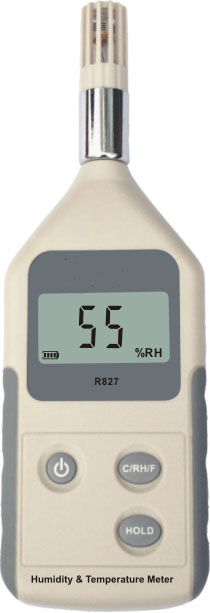
The temperature instruments industry encompasses the design, manufacturing, and distribution of devices used to measure, monitor, display, and control temperature across industrial, commercial, scientific, and consumer applications. This essential measurement sector employs various physical principles to quantify thermal energy, serving critical functions in process control, safety systems, quality assurance, environmental monitoring, and research. The industry bridges fundamental thermodynamics with practical engineering applications through precise sensing and control technologies.
Thermocouples: Temperature sensors consisting of two dissimilar metal wires joined at one end, generating a voltage proportional to temperature difference based on the Seebeck effect. Known for wide temperature ranges, ruggedness, and fast response times.
Resistance Temperature Detectors (RTDs): Sensors made of pure metal (typically platinum) whose electrical resistance changes predictably with temperature. Known for high accuracy, stability, and repeatability over moderate temperature ranges.
Thermistors: Semiconductor-based sensors with large, predictable changes in resistance with temperature. Available as Negative Temperature Coefficient (NTC, resistance decreases with temperature) and Positive Temperature Coefficient (PTC, resistance increases with temperature) types. Known for high sensitivity in limited ranges.
Infrared (IR) Thermometers & Thermal Imagers: Non-contact devices that detect infrared radiation emitted by objects to determine surface temperature. Used for moving objects, hazardous environments, and inaccessible surfaces.
Bimetal Thermometers: Mechanical devices using the differential expansion of two bonded metals to indicate temperature through a pointer dial. Known for simplicity, durability, and no power requirement.
Liquid-in-Glass Thermometers: Traditional devices using thermal expansion of liquid (mercury, alcohol) in a glass capillary for direct visual reading.
Temperature Transmitters & Signal Conditioners: Electronic devices that convert raw sensor signals (millivolts, resistance) into standardized output signals (4-20mA, 0-10V, digital protocols) for transmission to control systems.
Temperature Controllers & Recorders: Devices that compare measured temperature to a setpoint and provide control outputs, with data logging capabilities.
Industrial Process Instruments: Rugged sensors, transmitters, and controllers for manufacturing, petrochemical, power generation, and HVAC applications.
Laboratory & Scientific Instruments: High-precision devices for research, calibration, and testing environments.
Food Safety & Healthcare Instruments: Sanitary designs for medical, pharmaceutical, and food processing applications.
Building Automation & HVAC Instruments: Thermostats, sensors, and controllers for commercial and residential climate control.
Portable & Handheld Instruments: Battery-operated thermometers and thermal imagers for field service, maintenance, and troubleshooting.
Embedded & OEM Sensor Modules: Miniaturized components for integration into consumer electronics, appliances, and automotive systems.
Wireless & IoT-Enabled Sensors: Battery-powered temperature sensors with wireless communication (LoRaWAN, Bluetooth, Wi-Fi, Zigbee) for easy installation and integration into Industrial IoT (IIoT) networks.
Smart Sensors with Digital Output: Sensors featuring integrated digital interfaces (I2C, SPI, 1-Wire) and onboard signal processing for simplified integration and improved noise immunity.
Miniaturization & MEMS Technology: Micro-Electro-Mechanical Systems enabling extremely small, low-power, and cost-effective temperature sensors for consumer electronics and medical devices.
Advanced Infrared Imaging: High-resolution thermal cameras with improved sensitivity, faster frame rates, and AI-powered analytics for predictive maintenance and quality inspection.
Self-Validating & Self-Diagnosing Sensors: Intelligent sensors capable of detecting drift, degradation, or failure, and providing health status information.
Energy Harvesting Solutions: Sensors powered by ambient energy (thermal, vibration, light) eliminating battery replacement in remote installations.
Improved Materials & Packaging: Advanced protective sheaths, ceramic coatings, and robust encapsulations for harsh environments (high pressure, corrosion, vibration).
Industrial Automation & Industry 4.0: Increased deployment of sensors for smart manufacturing, predictive maintenance, and data-driven process optimization.
Stringent Process & Quality Control Standards: Requirements in pharmaceuticals, food & beverage, and semiconductor manufacturing for precise, documented temperature monitoring.
Energy Efficiency & Building Management: Growth in smart buildings and HVAC optimization driving demand for advanced temperature control and monitoring systems.
Healthcare & Life Sciences Expansion: Demand for precise temperature measurement in medical devices, laboratory equipment, and cold chain logistics.
Safety & Environmental Regulations: Compliance needs for monitoring temperature in hazardous processes, emissions control, and workplace safety.
Electrification & Automotive Evolution: Growing need for temperature monitoring in electric vehicle batteries, power electronics, and advanced driver-assistance systems.
Climate Change & Environmental Monitoring: Increased deployment of weather stations, oceanographic sensors, and agricultural monitoring systems.
Raw Material & Component Suppliers: Specialty metal wire (platinum, nickel), semiconductor materials, ceramic substrates, packaging materials, and electronic components.
Sensor & Element Manufacturers: Companies producing the core sensing elements (thermocouple wire, RTD windings, thermistor beads).
Instrument & System Integrators: Companies that design and assemble complete measurement instruments, controllers, transmitters, and monitoring systems.
Calibration & Certification Services: Accredited laboratories providing traceable calibration and performance validation.
Distribution & Sales Channels: Industrial distributors, specialized instrument suppliers, direct sales forces, and online platforms.
System Integrators & Solution Providers: Engineering firms that incorporate temperature instruments into larger control and monitoring solutions.
End Users: Manufacturing plants, power utilities, refineries, building operators, research institutions, healthcare facilities, and service providers.
Accuracy & Stability Trade-offs: Balancing measurement precision with long-term stability, especially in harsh operating environments.
Calibration & Traceability Maintenance: Ensuring measurement integrity through regular calibration against international standards (ITS-90).
Environmental Interference & Installation Effects: Managing errors caused by heat conduction, radiation, EMI/RFI noise, and improper sensor installation.
Competitive Pricing Pressure: Intense competition, particularly in standard sensor and instrument segments, leading to margin erosion.
Technology Standardization & Interoperability: Lack of universal communication protocols and form factors across different manufacturers.
Harsh Environment Durability: Designing sensors that withstand extreme temperatures, pressures, corrosion, and mechanical stress.
Rapid Technological Change: Keeping pace with the shift towards digital, wireless, and smart sensor technologies.
Pervasive Sensing & Digital Twins: Ubiquitous deployment of temperature sensors providing real-time data for virtual process models, enabling simulation and optimization.
AI-Enhanced Measurement & Analytics: Machine learning algorithms for anomaly detection, predictive maintenance, and extraction of deeper insights from temperature data patterns.
Integration with Broader IIoT Platforms: Temperature sensors becoming standard data points within comprehensive industrial data ecosystems.
Advanced Non-Contact & Multi-Parameter Sensing: Development of sensors combining temperature measurement with other parameters (pressure, humidity, gas composition) in single packages.
Sustainable & Self-Powered Designs: Increased adoption of energy-harvesting sensors and focus on environmentally friendly materials and manufacturing processes.
Personalized & Context-Aware Sensing: Smart sensors that adapt their operation based on environmental context and user-defined requirements.
Expansion into New Application Fields: Growth in temperature monitoring for renewable energy systems, additive manufacturing (3D printing), and quantum computing.