Industry Definition & Scope
The solar photovoltaic (PV) industry encompasses the research, development, manufacturing, and deployment of semiconductor-based devices that convert sunlight directly into electricity. Its core products are solar cells (the fundamental power-generating units) and solar panels/modules (integrated assemblies of cells for practical use). This industry is the technological and manufacturing backbone of solar energy, playing a pivotal role in the global transition to renewable energy and decarbonization of the power grid.
Key Product Categories
By Product Type:
Solar Cell: The basic semiconductor device (e.g., silicon wafer) that performs the photovoltaic effect, generating 3-7 watts of direct current (DC).
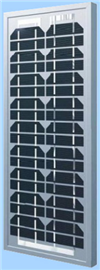
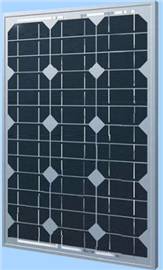
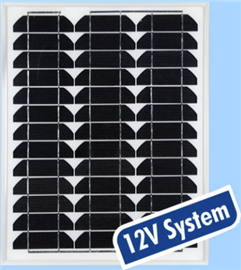
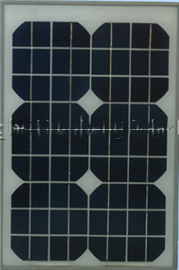
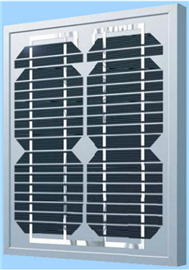
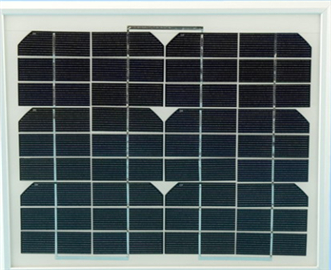
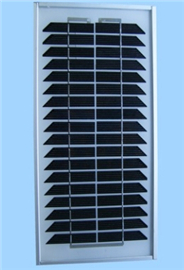
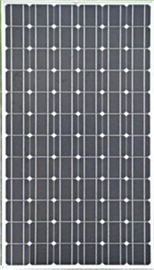
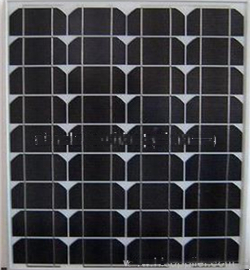
Solar Module/Panel: A packaged, weatherproof unit consisting of interconnected solar cells (typically 60, 72, or 144), laminated, framed, and fitted with a junction box for safe operation, producing 300-700+ watts.
Building-Integrated Photovoltaics (BIPV): Solar products that serve dual functions as construction materials (e.g., solar roof tiles, facade elements).
By Technology:
Crystalline Silicon (c-Si): Dominates the market (>95%).
Monocrystalline Silicon (Mono-Si): Higher efficiency (20-25%+), black appearance, made from single-crystal silicon.
Polycrystalline Silicon (Poly-Si): Slightly lower efficiency (17-20%), blue speckled appearance, made from melted silicon fragments.
Advanced c-Si: Includes high-efficiency designs like PERC, TOPCon, HJT, and IBC cells.
Thin-Film:
Cadmium Telluride (CdTe): Leading thin-film technology, lower cost for utility-scale projects.
Copper Indium Gallium Selenide (CIGS): Offers flexibility and good efficiency.
Perovskite:* Emerging lab-to-fab technology with ultra-high efficiency potential.
By Application:
Utility-Scale: Large solar farms feeding power into the grid.
Commercial & Industrial (C&I): Rooftop or ground-mount systems for businesses.
Residential (Rooftop): Systems for individual homes.
Off-Grid & Portable: Used for remote power, consumer electronics, and small devices.
Technology & Innovation Trends
Efficiency Race: Continuous R&D to push the conversion efficiency of commercial cells and modules higher.
Large-Format & High-Power Modules: Adoption of larger silicon wafers (M10, G12) to produce panels exceeding 600W.
Bifacial Technology: Modules that capture sunlight on both sides, increasing energy yield, especially in ground-mounted systems.
Smart Modules: Integration of power optimizers or microinverters at the module level for enhanced performance monitoring and safety.
Sustainability & Circularity: Focus on reducing carbon footprint in manufacturing, developing lead-free soldering, and establishing efficient end-of-life panel recycling systems.
Global Market Drivers
Climate Policies & Incentives: Government mandates (Renewable Portfolio Standards), subsidies, tax credits (e.g., U.S. ITC), and carbon pricing.
Plummeting Levelized Cost of Electricity (LCOE): Solar PV has become one of the cheapest sources of new electricity generation globally.
Corporate Renewable Procurement: Driven by ESG goals and initiatives like RE100.
Energy Security & Grid Independence: Rising demand for residential and commercial self-consumption, often paired with energy storage.
Electrification of Everything: Increased power demand from EVs, heat pumps, and data centers boosts the need for clean generation.
Major Players & Value Chain
Key Manufacturers: LONGi, JinkoSolar, Trina Solar, JA Solar, Canadian Solar (c-Si leaders); First Solar (CdTe leader); Hanwha Q CELLS.
Equipment & Materials Suppliers: Applied Materials, Meyer Burger, Wacker Chemie (polysilicon), DuPont (materials).
Value Chain: Polysilicon → Ingots/Wafers → Solar Cells → Solar Modules → System Integration (Inverters, Mounting) → Installation & Project Development → Operation & Maintenance.
Challenges & Opportunities
Challenges:
Supply Chain Volatility: Price fluctuations in polysilicon, silver, and other critical materials.
Trade Barriers: Tariffs, anti-dumping/countervailing duties, and geopolitical tensions.
Grid Integration: Managing the intermittency of solar power at high penetration levels.
Recycling Infrastructure: Scaling up cost-effective and environmentally sound recycling for end-of-life panels.
Opportunities:
Exponential Growth: Vast market potential as global solar capacity must expand massively to meet net-zero targets.
Technological Breakthroughs: Next-gen technologies like perovskite-silicon tandem cells.
Agrivoltaics & Floating PV: Dual-land-use applications opening new markets.
Digitalization & AI: Advanced analytics for yield forecasting, predictive maintenance, and asset optimization.