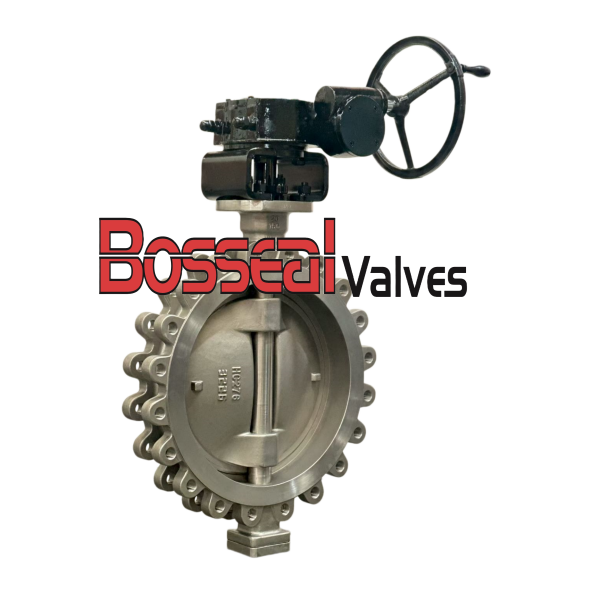
Butterfly Valves

Industry Definition & Scope
The butterfly valves industry involves the design, manufacturing, and application of quarter-turn valves that regulate flow through a disc mounted on a rotating shaft. Characterized by compact design, quick operation, and cost-effectiveness, butterfly valves serve as essential flow control components across water management, HVAC, industrial processing, and energy infrastructure.

Key Product Categories

  1. By Design Configuration:

    • Wafer-Type Butterfly Valves: Lightweight design clamped between pipe flanges

    • Lug-Type Butterfly Valves: Threaded inserts for end-of-line or dead-end service

    • Double Flanged Valves: Integral flanges for high-pressure applications

    • High-Performance Valves: Offset disc design (triple/dual eccentric) for zero leakage

    • Knife-Gate Hybrid Valves: For slurry and viscous media applications

  2. By Disc & Seat Materials:

    • Disc Materials: Carbon steel (epoxy-coated), stainless steel (316/304), aluminum bronze, nickel-plated, Duplex alloys

    • Seat Materials: EPDM, Nitrile, Viton, PTFE, reinforced PTFE, metal seats (Stellite/Hastelloy)

    • Liner Options: Full rubber lining, PFA lining, ceramic coating for abrasion resistance

  3. By Application Specifications:

    • Water & Wastewater: Resilient-seated valves (ANSI/AWWA C504 standard)

    • HVAC Systems: Tight-shutoff valves for heating/cooling circuits

    • Chemical Processing: Lined valves for corrosive media (ISO 16136)

    • Marine & Offshore: Certified valves for seawater cooling and ballast systems

    • Food & Pharmaceutical: Sanitary designs with CIP/SIP capability

    • Fire Protection: UL/FM approved valves with fail-safe operation

  4. By Actuation & Control:

    • Manual Operation: Lever, gear operator, detent mechanism

    • Automated Control: Electric, pneumatic, hydraulic actuators

    • Smart Integration: IoT-enabled with position feedback, torque sensing, predictive diagnostics

    • Modulating Control: Precision control via characterized discs and positioners

Technology & Innovation Trends

  • Advanced Sealing Technology:

    • Triple eccentric metal-seated designs for zero-leakage applications

    • Fire-safe certifications to API 607/ISO 10497 standards

    • Cryogenic seat materials for LNG and industrial gases (-196°C)

  • Digital Transformation:

    • Wireless valve monitoring via HART/Profibus/Modbus protocols

    • Cloud-based asset management with predictive maintenance algorithms

    • Digital twins for flow characteristic optimization

  • Material Science Advancements:

    • Nanocomposite seats extending service life 3-5X

    • Graphene-enhanced coatings for corrosion/erosion resistance

    • Sustainable material development (bio-based elastomers, recycled metals)

  • Manufacturing Innovation:

    • Robotic welding for consistent disc-shaft assembly

    • Laser scanning for dimensional accuracy verification

    • Additive manufacturing for customized valve components

Global Market Drivers

  • Global water infrastructure investment (desalination plants, smart water networks)

  • Energy transition projects (hydrogen pipelines, carbon capture systems)

  • HVAC market growth driven by green building standards (LEED, BREEAM)

  • Food processing industry automation and hygiene requirements

  • Replacement of aging valves in chemical and power generation facilities

  • Marine industry expansion (cruise ships, LNG carriers, offshore platforms)

Major Players & Value Chain

  • Global Leaders: Emerson, Flowserve, KITZ, Crane, IMI Critical Engineering

  • Water Specialists: DeZURIK, AVK, Hawle, Val-Matic, Bermad

  • Regional Manufacturers: China-centered (Zhejiang, Jiangsu clusters), Indian valve manufacturers

  • Value Chain: Material suppliers → component manufacturing → valve assembly → testing/certification → distributors → system integrators → end-users

Challenges & Opportunities

  • Challenges:

    • Price pressure from standardized product commoditization

    • Material compatibility issues in extreme chemical environments

    • Technical skill gap in proper valve selection and installation

    • Regulatory complexity across different regions and industries

  • Opportunities:

    • Smart water network integration for leakage reduction

    • Hydrogen-ready valve development for green energy infrastructure

    • Retrofitting programs for energy efficiency improvement

    • Aftermarket services (diagnostics, repair, digital upgrades)

    • Emerging market growth in Asia-Pacific and Middle East infrastructure

Butterfly Valves Product List

Refine your results:
About results

Videos of Butterfly Valves

More About Butterfly Valves

What maintenance do butterfly valves typically require?

They are low-maintenance but need periodic checks:

  • Seal/seat: Inspect for wear or compression set.

  • Shaft seals/packing: Check for leaks; adjust or replace as needed.

  • Disc/bearing movement: Ensure smooth operation; lubricate if specified.

  • Actuator linkage: Verify alignment and function.
    For metal-seated valves, minimal maintenance is required outside of operational checks.

When should I choose a lug-style over a wafer-style butterfly valve?

Wafer-style: Fits between flanges; cheaper and lighter. Use for general service where the valve doesn’t need to isolate downstream piping.
Lug-style: Has threaded inserts (lugs); can be bolted to one flange. Use when you need to isolate or remove downstream equipment without disassembling the entire pipeline (common at pump connections or branch lines).

What's the key advantage of a "triple-offset" butterfly valve?

The triple-offset design (offset shaft, offset disc seat axis, conical seat angle) ensures frictionless sealing. The metal seat contacts only at full closure, eliminating wear during operation. This allows bubble-tight shut-off with metal seats, high pressure/temperature capability, and long cycle life—ideal for critical hydrocarbon, chemical, and steam services.

Related searches of Butterfly Valves

Related Blogs of Butterfly Valves