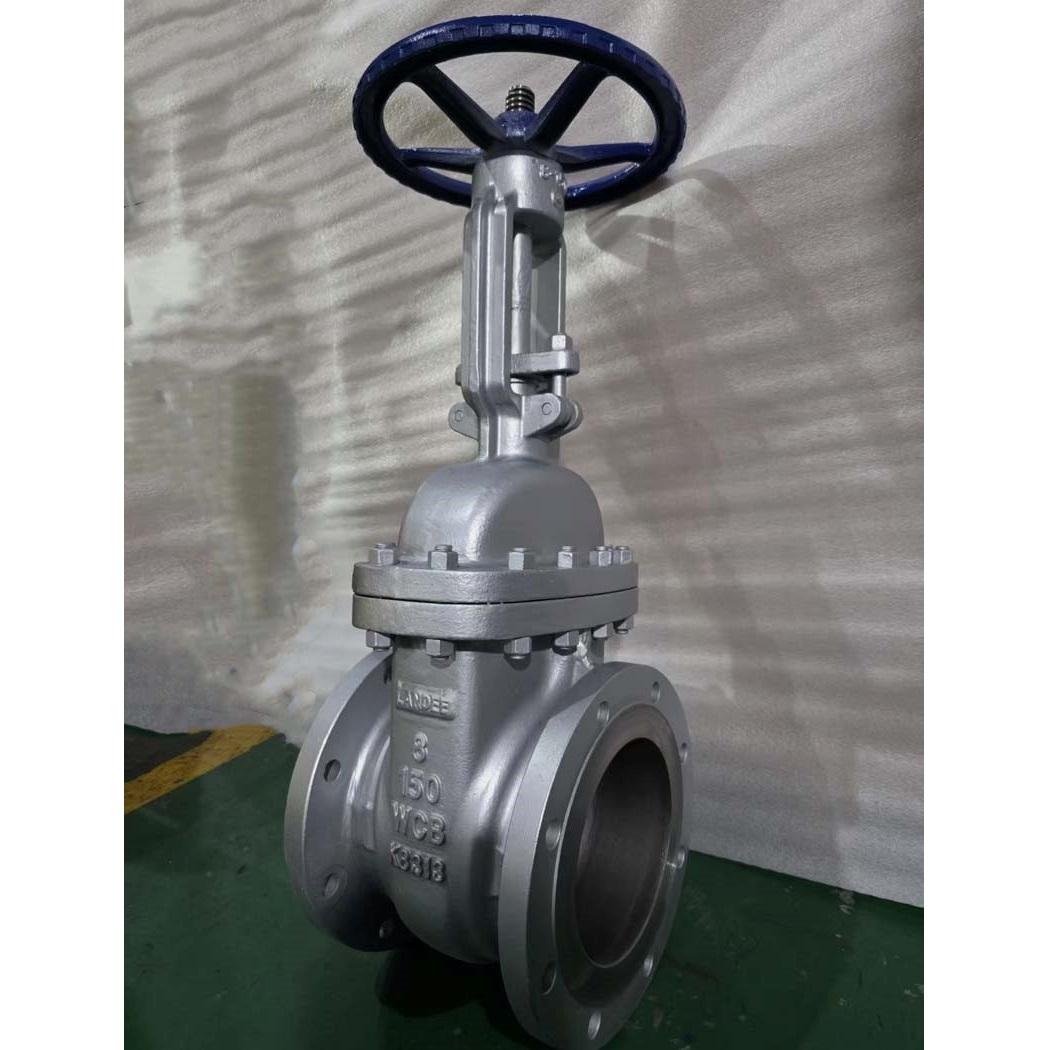
Gate Valves

Gate valves are essential for reliable on/off isolation control in pipelines carrying water, oil, gas, steam, and a wide range of industrial fluids. Designed with a linear motion mechanism, they operate by lifting or lowering a gate to fully open or fully close the flow passage, ensuring minimal pressure drop when in the open position. Known for their strong sealing capability, durable construction, and suitability for high-pressure and high-temperature environments, they are widely used in oil and gas, power generation, petrochemical, water supply, and industrial processing systems.

Through CNMFRS.com, buyers can explore a comprehensive selection of gate valve configurations designed for different operational requirements, including rising stem, non-rising stem, wedge gate, slab gate, and knife gate designs. These valves are available in a variety of materials such as stainless steel, carbon steel, alloy steel, and specialty corrosion-resistant alloys, with flexible options for sealing surfaces and trims to ensure reliable performance under demanding service conditions.

As a leading gate valve online marketplace in China, CNMFRS.com connects global buyers with trusted Chinese manufacturers and suppliers offering high-quality gate valves engineered for industrial-grade performance and reliability.

Explore our comprehensive range of gate valves, available in multiple types, standards, materials, sizes, pressure ratings, actuator configurations, stem designs, and sealing options to meet the requirements of diverse industrial fluid control systems.

Gate Valves Product List

Refine your results:
About results

A gate valve, also known as a sluice valve, is a linear-motion valve used to start or stop the flow of a fluid. The gate valve industry encompasses the engineering, manufacturing, and global deployment of these robust isolation devices. Gate valves are designed strictly for on-off isolation service rather than flow regulation or throttling. When fully open, the gate is completely removed from the flow stream, resulting in virtually no resistance to fluid flow, full-bore flow passages, and minimal pressure drop.

As vital safety and isolation components, gate valves ensure tight shutoff across diverse oil and gas pipelines, power plants, municipal water lines, and heavily abrasive mining networks worldwide.

How Gate Valves Work?

The operation of a gate valve relies on the vertical movement of an internal closure element—the gate—into and out of the fluid stream.

  • Opening the Valve: Activating the handwheel, gear, or automatic actuator moves the stem, which lifts the gate upward into the valve bonnet. When fully open, the flow path is completely unobstructed, allowing seamless flow matching the pipeline's inner diameter.
  • Closing the Valve: Turning the mechanism in the opposite direction drives the stem and gate downward into the valve seat. The gate wedges or slides tightly between the seats to form a positive, bubble-tight seal that halts fluid migration.

Gate Valve Categories by Design Configuration

Gate valves are classified by their internal component geometry, closure mechanisms, and stem operation to match specific industrial environments:

1. By Wedge and Disc Design

  • Wedge Gate Valves: Available in solid, flexible, or split-wedge configurations. Solid wedges are highly robust and economical; flexible wedges feature an intentional cut around the perimeter to flex slightly under pipeline stress and prevent "thermal binding" (where the gate gets trapped due to metal expansion); split wedges utilize a multi-piece design for independent seating adjustments.
  • Parallel Slide Gate Valves: Features a parallel disc design with spring-loaded sealing. Instead of a wedging force, fluid pressure slides the disc firmly against the downstream seat, making them excellent for high-temperature steam services.
  • Knife Gate Valves: Equipped with a sharp-edged, beveled gate specifically engineered to cut through thick slurries, pulp, paper stock, and highly viscous or abrasive media.
  • Through-Conduit / Slab Gate Valves: Features a full-bore, flat-faced slab design with a floating gate. This design provides an uninterrupted flow path when fully open, which is essential for pipeline pigging operations (cleaning and inspection tools run inside the line).
  • Expanding Gate Valves: Utilizes a mechanical expansion mechanism to provide true bidirectional sealing under both low and high pressures, commonly required in API 6D pipeline services.

2. By Stem Operation

  • Rising Stem (OS&Y - Outside Screw and Yoke): The stem moves upward along with the gate, providing an immediate visual indicator of the valve’s open/closed position. The threads are external, isolating them from the process fluid for easier lubrication.
  • Non-Rising Stem (NRS): The gate features internal threading, and the stem rotates inside the valve body without moving upward. This compact configuration is ideal for space-constrained environments, such as buried underground water lines or shipboard compartments.

Gate Valve Material Construction and Specifications

To perform reliably under varying pressures and chemical exposures, gate valves are built from high-integrity materials tailored for specific system boundaries (ranging across ANSI Classes 125–2500 and PN10–PN400):

  • Body Materials: Carbon steel (WCB, LCB) for high-pressure industrial applications; stainless steel (CF8, CF8M) for corrosive duties; alloy steel (WC6, WC9) for high-temperature steam; and bronze or ductile iron for marine and utility circuits.
  • Gate Materials: Typically 13% Chromium stainless steel, Monel, Inconel, nickel-plated alloys, or Stellite-faced metals for premium erosion resistance.
  • Seat Materials: Severe or high-temperature lines utilize metal-to-metal seating; low-temperature gas, water treatment, or chemical lines employ resilient seats (EPDM, NBR, Viton) or PTFE inserts.
  • Stem Materials: High-strength, hardened-surface alloys such as 316SS, 410SS, Monel, or Inconel to withstand cyclic mechanical stresses.

Application Specifications and Industry Standards for Gate Valves

Gate valves are foundational components engineered to meet strict regulatory and environmental specifications:

  • Oil & Gas: Employs API 6D/6A gate valves to withstand the severe conditions of upstream wellheads, cross-country transmission pipelines, and refineries.
  • Power Generation: Relies on high-temperature, high-pressure power plant isolation valves complying with standards like MSS SP-70/81.
  • Water Distribution: Recommends resilient-seated gate valves adhering to AWWA C500/C509 standards to cleanly isolate municipal water grids and reduce fluid loss.
  • Mining & Slurry: Utilizes heavy-duty knife gate valves to manage abrasive media handling without clogging.
  • Chemical Processing: Uses highly specialized alloy valves built to resist aggressive chemical corrosion.
  • Marine & Offshore: Deploys bronze and naval brass gate valves to withstand raw seawater exposure.
  • Cryogenic Service: Incorporates extended bonnet designs to insulate packing glands during LNG and industrial gas applications operating down to -196°C and below.

Gate Valve Technology and Innovation Trends

Modern manufacturing and digitalization are transforming gate valve capabilities:

  • Advanced Sealing Technology: Integration of Double Block and Bleed (DBB) designs allows operators to safely bleed pressure from the valve cavity for maintenance isolation. Fire-safe configurations are rigorously engineered to meet API 607/ISO 10497 standards, maintaining a seal even if elastomeric components burn away.
  • Digital Integration: Facilities are adopting smart position indicators equipped with wireless HART or Profibus communication protocols. IoT-enabled torque monitoring tracks the force needed to turn the stem to flag early scaling, while "digital twin" software uses field data for wear prediction and remaining life calculations.
  • Material Science Advancements: Nanostructured coatings are applied to increase erosion/corrosion resistance in sand-slurry lines. Composite materials are being integrated to achieve massive weight reduction in large-diameter valves, while advanced polymer seats drastically extend cycle life.
  • Manufacturing Innovation: Production lines leverage automated welding systems for consistent pressure boundary integrity, CNC machining with real-time quality monitoring, and robotic assembly for flawless high-volume production.

Global Market Drivers and Value Chain

The gate valve market is anchored by key infrastructure drivers, leading manufacturers, and a collaborative value chain:

  • Market Drivers: Global demand is propelled by oil and gas pipeline expansions, new power plant construction (including renewable and refurbished networks), water infrastructure modernization initiatives, mining industry growth, LNG terminal expansions, and tightening safety and environmental regulations.
  • The Value Chain: Raw material suppliers (foundries and steel mills) → component manufacturing (stems, wedges, seats) → valve assembly → testing/certification (pressure and leakage testing) → distributors → Engineering, Procurement, and Construction (EPC) contractors → industrial end-users.
  • Major Players: Global market leaders include Cameron (Schlumberger), Emerson, Flowserve, Velan, KITZ, and IMI. Specialty manufacturing is led by specialized brands like DeZURIK, Val-Matic, GWC, Weir Group, and Cla-Val, heavily supported by regional manufacturing clusters in China (Zhejiang, Jiangsu), India, and the Middle East.

Gate Valve Challenges and Opportunities

As industrial facilities optimize for automated, smart operations, the gate valve sector faces specific challenges and emerging opportunities:

1. Gate Valve Challenges

  • Lead Times: Large-diameter, custom-engineered gate valves often suffer from extended manufacturing lead times.
  • Seating Wear: High-cycle applications can cause rapid seal wear, sliding friction galling, or seat leakage over time.
  • Operational Risks: Improper installation, over-torquing, or deferred maintenance can lead to binding or catastrophic stem failure.
  • Market Competition: Commodity standard products face intense price competition from alternative valve designs (like high-performance ball or butterfly valves).

2. Opportunities for Gate Valves

  • Smart Infrastructure: Integrating gate valves into smart pipeline networks utilizing integrated valve monitoring.
  • Clean Energy Initiatives: Designing next-generation isolation infrastructure engineered for Hydrogen transport and Carbon Capture, Utilization, and Storage (CCUS) projects.
  • Sustainability: Supplying leak-reduction and water conservation programs to modernize older municipal networks.
  • Aftermarket & Field Upgrades: Offering highly profitable diagnostic testing, maintenance contracts, digital position retrofits, and compact modular valve designs for space-constrained facilities.

Videos of Gate Valves

More About Gate Valves

Related searches of Gate Valves

Related Blogs of Gate Valves