Diaphragm Valves

Diaphragm valves are essential for reliable on/off and throttling control in pipelines handling corrosive, abrasive, and high-purity fluids such as water, chemicals, slurries, and pharmaceutical media. Operating through a flexible diaphragm that moves against a weir or seat, they isolate the flow path from the operating mechanism, ensuring excellent sealing performance and minimal risk of contamination. Known for their leak-tight shut-off, corrosion resistance, and suitability for hygienic applications, they are widely used in chemical processing, water treatment, food and beverage, pharmaceuticals, and industrial process systems.

CNMFRS.com provides a comprehensive selection of diaphragm valve solutions designed for a wide range of operating conditions and media requirements. The range includes weir-type diaphragm valves, straight-through (full bore) designs, and multi-port configurations, along with manual, pneumatic, and electric actuation options. These valves are available in materials such as rubber-lined bodies, stainless steel, cast iron, and specialty corrosion-resistant alloys, with diaphragm materials including EPDM, PTFE, and NBR to ensure compatibility with aggressive or sensitive fluids.

As a leading diaphragm valve online marketplace in China, CNMFRS.com connects global buyers with trusted Chinese manufacturers and suppliers offering high-quality diaphragm valves engineered for hygienic performance, corrosion resistance, and reliable flow control.

Explore our comprehensive range of diaphragm valves, available in multiple types, standards, materials, sizes, pressure ratings, actuator configurations, lining materials, and sealing options to meet the requirements of diverse industrial fluid handling applications.

Diaphragm Valves Product List

Refine your results:
About results

A diaphragm valve is a linear-motion valve that utilizes a flexible, elastomeric membrane as its closing element. Unlike traditional industrial valves where the process fluid makes direct contact with the moving stem and internal metal housings, a diaphragm valve completely isolates the fluid from the valve's mechanical operating parts.

The Operating Principle of Diaphragm Valve

  • Opening the Valve: Turning the handwheel or activating an actuator lifts the internal compressor upward. Because the flexible diaphragm is attached to the compressor, it is pulled away from the bottom of the valve body, opening an unobstructed path for fluid flow.
  • Closing the Valve: Driving the stem downward forces the compressor against the back of the diaphragm. The diaphragm is pressed tightly into the bottom sealing surface, creating a positive, bubble-tight seal that completely isolates the upstream fluid from downstream piping.

Categories & Design Configurations of Diaphragm Valve

Diaphragm valves are primarily categorized into two distinct body designs, each engineered to address specific flow rates, fluid velocities, and media profiles:

1. Weir-Type Diaphragm Valves

Design Configuration: Features a raised lip or "weir" built into the bottom of the valve body. The diaphragm only needs to travel a short distance downward to press against this weir and shut off the flow.

Best For: General process isolation, precise liquid/gas throttling, and higher-pressure applications. The short travel distance extends the service life of the diaphragm by minimizing mechanical stretching.

Limitation: The internal weir creates minor flow resistance and a small pocket, which can hinder complete gravity drainage in strict sanitary applications unless the valve is installed at a precise drain angle.

2. Straight-Through / Full-Bore Diaphragm Valves

Design Configuration: The bottom of the valve body is completely flat and straight, creating an uninterrupted, full-bore passage matching the pipeline's internal diameter. To seal, the diaphragm must flex all the way down to the bottom of the pipe wall.

Best For: Highly viscous fluids, thick slurries, sewage, paper pulp, and abrasive mining media. Because there is no internal weir to obstruct the path, solids pass through smoothly without clogging, and lines can be easily cleaned or rodded out.

Limitation: The deeper travel requirement puts higher mechanical stress on the elastomeric material, resulting in a shorter diaphragm lifespan and a lower overall pressure rating compared to weir-type valves.

3. Multi-Port Diaphragm Valves

Beyond standard two-way valve bodies, multi-port blocks (such as 3-way, 4-way, and multi-valve blocks) are widely utilized in high-purity processing. They allow operators to divert, mix, or sample fluids while completely eliminating "dead-legs" where stagnant fluid could breed bacteria.

Material Construction & Components of Diaphragm Valve

Material compatibility is the most critical factor when selecting a diaphragm valve, as the flexible membrane must withstand continuous mechanical cycling alongside chemical exposure:

  • Body Materials: Cast iron, ductile iron, and cast carbon steel (WCB) are standard for utility lines. Stainless steel (304, 316L) is used for high-purity biopharmaceutical and food lines, while plastic bodies (PVC, CPVC, PVDF, PP) handle low-temperature chemical applications.
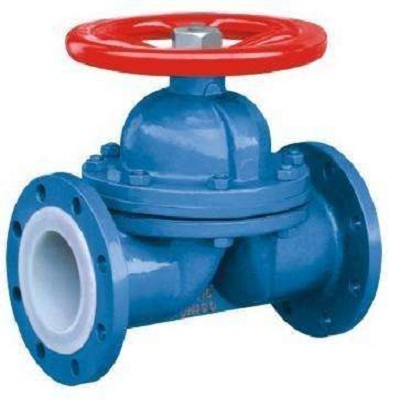
  • Body Linings: For maximum cost efficiency in corrosive environments, metal bodies are frequently lined with protective polymers or elastomers, such as PTFE, PFA, rubber, or glass.
  • Diaphragm Materials: The heart of the valve. They are categorized into resilient elastomers (EPDM for general water service, Buna-N, FKM/Viton® for high temperatures, and Butyl for gas/vacuum) or advanced fluoropolymers (PTFE, PFA) backed by an elastomeric cushion to provide universal chemical inertness.
  • Stem & Compressor Components: Typically manufactured from robust alloys like 316SS or hardened carbon steel to prevent mechanical deformation under high actuation torques.

Diaphragm Valve Automation & Actuation Mechanisms

While manual handwheels and levers are common for utility lines, industrial automation relies on distinct automated actuation mechanisms:

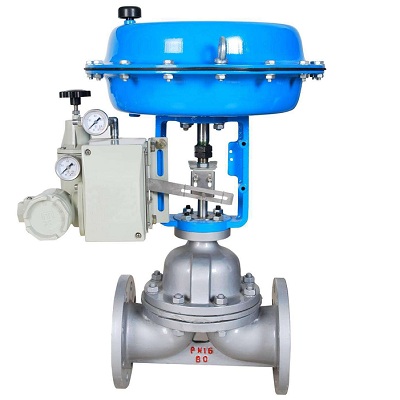
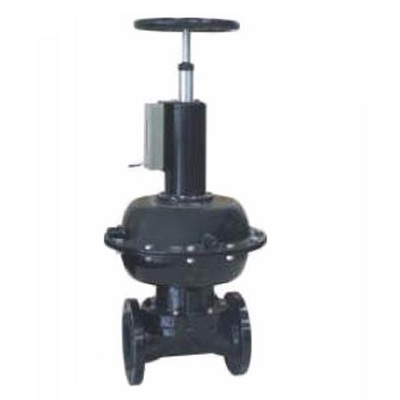
  • Pneumatically Actuated: Air-operated for remote or automated control. They respond rapidly and serve as the industry standard for high-cycle processing plants.
  • Electrically Actuated: Motor-operated units that provide precise positioning, making them ideal for incremental throttling and automated flow regulation.
  • Hydraulically & Solenoid Operated: Hydraulic actuators are reserved for heavy-duty, high-force industrial applications, while compact solenoids handle rapid on/off dosing for small-scale liquid or gas delivery.

Core Applications & Industry Standards for Diaphragm Valve

  • Pharmaceutical & Bioprocessing: Extensively relies on high-purity, stainless steel sanitary diaphragm valves. These feature mirror-polished or electropolished surfaces, comply with strict ASME BPE, FDA, 3-A, and EHEDG standards, and support Clean-in-Place (CIP) and Steam-in-Place (SIP) sterilization.
  • Chemical Processing & Semiconductors: Uses PTFE-lined and solid plastic diaphragm valves to manage highly corrosive acids, bases, and ultra-high-purity (UHP) chemical reagents without risking external fugitive emissions.
  • Water Treatment & Power Generation: Utilizes rubber-lined weir valves for demineralized water systems, chemical dosing loops, and ion-exchange plants where zero metal contamination is mandatory.
  • Mining & Slurry Processing: Deploys heavy-duty, straight-through valves to handle abrasive ore slurries, tailing lines, and grit without suffering premature seat erosion or mechanical binding.

Diaphragm Valve Challenges, Limitations, and Maintenance

Despite their exceptional isolation capabilities, engineers must carefully manage specific operating parameters:

  • Temperature and Pressure Restrictions: Because they rely on flexible elastomers and plastics, diaphragm valves cannot withstand the extreme temperatures and pressures handled by metal-seated gate or globe valves. They are generally confined to low-to-medium pressure classes.
  • Diaphragm Degradation: The diaphragm is a wear item that will eventually fail due to mechanical fatigue or chemical degradation over extended cycles. If a diaphragm ruptures, the process fluid can escape into the valve bonnet, making routine inspection and predictive step-by-step replacement a mandatory maintenance practice.
  • Hydrostatic Shock (Water Hammer): Rapidly snapping a pneumatic diaphragm valve shut can induce severe water hammer in high-velocity liquid lines, requiring the use of speed controls on the actuator to smooth out closing times.

Market Ecosystem & Technology Trends

The global diaphragm valve landscape is shifting from traditional, purely mechanical hardware toward highly engineered, smart process solutions.

1. Technology & Innovation Trends

Smart Valve Integration & IoT: Modern pneumatic and electric actuators are increasingly outfitted with smart positioners utilizing digital protocols like HART, IO-Link, PROFINET, or EtherCAT. These systems track diaphragm cycle counts and measure real-time sealing torque to predict failure before a leak occurs.

Advanced Diaphragm Materials: Manufacturers are shifting toward modified PTFE formulations that dramatically increase flex life, reduce cold flow (deformation under pressure), and tolerate higher continuous steam temperatures during sterilization.

Single-Use Systems (SUS): In biopharma manufacturing, single-use plastic block diaphragm valves are gaining rapid adoption. These pre-sterilized, disposable valve blocks eliminate the need for costly, time-consuming cleaning and validation cycles.

2. Major Industry Players

Biotech, Sterile & High-Purity Specialists: GEMÜ, ITT Engineered Valves, Alfa Laval, Burkert, Fujikin, Parker Hannifin.

Industrial, Chemical & Mining Specialists: Saunders (CIRCOR), Georg Fischer, ASAHI/America, Plast-O-Matic, Val-Matic.

Diaphragm Valve Value Chain Dynamics

The value chain spans from upstream chemical suppliers (elastomers and polymers) and foundries to midstream precision machining, cleanroom assembly, and validation testing. Because the flexible membrane is a regular consumable item, the aftermarket segment (diaphragm replacement and field maintenance services) generates a highly lucrative, stable, long-term revenue stream for manufacturers and distributors worldwide.

Videos of Diaphragm Valves

More About Diaphragm Valves

Related searches of Diaphragm Valves

Related Blogs of Diaphragm Valves