
Globe Valves vs. Needle Valves: Selection and Application
Globe valves and needle valves are two common types of valves used in industrial fluid control systems, but they serve fundamentally different functions. Globe valves have become one of the primary control devices in industrial piping systems due to their relatively large flow capacity and good throttling characteristics. Needle valves, on the other hand, provide extremely precise flow control and play an irreplaceable role in instrumentation systems and precision regulation applications. Although globe valve and needle valve share certain structural similarities, they differ significantly in flow capacity, control accuracy, size range, and application scenarios. A clear understanding of these differences is essential for engineers and technicians when selecting valves and ensuring stable system operation.
Introduction to Globe Valves
Globe valves are among the most common valve types used in industrial piping systems. Their internal flow path is typically S-shaped or Z-shaped, requiring the fluid to change direction twice as it passes through the valve. Globe valves offer excellent throttling performance, a wide range of sizes, various material options, and flexible actuation methods. They are suitable for both on-off service and flow regulation in medium- and large-diameter pipelines.

1. Basic Structure of Globe Valve
The name "globe valve" originates from the traditional spherical shape of the valve body. Although modern globe valves are not always spherical, the name remains widely used throughout the industry.
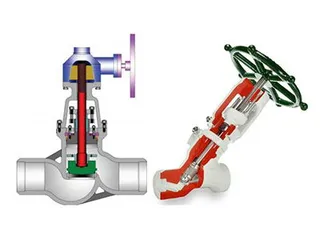
A globe valve has a distinctive internal structure. Inside the valve body is a horizontal partition, with a valve seat opening located at its center. After entering the valve, the fluid must flow through the passages formed above and below this partition.
The valve stem extends downward from the top of the valve body and is connected to a metal plug, also known as a disc. When the handwheel is rotated, the stem moves the disc in a linear up-and-down motion. As the disc moves downward, it gradually approaches the valve seat until it presses firmly against it, creating a seal and stopping fluid flow. When the disc moves upward, the flow passage opens, allowing fluid to pass through the valve.
2. Operating Principle and Characteristics of Globe Valve
The internal flow path of a globe valve is typically S-shaped or Z-shaped. After entering the valve body through the inlet, the fluid must first turn upward by approximately 90 degrees, pass through the valve seat opening, and then turn downward another 90 degrees before exiting the outlet.
Because of this complex flow path, globe valves generate a noticeable pressure drop even when fully open. Their flow resistance is relatively high compared with some other valve types.
However, this design also provides significant advantages. There is a relatively proportional relationship between disc travel and flow rate, resulting in excellent throttling characteristics. Operators can adjust the flow rate with reasonable precision by controlling the rotation of the handwheel. Therefore, globe valves are not only suitable for isolation duties but are also particularly effective for applications requiring flow regulation, such as cooling water systems and steam systems.
The valve seat and disc assembly is robust and capable of withstanding high operating pressures. It can also resist erosion caused by prolonged throttling service, giving globe valves excellent durability and a long service life in industrial applications.
3. Main Advantages and Limitations of Globe Valve
Globe valves are available in a wide range of sizes, from 1/2 inch (DN15) up to 36 inches (DN900), allowing them to meet the requirements of various piping systems.
They can be manufactured from cast iron, stainless steel, brass, and a variety of corrosion-resistant or high-temperature alloys. Sealing components commonly use PTFE or elastomeric materials to ensure reliable sealing performance. Actuation options include manual, electric, pneumatic, and hydraulic operation. Manual versions typically utilize handwheels, while automated versions can be integrated into control systems for remote operation.
The primary advantages of globe valves include:
- Good throttling and flow regulation performance
- Reliable shut-off capability
- Mature and proven design
- Convenient maintenance and repair
- Suitability for high-temperature and high-pressure service
Despite these benefits, globe valves also have limitations. The complex internal flow path causes significant pressure loss and higher flow resistance than gate valves or ball valves. In addition, globe valves are generally heavier and larger, requiring more installation space and stronger support structures. Consequently, they may not be ideal in applications where space is limited.
Overview of Needle Valves
Although needle valves resemble globe valves in some respects, they are specialized precision valves designed specifically for small-flow applications. Their key feature is a slender tapered needle-shaped plug combined with a fine-thread stem design, enabling highly precise flow adjustments through extremely small axial movements.
Needle valves are compact, pressure-resistant, and highly accurate, but they offer limited flow capacity. They are therefore commonly used in instrumentation systems and precision control applications.

1. Structure and Design of Needle Valves
The needle valve derives its name from its needle-like closure element. Structurally, it can be considered a miniature, high-precision version of a globe valve designed for applications requiring exceptional flow control accuracy.
Unlike globe valves, which use a relatively large blunt-ended or plug-shaped disc, needle valves employ a slender tapered needle as the closure element. The tip of the needle is finely machined and mates precisely with a corresponding conical valve seat. When the valve is closed, the needle fits tightly into the seat, creating an excellent seal.
Another important feature is the fine-thread stem design. Each rotation of the handwheel produces only a very small axial movement of the needle. In contrast, the coarser stem threads used in conventional globe valves generate much larger travel per revolution. This fine-thread mechanism is the foundation of the needle valve's high-precision flow control capability.
2. Needle Valve Flow Control Method
A threaded stem drives the needle element vertically within the valve body. Each rotation creates only a minute displacement, resulting in extremely gradual flow changes.
This slow-opening characteristic allows operators to regulate very small flow rates with exceptional precision, making applications such as drip flow control or ultra-low-flow media transfer possible.
The internal flow path resembles that of a globe valve, but the flow passage is dramatically smaller because of the needle-shaped plug and tiny seat opening. In many cases, the effective flow opening is comparable to the size of a pinhole.
This design provides extraordinary flow control precision but inherently limits flow capacity, making needle valves unsuitable for high-flow systems.
Needle valves are commonly manufactured from stainless steel, brass, or alloy materials. They are compact, lightweight, and capable of handling extremely high pressures. Working pressures exceeding 10,000 PSI (approximately 69 MPa) are common, allowing reliable operation under demanding conditions.
3. Main Advantages and Limitations of Needle Valves
The greatest advantage of a needle valve is its exceptional control precision. Thanks to the fine-thread stem design, opening occurs gradually and predictably, resulting in smooth flow adjustments. This makes needle valves ideal for drip-feed applications and ultra-low-flow services.
Additional advantages include:
- Extremely precise flow control
- Compact and space-saving design
- Excellent shut-off capability
- High-pressure resistance
Needle valves are generally available in sizes ranging from 1/8 inch to 1 inch (DN6 to DN25). While this small size range complements their precision-control function, it also represents their primary limitation: restricted flow capacity.
Using a needle valve in a high-flow system can severely reduce efficiency and may create a significant bottleneck within the process.
Core Differences Between Globe Valves and Needle Valves
After understanding the characteristics of each valve type individually, a direct comparison can be made in terms of internal design, flow capacity, pressure loss, control accuracy, and application scope.

1. Differences in Closure Element Design
The most fundamental distinction lies in the closure element.
Globe valves utilize a relatively large blunt-ended or plug-type disc. The interaction between the disc and seat is designed primarily for shut-off and moderate flow regulation. When opened, the valve provides a comparatively large flow passage.
Needle valves use a slender tapered needle that mates precisely with a tiny conical seat. Extremely small axial movements produce correspondingly small changes in flow rate.
In essence, globe valves are designed for larger flow control, while needle valves are designed for precision micro-flow control.
2. Comparison of Flow Capacity
Globe valves generally have a flow opening close to the pipe diameter and are commonly used in pipeline sizes ranging from 2 inches to 24 inches or larger. They possess strong flow-handling capability.
Needle valves, by contrast, feature extremely small flow openings and are typically available in sizes from 1/8 inch to 1 inch. Their flow control characteristics are optimized for highly precise low-flow regulation.
3. Pressure Loss and Control Accuracy
Because globe valves have an S-shaped flow path, fluids must change direction multiple times, resulting in relatively high pressure loss. However, they provide a reasonably linear relationship between valve opening and flow rate, making them suitable for medium-precision regulation.
Needle valves generate even greater pressure losses due to their extremely restricted flow passages. Nevertheless, their fine-thread design produces very gradual flow changes, offering exceptionally high control resolution and precision.
4. Size and Application Range
Globe valves are larger and heavier, making them suitable for main-line control in industrial piping systems.
Needle valves are compact and lightweight, making them ideal for instrumentation and precision-control systems.
Operationally, globe valves typically require only a small amount of rotation to open or close fully, whereas needle valves often require multiple turns to achieve fine flow adjustments.

Comparison of Flow Coefficient (Cv)
To quantitatively compare the flow capabilities of globe valves and needle valves, it is important to examine their flow coefficient (Cv) values.
1. What Is the Flow Coefficient Cv?
The flow coefficient Cv is an important parameter used in valve sizing and selection.
Cv is defined as the number of gallons of water per minute that can flow through a valve with a pressure drop of 1 PSI across the valve.
A larger Cv indicates greater flow capacity, while a smaller Cv indicates greater flow restriction and finer control capability.
2. Cv Characteristics of Globe Valves
Globe valves generally have relatively high Cv values.
For example, a 1-inch (DN25) globe valve may have a maximum Cv value of approximately 10. Under standard testing conditions, this means the valve can pass approximately 10 gallons of water per minute with a 1 PSI pressure drop.
The Cv value increases significantly as the valve opening increases. This characteristic makes globe valves suitable for medium- and large-flow applications but less suitable for ultra-low-flow control, where over-adjustment can occur.
3. Cv Characteristics of Needle Valves
Needle valves have extremely low Cv values.
For example, a 1/2-inch (DN15) needle valve may have a maximum Cv value of only about 0.3. Under identical pressure-drop conditions, its flow capacity is dramatically lower than that of a globe valve.
More importantly, the fine-thread mechanism causes Cv to increase very gradually as the valve opens. Even with a 10% increase in opening, the Cv value may remain close to zero.
This extremely low flow coefficient and slow rate of change enable exceptionally high control resolution, making needle valves ideal for low-flow chemical dosing, precision metering, and similar applications.
Typical Applications of Needle Valves & Globe Valves
Needle valves are typically used in applications requiring extremely high precision, such as instrumentation systems, chemical metering systems, and laboratory analytical systems. Globe valves are widely applied in industrial high-flow control scenarios, including boiler feedwater systems, cooling water regulation systems, and high-pressure steam control systems. In applications where pressure drop needs to be optimized, a Y-pattern globe valve can be used as a compromise solution.
1. Primary Applications of Needle Valves
Needle valves are widely used in applications requiring extremely high precision.
In instrumentation systems, they are often installed upstream of pressure gauges or sensors to provide damping and protection against pressure surges.
In chemical dosing systems, needle valves can accurately control flow rates down to a few drops per minute or even lower, making them ideal for corrosive or high-value media.
In laboratory analytical systems and gas calibration equipment, needle valves provide stable micro-flow regulation, ensuring measurement accuracy and system stability.
They are also commonly used in hydraulic systems, pneumatic systems, fuel delivery lines, and controlled venting or bleed-off systems where slow and precise pressure release is required.
2. Primary Applications of Globe Valves
Globe valves are extensively used in industrial high-flow control applications.
Typical applications include:
- Boiler feedwater systems
- Industrial cooling water systems
- High-pressure steam control systems
- Fuel oil transfer systems
- Chemical injection systems
- Oil and gas pipelines
- Power generation feedwater and condensate systems
For large-diameter pipelines, generally 2 inches and above, globe valves are often considered the standard choice.
Their robust construction makes them particularly suitable for applications involving frequent operation and continuous regulation.
3. Selection for Special Operating Conditions
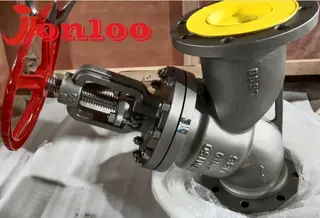
Where pressure-drop optimization is important, a Y-pattern globe valve can be used.
The stem and seat in a Y-pattern globe valve are positioned at approximately a 45-degree angle, creating a straighter flow path. This design reduces turbulence and pressure loss while retaining the throttling capabilities of a conventional globe valve.
As a result, Y-pattern globe valves provide an effective compromise in pressure-sensitive applications.
Conclusion
Globe valves and needle valves are complementary rather than interchangeable.
A globe valve cannot replace a needle valve because its larger disc area produces relatively large flow changes from small operating movements, making precise micro-flow control impossible.
Likewise, a needle valve cannot replace a globe valve because its limited flow capacity would create a severe restriction in high-flow systems, leading to excessive pressure drop and potentially preventing normal operation.
Globe valves are best suited for medium- and high-flow regulation and shut-off duties in industrial piping systems, offering excellent durability and versatility. Needle valves are designed for instrumentation and precision-control applications where extremely accurate flow regulation is required.
In practical engineering applications, valve selection should always be based on a comprehensive evaluation of flow requirements, operating pressure and temperature, media characteristics, and required control accuracy. Proper valve selection is essential for ensuring safe, stable, and efficient system operation.
Send your message to this supplier
Related Articles from the Supplier

Angle Globe Valve vs. Standard Globe Valve
- May 09, 2026

A Comprehensive Guide to Bellows Sealed Globe Valves
- Jun 19, 2025
How to Properly Install Your Globe Valves
- Jun 02, 2026
Related Articles from China Manufacturers
Globe Valves vs. Diaphragm Valves: How to Choose?
- Sep 09, 2025
Ball Valves vs. Globe Valves: What’s the Difference?
- Oct 27, 2024
Related Products Mentioned in the Article

Supplier Website
Source: https://www.valvepackingsealkits.com/news/globe-valves-vs-needle-valves-selection-and-application.html