
Globe Valve Selection and Application Guide
A globe valve is one of the most widely used control valves in industrial piping systems. Its defining structural characteristic is that the axis of the valve stem is perpendicular to the sealing surface of the valve seat. This vertical configuration allows the stem to move a relatively short distance during opening and closing operations. Combined with a reliable shut-off mechanism, this design makes the globe valve an ideal solution for medium isolation, regulation, and throttling.
Compared with other types of valves, globe valves have a notable design feature: when the valve is fully open, the sealing surfaces of the seat and the disc are no longer in contact. This design significantly reduces mechanical wear on the sealing surfaces, thereby extending the service life of the valve. In addition, most globe valves are designed so that the seat and disc can be repaired or replaced relatively easily. Even when the valve body is welded directly into the pipeline, maintenance can often be carried out without removing the entire valve from the line, which is highly practical in real-world engineering applications.
However, globe valves also have a noticeable disadvantage. As the fluid passes through the valve, the flow direction changes, resulting in higher flow resistance compared with other valve types such as ball valves or gate valves. To address this limitation, engineers have developed several improved structural variations of globe valves.
Main Structural Types of Globe Valves
Based on the internal flow channel configuration, globe valves can be categorized into several main types, each designed for specific operating conditions.
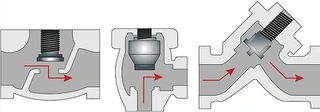
1. T-Type or Z-Type Globe Valve
This is the most traditional and commonly used globe valve design. The internal flow path of the valve body resembles the letter “Z,” requiring the fluid to change direction twice as it passes through the valve.
The primary advantage of this structure is its excellent throttling performance. The interaction between the valve seat and the disc enables precise flow control. However, because the fluid changes direction multiple times, it results in significant energy loss. The typical L/D coefficient (equivalent pipe length to diameter ratio) is approximately 340, indicating relatively high flow resistance.
2. Angle Globe Valve
An angle globe valve has inlet and outlet ports arranged at a 90-degree angle, similar to an elbow. The advantage of this configuration is that the fluid only changes direction once, resulting in a significantly lower pressure drop compared with T-type or Z-type designs.
The typical L/D coefficient of an angle globe valve is about 55. It is particularly useful in pipeline systems where the flow direction must change, because it effectively combines the functions of a valve and an elbow, simplifying pipeline layout and design.
3. Y-Type Globe Valve
The Y-type globe valve is an improved design intended to reduce flow resistance. In this structure, the valve body and seat are arranged at an angle, allowing the fluid to flow along a more direct path compared with the traditional Z-shaped flow channel.
Although it still maintains good throttling capability, the Y-shaped structure reduces the degree of directional change in the fluid flow, resulting in lower pressure loss. The typical L/D coefficient is around 150. This type of valve is particularly suitable for high-pressure applications.
4. Plunger Globe Valve
The plunger globe valve is a modified form of the conventional globe valve. In this design, the valve disc is polished into a plunger shape and connected to the valve stem. The sealing function is achieved by two elastic sealing rings installed around the plunger.
These two sealing rings are separated by a spacer sleeve, and the load applied by the bonnet nut compresses the rings to create a tight seal. The main advantage of this design is that the sealing rings can be easily replaced, and different materials can be selected according to operating conditions.
Plunger globe valves are primarily used for fully open or fully closed applications. However, with specially designed plungers or sleeves, they can also be used for flow regulation.
5. Double-Seat Globe Valve
Double-seat globe valves are equipped with two valve plugs and corresponding seats. This configuration significantly increases the flow capacity of the valve.
More importantly, the double-seat design forms a balanced structure that effectively offsets the force exerted by the medium pressure on the valve disc. As a result, the operating force required to actuate the valve is greatly reduced. Therefore, double-seat globe valves are an efficient choice in applications that require high flow capacity, precise control, and relatively low operating force.
Key Advantages of Globe Valves
Understanding the advantages of globe valves helps determine whether they are suitable for specific applications.
- Excellent wear resistance: During opening and closing operations, the friction between the disc and the sealing surface is smaller than that of gate valves. This results in improved wear resistance and longer service life.
- Compact structure: The opening height of a globe valve is typically only about one-quarter of the seat passage diameter. As a result, the overall valve size is much smaller than that of a gate valve, making it advantageous in installations where space is limited.
- Easy maintenance: Most globe valves have only one sealing surface on the valve body and disc. This relatively simple structure simplifies manufacturing and makes maintenance and seal replacement easier.
- Reliable sealing performance: Because the disc and seat separate when the valve is open, unnecessary wear is minimized. When the valve is closed, a reliable shut-off seal can be achieved.
Typical Applications of Globe Valves
Different types of globe valves are suitable for different operating conditions. Proper selection is essential to ensure reliable system performance.
1. High-Temperature and High-Pressure Applications
Globe valves are often the preferred choice for pipelines and equipment operating under high temperature and high pressure. Typical applications include steam systems in thermal power plants, coolant circuits in nuclear power stations, and high-pressure pipelines in petrochemical facilities.
These environments require extremely reliable sealing and operational stability, both of which are well supported by the structural characteristics of globe valves.
2. Pipelines with Moderate Flow Resistance Requirements
Because globe valves have relatively high flow resistance, they are suitable for pipelines where pressure loss is not a critical concern. If the system has strict requirements for energy efficiency or pressure drop, Y-type globe valves or other low-resistance valves may be more appropriate.
3. Small-Diameter Pipeline Systems
For pipelines with a nominal diameter of 50 mm or less that require flow or pressure regulation but not extremely high control precision, globe valves are a cost-effective option.
Small valves such as needle valves, instrument valves, sampling valves, and pressure needle valves all belong to the globe valve family.
4. Synthetic Chemical Industry
In synthetic chemical production processes, such as ammonia production, high-pressure angle globe valves or angle throttling valves with nominal pressures of PN160 (16 MPa) or PN320 (32 MPa) are commonly used.
These valves are capable of withstanding the extremely high pressures present in such processes.
5. Pipelines with Coking Media
For pipelines transporting media that tend to form coke deposits, it is recommended to use split-body straight-through globe valves or straight-through throttling valves with removable seats and hard alloy sealing pairs.
This design facilitates cleaning and maintenance, while the hard alloy sealing surfaces provide strong resistance to abrasion from coke particles.
6. Urban Infrastructure
In municipal water supply and district heating systems, pipelines with nominal diameters smaller than 150 mm can use globe valves, balance valves, or plunger valves.
These valves offer moderate cost, convenient maintenance, and reliable long-term performance for municipal pipeline networks.
Key Factors in Globe Valve Selection
Selecting the appropriate globe valve requires consideration of multiple factors to ensure optimal performance, reliability, and service life.
1. Flow Rate and Pressure Drop
First, determine the required flow range and allowable pressure drop in the system. Globe valves have good linear flow characteristics, making them suitable for applications requiring precise flow control.
During selection, the valve must be capable of handling the system's operating pressure without causing excessive pressure loss that could affect system efficiency.
2. Flow Characteristics
The appropriate flow characteristic curve should be selected based on process requirements. The main types include equal-percentage, linear, and quick-opening characteristics.
Equal-percentage characteristics mean the rate of flow change is proportional to the current flow rate, making them suitable for systems with large load variations. Linear characteristics provide a direct proportional relationship between valve opening and flow rate, making control straightforward. Quick-opening characteristics allow the flow rate to increase rapidly during the initial opening stage and are suitable for applications requiring fast shut-off or start-up.
Different flow characteristics directly affect the control accuracy and responsiveness of the valve during regulation.
3. Valve Size Matching
Selecting the correct valve size is critical for efficient system operation. A valve that is too small will restrict flow and cause unnecessary pressure loss, while an oversized valve may reduce control accuracy, cause vibration and noise at small openings, and increase costs.
The valve size should match the pipeline diameter and system flow requirements. Typically, the valve specification is determined based on the calculated maximum flow rate and allowable pressure drop.
4. Material Selection
Valve materials must be selected according to the medium's temperature, pressure, corrosion characteristics, and abrasive properties.
Common valve materials include:
- Stainless steel: excellent corrosion resistance; suitable for chemical, food, and pharmaceutical industries
- Carbon steel: high strength and relatively low cost; suitable for general industrial applications
- Bronze: resistant to seawater corrosion; suitable for marine and offshore engineering
- Cast iron: economical; commonly used in low-pressure water and steam systems
For special media, materials such as Hastelloy or titanium alloys may be required.
5. Structural Design
The choice between a traditional globe valve and a Y-type globe valve should be based on application requirements. Y-type valves offer smoother flow passages and lower pressure drop, making them suitable for high-pressure or low-resistance applications. Angle globe valves are suitable for pipeline layouts requiring directional changes.
6. Operation Method
The operating method must also be considered. Manual operation is suitable for valves that are operated infrequently or used mainly for isolation.
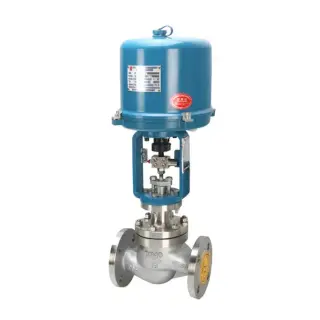
In systems requiring remote control, frequent adjustment, or automation, globe valves equipped with electric, pneumatic, or hydraulic actuators should be selected. The actuator selection should consider power supply conditions, control signal types, and explosion-proof requirements.
7. Leakage Class
The leakage class indicates the allowable leakage rate when the valve is fully closed. Higher leakage classes correspond to better sealing performance and tighter shut-off.
For toxic, flammable, or high-value media, valves with higher leakage classes should be selected. For common media such as water or steam, lower leakage requirements may be acceptable to reduce costs.
8. End Connection Type
The valve end connection must match the pipeline system. Common connection types include:
- Butt-weld connections: high strength and excellent sealing; suitable for high-pressure and high-temperature applications, but difficult to disassemble
- Threaded connections: easy installation; suitable for small-diameter, low-pressure pipelines
- Flanged connections: convenient for installation and maintenance; widely used in industrial pipelines
Standards and Certifications
Finally, ensure that the selected globe valve complies with relevant industry standards and certifications. Common standards include Chinese national standards (GB), mechanical industry standards (JB), petrochemical standards (SH), and international standards such as API, ANSI, and DIN.
Valves that comply with recognized standards provide greater assurance in terms of quality, safety, and performance.
Installation and Maintenance Considerations
Proper installation and maintenance can significantly extend the service life of globe valves and ensure safe system operation.
During installation, attention should be paid to the flow direction marking on the valve body to ensure the medium flows in the correct direction. Although some globe valves allow reverse flow, installing them according to the designed flow direction ensures optimal performance.
For electric or pneumatic globe valves, sufficient installation and maintenance space must be reserved for the actuator.
During routine maintenance, the sealing performance of the valve should be checked regularly to detect any internal or external leakage. Valves that remain unused for long periods should be operated periodically to prevent the disc from sticking to the seat.
If wear or leakage is detected at the sealing surfaces, the sealing components should be replaced promptly to prevent minor issues from developing into major failures.
Conclusion
As a critical control component in industrial piping systems, globe valves are widely used across various industries due to their reliable shut-off performance, excellent throttling capability, and relatively simple structure. From traditional T-type and Z-type designs to improved Y-type and angle configurations, as well as specialized plunger and double-seat structures, the evolution of globe valve designs has enabled them to meet the demands of increasingly complex operating conditions. When selecting a globe valve, it is essential to comprehensively consider factors such as flow characteristics, pressure and temperature conditions, medium properties, and operational requirements. By carefully evaluating these factors, engineers and procurement professionals can select the most suitable globe valve to ensure efficient, reliable, and long-lasting system operation.
Send your message to this supplier
Related Articles from the Supplier
Globe Valve Selection and Application Guide
- Mar 11, 2026
Selection and Application of Globe Valves
- Nov 13, 2025
Guide to DIN Globe Valve Bonnet Types and Selection
- May 12, 2026
Related Articles from China Manufacturers





Related Products Mentioned in the Article

Zhejiang Kosen Valve Co., Ltd.
- https://www.kosenvalve.com/
- Business Type: Industry & Trading, Manufacturer,
Supplier Website
Source: https://www.kosenvalve.com/media-hub/globe-valve-selection-and-application-guide.html