
Guide to DIN Globe Valve Bonnet Types and Selection
In the overall structure of a DIN globe valve, the valve bonnet is a critical component that directly influences the valve's normal operation and service life. The primary function of the bonnet is to enclose the valve body while accommodating moving components such as the stem, disc, and actuator. While the valve body serves as the main space for medium flow, the bonnet is responsible for sealing these internal components and preventing leakage at the interface between the body and the bonnet.
The sealing performance of the valve bonnet typically relies on gaskets and packing. A gasket creates a tight seal between the bonnet and the valve body, ensuring the medium does not escape. To verify the reliability of this sealing, specialized bonnet testing is often conducted in industrial settings to detect potential leaks, allowing for timely maintenance or adjustments.
Due to the diverse operational conditions encountered across various systems, globe valve bonnet designs have evolved into multiple types. From the structurally simple threaded bonnet to the highest-sealing welded bonnet, each type has its applicable scenarios and limitations. Selecting the appropriate bonnet type requires a comprehensive consideration of system working pressure, temperature conditions, medium properties, maintenance frequency, and valve size.
Common DIN Globe Valve Bonnet Types
Given the wide variation in operational requirements, several bonnet designs have emerged to meet different needs. Understanding the structural features and performance differences of each type is essential for correct selection. The following sections provide a detailed overview of five common DIN globe valve bonnet types.
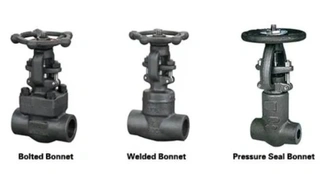
1. Threaded Bonnet
The threaded bonnet is the simplest and most cost-effective type in DIN globe valves. It screws directly into the valve body, making installation and removal relatively straightforward, thus providing high convenience for maintenance and repairs.
Threaded bonnets offer good sealing performance, effectively preventing leakage during fluid flow. Their simple design also results in fewer complex failure modes and lower overall maintenance costs. Therefore, threaded bonnets are commonly used in low-pressure, small-diameter DIN globe valve applications. For instance, in residential water supply systems where pressure is relatively low, a globe valve with a threaded bonnet can reliably meet operational requirements.
However, threaded bonnets have limitations. Repeated assembly and disassembly over time can wear the threads, potentially reducing sealing performance and causing leaks. Under high-pressure conditions, the threaded connection may not withstand significant internal loads, creating a risk of bonnet loosening. In vibrating environments, threads are also prone to loosening, typically requiring thread-locking compounds or anti-loosening devices to improve connection stability.
2. Bolted Bonnet
Compared to threaded bonnets, bolted bonnets offer a more robust and reliable structural design. The bonnet is secured to the valve body using bolts and nuts, providing highly stable and dependable sealing, making it suitable for high-pressure and high-temperature applications.
Bolted bonnets not only ensure good sealing but also allow easy inspection, maintenance, and replacement of internal components. By controlling bolt torque, uniform stress distribution is achieved, maintaining the integrity of the sealing surface and preventing leaks. Consequently, bolted bonnets are widely applied in the petroleum, natural gas, and refining industries.
Bolted bonnets can be paired with various gaskets to form a secure seal between the bonnet and valve body. However, proper bolt tightening is critical. Over-tightening may damage the gasket, leading to premature failure, while under-tightening can cause leaks. Installation and removal of bolted bonnets are more complex than threaded types, requiring more time, labor, and precise torque control. Uneven tightening or nonstandard torque can result in uneven stress, increasing the risk of leakage.
3. Welded Bonnet
The welded bonnet is permanently fixed to the valve body through welding. This design offers the highest level of structural integrity and sealing performance, achieving near-zero leakage, and is ideal for applications with extremely high sealing requirements.
By eliminating the gasket structure, welded bonnets remove potential leakage risks associated with gaskets. Their monolithic design also provides excellent resistance to vibration and mechanical shocks, ensuring stable operation under demanding conditions. This type of bonnet is widely used in industries with stringent safety requirements, such as nuclear power systems and pipelines handling highly toxic, flammable, or explosive media.
The main drawback of welded bonnets is that, once welded, internal valve components are nearly impossible to disassemble for maintenance. In case of internal failures, the entire valve typically must be replaced, resulting in higher maintenance costs and downtime. Therefore, choosing a welded bonnet requires careful consideration of its superior sealing performance versus maintenance accessibility.
4. Pressure-Seal Bonnet
The pressure-seal bonnet is specifically designed for high-pressure applications. Its key feature is that as internal system pressure increases, the sealing force between the bonnet and the valve body also increases, creating a self-reinforcing seal.
This design is particularly suitable for high-pressure scenarios, such as power plant systems and high-pressure pipelines, and is commonly seen in large-diameter DIN globe valves. When internal pressure rises, the bonnet is pressed more tightly against the valve body, forming a stronger seal. This self-reinforcing characteristic allows pressure-seal bonnets to exhibit excellent sealing performance and reliability under high-pressure conditions.
However, pressure-seal bonnets are complex to design and manufacture, requiring high precision in machining and assembly. Installation and removal typically necessitate specialized tools and skilled personnel, making maintenance more challenging and increasing manufacturing costs.
5. Union (Union-Type) Bonnet
Union bonnets use a union-style connection to link the bonnet to the valve body. This structure allows the valve to be quickly disassembled and reassembled during maintenance, making it ideal for systems requiring frequent inspection or internal cleaning.
Union bonnets offer good sealing performance and significant advantages in maintenance efficiency. In process piping systems where valves need to be removed without disturbing surrounding pipelines, union bonnets are particularly advantageous. They are widely used in industries like chemical and pharmaceutical systems, where frequent maintenance operations are required, effectively reducing downtime and improving operational efficiency.
Installation and removal of union bonnets are simple and do not require specialized tools. However, improper tightening or long-term neglect may lead to potential leakage points, so installation quality is critical. Structurally, union bonnets are slightly less robust than bolted or welded bonnets, making them unsuitable for extreme high-pressure conditions.
Bonnet Designs for Special Conditions
- Extended Bonnet: Extended bonnets are primarily used in high-temperature, high-pressure environments. Their elongated structure accommodates thermal expansion and facilitates the installation of insulation layers. In applications such as high-temperature steam pipelines, extended bonnets effectively mitigate structural deformation due to temperature variations, ensuring long-term stable valve operation.
- Low-Temperature Bonnet: Low-temperature bonnets are designed for extremely cold environments, such as liquefied natural gas systems. Under such conditions, standard materials may become brittle or fail to maintain sealing. Low-temperature bonnets, through special structural design and material selection, ensure that valve integrity is maintained even under extremely low temperatures, safeguarding system safety.
- Bellows-Seal Bonnet: Bellows-seal bonnets are intended for applications with extremely high sealing requirements. The bellows provide an additional sealing barrier, preventing leakage along the stem, which is crucial for systems handling toxic, flammable, or otherwise hazardous media. Bellows-seal bonnets must be compatible with the bellows sealing system to ensure overall reliability, making them ideal for scenarios where minimizing leakage risk is critical.
Key Factors for Bonnet Selection
Selecting a bonnet is not merely a matter of cost; it requires a comprehensive assessment of system operating parameters, medium characteristics, and maintenance requirements. Proper selection directly affects valve sealing reliability, service life, and overall operating cost. The following key factors should guide the selection process:
1. Operating Pressure and Temperature
System pressure and temperature are the primary considerations in bonnet selection. High-pressure, high-temperature applications are generally suited for bolted, pressure-seal, or welded bonnets. Bolted bonnets withstand high pressure and temperature while allowing maintenance; pressure-seal bonnets leverage the self-reinforcing sealing principle for high-pressure performance; welded bonnets offer the highest sealing reliability.
For low-pressure applications, threaded or union bonnets usually suffice. Threaded bonnets are simple and cost-effective for small-diameter valves, while union bonnets facilitate maintenance in low-pressure systems requiring frequent disassembly.
2. Medium Properties
The characteristics of the medium significantly influence bonnet selection. Corrosive or toxic media require bonnets with high sealing performance and strong corrosion resistance. Welded bonnets, achieving near-zero leakage, are ideal for pipelines conveying highly toxic or flammable media. Bellows-seal bonnets provide extra sealing for hazardous media.
For general media, bolted or threaded bonnets typically meet requirements, though material selection must ensure resistance to medium-induced corrosion.
3. Maintenance Frequency
Maintenance frequency is another critical factor. Systems requiring frequent inspection or cleaning are better served by union or bolted bonnets. Union bonnets allow rapid, tool-free disassembly, significantly reducing downtime. Bolted bonnets, while more complex, still facilitate internal component inspection, repair, or replacement.
For systems emphasizing long-term sealing and safety with minimal maintenance, welded bonnets are preferred. However, once welded, internal components are nearly inaccessible, necessitating complete valve replacement in case of failure.
4. Valve Size
Valve size also affects bonnet choice. Large-diameter valves commonly use pressure-seal bonnets, as their self-reinforcing sealing mechanism performs well under high-pressure, large-diameter conditions. Small-diameter valves can use threaded or union bonnets, balancing performance and cost.
Common Bonnet Materials
Material selection is crucial, directly affecting corrosion resistance, strength, and durability. Common materials include stainless steel, cast iron, titanium alloys, and nickel-based alloys, chosen based on medium properties and operating conditions.
Stainless steel offers good corrosion resistance and strength, suitable for various industrial environments. Cast iron is cost-effective and appropriate for general low-pressure applications. Titanium and nickel-based alloys provide excellent corrosion and high-temperature performance, used in specialized fields such as chemical and nuclear industries.
In high-pressure applications, bonnet strength is particularly critical. Materials must withstand operational loads to ensure safety and stability.
Bonnet Sealing Technology
One of the bonnet’s core functions is achieving effective sealing to prevent any leakage between the valve body and the bonnet. This typically requires coordination with gaskets and packing. Gaskets play a critical role in forming a tight seal between the bonnet and the valve body.
In bolted connections, gaskets ensure effective sealing, commonly using high-temperature materials such as graphite. Selection depends on medium characteristics, pressure, and temperature. Welded bonnets, by eliminating gaskets, achieve higher sealing reliability with zero gasket-related leakage risk.
Conclusion
DIN globe valve bonnets come in a variety of types, each with unique advantages and applicable ranges:
Threaded bonnets are simple and cost-effective, ideal for low-pressure, small-diameter applications.
Bolted bonnets are robust and reliable, suitable for high-pressure, high-temperature environments, while facilitating maintenance.
Welded bonnets offer the highest sealing reliability for safety-critical applications.
Pressure-seal bonnets employ a self-reinforcing principle, designed for high-pressure, large-diameter valves.
Union bonnets allow easy disassembly, ideal for systems requiring frequent maintenance.
When selecting a bonnet, it is essential to consider operating pressure, temperature, medium characteristics, maintenance frequency, and valve size. Material selection and sealing technology also directly influence performance and longevity. Through proper selection and regular maintenance, DIN globe valves can operate safely, stably, and efficiently under various conditions.
Send your message to this supplier
Related Articles from the Supplier
Guide to DIN Globe Valve Bonnet Types and Selection
- May 12, 2026
Guide to Key Steps of Safety Valve Adjustment
- Oct 09, 2025
Guide to Valve Performance and Selection
- Oct 10, 2025
Guide to Valve Electric Actuator Selection
- Nov 05, 2025
Guide to Diaphragm Pump Material Selection
- Dec 19, 2025
Guide to Industrial Valve Pressure Testing
- Jan 14, 2026
Related Articles from China Manufacturers
Guide to Non-Ferrous Metal Forging Process
- Nov 06, 2025
Guide to Aluminum Alloy Forging Technology
- Nov 13, 2025

Guide to Liquid Die Forging Technology
- May 20, 2025
Guide to Nickel-Based Alloy Open Die Forging
- Dec 09, 2025
Related Products Mentioned in the Article

Zhejiang Kosen Valve Co., Ltd.
- https://www.kosenvalve.com/
- Business Type: Industry & Trading, Manufacturer,
Supplier Website
Source: https://www.kosenvalve.com/media-hub/guide-to-din-globe-valve-bonnet-types-and-selection.html