
Forged Steel Globe Valves: Feature, Selection & Application
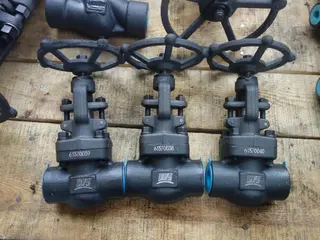
Forged steel globe valves are key devices in industrial piping systems used to control the on-off and regulate the flow of fluids. Its core working principle is realized by the vertical movement of the valve plug along the centerline of the valve seat. When the valve plug rises, the fluid passage opens; when the valve plug descends and presses against the valve seat, the fluid passage closes. Unlike common cast valves, forged steel globe valves are manufactured through a forging process. Forging is a processing method in which metal billets are plastically deformed by applying pressure. This process can eliminate tiny internal defects in the metal material, making the material structure denser and more uniform, thereby significantly improving the overall strength and service life of the valve.
The specification range of forged steel globe valves is relatively wide, with pressure ratings typically covering ANSI Class 150LB to 2500LB, and nominal diameters ranging from DN10 to DN500 (corresponding to NPS 1/2 inch to 36 inches). This broad range of specifications enables them to adapt to various applications from small equipment to large industrial pipelines.
Core Structural Features of Forged Steel Globe Valves
After understanding the basic concept of forged steel globe valves, let us look at their internal structure. The performance advantages of forged steel globe valves largely derive from their unique structural design, mainly including three key aspects: bonnet form, sealing process, and connection method.
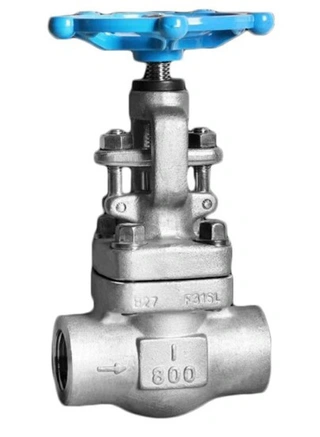
1. Bonnet Design Form
The bonnet design of forged steel globe valves mainly has three forms, each suitable for different working conditions:
- Bolted Bonnet: The valve body and bonnet are connected by bolts and nuts and sealed with a spiral-wound gasket (usually 316 stainless steel with flexible graphite material). This design is easy to disassemble and maintain, and is the most widely used structural form. For higher sealing requirements, a metal ring connection method can also be used.
- Welded Bonnet: The valve body and bonnet are connected by threading and then fully welded for sealing. This structure has excellent sealing performance and is suitable for high-pressure conditions. Under special requirements, a through-weld connection can also be used to further improve sealing reliability.
- Self-Sealing Bonnet: The valve body and bonnet are threaded, and sealing is achieved using an internal pressure self-sealing ring. The unique feature of this design is that the higher the system pressure, the better the sealing effect of the ring, making it particularly suitable for ultra-high-pressure conditions.
2. Sealing Surface Process
The sealing surface of forged steel globe valves is usually manufactured using Stellite cobalt-based hard alloy overlay welding technology. The advantages of this process include: high hardness of the sealing surface, good wear resistance; reliable sealing and strong shutoff capability; long service life and low maintenance cost.
3. Connection Method
To meet the requirements of different piping systems, forged steel globe valves offer multiple connection methods: flange connection, butt-weld connection, threaded connection, and socket-weld connection. Users can choose the appropriate connection type according to pipe material, pressure rating, and installation space.
Main Performance Advantages of Forged Steel Globe Valves
After understanding its features and advantages, let us look at the specific structure of forged steel globe valves. As a precision industrial device, its structural design directly determines operational performance and reliability.
1. High Strength and Durability
The forging process fundamentally improves the mechanical performance of the valve. Through forging, internal porosity and looseness of the metal material are compressed and eliminated, grain structure is refined, and the density and uniformity of the material are significantly improved. This allows forged steel globe valves to withstand higher working pressures and harsher working environments, operating stably under high-pressure conditions for long periods without deformation or rupture.
2. Excellent Sealing Performance
The sealing structure of forged steel globe valves is well-designed. Whether it is a metal-to-metal hard seal or a sealing seat using soft sealing materials, it can effectively prevent medium leakage. In particular, self-sealing structure valves have adaptive deformation of the sealing element as system pressure increases, enhancing the sealing effect and greatly improving system operation safety.
3. Precise Flow Regulation Capability
The change in the valve seat opening of a forged steel globe valve is proportional to the valve plug stroke, giving it good flow regulation capability. Operators can precisely adjust the flow of the medium in the pipeline by controlling the opening height of the valve plug, meeting the precise fluid control requirements of industrial production.
Compared with gate valves, the opening height of forged steel globe valves is usually only one-quarter of the valve seat diameter, with a short stroke, making operation more convenient and faster. At the same time, because the friction between the valve plug and the valve body sealing surface is smaller, the valve has better wear resistance and lower operating torque.
4. Good Temperature Adaptability
Forged steel globe valves have a wide operating temperature range, typically from -29°C to 550°C. The valve body material options include A105 carbon steel, F304 stainless steel, and other forged steel materials, allowing flexible selection according to medium properties and temperature requirements. This enables forged steel globe valves to adapt to various working conditions from low to high temperatures.
5. Easy Maintenance
Forged steel globe valves typically have only one sealing surface on the valve body and plug, making the structure relatively simple and convenient for field maintenance. When the sealing surface is worn, it can be repaired by grinding or re-overlay welding, extending valve life and reducing replacement costs.
Application Areas of Forged Steel Globe Valves
Forged steel globe valves have a very wide range of applications and can control various media: water, steam, oil, and other conventional media; corrosive media such as nitric acid and acetic acid; oxidizing media; fluids containing solid particles; low-viscosity media; and special chemical media such as urea. Main application industries include:
- Petrochemical Industry: In refining and chemical production, forged steel globe valves control the flow of various process media, ensuring safe and efficient production. Their reliable sealing performance and corrosion resistance make them particularly suitable for handling various chemicals.
- Power Industry: In thermal power plants and nuclear power plants, forged steel globe valves are important components of piping systems, regulating the flow of critical media such as water and steam to ensure stable operation of power generation systems. High-temperature and high-pressure steam conditions are typical applications for forged steel globe valves.
- Metallurgy Industry: In steelmaking and non-ferrous metal processing, forged steel globe valves control the delivery of cooling water, gas, compressed air, and other media, improving production efficiency and process reliability.
- Pharmaceutical Industry: In drug manufacturing, forged steel globe valves handle various pharmaceutical liquids and biological products, with excellent sealing performance to prevent contamination and meet hygiene standards.
- Hydraulic Engineering: Including hydropower stations, municipal water supply systems, and gas pipelines, forged steel globe valves regulate fluid flow to ensure efficient and stable system operation.
- Agricultural Irrigation: In modern agricultural irrigation systems, forged steel globe valves control water distribution and improve water use efficiency.
Key Considerations for Selecting Forged Steel Globe Valves
- Pressure Rating Selection: Choose a valve with a pressure rating suitable for the maximum working pressure of the piping system, with a safety margin. Forged steel globe valves have pressure ratings from 150LB to 2500LB; selection should refer to relevant design codes.
- Material Selection: Choose valve body material according to medium properties and working temperature. A105 carbon steel is suitable for general conditions; stainless steel is suitable for corrosive media and higher temperatures; special alloy steel can be used for extreme conditions.
- Actuation Method Selection: Forged steel globe valves can be manually, pneumatically, or electrically actuated. Manual operation is suitable for small-diameter valves or infrequent operation; pneumatic and electric actuators are suitable for large-diameter valves or for remote control and automation.
- Standards Compliance: High-quality forged steel globe valves should comply with GB/T12235, API 602, ASME B16.34, and other international or national standards to ensure product quality and interchangeability.
Installation and Maintenance of Forged Steel Globe Valves
After understanding the performance advantages and application scenarios of forged steel globe valves, proper installation methods and daily maintenance are equally important. Even the best equipment, if installed incorrectly or poorly maintained, cannot fully deliver value and may affect the safety and stability of the entire system.
1. Installation Requirements
Before installation, the valve should undergo necessary inspection and testing: perform a strength test at 1.5 times the nominal pressure to verify body pressure capacity; perform a tightness test at 1.1 times the nominal pressure to check sealing performance. During installation, pay attention to the direction of the medium; globe valves usually have clear inlet and outlet markings and must not be installed in reverse.
2. Daily Maintenance Points
- Regularly check sealing performance: Inspect the sealing condition of the valve plug and seat; address leaks promptly, and replace sealing components if necessary.
- Lubricate moving parts: Lubricate the valve stem and other moving components according to the prescribed cycle to reduce friction and ensure smooth operation.
- Regular cleaning and maintenance: Remove accumulated debris and contaminants inside the valve to prevent flow obstruction. Use appropriate tools and cleaning agents, following safety procedures.
- Monitor operating environment: Observe the valve’s working temperature, pressure, and medium characteristics to avoid exceeding design limits.
- Establish maintenance procedures: Develop a systematic inspection and maintenance plan for bolts, seals, bonnet, stem, and other key parts, adjusting maintenance cycles according to actual operating conditions.
3. Maintenance Precautions
During maintenance, ensure the valve is in the closed position to guarantee lubrication effectiveness and prevent medium leakage. For high-temperature and high-pressure systems, depressurize and cool down before maintenance to ensure operational safety.
Conclusion
Forged steel globe valves, with high strength, excellent sealing performance, precise flow control, and wide applicability, have become indispensable in petroleum and natural gas, power, chemical, metallurgy, pharmaceuticals, and many other industrial fields. Scientific and reasonable selection, standardized installation, and regular maintenance can ensure long-term stable operation, providing reliable safety and efficiency for industrial production.
When selecting forged steel globe valves, factors such as operating conditions, medium properties, pressure, and temperature parameters should be fully considered. Choose products that meet relevant standards and strictly follow installation and maintenance requirements to fully utilize their performance advantages, extend service life, and reduce total ownership costs.
Send your message to this supplier
Related Articles from the Supplier
Related Articles from China Manufacturers
Features of Forged Steel Cryogenic Globe Valves
- Dec 03, 2020

Knowledge of Forged Steel Cryogenic Globe Valves
- Feb 15, 2021

A brief introduction of forged steel globe valves
- Nov 15, 2018

End Connection of Forged Steel Globe Valves
- Jun 06, 2019
A brief introduction of forged steel globe valves
- Nov 15, 2018
End Connection of Forged Steel Globe Valves
- Jun 06, 2019
Related Products Mentioned in the Article

Zhejiang Kosen Valve Co., Ltd.
- https://www.kosenvalve.com/
- Business Type: Industry & Trading, Manufacturer,
Supplier Website
Source: https://www.kosenvalve.com/media-hub/forged-steel-globe-valves-feature-selection-application.html