
Temperature Regulation in Jacketed Plug Valves
In industrial production, many process media are extremely sensitive to temperature changes. High-viscosity crude oil, easily solidified asphalt, and temperature-sensitive syrups all share a common challenge: once temperature control fails during transportation, these materials may solidify, clog pipelines, or even damage equipment, leading to production shutdowns and safety risks. To address this issue, engineers have improved the traditional plug valve by adding an external jacket layer, giving the valve active temperature regulation capability. This specially designed valve is known as the jacketed plug valve.
The core value of a jacketed plug valve lies in its dual-layer structure, which enables precise temperature control. It maintains a stable thermal environment around the valve body, preventing the process medium from losing fluidity due to temperature drops, and allowing cooling regulation when necessary. In petrochemical, chemical, food processing, and other industries that handle high-viscosity or temperature-sensitive media, the jacketed plug valve has become a critical piece of equipment for ensuring continuous and stable operation.
Basic Concept and Working Principle of Jacketed Plug Valves
A jacketed plug valve is developed by adding an external jacket structure to a conventional plug valve, enabling temperature regulation through a dual-layer design. This section explains its definition, structural features, and temperature control mechanism.
1. What Is a Jacketed Plug Valve
A jacketed plug valve is a special type of valve that adds an external jacket to a standard plug valve. Its main function is not only to control the opening, closing, and flow of pipeline media but also to regulate the temperature of the valve body and internal medium through the external jacket.
This type of valve is widely used in industrial environments that require a stable temperature condition, especially in handling high-viscosity, easily solidified, or temperature-sensitive fluids. Unlike conventional valves, its core advantage is not only flow control but also thermal management.
By precisely controlling the heating or cooling medium within the jacket, the valve ensures that the internal process medium remains within a suitable temperature range, avoiding operational failures caused by temperature fluctuations.
2. Design Features of the Dual-Layer Structure
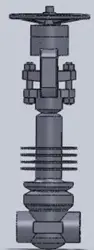
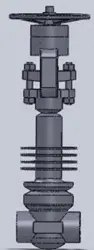
The jacketed plug valve adopts a dual-layer structural design. The inner layer is the plug valve body with flow channels responsible for opening, closing, and regulating flow. The outer layer is a fully enclosed jacket that forms an independent thermal control chamber.
Heating or cooling media such as steam, thermal oil, or cooling liquids can circulate within the jacket. This indirect heat exchange allows the valve body and internal process medium to be heated or cooled without direct contact.
This dual-layer structure ensures stable thermal conditions under varying operating environments. The jacket is completely isolated from the internal flow passage, preventing contamination or mixing between the process medium and thermal medium.
Depending on design requirements, the jacket may cover the entire valve body, only key areas such as the valve chamber, or extend to flange sections to ensure more uniform heating.
3. Basic Mechanism of Temperature Regulation
The principle of temperature control is based on heat conduction through the jacket wall. Heat from the heating medium is transferred to the valve body and internal fluid, or excess heat is removed through a cooling medium.
This continuous heat exchange keeps the process medium inside the valve in a stable flow state, preventing solidification or blockage.
During operation, the thermal medium circulates inside the jacket. By adjusting its flow rate, temperature, and pressure, the valve body temperature can be precisely controlled. This indirect heating or cooling method is both safe and efficient, meeting the temperature control requirements of most industrial applications.

Key Effects of Temperature Control on Valve Operation
Temperature control is not only essential for maintaining fluidity but also directly affects valve performance, sealing reliability, and service life. Low temperature can cause solidification and increased torque; high temperature can accelerate seal aging and waste energy; frequent fluctuations can cause thermal fatigue damage.
1. Problems Caused by Low Temperature
When jacket temperature is too low, the viscosity of the internal medium increases, reducing fluidity. This results in higher operating torque and difficulty in opening or closing the valve. In extreme cases, sticking or jamming may occur.
For high-viscosity media such as asphalt or wax, low temperatures may lead to complete solidification, causing blockages inside the valve and damaging sealing surfaces due to uneven stress distribution.
In many industrial operations, simply optimizing temperature control can significantly reduce long-term jamming issues in high-viscosity or crystallizing media systems.
2. Consequences of Excessive Temperature
When jacket temperature is too high, the first issue is energy waste, leading to increased operational costs. More importantly, excessive heat accelerates the aging of sealing components and may lead to seal failure.
High temperatures may also cause uneven thermal expansion of materials, generating structural stress and affecting the integrity of the valve body. In addition, some temperature-sensitive media may undergo chemical degradation, affecting product quality.
Therefore, temperature control must balance between preventing solidification and avoiding overheating.
3. Long-Term Harm of Temperature Fluctuations
Frequent temperature fluctuations are particularly damaging. They accelerate fatigue in valve components, reducing overall service life. Repeated thermal expansion and contraction can deform sealing surfaces, increasing the risk of leakage.
Temperature instability also affects process stability and product consistency. In temperature-sensitive production systems, even small variations can result in inconsistent product quality.
Key Factors Affecting Jacket Temperature
Effective temperature control requires understanding the factors that influence jacket performance. These include fluid properties, operating conditions, environmental influences, and system design.
1. Influence of Medium Physical Properties
The primary factor affecting jacket temperature is the physical nature of the process medium. Viscosity, freezing point, and boiling point determine the required operating temperature range.
High-viscosity fluids require higher temperatures to maintain flowability, while crystallizing media must be kept above their crystallization point. Specific heat capacity and thermal conductivity also influence heat transfer efficiency.
2. Operating Conditions and Environmental Factors
Operating conditions directly affect temperature stability. Changes in pipeline flow rate, pressure, and inlet/outlet temperature alter heat load requirements.
Environmental temperature is equally important. Cold environments increase heat loss, requiring higher heating input, while hot environments may require additional cooling capacity.
3. Temperature Control System and Structural Factors
The type of thermal medium and circulation efficiency significantly affect heat transfer performance. Steam systems, thermal oil systems, and cooling liquid systems each have different characteristics.
Valve design, material thermal conductivity, wall thickness, and jacket structure also influence heating uniformity and response speed. High conductivity materials allow faster response, while thicker walls improve stability but slow down temperature adjustment.
Methods and Operational Procedures for Temperature Control
In practice, jacket temperature control can be achieved through manual adjustment, automatic control, or PID control systems. Standardized procedures ensure stable and repeatable operation.
1. Manual Adjustment Method
Manual control is the simplest method, relying on manual valves to regulate thermal medium flow. It is cost-effective and simple but requires continuous operator monitoring.
This method is suitable for stable conditions with low temperature accuracy requirements but depends heavily on operator experience.
2. Automatic and PID Control Systems
Automatic control uses temperature sensors and actuators to maintain set values. When temperature deviates, the system automatically adjusts flow rate for stability.
More advanced PID control improves accuracy by using proportional, integral, and derivative calculations to dynamically correct temperature deviations. It is suitable for processes requiring strict temperature stability.
3. Standard Operating Procedure
Typical operation follows these steps:
- First, determine the target temperature range based on medium properties and process requirements, including upper and lower limits.
- Second, verify that heating or cooling systems and circulation pipelines are functioning properly.
- Third, ensure that temperature sensors and instruments are calibrated and accurate.
- Fourth, monitor temperature in real time and adjust flow gradually, avoiding sudden changes.
- Fifth, record data after stabilization to verify performance.
- Sixth, document all parameters for maintenance and future optimization.
Core Advantages of Jacketed Plug Valves
Jacketed plug valves are widely used due to several key advantages, including preventing solidification, extending service life, and improving safety and product quality.
1. Preventing Solidification and Blockage
The most important advantage is preventing high-viscosity or crystallizing media from solidifying inside the valve. By maintaining temperature above the pour point, the system avoids crystallization and blockage.
Stable thermal conditions also prevent uneven expansion and contraction, protecting internal components.
2. Extending Equipment Service Life
The jacket structure reduces thermal shock and protects seals and valve bodies from sudden temperature changes. Stable operation reduces material deposition and scaling, decreasing maintenance frequency.
As a result, downtime is reduced and overall service life is extended.
3. Improving Safety and Product Quality
Stable sealing performance reduces leakage risks, while precise temperature control ensures consistent product quality. In sensitive processes, this stability is critical for maintaining uniform product characteristics.
Comparison Between Jacketed and Conventional Valves
To understand the value of jacketed plug valves, it is useful to compare them with conventional valves in terms of structure, application, and cost.
1. Structural Differences
Conventional valves use a single-layer structure focused on flow control. Jacketed plug valves add an external layer that allows heating or cooling circulation.
This additional structure enables temperature regulation, which conventional valves lack.
2. Application Scenarios
Conventional valves may suffer from blockage when handling solidifying media. Jacketed plug valves solve this issue by maintaining stable temperature conditions.
However, in some cases, other valve types may offer better flow characteristics or sealing performance depending on application requirements.
3. Cost and Maintenance Considerations
Due to their more complex structure, jacketed plug valves are more expensive. They should only be used when temperature control is necessary.
However, in demanding environments, they often reduce long-term maintenance costs due to fewer blockages and less wear.
Main Application Areas
Jacketed plug valves are widely used in industries that require temperature control for viscous or sensitive media.
1. Petrochemical Industry
They are extensively used in oil extraction, transportation, and refining processes for crude oil, asphalt, and molten sulfur.
They are also used in chemical plants handling urea, caustic soda, and acid anhydrides under high-temperature conditions.
2. Food and Pharmaceutical Industries
In food processing, they are used for syrup, honey, and chocolate, where temperature control is essential for maintaining fluidity.
In pharmaceuticals, they ensure stable transport of temperature-sensitive intermediates.
3. Other Industrial Fields
They are used in resin, coating, and pigment industries where materials tend to solidify or increase in viscosity at lower temperatures.
They are also suitable for molten salt and low-temperature cooling applications.
Conclusion
The jacketed plug valve is a functional valve designed to solve flow problems under extreme temperature conditions. By combining a dual-layer structure with temperature control capability, it ensures stable and reliable transportation of high-viscosity and temperature-sensitive media.
Temperature control is the core of its performance. Proper regulation affects not only valve operation but also system safety, reliability, and product quality. Different control methods, from manual adjustment to PID automation, provide flexibility for various industrial requirements.
In practical applications, selection should consider medium characteristics, operating conditions, environmental factors, and cost efficiency. For demanding processes, the investment in jacketed plug valves delivers significant improvements in stability and maintenance efficiency. As industrial automation advances, temperature control technologies for such valves will continue to evolve, offering more reliable fluid control solutions across industries.
Send your message to this supplier
Related Articles from the Supplier

Temperature Regulation in Jacketed Plug Valves
- Jun 06, 2026
High-Temperature Ball Valves Material Selection
- Dec 17, 2025
Related Articles from China Manufacturers


Related Products Mentioned in the Article

Zhejiang Kosen Valve Co., Ltd.
- https://www.kosenvalve.com/
- Business Type: Industry & Trading, Manufacturer,
Supplier Website
Source: https://www.kosenvalve.com/media-hub/temperature-regulation-in-jacketed-plug-valves.html