
High Pressure Valve Design, Materials & Performance
High-pressure valves are important equipment used in industrial systems to control the flow of fluids, specifically designed to operate under extreme pressure conditions. Compared with ordinary valves, high-pressure valves can withstand pressures far higher than conventional working conditions and offer greater reliability in preventing leakage and equipment failure. In industries such as oil and gas extraction, chemical production, power supply, and water treatment, high-pressure valves play an irreplaceable role. The working environments in these industries are usually characterized by high pressure, high temperature, or strong corrosiveness. Ordinary valves cannot meet the usage requirements, and specially designed high-pressure valves must be used to ensure the safety and stability of the system. The basic working principle of high-pressure valves is to control the on/off state, flow rate, or flow direction of the medium in the pipeline by changing the position or state of internal valve components. According to specific functional requirements, high-pressure valves can achieve different states such as fully open, fully closed, or partially open, thereby meeting various process requirements.
Main Types of High-Pressure Valves
According to differences in structure and working principles, high-pressure valves can be divided into multiple types, each suitable for different working conditions.
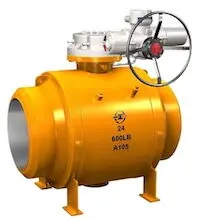
1. High-Pressure Ball Valves
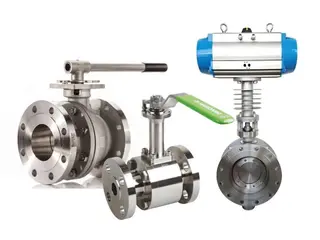
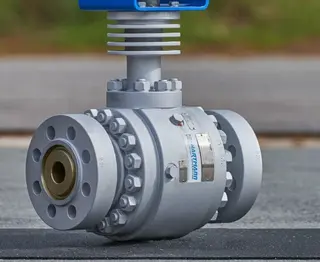
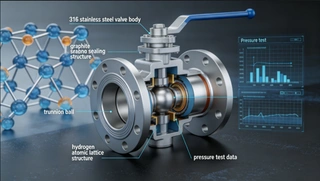
High-pressure ball valves use a ball with a through hole as the opening and closing element. By rotating the ball 90 degrees, full opening or full closing is achieved. The main characteristics of this type of valve are fast opening and closing speed and good sealing performance, making it especially suitable for occasions where rapid shutoff of the medium is required. High-pressure ball valves can also be used for throttling to a certain extent, but special attention must be paid to the compatibility between the material and the medium to prevent corrosion issues from affecting service life.
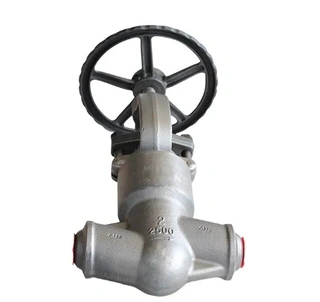
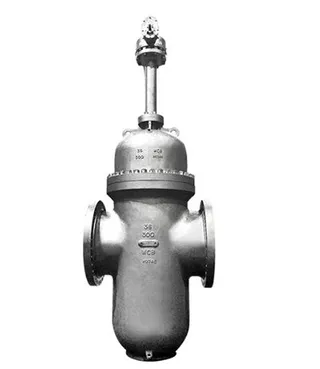
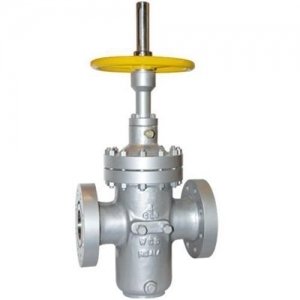
2. High-Pressure Gate Valves
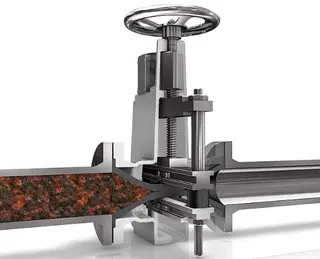
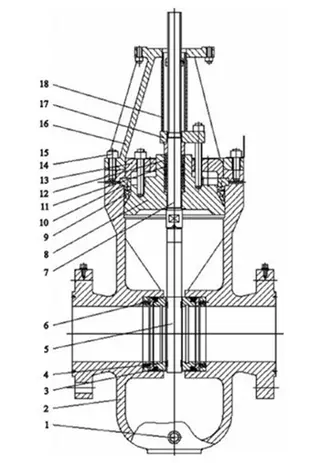
High-pressure gate valves control the opening and closing of the pipeline through the upward and downward movement of the gate. The flow passage is linear, and fluid resistance is very small when fully open. This type of valve is suitable for high-pressure pipeline systems that require complete opening or complete closing, but it is not suitable for throttling conditions. The operating speed of high-pressure gate valves is relatively slow, and regular maintenance is required to prevent the gate from sticking.
3. High-Pressure Globe Valves
High-pressure globe valves rely on the lifting and lowering of the valve disc to regulate the opening of the flow passage, offering good flow regulation capability. This type of valve is suitable for systems requiring precise flow control, such as steam systems and chemical process pipelines. It should be noted that the structure of high-pressure globe valves results in a relatively large pressure drop, so they are more suitable for control conditions rather than large-flow transmission applications.
4. High-Pressure Plug Valves
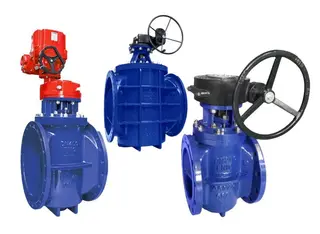
High-pressure plug valves use a cylindrical or conical plug with a hole as the opening and closing element, and operation is achieved through rotation. This type of valve has a compact structure and good sealing performance and is commonly used in chemical and petrochemical applications where installation space is limited and sealing requirements are high. However, the ability of high-pressure plug valves for fine regulation is relatively weak, and regular maintenance is required to ensure smooth operation.
5. Other Common Types
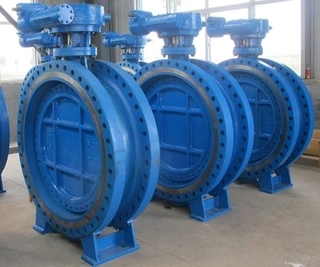
In addition to the four main types mentioned above, high-pressure check valves, high-pressure butterfly valves, high-pressure safety valves, and high-pressure needle valves are also commonly used in industry. Check valves are used to prevent backflow of the medium, butterfly valves are suitable for large-diameter pipelines, safety valves automatically release pressure when it exceeds limits to protect system safety, and needle valves are used in small-diameter applications requiring fine flow regulation.
Core Functions of High-Pressure Valves
High-pressure valves undertake multiple important functions in industrial systems, mainly including the following aspects:
- Start/Stop Control: By changing the position of internal valve structures, the opening or closing of medium flow is realized. This is the most basic function of high-pressure valves.
- Flow Regulation: By adjusting the opening degree of the valve, the flow rate of the medium in the pipeline is controlled to meet specific requirements of different process stages.
- Flow Direction Control: By using special structures such as check valves, the medium is ensured to flow only in one direction, preventing damage caused by backflow.
- Pressure Control: Through safety valves or relief valves, pressure is automatically released when system pressure exceeds the set value, preventing damage caused by overpressure.
- System Isolation: By closing specific valves, a certain part of the system is isolated from other parts, facilitating equipment maintenance or emergency handling.
In addition, some specially designed high-pressure valves can also achieve fluid mixing or diversion functions to meet more complex process requirements.
Key Design Considerations of High-Pressure Valves
The design of high-pressure valves needs to consider multiple key factors to ensure reliability and safety under harsh working conditions.
1. Material Selection
Material is the primary consideration in high-pressure valve design. Common materials include stainless steel (such as 304, 316, etc.), carbon steel, and various special alloys. These materials have excellent tensile strength, yield strength, and corrosion resistance. In extreme temperature or highly corrosive environments, high-performance materials such as Hastelloy, Monel, or Inconel alloys are also used. When selecting materials, emphasis should be placed on corrosion resistance and deformation resistance to ensure stable performance during long-term use.
2. Pressure Rating Matching
The rated pressure of the valve must be higher than the maximum working pressure of the system, with sufficient safety margin reserved to handle possible pressure fluctuations. The selection of pressure rating is directly related to the safety and service life of the valve and must not be neglected in the design process.
3. Temperature Adaptability
High-pressure valves must be able to operate stably under high or low temperature conditions. During design, full consideration must be given to the effects of thermal expansion and contraction caused by temperature changes to avoid deformation or sealing failure due to thermal stress.
4. Sealing Performance
Sealing is the core issue in high-pressure valve design. High-quality sealing elements and gaskets should be used, with commonly used materials including PTFE, graphite, and elastomers. Good sealing structures can effectively prevent medium leakage and avoid environmental pollution and safety accidents.
5. Flow Path Design
The shape and size of the flow path directly affect the flow state of the fluid. A reasonable flow path design should minimize turbulence and pressure drop as much as possible, achieving efficient and stable fluid transport while reducing energy consumption and noise.
Application Fields of High-Pressure Valves
High-pressure valves have a very wide range of applications, covering almost all industrial fields involving high-pressure fluid control.
- Oil and Gas Industry: Used in wellhead control, subsea systems, processing units, and pipeline transportation, capable of handling challenges brought by high pressure and complex environments.
- Chemical and Petrochemical Industry: Used to control the flow of various corrosive and reactive media, ensuring the safety and stability of process operations. Due to the diversity of chemical media, higher requirements are placed on valve material selection and sealing performance.
- Power Industry: In thermal power plants and nuclear power stations, high-pressure valves are used to regulate the flow and pressure of steam, water, and other media, serving as key equipment in boiler and turbine systems. Their reliability directly affects the safe operation of power generation systems.
- Water Treatment Field: Used to control water flow and related system operations, ensuring the stability and efficiency of the treatment process.
- Pharmaceutical and Biotechnology: Applied in high-performance liquid chromatography systems and reaction devices, with high requirements for material cleanliness and safety, usually requiring designs and materials that meet hygienic standards.
- Marine Engineering: Used in ballast water management, fuel processing, and steam systems, requiring resistance to seawater corrosion.
- Aerospace and Defense: Applied in fuel systems, hydraulic systems, and propulsion systems, requiring simultaneous performance under high pressure, extreme temperatures, and lightweight conditions.
Operation Methods of High-Pressure Valves
High-pressure valves can be operated manually or automatically.
1. Manual Operation
Manual operation is achieved through handwheels or levers. It has a simple structure and low cost and is suitable for occasions where frequent operation or remote control is not required. However, manual operation has limitations in large systems or hazardous environments, with higher labor intensity for operators and slower response speed.
2. Automatic Operation
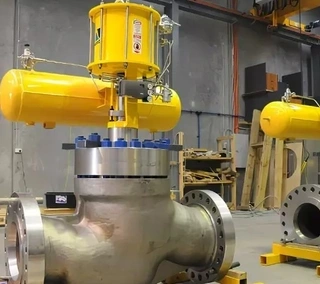
Automatic operation is achieved through actuators, mainly including electric, hydraulic, and pneumatic types. Electric actuators are convenient for integration with control systems and suitable for occasions requiring precise control and remote operation; hydraulic actuators provide large output torque and are suitable for large-size, high-pressure valves; pneumatic actuators have a simple structure, fast action, and do not produce electrical sparks, making them particularly suitable for flammable and explosive environments.
Automatic valves can operate through closed-loop or open-loop control systems, support analog or digital signal control, and are usually equipped with position indication devices so that operators can monitor the valve’s opening and closing status in real time.
Safety Standards and Specifications
The design, manufacturing, testing, and use of high-pressure valves must comply with multiple international standards and specifications to ensure product quality and system safety.
Common international standards include ASME (American Society of Mechanical Engineers), API (American Petroleum Institute), ISO (International Organization for Standardization), and EN (European Standards). These standards cover pressure classification, structural design requirements, leakage testing methods, and material selection specifications.
In addition, organizations such as MSS, NBBI, and NACE have also established relevant industry specifications to guide the manufacturing and application of high-pressure valves. Through third-party inspection and certification, it can be ensured that products meet standard requirements, thereby guaranteeing the safety and reliability of system operation.
In practical applications, high-pressure valves usually also need to have fail-safe designs, such as automatic reset functions in case of power failure, ensuring that the valve remains in a safe state when the control system fails.
Maintenance and Servicing
To ensure the long-term reliable operation of high-pressure valves, standardized maintenance and inspection must be carried out.
Regular inspection is the basis of maintenance work, mainly including checking the wear condition, corrosion degree, and leakage status of the valve. Through periodic inspection, potential problems can be identified in time, preventing small issues from developing into major failures.
Safety valves need to have their opening pressure calibrated regularly to ensure accurate operation when the system is overpressurized. Calibration should be performed by professionals, and calibration data should be recorded for reference.
Impurities or deposits may accumulate inside the valve, affecting its normal operation. Therefore, regular cleaning of the valve interior is required to keep the flow path unobstructed. This is especially important for valves transporting corrosive media.
When damage to sealing elements, packing, or other components is found, they should be replaced promptly to avoid leakage or valve sticking caused by component failure. Replacement parts should be of the same specifications as the original design to ensure that performance is not affected after maintenance.
Through scientific maintenance management, the service life of high-pressure valves can be effectively extended, system failure rates can be reduced, and the continuity and safety of industrial production can be ensured.
Conclusion
As indispensable core equipment in industrial systems, high-pressure valves play an important role in ensuring safe and efficient operation. Reasonable selection, scientific design, and standardized maintenance are of great significance for guaranteeing system safety and efficient operation.
With the continuous development of industrial technology, high-pressure valves are also continuously improving in materials, structures, and control technologies, enabling them to better meet increasingly complex working conditions.
When selecting high-pressure valves, factors such as the properties of the medium, working pressure and temperature conditions, control accuracy requirements, and installation environment should be fully considered to choose the most suitable valve type and specifications. At the same time, strict compliance with relevant standards and proper daily maintenance are necessary to fully utilize the performance advantages of high-pressure valves and ensure the long-term stable operation of industrial systems.
Send your message to this supplier
Related Articles from the Supplier
High Pressure Valve Design, Materials & Performance
- Apr 24, 2026
How Does a High Performance Butterfly Valve Work
- Dec 14, 2024
High-Temperature Ball Valves Material Selection
- Dec 17, 2025
What Is a High-Performance Butterfly Valve
- Apr 10, 2026
Related Articles from China Manufacturers
Related Products Mentioned in the Article

Zhejiang Kosen Valve Co., Ltd.
- https://www.kosenvalve.com/
- Business Type: Industry & Trading, Manufacturer,
Supplier Website
Source: https://www.kosenvalve.com/media-hub/high-pressure-valve-design-materials-performance.html