
What Is a High-Performance Butterfly Valve
In industrial pipeline systems, valves are key equipment for controlling fluid flow. As one of the common types, butterfly valves are widely used due to their simple structure and convenient operation. However, not all butterfly valves can cope with complex working conditions. When the operating environment becomes harsh, high-performance butterfly valves are required.
High-performance butterfly valves are rotary valves specially designed for severe service conditions. Compared with ordinary butterfly valves, they have significant improvements in sealing performance, pressure resistance, temperature range, and overall durability. These valves can handle corrosive media, high-temperature and high-pressure fluids, and other complex application scenarios, ensuring that the system can still operate stably under extreme conditions.
Simply put, if an ordinary butterfly valve is like a family sedan, then a high-performance butterfly valve is like an off-road vehicle—the former is suitable for daily smooth roads, while the latter can handle various complex terrains.
Core Structure of High-Performance Butterfly Valves
The most fundamental difference between high-performance butterfly valves and ordinary butterfly valves lies in the internal structure. Ordinary butterfly valves mostly adopt single-offset or centerline-type designs, where the valve stem is located at the center of the disc. This structure is simple and low-cost, but during opening and closing, there is significant friction between the disc and the seat, making it unsuitable for high-frequency operation.
High-performance butterfly valves adopt double-offset or triple-offset structures:
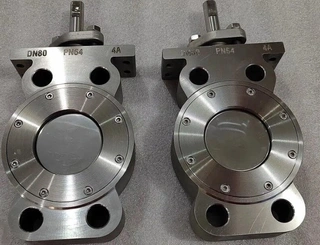
Double-offset structure means that the centerline of the valve stem is offset from both the centerline of the disc and the centerline of the valve body. This design allows the disc to quickly separate from the seat during opening, reducing friction.
Triple-offset structure adds a third offset on this basis—the sealing surface offset. This means that the sealing surface of the disc is a conical surface, and contact with the seat only occurs at the moment of full closure. This design fundamentally eliminates friction during opening and closing, greatly extending service life.
The advantages of the triple-offset structure are very obvious: the disc hardly contacts the seat during rotation, and only forms a seal at the final closing moment. This not only reduces wear but also achieves more reliable sealing performance, even reaching zero-leakage standards.
Material Selection for High-Performance Butterfly Valves
Material is a key factor determining valve performance. Ordinary butterfly valves usually use cast iron valve bodies with EPDM rubber sealing rings to control costs. This combination performs well in low-temperature and low-pressure water treatment applications, but becomes insufficient in high-temperature, high-pressure, or corrosive media conditions.
High-performance butterfly valves use more carefully selected materials:
Valve body materials mainly include carbon steel, stainless steel, or ductile iron. Carbon steel and stainless steel have excellent mechanical strength and corrosion resistance, enabling them to withstand higher pressure and temperature. Ductile iron, while maintaining good strength, also has better pressure resistance.
Sealing materials usually use PTFE (polytetrafluoroethylene). This material is known as the “king of plastics” and has extremely strong chemical stability, capable of resisting most acid and alkali corrosion, while also offering excellent temperature resistance. Under extreme high-temperature and high-pressure conditions, metal-to-metal sealing structures are also used to ensure sealing reliability.
Special alloys such as Inconel and other nickel-based alloys are also used in specific applications. These materials can resist strong oxidizing environments and extreme corrosive media.
The direct benefit of material upgrades is a comprehensive improvement in performance parameters. The operating temperature range of high-performance butterfly valves is usually from -28°C to 500°C, and some special models can even operate at higher temperatures. In comparison, the operating temperature range of ordinary butterfly valves is generally -28°C to 98°C, with a maximum not exceeding 250°C.
In terms of pressure resistance, high-performance butterfly valves can usually withstand a maximum working pressure of about 51 bar (740 psi), and specially designed models can reach even higher levels. Ordinary butterfly valves are generally only suitable for conditions up to about 14 bar (200 psi).
Core Characteristics of High-Performance Butterfly Valves
The reason why high-performance butterfly valves perform well in harsh conditions is due to their unique design and material advantages. These advantages are reflected in six key characteristics, each optimized for practical industrial pain points.
1. Low Torque Operation
High-performance butterfly valves require lower driving force during operation. This feature brings multiple benefits. In automated control systems, low torque means smaller actuators can be selected, reducing energy consumption and equipment cost. At the same time, lower operating force reduces wear of mechanical components and extends the service life of the entire system.
In continuously operating industrial scenarios, the low torque feature ensures that the valve can regulate flow smoothly without vibration or sticking due to excessive load.
2. Bidirectional Flow Control
Unlike ordinary butterfly valves, high-performance butterfly valves can effectively control fluid flow in both directions. This feature is particularly important in systems where flow direction frequently changes, such as certain water treatment devices or circulation pipeline systems.
Bidirectional control capability simplifies system design. There is no need to install separate valves or set bypass pipelines for different flow directions. This not only reduces material cost but also reduces potential failure points in the system, improving overall reliability.
3. Compact Structure Design
High-performance butterfly valves have a relatively simple structure, small size, and light weight. In industrial environments with limited space, this advantage is particularly prominent. For example, in ships, offshore platforms, or high-density industrial facilities, compact valve design can free up valuable space for other equipment.
At the same time, the simple structure also means convenient installation. In new projects or equipment retrofits, installation time can be significantly reduced, lowering construction costs.
4. Easy Maintenance
The internal structure of high-performance butterfly valves is designed with maintenance requirements in mind, making components easy to access and replace. In continuous production lines, equipment downtime means economic loss, and easily maintainable valves can significantly shorten repair time.
In addition, due to fewer moving parts and low friction, the probability of failure itself is lower. This makes maintenance planning more predictable, allowing enterprises to arrange inspection cycles reasonably and avoid unexpected shutdowns caused by sudden failures.
5. Wide Applicability
High-performance butterfly valves can adapt to various types of fluid media, from clean water, wastewater to oil products, chemical media, from low-temperature liquids to high-temperature steam, as long as appropriate material and structural configurations are selected.
This versatility allows enterprises to use standardized valve types across different systems, simplifying inventory management, reducing spare part variety and quantity, and lowering capital occupation.
6. Long Service Life and Low Maintenance Cost
Although the initial procurement cost of high-performance butterfly valves is higher than that of ordinary butterfly valves, from a life-cycle perspective, they are often more economical. Longer service life, lower failure rate, and fewer maintenance requirements all contribute to reducing total cost of ownership.
In continuous production industries such as chemical and power generation, the cost saved from avoiding one unplanned shutdown often exceeds the price difference of the valve itself.
Main Applications of High-Performance Butterfly Valve
The excellent performance of high-performance butterfly valves makes them play an important role in multiple key industries:
- Oil and gas industry: used to control the transportation of crude oil, natural gas, and refined oil products. These media often have high pressure and flammable/explosive characteristics, requiring extremely high sealing performance and reliability. High-performance butterfly valves can operate stably in pump stations, metering stations, and storage and transportation facilities of long-distance pipelines.
- Chemical industry: used to handle large amounts of corrosive, toxic, and hazardous media. The metal sealing structure of triple-offset high-performance butterfly valves can withstand strong acid and alkali corrosion while achieving zero leakage, protecting the environment and personnel safety.
- Power industry: used in steam systems, cooling water systems, and flue gas treatment systems. These scenarios involve high-temperature, high-pressure steam or corrosive flue gas, which ordinary valves cannot handle.
- Food and pharmaceutical industry: although the operating conditions are not as severe as in the chemical industry, hygiene requirements are extremely high. The precise sealing and smooth surface of high-performance butterfly valves make them easy to clean and disinfect, meeting sanitary standards.
- Water treatment industry: in large municipal water supply and industrial wastewater treatment, high-performance butterfly valves are used for flow regulation and shut-off control. Their bidirectional sealing characteristics are particularly useful in such applications.
- Shipbuilding and marine engineering: due to limited space and harsh environments, compact and durable high-performance butterfly valves are ideal, used in ballast water systems, fuel systems, and cooling systems.
High-Performance vs. Standard Butterfly Valves
|
Comparison Factor |
Standard Butterfly Valve |
High-Performance Butterfly Valve |
|
Structural design |
Concentric or single-offset |
Double-offset or triple-offset |
|
Typical materials |
Cast iron, rubber seal |
Carbon steel/stainless steel, PTFE/metal seal |
|
Temperature range |
-28°C to 98°C (up to 250°C max) |
-28°C to 500°C (or higher) |
|
Pressure rating |
Up to ~14 bar |
Up to ~51 bar or higher |
|
Sealing performance |
Moderate, slight leakage possible |
Zero leakage achievable |
|
Corrosion resistance |
Limited |
Suitable for highly corrosive media |
|
Service life |
Shorter, frequent maintenance |
Long service life, low maintenance |
|
Operating conditions |
Low pressure, clean media |
Severe service conditions |
|
Initial cost |
Low |
Higher |
|
Lifecycle cost |
Higher |
Lower |
The choice of which butterfly valve to use depends on the specific application scenario. For systems such as water treatment and HVAC under normal temperature and pressure conditions, ordinary butterfly valves offer better cost-effectiveness. However, when the working conditions involve high temperature, high pressure, corrosive media, or require zero leakage, high-performance butterfly valves are the only reliable choice.
Selection Recommendations for High-Performance Butterfly Valves
When selecting high-performance butterfly valves, the following factors should be considered:
- Clearly define operating conditions: including medium type, temperature range, working pressure, and flow requirements. These parameters directly determine valve material and structural selection.
- Determine sealing level requirements: for hazardous media or environmentally strict applications, triple-offset metal-seated structures capable of zero leakage should be selected.
- Consider operating frequency: high-frequency opening and closing conditions are more suitable for low-torque high-performance butterfly valves to reduce wear and energy consumption.
- Evaluate life-cycle cost: not only consider purchase cost, but also installation cost, maintenance cost, downtime loss, and service life.
- Select reliable suppliers: industrial valve quality directly affects system safety, so manufacturers with relevant qualifications and good track records should be chosen.
Conclusion
High-performance butterfly valves represent the development direction of butterfly valve technology. Through innovative eccentric structure design and high-quality material applications, they overcome the performance limitations of traditional butterfly valves under severe working conditions.
Although the initial investment is relatively high, the improved reliability, reduced maintenance cost, and extended service life make them a wise choice in critical industrial applications.
With the increasing level of industrial automation and stricter environmental requirements, the application scope of high-performance butterfly valves will continue to expand. For engineers and procurement personnel, a deep understanding of their characteristics and advantages will help make more reasonable technical decisions in projects and ensure long-term stable system operation.
Send your message to this supplier
Related Articles from the Supplier
What Is a High-Performance Butterfly Valve
- Apr 10, 2026
What is a Duplex Spring Safety Valve?
- Sep 17, 2025
What Is a Thermodynamic Steam Trap
- Jan 22, 2026
What is Explosion-Proof Electric Ball Valve
- Dec 22, 2025
What is Bimetallic Steam Trap?
- Dec 26, 2025
What is Dual Plate Wafer Check Valve
- Jan 05, 2026
Related Articles from China Manufacturers
What is a High Pressure Gate Valve?
- Aug 13, 2020

What Is a High-Quality Liquid Oxygen Storage Tank?
- Sep 09, 2025
What is a tumble shot blasting machine?
- Apr 09, 2019
What is a Cold Forged Stainless Steel Wing Nut?
- Sep 06, 2024

What Is a Floating PV Plant?
- Feb 21, 2022

What Is A Labyrinth Seal?
- Apr 18, 2022
Related Products Mentioned in the Article



Zhejiang Kosen Valve Co., Ltd.
- https://www.kosenvalve.com/
- Business Type: Industry & Trading, Manufacturer,
Supplier Website
Source: https://www.kosenvalve.com/media-hub/what-is-a-high-performance-butterfly-valve.html