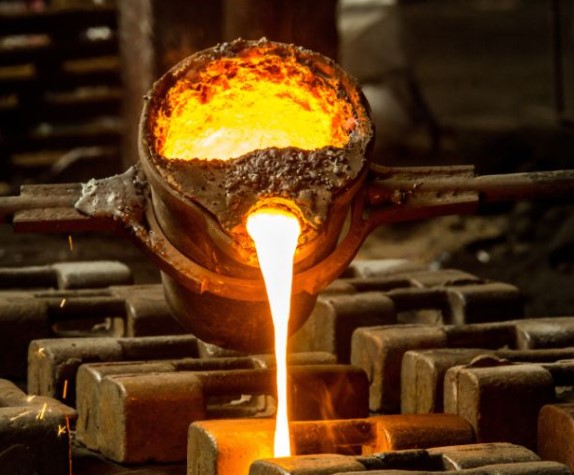
In the realm of industrial manufacturing, the selection of materials directly impacts the performance, service life, and safety of equipment. Aluminum bronze casting, as a well-established copper alloy processing technology, has become an indispensable production method across numerous critical industries, owing to the exceptional characteristics of the material itself and its inherent process flexibility. From marine propellers to oil and gas valves, from cryogenic engineering equipment to non-magnetic precision instruments, aluminum bronze castings consistently demonstrate reliable performance under a wide variety of demanding operating conditions.
This article provides a detailed introduction to aluminum bronze casting, encompassing the fundamental composition and classification of aluminum bronze grades, its core performance advantages, key control points in the casting process, its primary application fields, and the distinctions between it and other bronze alloys. By systematically organizing this knowledge, this guide aims to offer readers a comprehensive understanding of the technical characteristics of aluminum bronze casting, thereby serving as a reference for material selection and process optimization.
- What is Aluminum Bronze: Aluminum bronze is a copper-based casting alloy that utilizes copper as its matrix and aluminum as its primary alloying element. In addition to these base components, small quantities of nickel and iron are typically added to further enhance the material's corrosion resistance and mechanical properties. This alloy generally complies with the BS 1400 standard and is one of the most widely used engineering materials in the metal casting industry. Owing to its outstanding comprehensive properties and strong process adaptability, aluminum bronze has become a vital material choice for high-performance engineering castings. Whether the application demands high strength, corrosion resistance, or adaptability to specific environmental conditions, aluminum bronze offers a reliable solution.
- Classification of Aluminum Bronze Grades: Based on the aluminum content, aluminum bronze can be categorized into several grades, with the most common being AB1 and AB2. Different grades exhibit slight variations in their mechanical and physical properties, allowing users to select the most suitable grade according to specific operational requirements. Although the compositional ratios differ among grades, they all share the collective advantages inherent to the aluminum bronze family, including high strength, corrosion resistance, wear resistance, and excellent castability.
- Applicable Casting Processes: Aluminum bronze is amenable to a variety of casting techniques, primarily including sand casting, shell moulding, investment casting, and die casting. This extensive process adaptability enables aluminum bronze to meet the demands of producing castings with diverse shapes, sizes, and precision requirements. In industries such as shipbuilding, marine engineering, oil and gas, petrochemicals, and heavy equipment manufacturing, aluminum bronze castings are extensively utilized due to their reliable performance and flexible processing methods.
The advantages of aluminum bronze—including high strength and wear resistance, outstanding corrosion resistance, non-sparking safety characteristics, adaptability to low-temperature environments, and low magnetic permeability coupled with tarnish resistance—collectively constitute its irreplaceable value in industrial applications.
Aluminum bronze possesses the highest strength and toughness among all copper-based alloys. Its as-cast tensile strength typically reaches 500–590 MPa, with mechanical properties approaching those of ordinary low-carbon steel, while still retaining the inherent corrosion resistance characteristic of copper alloys. In terms of wear resistance, aluminum bronze performs admirably and can be further enhanced through appropriate heat treatment processes to increase hardness and abrasion resistance. This property makes it particularly suitable for manufacturing mechanical components that endure long-term friction and wear, such as bearings, gears, bushings, and worm gears. In extending equipment service life and reducing maintenance costs, aluminum bronze offers distinct advantages.
Corrosion resistance stands as one of the most remarkable features of aluminum bronze. The aluminum present in the alloy reacts with oxygen in the air to form a tenacious and dense protective layer of aluminum oxide on the material's surface. This protective film effectively resists the corrosive attack of seawater, chlorine-containing media, and various other aggressive environments. Aluminum bronze exhibits exceptional resistance to stress corrosion cracking and erosion-corrosion, enabling long-term, stable operation even in harsh conditions. Furthermore, aluminum bronze effectively resists cavitation corrosion; even in pumps with impeller peripheral speeds as high as 45 m/s, aluminum bronze impellers maintain excellent cavitation resistance, thereby extending equipment service life. Additionally, aluminum bronze possesses inherent biofouling inhibition properties, effectively preventing the attachment and growth of algae, barnacles, and other marine organisms on the material's surface. This characteristic confers a unique advantage in marine environments.
Aluminum bronze does not produce sparks during impact or friction, making it highly suitable for working environments where flammable or explosive risks exist. In the oil and gas industry, mining, aerospace, petrochemicals, and other hazardous industrial sectors, aluminum bronze is extensively used in the manufacture of various tools, valves, pumps, and critical equipment components. The combination of non-sparking performance and outstanding corrosion resistance enables aluminum bronze to operate safely and reliably in corrosive environments that also present fire or explosion hazards, significantly enhancing the safety of equipment operation and on-site activities.
Temperature adaptability represents a significant advantage of aluminum bronze. Copper-based alloys are inherently well-suited for low-temperature service; as temperatures decrease, their physical properties—including tensile strength, elastic modulus, and fatigue strength—do not degrade but rather tend to improve. Aluminum bronze does not suffer from low-temperature embrittlement and maintains excellent mechanical properties even at cryogenic temperatures approaching that of liquid helium. Consequently, aluminum bronze finds broad application in cryogenic engineering and the manufacture of ultra-low temperature equipment, particularly in low-temperature valves and associated components for liquefied natural gas, liquid oxygen, liquid nitrogen, and other liquefied gas transport systems.
Aluminum bronze exhibits extremely low magnetic permeability. Through judicious adjustment of the alloy composition, its magnetic permeability can be controlled to below 1.05, with some grades even achieving values lower than 1.01. This property renders it an important material for manufacturing non-magnetic instruments, critical components for minesweepers, naval vessel equipment, and other precision devices requiring low magnetic characteristics. In terms of aesthetic performance, aluminum bronze is one of the finest copper alloys in terms of resistance to tarnishing and discolouration. Even after prolonged exposure to atmospheric conditions, its surface maintains a stable metallic lustre and does not readily oxidize to affect appearance. Therefore, in addition to industrial uses, aluminum bronze is also commonly employed in architectural decoration, artistic works, and other applications where aesthetic quality is of importance.
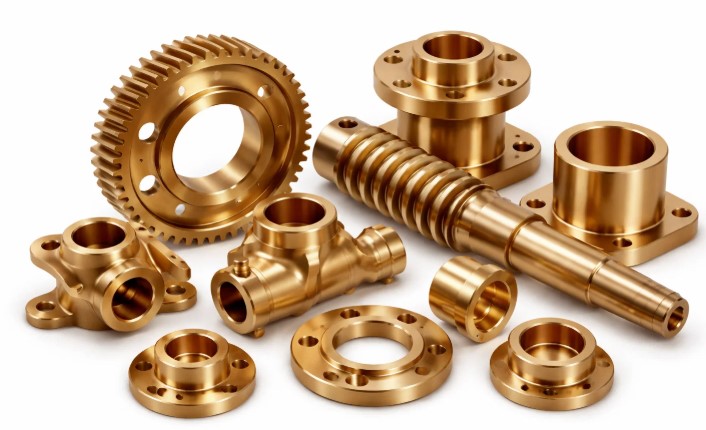
It is now necessary to address the key considerations in the aluminum bronze casting process. These considerations include melting and pouring control, cooling rate management, heat treatment process optimization, and welding and repair techniques—each of which is a critical link in ensuring the quality of aluminum bronze castings.
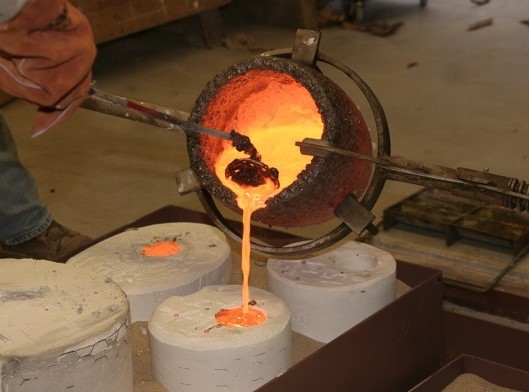
From a casting process perspective, aluminum bronze exhibits good castability. Owing to its narrow solidification temperature range, it maintains relatively uniform and consistent microstructure and properties across castings of varying wall thicknesses, facilitating the production of high-quality, geometrically complex castings with significant dimensional variations. However, in actual production, stringent control over melting and pouring procedures is essential. The formation of oxide inclusions must be prevented during melting, as these impurities severely compromise the internal quality and mechanical properties of the casting. Operators must master the appropriate melting temperature and duration to ensure homogeneity of the alloy composition and to prevent elemental burn-off.
Proper control of the cooling rate is a critical factor in obtaining high-quality aluminum bronze castings. The cooling rate directly influences grain size, microstructural morphology, and the ultimate properties of the casting. Both excessively rapid and overly slow cooling can lead to defects or substandard performance. For castings of varying wall thicknesses and configurations, corresponding cooling protocols should be established to ensure the development of a sound internal structure and optimized overall properties. For large, geometrically complex castings, particularly careful design of the gating system and cooling process is required.
Aluminum bronze castings can be further improved through heat treatment. Appropriate heat treatment enhances the material's wear resistance and overall mechanical properties, enabling castings to better fulfil service requirements. However, heat treatment process parameters—including heating temperature, holding time, and cooling method—must be rationally controlled to avoid distortion of the casting. Post-heat-treatment quality inspection should be conducted to ensure that properties meet design specifications. Residual stresses generated during machining or welding can also be relieved through annealing. Annealing promotes a more homogeneous microstructure in the heat-affected zone, thereby restoring material properties and enhancing the dimensional stability, reliability, and service life of components.
Aluminum bronze exhibits good weldability—a significant advantage not shared by many high-strength alloys. Even after casting and subsequent service, aluminum bronze components can be repaired by welding. When localized wear or damage occurs due to prolonged equipment operation, it is often unnecessary to replace the entire part; serviceability can be restored simply by employing welding techniques. In many instances, aluminum bronze components can be repaired on-site without disassembly. This not only reduces maintenance costs but also effectively minimizes equipment downtime, thereby improving operational efficiency and production continuity.
Leveraging its excellent comprehensive properties, aluminum bronze plays a critical role in numerous key sectors, including marine and offshore engineering, the oil and gas industry, cryogenic engineering equipment, and special safety-critical environments.
In shipbuilding and marine engineering, aluminum bronze is widely employed in the manufacture of critical components such as marine propellers, underwater fasteners, valves, pump bodies, and high-speed centrifugal pump impellers. These components are immersed in seawater for prolonged periods, demanding materials with exceptionally high corrosion resistance and strength. The biofouling inhibition properties of aluminum bronze effectively minimize the attachment of marine organisms to equipment surfaces, reducing maintenance frequency. Its resistance to cavitation corrosion also makes it an ideal material for high-speed pump impellers.
Aluminum bronze finds extensive application in the oil and gas sector. Pumps, valves, pipelines, and offshore drilling platform equipment within this industry are typically subjected to sustained high pressures, corrosive media, and complex operating conditions, requiring materials with outstanding strength and reliability. Aluminum bronze meets these rigorous demands, and its non-sparking characteristics provide irreplaceable safety value in flammable and explosive environments. In harsh conditions such as those encountered in petrochemical and petroleum refining operations, aluminum bronze maintains an extended service life.
Because aluminum bronze not only retains but actually improves its properties at low temperatures, and because it does not suffer from low-temperature embrittlement, it is extensively used in cryogenic valves and associated equipment for liquefied gas transport systems handling LNG, liquid oxygen, and liquid nitrogen. In the field of cryogenic engineering and ultra-low temperature equipment manufacturing, the reliability and safety of aluminum bronze have been long established, making it an important structural material for cryogenic service.
The low magnetic permeability of aluminum bronze renders it irreplaceable in specialized industrial sectors. In minesweepers, naval vessel equipment, non-magnetic instruments, and high-magnetic-field environments such as those near hospital MRI equipment, aluminum bronze is frequently used in the manufacture of various components and tools to ensure operational accuracy and safety. In mining, aerospace, and transportation industries, the non-sparking property of aluminum bronze also makes it the material of choice for safety tools and critical components.
Having gained a comprehensive understanding of the properties and applications of aluminum bronze, it is necessary to compare it with other bronze alloys to facilitate more accurate material selection decisions.
While aluminum bronze and other types of bronze alloys all belong to the copper-based alloy family, the addition of aluminum imparts distinctly different properties and application ranges. Different types of bronze typically incorporate elements such as tin, silicon, manganese, or aluminum to meet varying service requirements. The most distinguishing feature of aluminum bronze lies in its combination of high strength and outstanding corrosion resistance. Compared with tin bronze, aluminum bronze exhibits superior strength and seawater corrosion resistance; compared with silicon bronze, aluminum bronze offers advantages in wear resistance and load-bearing capacity.
For equipment and components requiring the conveyance of corrosive media, long-term immersion in water, or service in marine environments, aluminum bronze is a particularly suitable choice. In shipbuilding, marine engineering, chemical processing equipment, and the oil and gas industry, the application of aluminum bronze is especially prevalent. If a project imposes special requirements for material strength, corrosion resistance, non-sparking properties, or low magnetic characteristics, aluminum bronze is typically the preferred material. Its good weldability and repairability also facilitate ease of maintenance over the equipment's lifecycle.
Aluminum bronze, by virtue of its outstanding adaptability and long-term, stable application performance, has become an ideal material choice for numerous industries, including aerospace, oil and gas, shipbuilding, chemical processing, and transportation. The aluminum content determines the grade of aluminum bronze and imparts different mechanical and physical properties to the material. Overall, aluminum bronze combines high strength, excellent corrosion resistance, good thermal and electrical conductivity, and superior wear resistance, constituting a high-performance copper alloy capable of meeting demanding service conditions. Its favourable castability, weldability, and repairability further enhance its competitiveness in industrial applications.
If you are in the process of selecting an appropriate alloy material for a metal casting project, aluminum bronze, with its outstanding comprehensive properties, proven durability, and mature processing technologies, warrants serious consideration as a material option. Through proper casting process control and subsequent heat treatment, aluminum bronze castings can deliver long-term, stable performance in a variety of severe environments, providing a solid guarantee for the safety and reliability of equipment.
