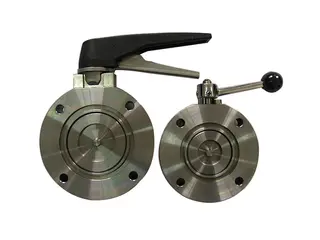
Vacuum valves are essential for controlling gas flow, isolation, and pressure regulation in vacuum and low-pressure systems used across industrial and scientific applications. Designed to operate under high vacuum or ultra-high vacuum conditions, they ensure precise control of gas evacuation, chamber isolation, and system protection. Known for their tight sealing performance, low leakage rates, and reliable operation in sensitive environments, they are widely used in semiconductor manufacturing, laboratory systems, chemical processing, coating equipment, and vacuum engineering applications.
CNMFRS.com offers a comprehensive selection of vacuum valve solutions designed for different vacuum levels and process requirements. The range includes angle valves, straight-through vacuum valves, bellows-sealed valves, gate-type vacuum valves, and pneumatic or manual actuation configurations. These valves are available in materials such as stainless steel, aluminum alloy, and corrosion-resistant specialty metals, with advanced sealing options including PTFE and elastomer-based components to ensure stable performance under demanding vacuum conditions.
As a leading vacuum valves online marketplace in China, CNMFRS.com connects global buyers with trusted Chinese manufacturers and suppliers offering high-quality vacuum valves engineered for precision control, leak-tight performance, and long-term operational reliability.
Explore our comprehensive range of vacuum valves, available in multiple types, standards, materials, sizes, pressure ratings, actuation options, and sealing configurations to meet the requirements of diverse vacuum and low-pressure industrial systems.
Vacuum Valves Product List
Vacuum valves are specialized flow control components designed to regulate, isolate, and maintain vacuum conditions within a system. Unlike conventional valves that operate under positive pressure, vacuum valves are engineered to function efficiently in low-pressure or near-zero pressure environments where maintaining system integrity, leak-tight sealing, and minimal outgassing are critical.
They are widely used in semiconductor manufacturing, laboratory research, vacuum coating systems, pharmaceutical processing, aerospace testing, and other high-precision industrial applications where controlled vacuum environments are essential.
Functions of Vacuum Valves
Vacuum valves are mechanical devices that control the movement of gases between different sections of a vacuum system or between a vacuum chamber and the atmosphere. Their primary function is to:
- Isolate vacuum chambers
- Regulate vacuum levels
- Protect sensitive equipment from contamination
- Enable controlled venting and pumping cycles
They are designed with extremely tight sealing tolerances to prevent even microscopic leaks that could disrupt vacuum stability.
Key Design Requirements and Material Considerations
Vacuum service places strict demands on valve design and material selection:
1. Leak-Tight Construction
Vacuum valves must maintain ultra-low leakage rates, often measured in mbar·L/s or Torr·L/s. This requires:
- Precision-machined sealing surfaces
- High-quality elastomer or metal seals
- Minimal internal clearances
2. Low Outgassing Materials
Materials are selected to minimize the release of trapped gases:
- Stainless steel (commonly 304 or 316L)
- Aluminum alloys (for lightweight systems)
- Fluoropolymers such as PTFE for seals
3. Thermal and Chemical Stability
Vacuum systems often operate under varying temperatures and exposure to reactive gases, requiring materials that remain stable without deformation or contamination.
Structure and Main Components of Vacuum Valves
Although designs vary, most vacuum valves share a similar structural architecture:
- Valve body: Forms the pressure boundary and is typically made of stainless steel or aluminum.
- Actuator (manual, pneumatic, or electric): Controls valve opening and closing.
- Sealing element: May include elastomer O-rings, bellows, or metal seals depending on vacuum level.
- Gate, poppet, or butterfly mechanism: Determines flow control method.
- Bellows assembly (in high-vacuum valves): Provides stem sealing without dynamic leakage.
- Flanges or connectors: Standard interfaces such as KF, CF, or ISO flanges for system integration.
Working Principle of Vacuum Valves
Vacuum valves operate by controlling molecular or rarefied gas flow rather than conventional fluid flow. Their operation focuses on maintaining pressure differentials while preventing backstreaming or contamination.
- In isolation mode, the valve completely seals off a section of the vacuum system.
- In control mode, it regulates gas flow between chambers or pumps.
- In venting mode, it allows controlled introduction of atmospheric air or inert gases.
The design ensures minimal disturbance to vacuum conditions during operation.
Common Types of Vacuum Valves
Vacuum systems use several specialized valve designs depending on pressure range and application:
- Vacuum Gate Valves: Used in high and ultra-high vacuum systems, gate valves provide a straight-through flow path with minimal conductance loss.
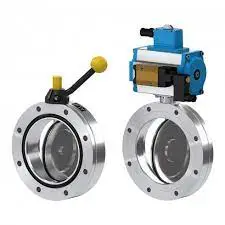
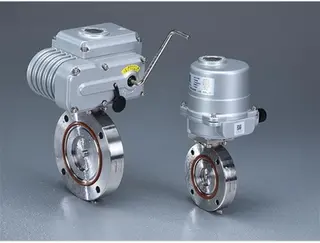
- Vacuum Butterfly Valves: Compact and lightweight, these are commonly used in rough and medium vacuum applications for flow throttling.
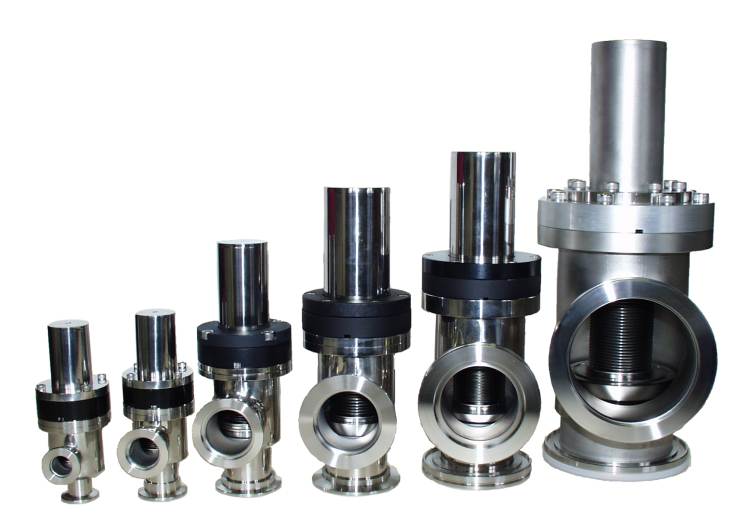
- Vacuum Angle Valves: Designed to change flow direction while maintaining vacuum integrity, often used in pump isolation and venting lines.
- Vacuum Ball Valves: Used in rough vacuum systems where quick shutoff is required, though not ideal for ultra-high vacuum due to potential leakage paths.
- Bellows-Sealed Valves: These use a metal bellows to isolate the stem from the vacuum environment, eliminating dynamic sealing leakage.
Applications of Vacuum Valves
Vacuum valves are essential in systems requiring controlled low-pressure environments:
- Semiconductor fabrication (etching, deposition, lithography)
- Thin-film coating (PVD, CVD processes)
- Laboratory vacuum systems and research equipment
- Vacuum furnaces and heat treatment systems
- Aerospace simulation chambers
- Pharmaceutical freeze-drying (lyophilization)
- Electron microscopy and analytical instruments
Their role is critical in maintaining process purity and operational stability.
Advantages of Vacuum Valves
Vacuum valves offer several performance advantages:
- Extremely low leakage rates
- High reliability in precision environments
- Compatibility with cleanroom standards
- Resistance to contamination and particle generation
- Long service life under cyclic vacuum conditions
Ability to operate across wide pressure ranges (rough to ultra-high vacuum)
Vacuum Valve Limitations and Considerations
Despite their advanced design, vacuum valves have certain constraints:
- Higher cost compared to standard industrial valves
- Sensitive to contamination and improper handling
- Require precise installation and alignment
- Elastomer seals may degrade under high radiation or extreme temperatures
- Maintenance often requires cleanroom conditions in high-end applications
Proper selection and maintenance are essential for maintaining system integrity.
Vacuum valves are highly specialized components designed to maintain and control vacuum environments with extreme precision. Their advanced sealing technologies, specialized materials, and engineered structures make them indispensable in high-tech industries such as semiconductors, aerospace, and scientific research. While more complex and costly than conventional valves, their role in ensuring system purity, stability, and performance is critical in modern vacuum-based technologies.