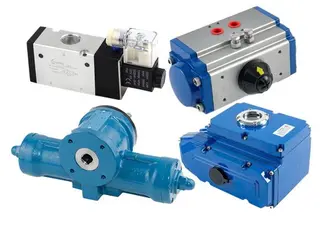
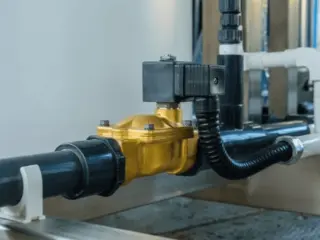
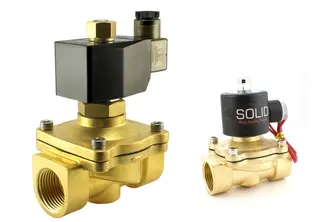
Solenoid valves are essential for fast, automated control of liquids and gases in industrial and commercial fluid systems. Operating through an electromagnetic coil that opens or closes the valve mechanism, they provide rapid response, precise switching, and reliable repeatability. Known for their compact design, automation compatibility, and efficient operation, they are widely used in water treatment, HVAC systems, oil and gas, chemical processing, pneumatic systems, and industrial automation applications.
CNMFRS.com offers solenoid valve solutions designed for different media types, pressures, and control requirements. The range includes direct-acting, pilot-operated, and semi-direct solenoid valves, available in normally open and normally closed configurations. These valves are manufactured in materials such as stainless steel, brass, and engineered polymers, with coil voltage options including AC and DC variants to suit diverse electrical and system integration needs.
As a leading solenoid valves online marketplace in China, CNMFRS.com connects global buyers with trusted Chinese manufacturers and suppliers offering high-quality solenoid valves engineered for fast response, reliable automation, and stable performance in industrial control systems.
Explore our comprehensive range of solenoid valves, available in multiple types, materials, sizes, pressure ratings, voltage options, port configurations, and sealing materials to meet the demands of diverse automated fluid control applications.
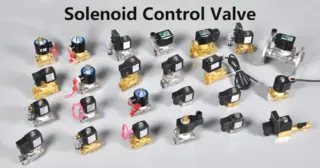
Solenoid Valves Product List
Solenoid valves are electromechanically operated control devices used to regulate the flow of liquids or gases in a piping or tubing system. They function by converting electrical energy into mechanical motion through a solenoid coil, which actuates a valve mechanism to open or close flow paths. Because of their fast response, high reliability, and automation compatibility, solenoid valves are widely used in industrial automation, fluid control systems, HVAC, medical devices, and process engineering.
The Role of Solenoid Valves
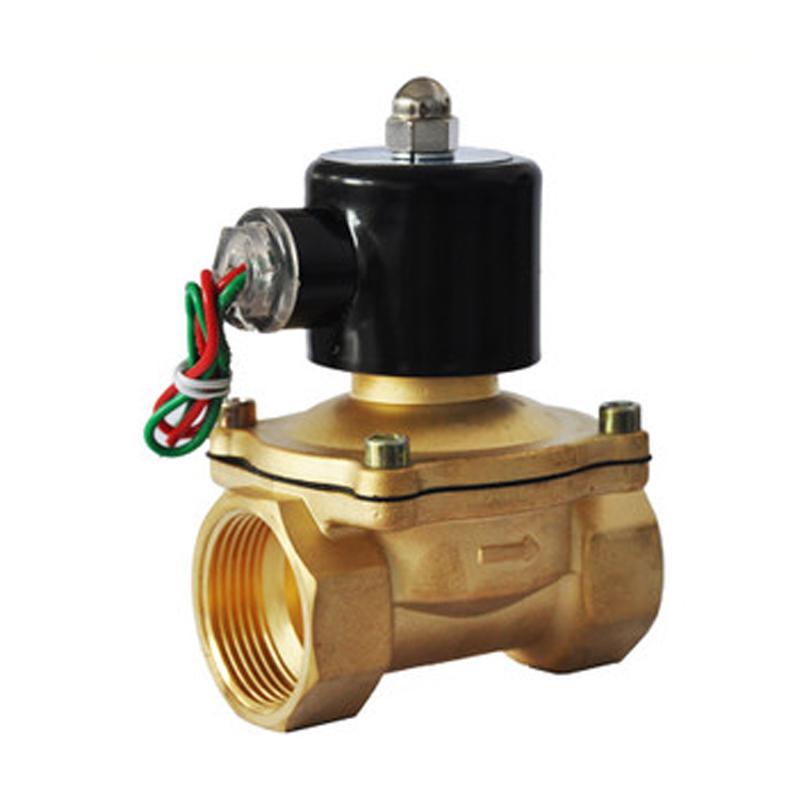
A solenoid valve is a type of electrically controlled valve that uses an electromagnetic coil (solenoid) to move a plunger or armature, which in turn controls the opening or closing of the valve orifice.
Their primary functions include:
- Starting or stopping fluid flow
- Directing flow between ports
- Automating fluid control processes
- Providing safety shutoff in emergency systems
They are fundamental components in modern automated fluid systems where remote or programmable control is required.
Working Principle of Solenoid Valves
Solenoid valves operate based on electromagnetic induction:
When electrical current passes through the coil, it generates a magnetic field.
This magnetic field pulls a plunger or armature upward or downward.
The movement opens or closes the valve orifice, controlling fluid flow.
Operating States:
De-energized state: Valve remains in its default position (open or closed depending on design).
Energized state: Coil activates, changing the valve position.
Structure and Components of Solenoid Valves
Solenoid valves are compact but precisely engineered devices consisting of several key parts:
- Solenoid coil: Generates electromagnetic force when energized.
- Plunger (armature): Movable ferromagnetic core that actuates the valve.
- Valve body: Houses internal flow passages and pressure boundaries.
- Orifice: Opening through which fluid flows.
- Spring: Returns the plunger to its default position when de-energized.
- Seals (elastomer or PTFE): Ensure tight shutoff and prevent leakage.
- Diaphragm or piston (in pilot-operated valves): Assists in controlling higher pressure flows.
Types of Solenoid Valves
Solenoid valves are classified based on operation, flow direction, and internal design:
- Direct-Acting Solenoid Valves: These valves open or close directly using electromagnetic force without relying on system pressure. They are suitable for low-flow and low-pressure applications.
- Pilot-Operated Solenoid Valves: These use system pressure to assist operation, allowing control of higher flow rates and pressures with lower electrical power consumption.
- 2-Way Solenoid Valves: Used for simple on/off control, with one inlet and one outlet.
- 3-Way Solenoid Valves: Used for diverting or mixing flows between different ports.
- 4-Way Solenoid Valves: Commonly used in pneumatic systems to control actuators and cylinders.
Solenoid Valve Materials and Design Considerations
The performance of solenoid valves depends heavily on material selection and design precision:
- Valve body materials: Brass, stainless steel, aluminum, or engineering plastics
- Seals: NBR, EPDM, FKM (Viton), or PTFE depending on fluid compatibility
- Coil insulation: Heat-resistant polymer to withstand continuous energization
- IP protection rating: Ensures resistance to dust and moisture in industrial environments
Proper material selection ensures compatibility with water, air, steam, oil, and aggressive chemicals.
Applications of Solenoid Valves
Solenoid valves are used across a wide range of industries due to their automation capability:
- Industrial automation systems
- HVAC systems (refrigerant and air control)
- Water treatment and distribution systems
- Pneumatic and hydraulic control systems
- Medical and laboratory equipment
- Automotive fuel and emission control systems
- Food and beverage processing lines
They are especially important in systems requiring precise timing and remote control.
Advantages of Solenoid Valves
Solenoid valves offer several key benefits:
- Fast switching speed (milliseconds response time)
- High reliability with minimal mechanical wear
- Easy integration with electrical control systems (PLC, sensors)
- Compact design suitable for tight installations
- Low power consumption in modern designs
- Suitable for automation and remote operation
Limitations and Considerations
Despite their advantages, solenoid valves also have limitations:
- Require continuous power to maintain energized state (in some designs)
- Limited performance in extremely high-pressure or high-flow systems (for direct-acting types)
- Sensitive to contamination and particulate buildup
- Coil overheating risk under continuous duty cycles
- Not ideal for throttling applications (primarily on/off control devices)
Solenoid valves are critical components in modern automated fluid control systems, offering fast, precise, and electrically controlled operation. Their simple yet highly effective electromagnetic mechanism makes them indispensable in industries ranging from HVAC and water treatment to industrial automation and medical technology. While best suited for on/off and directional control rather than fine throttling, their integration flexibility and reliability make them a cornerstone of modern control engineering.