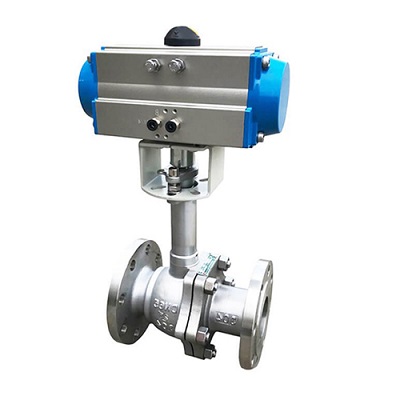
Low Temp (Cryogenic) Ball Valve with Pneumatic Actuator, Extended Bonnet
Key Specifications / Features
China Low Temp (Cryogenic) Ball Valve Manufacturer Shinjo Supplies Low Temp (Cryogenic) Ball Valve with Pneumatic Actuator, Extended Bonnet.
Detail Information
Low temp (Cryogenic) ball valve is special ball valve for that medium using its temperature from -40 C to -196 C. Cryogenic ball valve with pneumatic actuator can be used as cryogenic fluids, for example liquefied gas(LNG), liquid nitrogen (LN2), liquid oxygen (LOX), and liquid argon (LAr), etc.The pneumatic cryogenic ball valve is exposed to special cryogenic treatment to guarantee the cryogenic performance from the material. When operating in cryogenic conditions, it won't cause deformation and leakage because of temperature changes.The bonnet of cryogenic pneumatic ball valve adopts a extended design structure, and it is purpose would be to safeguard the part from the packing box, so the packing box is situated far from the cryogenic temperature to guarantee the sealing aftereffect of the packing.
SIZE RANGE AND PRESSURE CLASS
Size from 2” to 24” (DN50-DN600)
Pressure from 150LBS to 2500LBS (PN16-PN420)
DESIGN STANDARD
Design / Manufacture as per the standards
API 6D; ASME B16.34; DIN 3357; EN 13709; GB/T12237; BS5351
Face to Face Length (Dimension) as per the standards
ASME B16.10; EN 558-1 Gr. 14 (DIN 3202-F4); DIN 3202-F5; DIN 3202-F7; BS5163
Flange Dimension according to the standards
ASME B16.5; EN 1092-1; BS4504; DIN2501;
Testing according to the standards
API 598; API 6D; EN 12266-1; EN 1074-1; ISO5208
TECHNICAL FEATURES
Forged steel or cast steel body
Split body, side entry design
Floating ball or trunnion mounted
Low Emission Design
Extended Bonnet Design
Insulated Panel Design
Fire Safe Design and Antistatic Design
Cavity Pressure Relief
Reliable Sealing, lip seal ring
SIZE RANGE AND PRESSURE CLASS
Size from 2” to 24” (DN50-DN600)
Pressure from 150LBS to 2500LBS (PN16-PN420)
DESIGN STANDARD
Design / Manufacture as per the standards
API 6D; ASME B16.34; DIN 3357; EN 13709; GB/T12237; BS5351
Face to Face Length (Dimension) as per the standards
ASME B16.10; EN 558-1 Gr. 14 (DIN 3202-F4); DIN 3202-F5; DIN 3202-F7; BS5163
Flange Dimension according to the standards
ASME B16.5; EN 1092-1; BS4504; DIN2501;
Testing according to the standards
API 598; API 6D; EN 12266-1; EN 1074-1; ISO5208
TECHNICAL FEATURES
Forged steel or cast steel body
Split body, side entry design
Floating ball or trunnion mounted
Low Emission Design
Extended Bonnet Design
Insulated Panel Design
Fire Safe Design and Antistatic Design
Cavity Pressure Relief
Reliable Sealing, lip seal ring
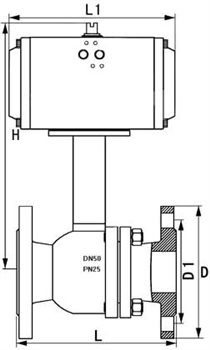
|
DN(mm) |
L |
L1 |
H |
D |
D1 |
|
Pressure(MPa) |
1.6/2.5 |
1.6/2.5 |
1.6/2.5 |
1.6/2.5 |
1.6/2.5 |
|
15 |
130 |
130 |
272 |
95 |
65 |
|
20 |
140 |
140 |
292 |
105 |
75 |
|
25 |
150 |
140 |
303 |
115 |
86 |
|
32 |
165 |
170 |
398 |
136 |
100 |
|
40 |
180 |
170 |
398 |
146 |
110 |
|
50 |
200 |
186 |
428 |
160 |
125 |
|
65 |
220 |
254 |
490 |
180 |
145 |
|
80 |
250 |
254 |
520 |
195 |
160 |
|
100 |
280 |
296 |
580 |
215/230 |
180/190 |
|
125 |
320 |
384 |
658 |
245/270 |
210/220 |
|
150 |
360 |
501 |
757 |
280/300 |
240/250 |
|
200 |
400 |
533 |
965 |
335/360 |
295/310 |
Supplier Information
Shanghai Shinjo Valve Co., Ltd.
Verified Supplier
5A Floor, No 789, Wanhangdu Road, Jingan District, Shanghai, China.
Est. 2016
Certifications:
ISO 9001

Allen Wang
sh*******02
I graduated with a degree in Mechanical Design and began my career in 2012 as a QC engineer in the workshop. I worked my way up through CAD engineering and eventually served as Chief Technical Engineer. I joined Shinjo Co in 2016 and have since focused on control valves and a wide range of challenging process conditions, supporting numerous overseas clients with demanding applications.
Over the years, I have come to believe that quality and solution capability are what ultimately maximize value — for both the client and the company. We welcome complex and unconventional cases. I hope my industry experience can be of help to you.
620 article(s)
Comments
Leave a Comment