
Marine Valve Selection: Types, Materials & Standards
Marine valves are the core control components of ship pipeline systems and directly affect the safety and operational efficiency of vessels. In the harsh marine environment, valves must withstand high salinity corrosion, pressure surges, and complex operating conditions over long periods. Improper selection or substandard quality may lead to reduced system efficiency at best, or leakage and even serious safety accidents at worst. However, with the wide variety of valve products available on the market, procurement personnel and engineers often feel confused when selecting valves; how should different materials, structures, and certification standards be properly evaluated?
This article provides a systematic overview of marine valve selection, starting from basic functions, and introduces the structural characteristics of major valve types such as gate valves, ball valves, butterfly valves, globe valves, check valves, and safety valves. It also analyzes key selection factors including material choice, size matching, pressure rating, and certification standards. Combined with core application scenarios such as seawater cooling, ballast water systems, fuel systems, and safety and environmental protection systems, this guide offers a practical reference for marine valve selection.
Overview of Marine Valves and Selection Fundamentals
Marine valves play an irreplaceable role in ship systems, yet there are many common misunderstandings during the selection process. Understanding these basic concepts helps ensure correct decisions in later stages. This section introduces core functions, common selection mistakes, and fundamental selection principles.
1. Core Role of Marine Valves in Ship Systems
Marine valves are essential mechanical components used for fluid control in shipboard piping systems. They regulate the flow of water, oil, gas, and other media within the vessel. Due to long-term exposure to high salinity, high humidity, and complex marine conditions, marine valves must feature corrosion resistance, pressure resistance, and high reliability in their design.
Valves perform multiple key functions, including regulating, opening, closing, or diverting fluid flow. They help control flow rate, direction, and pressure, ensuring stable and efficient system operation. In addition, valves provide isolation functions, allowing specific pipeline sections to be shut off during maintenance or emergencies. This prevents fault propagation and facilitates repair operations.
When valves operate reliably, they significantly improve both safety and system efficiency. Experienced engineers often emphasize that not all valves are the same—each type has its specific application. Therefore, selecting the right marine valve is not as simple as it may seem; it requires careful evaluation of requirements, materials, pressure capacity, and intended use.
2. Common Misconceptions in Marine Valve Selection
Selecting marine valves can initially feel overwhelming. The market offers numerous options, each designed for different applications. A common mistake is prioritizing the lowest price while ignoring quality, which often leads to higher maintenance costs later.
Data shows that approximately 30% of ship system failures are related to improper valve specifications. Therefore, the following misconceptions should be avoided:
Focusing only on price rather than quality: low-cost valves may save money initially but increase long-term maintenance and replacement costs.
Ignoring operating conditions: different systems require different pressure, temperature, and media compatibility.
Overlooking certification standards: valves without proper certification may fail in real operation, leading to safety risks.
3. Core Principles of Marine Valve Selection
Marine valve selection in 2026 should follow these key principles:
Operating Condition Matching Principle: Select valve type and material based on medium, temperature, pressure, and flow requirements.
Standards Compliance Principle: Ensure compliance with shipbuilding regulations and classification society requirements.
Safety and Reliability Principle: Prioritize valves with excellent sealing performance, impact resistance, and long service life.
Service Support Principle: Choose suppliers capable of providing full-process service and fast response.
Main Types of Marine Valves and Structural Characteristics
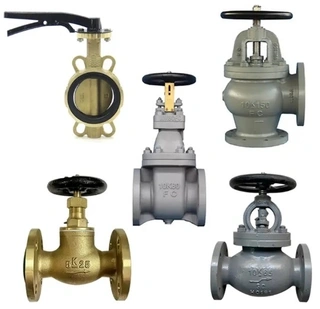
Marine valves come in many types, each with distinct structural designs and functional roles. Gate valves are suitable for full-bore on/off control, ball valves offer fast switching and isolation, butterfly valves are compact, globe valves provide precise regulation, check valves prevent backflow, safety valves protect against overpressure, and diaphragm valves are suitable for viscous media. Understanding these characteristics is the foundation of proper selection.
1. Gate Valves: Full-Bore On/Off Control
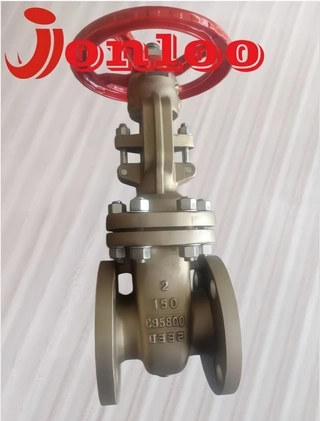
Gate valves control flow by lifting or lowering a gate plate, providing full open or full closed operation. They offer excellent sealing performance and are typically used in systems requiring unobstructed flow.
Gate valves are suitable for straight-line flow conditions and can handle large flow volumes, but they are not ideal for rapid closing operations.
Typical applications include ballast systems and seawater cooling systems, where reliable shut-off control is required.
2. Ball Valves: Fast Switching and Isolation
Ball valves use a spherical closure element that rotates to achieve quick switching. They provide excellent sealing performance and low flow resistance, making them ideal for on/off control and system isolation.
Ball valves are widely used in fuel systems, particularly for fuel flow control and emergency isolation during maintenance or shutdown situations. Their fast operation improves both safety and efficiency.
3. Butterfly Valves: Compact Structure and Flow Regulation
Butterfly valves are compact and lightweight, using a rotating disc to control flow. They are suitable for space-constrained systems requiring fast operation.
They are commonly used in seawater cooling systems and fuel pipelines, especially in large vessels where space is limited. However, their sealing performance may be slightly lower than that of ball and gate valves.
In 2026, electric butterfly valves are shifting from standardized products to customized solutions for complex operating conditions, including seawater corrosion, high temperature, and explosion-proof environments.
4. Globe Valves: Precise Regulation and Throttling
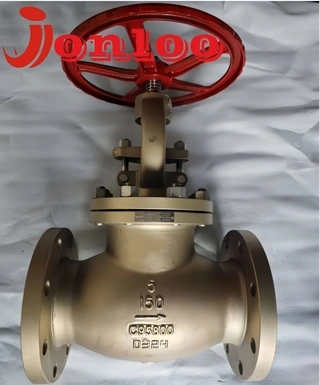
Globe valves use linear motion to regulate flow and are suitable for applications requiring precise control. They are commonly used in systems where pressure drop is not a major concern and where high-temperature or high-pressure media are present.
Typical applications include freshwater and steam systems. Various designs exist, including straight-through, angle-type, and plunger-type globe valves.
5. Check Valves: Backflow Prevention and System Protection
Check valves allow one-way flow and automatically prevent backflow. They are essential safety components that stabilize system pressure and prevent reverse fluid movement.
Common types include lift check valves and swing check valves. They are widely used at seawater pump outlets and fuel pump outlets. In bilge systems, they prevent liquid backflow and contamination spread. Silent check valves reduce noise during closure.
6. Safety Valves: Overpressure Protection
Safety valves protect systems from overpressure by automatically opening when pressure exceeds a preset limit. They are critical components in ship safety systems, preventing catastrophic failures and ensuring personnel and equipment safety.
7. Diaphragm Valves: Viscous Fluid Control
Diaphragm valves are suitable for controlling viscous fluids but require relatively complex maintenance. They are ideal for high-viscosity media systems, although long-term maintenance convenience must be considered.
Key Factors in Marine Valve Selection
After understanding valve types, multiple key factors must be considered, including material selection, size compatibility, pressure and temperature ratings, and installation and maintenance convenience.
1. Material Selection: Corrosion Resistance and Durability
Material selection is critical for valve durability in marine environments. Common materials include stainless steel, bronze, and composite plastics.
Stainless steel offers excellent corrosion resistance, especially in seawater applications, with a service life of up to 20 years when properly maintained. 316 stainless steel and duplex stainless steel perform particularly well in marine conditions.
Carbon steel valves may require frequent recoating and can have a significantly reduced lifespan in marine environments.
Bronze provides good durability but may corrode over time without protection. Composite plastics are lightweight and chemically resistant but are limited in high-pressure applications.
2. Valve Size and System Compatibility
Proper sizing ensures system efficiency and prevents leakage. Compatibility includes not only physical dimensions but also pressure rating, material, and environmental conditions.
Incorrect sizing may restrict flow or fail to meet system demands. Proper sizing ensures optimal performance and easier installation and maintenance.
3. Pressure and Temperature Ratings
Pressure and temperature ratings are critical for safe valve operation. Marine valves are typically categorized as:
- Low pressure (<10 bar): domestic water and non-critical systems
- Medium pressure (16–25 bar): fuel and lubrication systems
- High pressure (>40 bar): steam and compressed air systems
A safety margin of around 20% is generally recommended to ensure reliability under extreme conditions.
4. Installation and Maintenance Convenience
Some valves require regular maintenance, while others are easier to service. Accessibility also affects maintenance efficiency. Choosing valves with reasonable design and easy maintenance can significantly reduce lifecycle costs.
Marine Valve Certification and Standards
Certification is a crucial part of valve selection. International standards, classification society rules, ABYC guidelines, and IMO reports all provide quality benchmarks.
1. International Certification Systems
ISO standards define safety and performance benchmarks, while ISO 9001 reflects quality management systems.
Major classification societies include DNV, ABS, LR, CCS, GL, KR, NK, and BV. These certifications ensure valves undergo strict pressure testing, fire safety evaluation, and material verification.
2. ABYC Standards
ABYC provides guidelines for marine equipment materials and testing methods. Certified valves are designed to withstand harsh marine environments, although real-world performance may vary.
3. IMO Reports
IMO reports indicate that approximately 30% of valve failures are related to poor material quality, emphasizing the importance of strict certification review.
4. Latest Standards in 2026
With the advancement of green shipping policies, marine valve standards are continuously evolving. New requirements focus on ballast water systems, LNG vessels, and emission control systems, with stricter rules on welding stability and lifecycle performance validation.
Application Scenarios of Marine Valves
Marine valves are widely used in multiple ship systems.
- Seawater Cooling Systems: Used to regulate seawater flow for engines and heat exchangers. Valves must resist corrosion and ensure stable cooling performance.
- Ballast Water Systems: Used to adjust vessel stability by controlling water intake and discharge. Reliability is critical for ship safety.
- Fuel Systems: Ball valves are widely used for fuel flow control and emergency isolation, ensuring safe and efficient operation.
- Environmental Protection and Safety Systems: Check valves and emergency shut-off valves play key roles in preventing backflow and isolating systems during emergencies.
- Bilge Systems: Check valves prevent wastewater backflow and help maintain compartment dryness while avoiding marine pollution.
Practical Marine Valve Selection Recommendations
- Define Requirement Parameters: Include valve type, size (DN), medium, temperature, pressure range, and delivery requirements.
- Match Standards and Certifications: Ensure compliance with classification society requirements and obtain relevant approvals.
- Select Material and Actuation Method: Choose suitable materials and actuation types such as manual, electric, pneumatic, or hydraulic systems.
- Consider Lifecycle Cost: Evaluate not only purchase cost but also installation, maintenance, and replacement costs.
- Choose Reliable Suppliers: Select suppliers with strong production capabilities, certifications, experience, and after-sales support.
Conclusion
Marine valves are indispensable components in maritime engineering, playing a critical role in ensuring safe and stable vessel operation. They regulate fluid flow, maintain system stability, and support nearly all key shipboard systems. Selecting the right marine valve requires comprehensive consideration of type, material, size, pressure rating, certification, and application environment. With the ongoing trend toward green and intelligent shipping, performance requirements for marine valves continue to rise. Scientific and rational selection ensures long-term reliability, reduces operational risks, and lowers maintenance costs.
Send your message to this supplier
Related Articles from the Supplier
Marine Valve Selection: Types, Materials & Standards
- Jun 05, 2026
Related Articles from China Manufacturers
Guide to Marine Valve Selection and Application
- Apr 17, 2026
Quality Control in Marine Valve Manufacturing
- Aug 21, 2025



Related Products Mentioned in the Article

Supplier Website
Source: https://www.valvepackingsealkits.com/news/marine-valve-selection-types-materials-standards.html