
Guide to Gasket and O-Ring Comparison & Selection
In industrial equipment and piping systems, preventing fluid or gas leakage is a fundamental requirement to ensure safe and reliable operation. Seal failure not only results in the loss of medium but can also create safety hazards and additional downtime and maintenance costs. Among the numerous sealing components available, gaskets and O-rings are the most commonly used options. However, due to certain similarities in appearance and basic function, many engineers often confuse their proper applications, leading to incorrect selection and repeated leaks. In fact, gaskets and O-rings differ fundamentally in structural design, working principle, and suitable operating conditions. Only by selecting the appropriate type based on the geometry, operating environment, and medium characteristics can reliable long-term sealing be achieved. This article systematically examines the distinctions between gaskets and O-rings and provides guidance for proper selection, covering basic concepts, sealing mechanisms, key selection factors, application scenarios, and common errors.
Basic Concepts of Gaskets and O-Rings
Before delving into selection factors, it is essential to clarify the definitions and core characteristics of gaskets and O-rings. Although both serve as sealing components, they differ significantly in shape, installation method, and material range. Understanding these basic concepts is the first step toward correct selection. The following sections define gaskets and O-rings and summarize their core differences.
1. What is a Gasket?
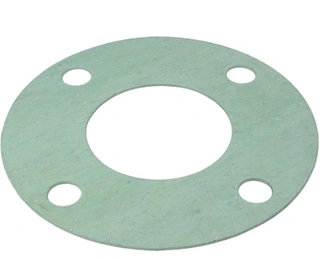
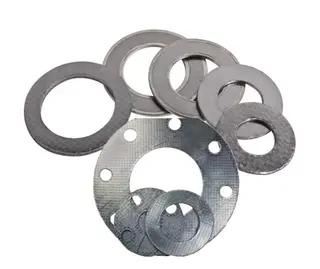
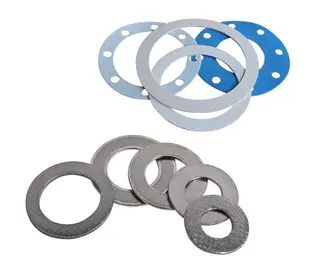
A gasket is a mechanical sealing element installed between two mating surfaces to prevent the leakage of liquids or gases. Gaskets are typically flat or slightly curved, most commonly circular, but can be custom-made in various shapes to fit the specific geometry and size of the sealing surfaces. Materials used for gaskets are highly diverse, including rubber, silicone, cork, fiber, metals, and composite materials. Because gaskets can be cut to match flange shapes, they effectively compensate for surface irregularities or assembly deviations. This makes them widely applicable in piping flanges, pump housings, heat exchangers, electrical enclosures, and engine cylinder heads, particularly in static sealing applications.
2. What is an O-Ring?
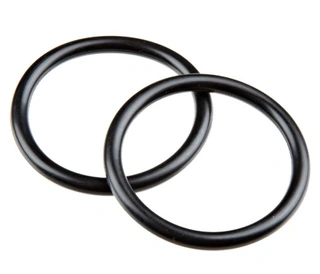
An O-ring is a circular, elastic sealing component with a round cross-section, typically made from elastomeric materials such as nitrile rubber (NBR), silicone, or fluororubber (FKM). O-rings are installed in precisely machined grooves (also called recesses or gland grooves), forming a sealing interface through controlled compression during assembly. O-rings are suitable for both static and dynamic sealing applications and are widely used in hydraulic cylinders, aerospace fuel systems, automotive braking systems, valves, pumps, and medical equipment. Their compact structure and high sealing efficiency make O-rings especially suitable for high-pressure, limited-space, and frequently moving applications.
3. Core Differences Between Gaskets and O-Rings
While both gaskets and O-rings prevent fluid or gas leakage, their design logic differs fundamentally. Gaskets rely on compression between two flat surfaces to achieve sealing and are suitable for large-area static structures. O-rings, in contrast, achieve sealing through controlled deformation within a groove, making them ideal for compact designs and high-pressure environments. In simple terms, gaskets are better suited for flat flanges and static sealing applications, while O-rings excel in grooved structures, high-pressure, or dynamic conditions.
Working Principles and Sealing Mechanisms
Having established the basic concepts, it is crucial to understand how these sealing components function. Gaskets achieve sealing through planar compression that fills surface gaps, while O-rings use groove-controlled deformation to form a stable seal. These distinct mechanisms define the operational range and performance characteristics of each type. The following sections discuss the planar compression sealing of gaskets and the groove-controlled sealing of O-rings, explaining why they are generally not interchangeable.
1. Planar Compression Sealing of Gaskets
Gaskets work by being compressed between two flanges or mating surfaces, typically using bolts or other fasteners. This compression deforms the gasket material, filling small gaps between contact surfaces to prevent leakage. Gaskets can tolerate surface irregularities and assembly deviations, forming a seal over a large contact area. They also adapt well to wide temperature variations and steam environments, thanks to the diversity of materials available. When the contact pressure exceeds the medium pressure, the gasket effectively prevents leakage. If contact pressure is insufficient relative to medium pressure, leakage can occur.
2. Groove-Controlled Compression Sealing of O-Rings
O-rings rely on precisely machined grooves for their sealing mechanism. The groove dimensions control the O-ring’s compression and deformation, and during assembly, the O-ring is squeezed in the groove, generating a restoring force that presses it against the sealing surfaces to form a reliable, repeatable seal. This controlled compression allows O-rings to achieve efficient sealing even in confined spaces and maintain performance under fluctuating pressure. This mechanism makes O-rings particularly effective in high-pressure systems.
3. Why They Cannot Be Interchanged
Due to these structural differences, gaskets and O-rings cannot be used interchangeably. Using an O-ring on a flat, groove-less surface lacks controlled compression, which can result in extrusion, damage, or rupture. Conversely, placing a gasket in a grooved structure prevents it from conforming to the groove geometry, leading to seal failure. In practice, most seal failures are not material-related but result from mismatched component selection and structural design.
Key Selection Factors
Once the basic concepts and working principles are understood, it is important to focus on critical factors in the selection process. Proper selection should consider geometry, motion, pressure and temperature conditions, material compatibility, and industry standards. Ignoring any one factor can lead to premature seal failure. The following sections detail five key aspects of gasket and O-ring selection.
1. Geometry Determines the Seal Type
The first step in seal selection is evaluating the geometry. For joints without machined grooves, where two flat surfaces are clamped by bolts, gaskets are the correct choice. For structures with standard sealing grooves, O-rings should be used, as the groove controls compression and deformation for a stable, repeatable seal. Flat flanges and housings suit gaskets, while precision-grooved structures are ideal for O-rings.
2. Motion Influences Seal Choice
Motion must also be considered. For sliding, reciprocating, or rotating applications, such as pistons, valve stems, or rotating shafts, the system requires dynamic sealing solutions, not standard gaskets or O-rings. Gaskets are only suitable for static conditions; using a flat gasket in a dynamic environment leads to rapid failure.
3. Pressure and Temperature Conditions
Pressure is another critical factor. Under pressure spikes or large gaps, an O-ring without a backup ring or support structure may extrude or rupture. This is often mistakenly attributed to poor elastomer quality but is actually a matter of gap control and pressure design. In high-pressure systems, O-rings typically perform better, while gaskets are advantageous in wide temperature variations or steam environments due to material versatility.
4. Material Compatibility and Industry Standards
For corrosive or chemically aggressive media, certified chemically resistant materials are essential to avoid swelling, aging, or failure. In regulated industries such as food, pharmaceutical, or chemical, materials must meet FDA, USP Class VI, TA-Luft, and other standards to ensure safety and compliance. Material selection should also account for additives or cleaning agents in the medium, which are often overlooked but can directly lead to seal failure.
Typical Application Scenarios
The theoretical analysis of selection factors must ultimately be applied to practical scenarios. Gaskets and O-rings each have environments in which they excel: gaskets dominate large-area static sealing applications, while O-rings perform well in confined spaces, high pressure, and dynamic conditions. Understanding these applications helps engineers make quick, accurate selection decisions.
1. Applications for Gaskets
Gaskets are ideal for large-area flat contact structures such as piping flanges, engine cylinder heads, heat exchangers, pressure vessels, and HVAC systems. These applications require substantial sealing contact areas and adaptability to thermal expansion and compression deformation. Gaskets can conform to irregular surfaces and maintain reliability in static sealing applications. If repeated tightening still results in leakage, the issue is usually flange flatness, bolt load distribution, or gasket compression recovery—not simply the material itself.
2. Applications for O-Rings
O-rings are widely used in hydraulic and pneumatic systems, valves, pumps, automotive braking systems, and precision equipment. They offer reliable sealing in limited spaces and maintain performance under pressure fluctuations. O-rings are commonly used in aerospace fuel systems, automotive parts, water systems, and medical devices. Their compact design makes them especially suitable for high-pressure, small-space, or frequently moving applications.
3. High-Pressure and Dynamic Requirements
In high-pressure or shock-loading systems, O-rings often require backup rings or hydraulic sealing structures to prevent extrusion. Dynamic motion, such as reciprocating or rotating shafts, demands specialized dynamic seals, possibly with dust scrapers or auxiliary seals to prevent contamination. Standard O-rings or gaskets alone are insufficient in these cases.
Common Selection Errors and Failure Causes
Even with proper guidelines, engineers often make selection errors, resulting in repeated leaks or premature failure. These errors are rarely material-related but are due to structural or design mismatches. The following sections outline four common mistakes and their mechanisms.
1. Using O-Rings Without a Groove
A common mistake is using an O-ring on a flat, groove-less surface. Flat flanges cannot control the O-ring’s compression, leading to over-compression, extrusion, or premature failure. Repeated leakage in such cases is usually not due to material defects but rather an error in structural selection.
2. Misusing Flat Gaskets in Dynamic Conditions
Another frequent error is using flat gaskets in dynamic applications. Gaskets are designed for static sealing and cannot withstand the friction and deformation caused by sliding, rotating, or reciprocating motion. Using a flat gasket in pistons, valve stems, or rotating shafts leads to rapid wear and seal failure.
3. Ignoring Pressure Surges and Gap Control
Assuming that thicker gaskets improve sealing or ignoring extrusion risks due to pressure spikes often causes repeated seal failure. In high-pressure systems, improper gap control and pressure design can cause O-rings to extrude or rupture. If leaks persist after repeated tightening, it is important to check flange flatness, bolt load distribution, and gasket compression recovery characteristics.
4. Material and Medium Mismatch
Neglecting the effects of additives or cleaning agents in the medium can cause seals to swell, age prematurely, or fail. Many recurring sealing issues stem from overlooking factors such as structural constraints, compression management, pressure fluctuations, and chemical compatibility, rather than material quality alone.
Conclusion
While both gaskets and O-rings prevent leakage, they differ significantly in function, structure, and application. Gaskets achieve sealing through planar compression and are suitable for flanged connections and static environments. O-rings achieve sealing through groove-controlled deformation and are ideal for compact structures, high-pressure systems, and dynamic applications. They are generally not interchangeable, and incorrect selection can lead to repeated leakage, extrusion damage, or premature failure.
Proper sealing selection must comprehensively consider geometry, motion, pressure and temperature, material compatibility, and industry standards. During design and procurement, all relevant parameters should be defined, and selection should align with structural drawings. Only by matching the sealing component to the structure and operating conditions can long-term stability be ensured, avoiding frequent leakage and costly downtime.
Send your message to this supplier
Related Articles from the Supplier
Guide to Gasket and O-Ring Comparison & Selection
- Jun 03, 2026

Flange Gasket Sealing: A Guide to Preventing Leaks
- Oct 14, 2025
Comprehensive Guide to PTFE Envelope Gaskets
- Apr 28, 2026
Related Articles from China Manufacturers
Guide to Gasket Leakage: Causes and Solutions
- Nov 18, 2025



A Practical Guide to Gasket Thickness Decisions
- May 24, 2025
Guide to Spiral Wound Gasket Selection
- Nov 07, 2025
Related Products Mentioned in the Article
![A Guide to Computer User Support for Help Desk [Book]](https://img.jeawincdn.com/resource/upfiles/153/images/products/custom-full-color-printing/custom-catalogs/resize/3f25b1a83689330016a4063627d10c04/CC002-A-Guide-to-Computer-User-Support-for-Help-Desk-Book-320x320.webp)


Supplier Website
Source: https://www.magpievalves.com/media-hub/guide-to-gasket-and-o-ring-comparison-selection.html