
A Guide to ePTFE Packing and Gasket for Valves & Pumps
In the daily operation of industrial equipment, seal failure is one of the primary causes of leakage, downtime, and safety hazards. Whether dealing with corrosive media in chemical pipelines or sanitary fluids in food processing equipment, selecting the appropriate sealing material directly affects both equipment safety and production efficiency. Among the numerous sealing materials available, expanded polytetrafluoroethylene (ePTFE) gland packing & gaskets have gradually emerged as critical choiced in the industrial sealing field due to their unique performance advantages.
ePTFE gland packing is a rope-like sealing material made from expanded polytetrafluoroethylene. It retains PTFE's excellent chemical stability and high-temperature resistance while gaining enhanced flexibility and compressibility through a special expansion process. Compared with traditional sealing materials, ePTFE packing can achieve reliable sealing under relatively low compression forces, making it particularly suitable for low-pressure applications and equipment made from brittle materials. Currently, ePTFE packing is widely used in pumps, valves, agitators, and other industrial devices, becoming an indispensable component in the chemical, pharmaceutical, and food processing industries.
This article provides a systematic introduction to ePTFE sealing materials, covering their types, manufacturing processes, application scenarios, and selection guidelines, aiming to give readers a comprehensive understanding of ePTFE gland packing and ePTFE gaskets and offering practical guidance for industrial sealing applications.
Overview of ePTFE Materials
Expanded PTFE (ePTFE) is derived from polytetrafluoroethylene (PTFE) and processed through a stretching and expansion technique that creates a network of micro-porous structures within the material. This unique structure imparts flexibility and compressibility. The core characteristics of ePTFE include an extremely wide operating temperature range (-200°C to 315°C), excellent chemical resistance (pH 0–14), very low friction coefficient, and good elastic recovery. Below, we explore what ePTFE is and its core properties.
1. What is Expanded PTFE?
Expanded PTFE is a high-performance sealing material created from PTFE through a special expansion process that generates a highly porous internal structure. This micro-porous network gives the material unique physical and chemical properties.
The development of ePTFE began with unidirectional sealing tapes. With advances in technology, its product forms have diversified to include ePTFE films, multidirectional sealing tapes and sheets, and rope-like ePTFE packing. These different forms meet the varied demands of industrial sealing applications.
2. Core Properties of ePTFE
ePTFE inherits PTFE's exceptional chemical stability while offering unique flexibility and compressibility due to its micro-porous structure. It operates reliably over an extremely wide temperature range, from approximately -200°C at low temperatures to around 315°C at high temperatures. Chemically, it resists most strong acids, bases, and organic solvents within a pH range of 0–14.
Additionally, ePTFE has a very low friction coefficient and excellent rebound performance, making it ideal for sealing applications. Free of fillers or additives, it maintains high chemical purity and complies with FDA and SGS standards related to food safety.

Types and Characteristics of ePTFE Gland Packing
Based on structural differences, ePTFE gland packing can be divided into three main types: braided, pure ePTFE, and reinforced. Braided packing offers high structural stability and is suitable for high-pressure conditions; pure ePTFE packing provides excellent flexibility and compressibility for low-pressure and brittle material applications; reinforced packing includes added fillers to enhance overall performance.
1. Braided ePTFE Packing
Braided ePTFE packing is made by weaving fine PTFE or ePTFE fibers into a square cross-sectional shape. This structure combines PTFE's chemical stability with the mechanical strength provided by the braided design.
Braided ePTFE packing has high structural stability and greater mechanical strength than pure ePTFE packing. However, its compressibility is relatively lower due to the constraints of the braid, requiring higher installation torque to achieve effective sealing. Therefore, braided ePTFE packing is best suited for high-pressure environments that require significant preloading.
2. Pure ePTFE Packing
Pure ePTFE packing, also known as PTFE rope, ePTFE rope, or round ePTFE packing, typically has a circular cross-section. It is produced from PTFE through unidirectional expansion, similar to ePTFE sealing tapes, but with stricter requirements for surface smoothness and shape uniformity to prevent ovality or structural inconsistencies.
The main advantage of pure ePTFE packing is its excellent flexibility and compressibility. Even under low compression and torque, it achieves reliable sealing. This makes it particularly suitable for low-pressure applications and equipment that cannot tolerate high preloading, such as glass or other brittle material systems.
3. Reinforced ePTFE Packing
Both braided and pure ePTFE packing can be enhanced with fillers such as glass fiber, carbon, or graphite to improve overall performance. Reinforced packing exhibits superior creep resistance, wear resistance, and mechanical strength, making it suitable for long-term operation under complex conditions.
The choice of filler depends on the specific application. Glass fiber reinforcement improves mechanical strength, graphite enhances thermal conductivity and self-lubrication, and carbon provides superior wear resistance and anti-static properties.

Manufacturing Process of ePTFE Packing
The excellent performance of ePTFE packing is closely linked to its unique manufacturing process. The process begins with PTFE powder mixed with a lubricant, followed by extrusion, lubricant evaporation, and heating/stretching to form ePTFE fibers. This process creates a microstructure with numerous air-filled pores. Quality control focuses on uniform fiber structure and consistent cross-sectional shape. The process is detailed below.
1. Basic Manufacturing Process
PTFE powder is first mixed with a lubricant, then extruded into a paste. After evaporation of the lubricant, the material is stretched under heat, forming ePTFE fibers. This expansion process significantly strengthens the fibers while introducing micro-pores throughout the material.
These micro-pores enhance flexibility, rebound performance, and the distribution of lubricant, improving the friction characteristics of the packing during operation.
2. Key Quality Control Points
Uniform fiber structure and consistent cross-sectional shape are crucial. If the fiber network is uniform, sealing consistency and durability improve; uneven structures can lead to localized wear and potential leakage. High-quality ePTFE packing requires smooth surfaces and consistent dimensions to prevent ovality or structural defects.
3. Structural Design Optimization
ePTFE packing is further optimized to perform well under low to medium load conditions. Design focuses on enhancing flexibility and compressibility to achieve effective sealing at minimal compression forces. Compared to traditional PTFE, ePTFE offers better adaptability and easier installation, reducing equipment energy consumption and wear.
Applications of ePTFE Packing
Thanks to its excellent properties, ePTFE packing finds use in diverse industrial environments, including extreme temperature conditions, corrosive media, high- and low-pressure systems, sanitary and sterile applications, and sealing of pumps and valves.
1. High and Low Temperature Environments
ePTFE packing can operate from approximately -250°C to +250°C. It maintains performance in both high-temperature settings, where it outperforms rubber and silicone in sealing ability, and low-temperature or cryogenic environments without becoming brittle or losing functionality.
2. Corrosive Chemical Environments
PTFE is chemically inert, resisting strong acids, bases, and corrosive media. While ePTFE contains micro-pores, they are tiny and resist fluid absorption, preventing retention or contamination of the medium. ePTFE performs well in pH 0–14 environments but is not suitable for strong oxidizers, fluorine, or extreme chemical conditions.
3. High and Low Pressure Conditions
Under high pressure, ePTFE packing achieves reliable sealing with lower compression force, making it ideal for fragile equipment. For low-pressure applications, pure ePTFE packing's high compressibility ensures effective sealing with minimal force.
4. Food-Grade and Sterile Applications
ePTFE packing meets food contact certifications and is suitable for pharmaceutical and food processing industries. Its inert nature ensures the sealing material does not react with or contaminate the medium.
5. Pump and Valve Sealing
Both braided and solid ePTFE packing perform well in pumps and valves. Low friction reduces energy consumption, and chemical stability ensures long-term operation. However, due to its low thermal conductivity, ePTFE is limited in high-speed pump shafts where frictional heat cannot dissipate efficiently.
Performance and Applications of ePTFE Gaskets
ePTFE gaskets share similar properties with packing, including extreme temperature tolerance (-200°C to 315°C), chemical resistance, compressibility, rebound, ease of processing, and installation. They are ideal for sealing uneven flange surfaces and maintain high chemical purity.
1. Core Advantages
ePTFE gaskets are high-performance sealing materials with a micro-fiber structure that enables stable operation under extreme temperatures and pressures (up to 5 MPa), compliant with FDA and SGS standards, and resistant to most acids, bases, and solvents.
2. Sealing Performance
With compression rates of 50–55% and rebound of 10–15%, ePTFE gaskets conform to surface irregularities and maintain sealing under pressure fluctuations or thermal cycling.
3. Ease of Processing and Installation
Flexible and easily cut to size, ePTFE gaskets can be spliced on-site, adapting to various flanges, pump bodies, and manhole covers. Compression during installation forms a dense fiber network, maintaining sealing even in vertical or suspended applications.
4. Durability and Cost Efficiency
The inert nature and expanded structure improve creep resistance and longevity, reducing maintenance and replacement costs. On-site processing reduces inventory needs and allows for reuse in some low-pressure applications.
5. Cleanliness Applications
Made from pure PTFE, ePTFE gaskets maintain chemical purity throughout their lifespan, suitable for high-purity industries like pharmaceuticals, biotechnology, semiconductors, and food processing.

Limitations of ePTFE Materials
Despite many advantages, ePTFE has limitations, including poor thermal conductivity, limited wear resistance, temperature ceilings, and certain chemical incompatibilities. Awareness of these limitations aids proper material selection.
- Thermal Conductivity: Low thermal conductivity can cause heat accumulation in high-speed shafts or high-friction conditions, limiting service life.
- Wear Resistance: In abrasive media, ePTFE may wear quickly. Reinforced grades or alternative materials may be necessary.
- Temperature Limitations: Long-term use above 288°C is not recommended, though short-term exposure up to 315°C is tolerated. Exceeding this range risks material degradation.
- Chemical Compatibility: Not suitable for strong oxidizers, fluorine, or extreme chemical environments. Selection must consider the medium's properties.
Selection and Usage Guidelines
- Gland Packing Selection: Choose braided for high-pressure applications, pure ePTFE for low-pressure or fragile materials, and reinforced packing for abrasive media or enhanced mechanical strength. Consider thermal limits for high-speed equipment.
- Gasket Selection: Consider temperature, pressure, medium, and flange conditions. Use pure PTFE for high-purity applications.
- Installation and Maintenance: Maintain uniformity and avoid over-compression. ePTFE is long-lasting and requires minimal storage care.
- Storage and Lifespan: Store in clean, dry environments, away from sharp objects and direct sunlight. ePTFE is nearly impervious to aging, making it ideal for long-term inventory.
Conclusion
Expanded PTFE (ePTFE) is a high-performance material with broad industrial applications. Both ePTFE packing and gaskets offer excellent chemical stability, wide temperature tolerance, compressibility, and rebound properties.
Braided and pure ePTFE packing cater to high-pressure and low-pressure/brittle equipment, respectively, and can be reinforced for enhanced performance. ePTFE gaskets provide excellent sealing, compressibility, and ease of installation, especially in high-purity industries.
Understanding ePTFE's advantages and limitations, including low thermal conductivity, limited wear resistance, and chemical constraints, is essential for proper selection. Correct material choice ensures long-term, reliable sealing performance in industrial systems.
This article serves as a foundational guide for anyone considering ePTFE sealing materials in industrial settings, providing insight into their characteristics, manufacturing, advantages, and potential limitations to inform better selection decisions.
Send your message to this supplier
Related Articles from the Supplier

Flange Gasket Sealing: A Guide to Preventing Leaks
- Oct 14, 2025
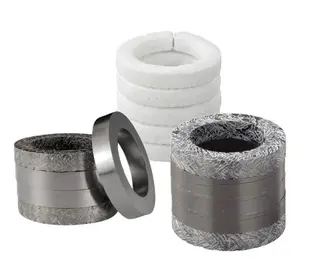
Selection of Packing Materials: A Practical Guide
- Aug 04, 2025
Related Articles from China Manufacturers
A Guide to Non-Ferrous Alloy Casting
- Jun 27, 2025

A Guide to The Types of Ball Valves
- Dec 10, 2025
A Guide to Fail-Safe Positioning in Control Valves
- Jul 13, 2024
A Guide to Selecting Electric V-Type Ball Valves
- Aug 22, 2025
A Guide to Diesel Generator Controller
- Aug 26, 2025
Related Products Mentioned in the Article
![A Guide to Computer User Support for Help Desk [Book]](https://img.jeawincdn.com/resource/upfiles/153/images/products/custom-full-color-printing/custom-catalogs/resize/3f25b1a83689330016a4063627d10c04/CC002-A-Guide-to-Computer-User-Support-for-Help-Desk-Book-320x320.webp)

Supplier Website
Source: https://www.magpievalves.com/media-hub/a-guide-to-eptfe-packing-and-gasket-for-valves-pumps.html