
Comprehensive Guide to PTFE Envelope Gaskets
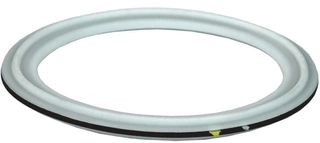
To understand the purpose of PTFE Envelope Gaskets, it is essential first to know their fundamental composition and working principles. PTFE Envelope Gaskets are a type of composite sealing element, consisting of two layers: an outer layer made of polytetrafluoroethylene (PTFE) and an inner core made of metal or other materials. This structure allows the gasket to combine the advantages of both materials.
The outer PTFE layer is in direct contact with the fluid or gas within the pipeline. PTFE possesses a high melting point, low friction coefficient, and excellent chemical stability. It does not react with most chemicals and does not contaminate the medium. The inner core provides mechanical strength and support. Common core materials include metals, compressed non-asbestos fibers, or elastomers.
PTFE Envelope Gaskets are sometimes referred to as “wrapped” or “encapsulated” PTFE seals. Their shape typically resembles an envelope, with the metal core fully enclosed within the PTFE layer. This design eliminates the need for foam or silicone filling, with the gasket’s rigidity and sealing performance fully reliant on the combination of PTFE and the core material.
Structural Characteristics of PTFE Envelope Gaskets
Understanding the structure is crucial to understanding the performance of these gaskets. The performance advantages primarily stem from their unique dual-layer design.
1. Properties of the Outer PTFE Layer
The outer PTFE layer bears direct contact with the process medium, making its material properties critical.
The PTFE layer is the only part of the gasket in contact with the medium. It provides resistance against acids, alkalis, solvents, and other chemicals. PTFE remains stable under high temperatures and corrosive environments without degrading, swelling, or releasing substances. This ensures both sealing integrity and the purity of the medium.
Additionally, PTFE has self-lubricating properties. During installation and removal, this reduces friction and wear. It makes it easier for operators to position and remove the gasket.
2. Types and Roles of Core Materials
While the outer layer provides chemical protection, the inner core provides mechanical support. Both are indispensable.
The core material determines the gasket’s mechanical strength. Different types of cores suit different operating conditions:
- Metal Core: Provides maximum strength and rigidity, suitable for high-pressure and high-temperature applications. The metal core is usually envelope-shaped to support the gasket and prevent deformation.
- Compressed Fiber Core: Offers good compressibility and elastic recovery, ideal for applications requiring a degree of flexibility.
- Elastomer Core: Materials such as rubber provide excellent resilience but have lower heat resistance than compressed fiber cores.
The core material dictates the gasket’s pressure resistance and temperature limits. For example, an elastomer core cannot withstand as high temperatures as a compressed fiber core.
3. Advantages of the Composite Design
The combination of the outer PTFE layer and the inner core creates a synergistic effect—1+1>2. This composite design addresses the limitations of single-material gaskets.
Pure PTFE gaskets often lack structural strength and are prone to "cold flow," where the material slowly deforms under pressure, leading to sealing failure. The PTFE Envelope Gasket’s core provides support to resist cold flow, maintaining shape under bolt stress.
The soft PTFE layer also protects fragile flange surfaces, such as glass-lined or enamel-lined flanges, while the core provides sufficient rigidity to withstand bolt load. This combination allows the gasket to seal both large openings and small gaps effectively.
Key Advantages of PTFE Envelope Gaskets
In practical use, the primary concern is what specific benefits these gaskets bring. The core advantages include:
1. Exceptional Chemical Resistance
In the presence of corrosive media, ordinary gaskets quickly fail, whereas PTFE Envelope Gaskets excel.
PTFE is inert to nearly all industrial chemicals and solvents. It does not react with strong acids, strong bases, or reactive media, making these gaskets suitable for chemical, pharmaceutical, and food processing industries.
2. High-Temperature Resistance
High temperatures accelerate material aging, but PTFE Envelope Gaskets maintain performance under such conditions.
These gaskets can withstand operating temperatures up to 500°F (approximately 260°C), ensuring reliable sealing in high-temperature environments. This is particularly critical in oil and gas applications.
3. Mechanical Strength and Rigidity
Although PTFE alone is soft, a metal core provides significant support.
The metal core grants the gasket sufficient strength and rigidity, making it compatible with various flange types, including glass-lined steel, cast iron, standard metal, and even concrete flanges. Even over large sealing areas, the gasket maintains high bolt compression force without compromising performance or causing long-term wear.
4. Easy Installation and Removal
Maintenance personnel favor these gaskets due to their operational ease.
PTFE Envelope Gaskets do not stick to flange surfaces, allowing quick and straightforward installation and removal. They can be replaced without cleaning residue, saving time during maintenance.
5. Low Creep Relaxation
Many gaskets lose elasticity over time, but PTFE Envelope Gaskets exhibit minimal creep relaxation, maintaining sealing performance over their lifespan.
6. Precise Dimensions and Customizability
Different equipment requires gaskets in varying dimensions, and PTFE Envelope Gaskets can flexibly meet these needs.
These gaskets are available in standard sizes, and for non-standard equipment, manufacturers can provide custom designs. This adaptability makes them suitable for a wide range of flange sizes and vessel openings.
Applications of PTFE Envelope Gaskets
With so many advantages, where are these gaskets most commonly used? The following are their typical application areas.
1. Chemical Processing Industry
Chemical plants are major users, as chemical media often have strong corrosive properties.
Pipelines, reactors, and storage vessels in chemical plants require reliable sealing at their joints. PTFE Envelope Gaskets resist acids, alkalis, and solvents, sealing both small gaps between flanges and large multi-surface connections.
They provide stable sealing in pressure vessels, heat exchangers, and vessel openings, preventing leaks, ensuring operator safety, and minimizing environmental contamination.
2. Pharmaceutical and Bioprocessing
The pharmaceutical industry demands extremely high purity, as any contamination can compromise product quality.
PTFE materials do not leach substances and do not react with drug components. PTFE Envelope Gaskets maintain product purity and equipment integrity. They perform equally well in bioprocessing equipment, ensuring consistent containment and sanitation.
3. Food and Beverage Processing
The food and beverage sector requires high hygienic standards, which PTFE Envelope Gaskets meet effectively.
PTFE is non-toxic, tasteless, and non-absorbent, preventing contamination of food and minimizing bacterial growth. These gaskets are ideal for pipelines, valves, and tanks in food processing equipment.
4. Oil and Gas Industry
The oil and gas sector operates under extreme conditions, where sealing materials face harsh challenges.
PTFE Envelope Gaskets are used to seal connections in pressure vessels, pipelines, and valves, withstanding extreme temperatures, pressures, and corrosive chemicals. Their durability ensures integrity in situations where other gaskets, such as neoprene or rubber, might fail.
5. Automotive Industry
Beyond industrial piping, these gaskets are widely applied in automotive manufacturing.
They seal connections between engine components, hoses, or pipes, enduring high temperatures and vibrations inside engine compartments, ensuring reliable sealing throughout vehicle operation.
Lifespan and Influencing Factors
A common concern is how long PTFE Envelope Gaskets last, which depends on multiple factors.
1. Lifespan is Not a Fixed Number
There is no universal lifespan standard.
The service life depends on operating conditions. Engineers and maintenance personnel must consider temperature, pressure, chemical exposure, and installation practices to estimate replacement intervals accurately.
2. Temperature Effects
Temperature is the primary factor affecting lifespan, especially fluctuations.
Although PTFE can withstand up to 260°C, thermal cycling—repeated heating and cooling—can harden the core material. Once hardened, the core loses elasticity, reducing compression and potentially causing leaks.
3. Pressure Effects
Pressure is another critical factor in determining gasket longevity.
Even within nominal temperature ranges, high bolt loads can induce cold flow, where PTFE slowly deforms under constant pressure. This reduces thickness and sealing force, leading to potential leakage. Extremely high-pressure applications may require alternative sealing solutions, such as spiral wound gaskets. PTFE Envelope Gaskets are not recommended for ultra-high pressure scenarios.
4. Chemical Media Effects
While PTFE is highly resistant, certain aggressive chemicals can penetrate the thin PTFE layer, damaging the inner core and causing blistering or softening, significantly reducing gasket lifespan.
5. Installation Practices
Premature failure often results from incorrect installation rather than material defects.
Common causes include:
Over-tightening: Excessive torque can crush the core or crack the PTFE layer.
Under-tightening: Insufficient torque reduces sealing force, causing leaks.
Poor flange surface quality: Scratches or pitting prevent proper sealing. Residual debris from old gaskets can also compromise the seal.
6. Extending Gasket Life
Proper installation can significantly prolong service life:
Use a calibrated torque wrench and follow manufacturer-specified torque values.
Tighten bolts in a star pattern to prevent uneven stress.
Clean flange surfaces with a non-metallic brush before installation, removing old gasket residue.
Avoid metal tools that could scratch flange surfaces.
Inspect flange flatness and repair significant defects before installing the gasket.
Usage Considerations and Limitations
Understanding the limitations of PTFE Envelope Gaskets helps avoid incorrect application.
1. Handling and Installation
The PTFE layer is thin and must be handled with care. Scratches or folds can create leak paths. Operators should be trained and use appropriate tools.
2. Pressure and Temperature Limits
Do not consider only PTFE properties; the core material also determines maximum operating limits. Elastomer cores have lower heat resistance than compressed fiber cores. Ensure the core material matches actual operating conditions.
3. Higher Cost
High performance often comes at a higher price. PTFE Envelope Gaskets cost more than single-material gaskets, making them most suitable where PTFE’s chemical resistance is required. For standard media, more economical seals may suffice.
4. Unsuitability for Ultra-High Pressure
PTFE Envelope Gaskets are not suitable for extreme high-pressure applications. In such cases, spiral wound or metal gaskets are preferable.
Conclusion
PTFE Envelope Gaskets are excellent sealing products for corrosive environments, combining PTFE’s chemical inertness with the mechanical strength of a core material. They can withstand high temperatures, pressures, and aggressive media.
They are widely used in oil and gas, chemical processing, pharmaceuticals, food and beverage, automotive, and water treatment industries. Key advantages include chemical resistance, high-temperature stability, mechanical strength, wear resistance, low creep, precise dimensions, ease of installation, and long-term reliable sealing.
Users must also consider limitations: they are unsuitable for ultra-high pressure, have thin PTFE layers requiring careful handling, are more costly than single-material gaskets, and their maximum temperature and pressure depend on the core material. Correct selection, installation, and maintenance practices can significantly extend service life, reduce operating costs, and ensure safe equipment operation.
Send your message to this supplier
Related Articles from the Supplier

Comprehensive Guide to PTFE Envelope Gaskets
- Apr 28, 2026
Related Articles from China Manufacturers

Comprehensive Guide to Forging Cleaning Methods
- Dec 11, 2024
Comprehensive Guide to Forged Steel Ball Valve
- Apr 02, 2025
Related Products Mentioned in the Article

Supplier Website
Source: https://www.magpievalves.com/media-hub/comprehensive-guide-to-ptfe-envelope-gaskets.html