
Pinch Valve Selection Guide: What You Should Know
In slurry flow control systems, the selection of valves directly impacts the operational efficiency and service life of equipment. Slurry typically contains a substantial quantity of solid particles, which cause continuous wear to the internal structures of valves. Consequently, conventional valves often fail to meet the demands of long-term, stable operation. The pinch valve, as a valve type specifically engineered for slurry control, demonstrates distinct advantages in wear resistance, flow regulation, and maintenance convenience, owing to its unique rubber sleeve construction. This article will systematically introduce the core advantages of pinch valves in slurry control systems, their structural composition, methods for selecting rubber sleeve materials, actuator types and selection criteria, primary application fields, and important usage considerations. By reading this article, readers will gain a comprehensive understanding of the basis for pinch valve selection and be able to make rational choices based on actual operating conditions.
Main Advantages of Pinch Valves in Slurry Control
It is first necessary to understand the three core advantages that pinch valves offer in slurry flow control systems. Pinch valves, characterized by their outstanding wear resistance, wide flow regulation range, and relatively low maintenance costs, have become widely used key equipment in slurry transportation systems.
1. Outstanding Wear Resistance
One of the primary advantages of pinch valves in slurry flow control systems is their high degree of wear resistance. Slurry usually contains a large number of solid particles and exhibits strong erosive properties. The pinch valve employs a rubber sleeve as the sole component in direct contact with the medium, while the valve body and other mechanical parts do not come into direct contact with the slurry, thereby reducing the impact of wear.
When solid particles impact the surface of the rubber sleeve, the rubber material undergoes elastic deformation, absorbing a portion of the kinetic energy generated by particle impact and mitigating the destructive effect on the material surface. Compared with metal materials, the rubber sleeve offers superior impact resistance and wear resistance in highly erosive slurry environments. This characteristic has led to the widespread application of pinch valves in slurry transportation systems across industries such as mining, mineral processing, metallurgy, power generation, chemicals, and oil and natural gas.
2. Wide Flow Regulation Range
Pinch valves feature a full-bore flow channel structure. In the fully open position, the rubber sleeve is expanded, and the internal flow path remains essentially consistent with the connecting pipeline, creating no significant flow restriction. Therefore, the pinch valve exhibits low flow resistance in the fully open state and is capable of providing a broad flow range. Compared with some conventional valves of the same size, pinch valves can accommodate a wider range of flow regulation requirements.
Controlled pinch valves can be designed with a tapered rubber sleeve to improve flow regulation characteristics. The tapered sleeve enables a flow control curve that is approximately linear, maintaining a relatively stable proportional relationship between valve opening variation and flow rate change. This design expands the effective regulation range, making the pinch valve suitable for applications requiring higher control precision, such as liquid level control systems in mineral flotation processes.
3. Relatively Low Maintenance Costs
The maintenance of pinch valves primarily involves the replacement of the rubber sleeve. Since the rubber sleeve is the main wear component, when the sleeve becomes worn after extended operation, valve performance can be restored by replacing the sleeve. Sleeve replacement typically does not require complex processing equipment or special tools and can be carried out on site. Compared with some valve structures that require the replacement of multiple internal parts, the maintenance process for pinch valves is relatively straightforward, resulting in lower maintenance costs.

Structural Composition of Pinch Valves
The structure of a pinch valve is mainly composed of the valve body, the rubber sleeve, and the connection method, each of which plays an indispensable role in the overall functionality of the valve.
1. Valve Body Structural Characteristics
The pinch valve structure is primarily composed of the valve body, rubber sleeve, actuator, and connecting components. The valve body is typically manufactured from lightweight materials to facilitate installation, handling, and maintenance. Since the valve body generally does not come into direct contact with the conveying medium, the valve body material typically does not require special resistance to medium corrosion. The material selection and structural forms of different components will affect the pinch valve's wear resistance, control mode, service life, and maintenance requirements.
2. Critical Role of the Rubber Sleeve
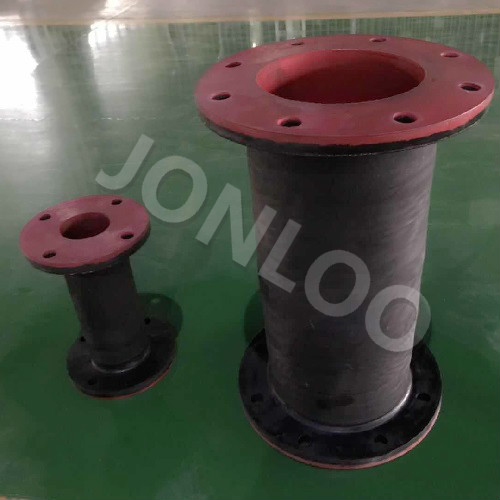
The component of the pinch valve that actually comes into contact with the medium is the internal rubber sleeve; therefore, the performance of the sleeve material has a significant impact on valve operation. Pinch valve sleeves are typically manufactured from natural rubber, synthetic rubber, or engineering plastics with good wear resistance to withstand the scouring and abrasion caused by solid particles in the slurry.
If the sleeve material is damaged by the long-term action of the conveying medium, it can obstruct the fluid channel and affect the normal operation of the valve. Simultaneously, if the sleeve material lacks adequate flexibility, permanent deformation may occur during prolonged compression and recovery cycles, preventing the sleeve from returning completely to the open state. When the sleeve cannot fully open, portions of the material protrude into the media flow path, resulting in a reduced flow area, increased pressure loss, and greater turbulence in the media flow, which further accelerates wear on the inner wall of the sleeve. Therefore, the pinch valve sleeve must possess good elastic recovery capability, wear resistance, and resistance to the medium.
3. Connection Method Design
The connection method for pinch valves is typically designed for installation between pipeline flanges to minimize installation space requirements and facilitate valve disassembly and maintenance. Some pinch valves feature a sterile design, with end flanges that can be flush-connected to the conveying pipeline to reduce fluid stagnation zones. If a completely flush connection cannot be achieved, a sealing structure must be provided between the valve and the connector to prevent particle accumulation and to enable online cleaning.
Pinch valve sleeves can also be designed with extended ports and clamp structures, allowing them to be fitted directly onto the pipe ends. In addition, pinch valves can be provided with standard-size flanged ends to meet the installation requirements of different piping systems.

Selection of Pinch Valve Rubber Sleeve Materials
Next, it is necessary to understand the method for selecting the rubber sleeve material for pinch valves. The choice of rubber sleeve material directly impacts the pinch valve's wear resistance, chemical corrosion resistance, and fatigue resistance, making it a critical step in the selection process.
1. Common Wear-Resistant Materials
Common wear-resistant rubber sleeve materials for pinch valves include styrene-butadiene rubber (SBR), polyurethane (PU), and natural rubber (NR). Standard SBR sleeves are suitable for most controlled pinch valve applications. For high-wear and highly erosive conditions, polyurethane-lined sleeves or high-wear-resistant natural rubber sleeves can be used to enhance wear resistance.
The choice of different materials is typically determined based on slurry concentration, particle characteristics, operating temperature, and wear conditions. Pinch valve rubber sleeves are usually available in a variety of sizes and material options to accommodate different slurry service conditions. Material selection needs to consider factors such as the chemical nature of the conveying medium, particle content, particle hardness, temperature range, and pressure conditions. By selecting the sleeve material appropriately, operational stability can be improved and maintenance frequency reduced.
2. Chemically Resistant Materials
Commonly used sleeve materials for pinch valves also include polytetrafluoroethylene (PTFE), neoprene (polychloroprene), nitrile rubber (NBR), and fluororubber (FKM). Different materials possess varying degrees of chemical corrosion resistance, temperature tolerance, elasticity, and wear resistance, and must be selected based on the nature of the conveyed medium, operating temperature, pressure conditions, and degree of wear. For slurry media containing large amounts of solid particles, rubber materials with high wear resistance are typically required.
3. Fatigue-Resistant Materials
External pinch valve sleeves made from ordinary silicone rubber or flexible polyvinyl chloride (PVC) are prone to fatigue wear during long-term squeezing cycles and require periodic replacement. Internal pinch valve sleeves made from elastomer materials such as ethylene propylene diene monomer (EPDM) rubber or fluororubber generally offer higher fatigue resistance, enabling longer operating cycles. Under suitable working conditions, some pinch valve sleeves can achieve a service life of several years.
Pinch Valve Actuator Types and Selection
Pinch valve actuators include five types: manual, solenoid, electric, pneumatic, and hydraulic. Each type has its specific application scenarios and selection requirements.
1. Manual Actuators
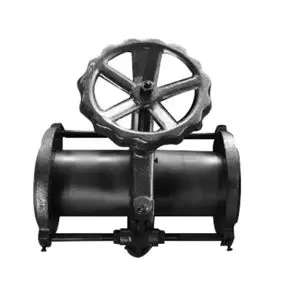
Manual actuators typically operate via a handwheel or crank, completing valve opening and closing manually. The handwheel is connected to a threaded bonnet and a threaded stem, and rotating the handwheel adjusts the position of the compression components, thereby changing the degree of compression of the rubber sleeve. Manual pinch valves do not have automatic control capabilities, but their simple structure makes them suitable for applications that do not require frequent operation or automation.
2. Solenoid Actuators
Solenoid actuators achieve automatic control through electromagnetic force. When an electric current passes through the solenoid coil, a magnetic field is generated around the coil. The iron core or plunger located in the center of the coil is subjected to magnetic force, causing movement that drives the valve to close or open. Solenoid actuators can be designed as normally open or normally closed types. Because electrical signals can act quickly on the solenoid coil, solenoid actuators offer fast response speeds, although they may generate some noise during operation.
3. Electric Actuators
Electric actuators drive the valve using an electric motor, enabling manual, semi-automatic, or automatic operation. High-speed motors typically have forward and reverse functions for controlling valve opening and closing. The operating status of electric pinch valves is usually expressed by the duty cycle, which is calculated as the energization time divided by the total operating time.
Electric actuators can be controlled based on valve position or motor torque, and can also be equipped with limit switches to automatically stop the motor when the valve is fully open or fully closed.
4. Pneumatic Actuators
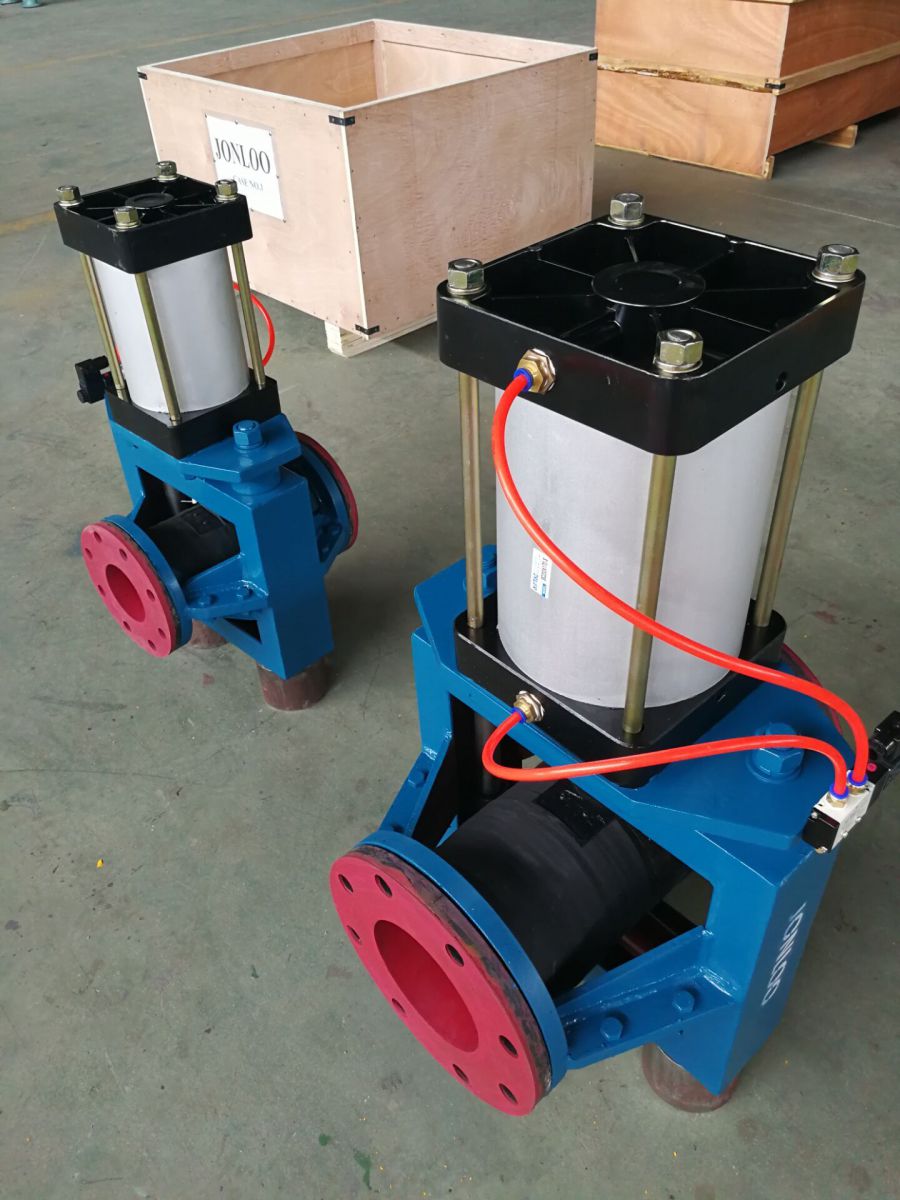
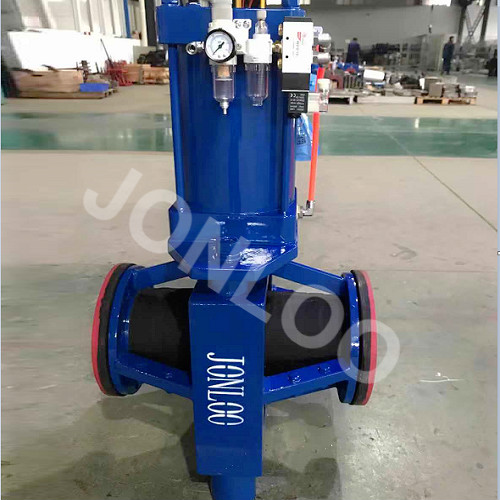
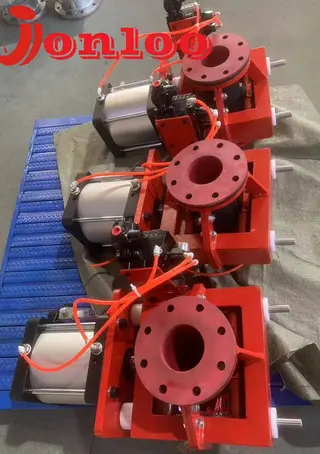
Pneumatic actuators use compressed air to generate power. Air pressure acts on a diaphragm or piston, converting pneumatic signals into stem movement to achieve automatic or semi-automatic control. Pneumatic actuators are characterized by fast action speeds, making them suitable for applications requiring rapid opening/closing or flow regulation.
In pneumatic pinch valves, the plunger encounters spring resistance during the closing process. This resistance gradually increases as the plunger moves, causing the plunger speed to decrease as it nears the closed position, thereby reducing impact and operating noise.
5. Hydraulic Actuators
Hydraulic actuators control valve position through hydraulic medium pressure and can be used for semi-automatic or automatic control. When no hydraulic pressure is applied, spring force keeps the valve in the closed position. When hydraulic medium enters the actuator chamber, internal pressure rises. When the hydraulic pressure exceeds the spring force, the piston moves and opens the valve. To close the valve, hydraulic oil, water, or other hydraulic medium enters the opposite side of the piston, while the fluid on the other side is discharged, causing the piston to move and complete the closing action. Hydraulic actuators can provide high driving forces and are suitable for pinch valve systems of various sizes.
6. Key Considerations for Actuator Selection
The size of the pinch valve actuator must be selected based on the specific valve model and operating conditions. If the actuator is undersized, it may not overcome system resistance, resulting in slow or unstable valve action. If the actuator lacks sufficient stiffness, it may not maintain the closed position, potentially causing the closing component to impact the valve seat and generate pressure surges.
If the actuator is oversized, it will increase equipment cost, weight, and response time, and may generate excessive force that damages internal valve structures. Therefore, the actuator must be properly matched based on valve size, working pressure, operating frequency, and safety factor.

Selection Considerations for Pinch Valves
It is important to master the key considerations when selecting pinch valves. These considerations include evaluating operating conditions, identifying unsuitable applications, and understanding control precision requirements, ensuring the correct pinch valve product is chosen for appropriate working conditions.
1. Evaluation of Operating Conditions
When selecting a pinch valve, a thorough evaluation of operating conditions is required. First, it is necessary to understand the chemical properties of the conveyed medium to determine if the sleeve material's corrosion resistance meets the requirements. Second, the particle content and particle hardness in the slurry should be determined to establish the required wear resistance level of the sleeve material. The operating temperature range directly influences the selection of sleeve material, as different rubber materials have varying temperature tolerances. The working pressure conditions determine the valve structure and actuator selection.
2. Unsuitable Operating Conditions
Pinch valves are not suitable for continuous pulsating flow conditions. This is because pulsating flow causes the rubber sleeve to continuously expand and contract, subjecting the material to long-term cyclic deformation, which accelerates fatigue damage and shortens service life. In systems with continuous pulsating flow, other valve types should be considered.
3. Control Precision Requirements
For applications requiring high flow control precision, controlled pinch valves with tapered sleeve designs should be selected. The tapered sleeve provides an approximately linear flow characteristic, maintaining a stable proportional relationship between valve opening and flow rate, thereby meeting the demands of precise control.
Conclusion
Pinch valves offer distinct technical advantages in slurry flow control systems. Their rubber sleeve construction provides excellent wear resistance, the full-bore design ensures low flow resistance, and the simple maintenance approach reduces operating costs. During the selection process, it is necessary to comprehensively consider factors such as medium properties, operating temperature, pressure conditions, control precision requirements, and actuator type. By rationally selecting sleeve materials and actuators, and avoiding use under continuous pulsating flow conditions, the performance advantages of pinch valves can be fully realized, achieving stable and reliable slurry control.
Send your message to this supplier
Related Articles from the Supplier

Pinch Valve Selection Guide: What You Should Know
- Jul 16, 2026
Related Articles from China Manufacturers
Pinch Valve Advantages & Disadvantages
- Jul 04, 2017
JONLOO Pinch Valve Sleeves
- Sep 30, 2019
How Pinch Valve Works
- Mar 09, 2021
Austrian Liner Pinch Valve
- Mar 02, 2017
Related Products Mentioned in the Article

Zhejiang Kosen Valve Co., Ltd.
- https://www.kosenvalve.com/
- Business Type: Industry & Trading, Manufacturer,
Supplier Website
Source: https://www.kosenvalve.com/media-hub/pinch-valve-selection-guide-what-you-should-know.html