
Leakage Prevention and Maintenance of Knife Gate Valves
Knife gate valves are key devices in industrial pipeline systems specifically used to control fluid flow. Their core component is a gate with a sharp edge, which can cut and isolate the medium in the pipeline like a blade. This design makes knife gate valves particularly suitable for handling complex media that are difficult for ordinary valves to manage, such as slurry containing solid particles, viscous fluids, and powdered materials.
In industries such as mining, wastewater treatment, papermaking, chemical, and power, knife gate valves are widely used. These industries share the common characteristic of frequently transporting abrasive or corrosive media. The structure of knife gate valves is simple and robust, enabling them to maintain stable sealing performance under extreme conditions while reducing maintenance requirements and offering excellent wear resistance.
Compared with traditional valves, the advantage of knife gate valves lies in their ability to effectively cut heavy or abrasive media and achieve reliable sealing. The gate slides into the seat to achieve tight closure, preventing leakage even under high-pressure conditions. This structure performs particularly well in environments prone to blockage and harsh working conditions, reducing clogging, lowering pressure drop, and providing reliable performance in processes requiring precise flow control.
Why Do Knife Gate Valves Leak?
Although knife gate valves are designed with multiple structures to minimize leakage and maintain good sealing performance under harsh conditions, no valve can completely avoid leakage problems. Understanding the specific causes of leakage is the first step in prevention and resolution.
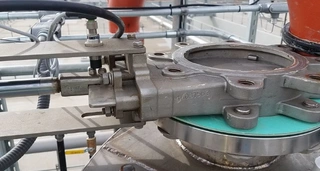
1. Wear of Sealing Components and Packing
Sealing components and packing are the parts most prone to problems in knife gate valves. During long-term operation, especially when handling abrasive media, sealing components will gradually degrade. Friction caused by frequent opening and closing, as well as erosion from particle-laden media, will accelerate wear, thereby reducing sealing performance and increasing the risk of leakage. This wear is more pronounced in applications transporting slurry or media containing solid particles.
2. Improper Installation
Problems during installation are often one of the root causes of leakage. If the valve is poorly aligned with the pipeline, or if bolt torque is uneven, it will lead to uneven stress distribution or sealing failure. This not only causes leakage but also accelerates component damage. The correct installation method should adopt diagonal and uniform tightening to ensure balanced stress at the flange connection.
3. Material Corrosion or Wear
Corrosive media can cause pitting or stress corrosion cracking in metal materials, while high-pressure environments may lead to fatigue or structural deformation. When the medium is highly corrosive, such as with a pH lower than 4 or higher than 10, ordinary carbon steel valve bodies will fail rapidly, and corrosion-resistant stainless steels such as 316L or 904L must be selected.
4. Actuator Failure
For knife gate valves equipped with pneumatic or electric actuators, actuator issues can also lead to leakage. Problems such as insufficient air supply, aging seals, or mechanical wear can prevent the gate from fully closing, resulting in leakage. If a pneumatic actuator fails, the valve cannot operate properly, directly affecting sealing performance.
5. Sealing Issues at Pressure Test Ports
Some knife gate valves have pressure test ports on the bonnet left by the manufacturer during testing. If these ports are not properly sealed, they can easily become leakage points. Before use, ensure that the pressure ports are tightened, and if necessary, seal the screws and threaded holes by welding.
How to Locate Leakage Points in Knife Gate Valves?
When leakage is detected in a knife gate valve, the first step is to identify the exact source of the leakage. Common leakage locations include the following parts:
- Valve Body: Check whether there are visible cracks or damage, which are usually caused by excessive pressure or improper installation.
- Sealing Surface: Inspect the sealing surface between the gate and the seat, which may wear over time and lead to poor sealing.
- Stem Packing: The packing prevents medium leakage along the valve stem; aging or damage can cause leakage.
- Flange Connections: Check for loose bolts or damaged gaskets at flange connections, which can cause leakage.
After determining the leakage location, a detailed inspection of the relevant components is required. Remove the bonnet and check whether the gate and seat are worn, corroded, or damaged. If the sealing surface is damaged, the gate or seat may need to be replaced. At the same time, check whether the stem packing is compressed, aged, or damaged. If it is in poor condition, it should be replaced promptly with packing materials suitable for the working conditions.
Preventive Measures for Knife Gate Valve Leakage
Preventing leakage in knife gate valves requires systematic measures, considering everything from routine maintenance to equipment selection.
1. Establish a Regular Maintenance Mechanism
Maintaining proper lubrication of valve components can reduce friction and wear. Lubricants compatible with the medium and materials should be selected, and lubrication should be performed regularly. Regular inspection and cleaning of sealing components can effectively reduce wear and failure, extending service life. For valves handling slurry conditions, lubrication frequency should be higher than under normal conditions to offset the accelerated wear caused by particles.
2. Reasonable Material Selection
Selecting corrosion-resistant materials such as stainless steel or nickel-based alloys, as well as high-performance sealing materials such as PTFE (polytetrafluoroethylene) or elastomers, can significantly improve sealing performance and reduce maintenance frequency. For high-wear conditions, priority should be given to ceramic gate plates or structures with wear-resistant alloy overlays on the blade edge, which can significantly extend valve service life.
3. Choose Reliable Manufacturers
Selecting manufacturers with strict quality control and certification systems helps ensure product durability and reliability. Qualified manufacturers should have certifications such as ISO 9001 quality management system certification and pressure pipeline component manufacturing licenses (TS certification), ensuring compliance with industrial safety and quality standards.
4. Use Actuators to Improve Control Accuracy
Using pneumatic or electric actuators enables automated operation, providing stable driving force and precise control, reducing human error and lowering the risk of incomplete closure. Pneumatic knife gate valves have fast response and stable opening and closing, making them suitable for industrial scenarios with available air supply and moderate automation levels; electric knife gate valves are suitable for remote control and intelligent monitoring scenarios, making them ideal for automated production lines.
Maintenance Operation Guide for Knife Gate Valves
Daily visual inspections should be carried out to check for leakage at the valve body, valve stem, and flange connections. Check whether there is dirt accumulation or scratches on the gate surface, as these can affect sealing performance. At the same time, pay attention to whether there are abnormal noises during valve operation, which may be an early signal of internal problems.
1. Regular Maintenance Plan
Weekly Inspection: Check whether the packing gland is tightened, manually operate the valve once to test its running condition, check the air supply pressure of the pneumatic actuator, and inspect whether flange bolts are loose.
Monthly Inspection: Clean the gate and seat area, apply grease to moving parts, check whether the actuator has wear or leakage, confirm the alignment between the valve and the pipeline, and review maintenance records for any missing items.
Quarterly or Semi-Annual: Conduct internal inspection, evaluate sealing conditions, and perform performance testing.
2. Key Points of Cleaning and Lubrication
When cleaning the valve cavity, appropriate cleaning agents should be used for flushing, and tools that may scratch the sealing surface should not be used. For horizontally installed valves, it is recommended to use a gate protection cover to prevent debris from entering. When lubricating moving parts, manufacturer-approved lubricants must be used, including for valve stem threads, bearings, and actuator linkages.
3. Flange Connection Maintenance
Flange bolts should be tightened using a diagonal method, that is, tighten one bolt first, then the opposite bolt, proceeding in a cross pattern. Use a torque wrench to ensure the specified torque value is achieved, and recheck all bolts after the first tightening round. Do not tighten bolts in a circular sequence, as this will lead to uneven pressure and cause leakage.
Procedure for Handling Leakage Problems
When leakage is found in a knife gate valve, it should be handled according to the following steps:
1. Confirm Operating Conditions
Check whether the rated pressure and temperature of the valve match the actual working conditions. Excessive pressure or temperature will lead to sealing failure. Confirm whether the flow rate is within the recommended range of the valve, as excessive flow velocity may affect valve performance. At the same time, ensure that the valve material is compatible with the conveyed medium.
2. Inspect and Replace Damaged Components
According to the leakage location, disassemble and inspect the relevant components. If the sealing surfaces of the gate or seat are damaged, they need to be replaced; if the stem packing is aged, it should be refilled with materials suitable for the working conditions; if the gasket is damaged, it should be replaced in time.
3. Re-test
After completing repairs or replacements, fully close the valve, gradually increase pressure, and observe whether there is leakage, using a pressure gauge for monitoring if necessary. Then perform multiple opening and closing operations to ensure smooth action and confirm that no new leakage problems occur.
Industry Standards and Testing Requirements
According to the MSS SP-81 standard, knife gate valves must undergo strict testing. In the valve body shell test, each valve must be subjected to a hydrostatic test at 1.5 times the rated working pressure, and no visible leakage is allowed. In the seat sealing test, testing should be conducted at a differential pressure of 40 psi (2.8 bar), and the maximum allowable leakage rate is 40 ml/min/NPS (1.6 ml/min/DN). Understanding these standards helps correctly evaluate whether the sealing performance of the valve meets requirements.
Conclusion
As key equipment in industrial systems, the sealing performance of knife gate valves directly affects production efficiency and safety. By understanding the working principles of knife gate valves, identifying common causes of leakage, and establishing systematic preventive maintenance mechanisms, enterprises can significantly reduce leakage risks and extend equipment service life.
Effective preventive measures include regular inspection and maintenance, selecting high-quality materials suitable for working conditions, purchasing products from reliable manufacturers, and reasonably configuring actuators to achieve automated control. When dealing with specific leakage problems, a systematic process should be followed: locating the leakage point, inspecting components, confirming operating conditions, repairing or replacing parts, and re-testing.
By implementing these practical management methods, various industries can apply knife gate valve solutions with greater confidence, maintaining efficiency and durability under harsh working conditions and ensuring the continuous and stable operation of industrial systems.
Send your message to this supplier
Related Articles from the Supplier
Ball Valve Leakage: Causes, Prevention and Solutions
- Feb 13, 2026
Valve Leakage and Maintenance Measures
- Feb 05, 2025
How to Prevent Leakage in Steam Trap?
- Sep 18, 2025
Safety Valve Leakage: Causes, Detection & Solutions
- Nov 24, 2025
Control Valve Leakage Classes Explained
- Jan 29, 2026
Related Articles from China Manufacturers


Related Products Mentioned in the Article

Zhejiang Kosen Valve Co., Ltd.
- https://www.kosenvalve.com/
- Business Type: Industry & Trading, Manufacturer,
Supplier Website
Source: https://www.kosenvalve.com/media-hub/leakage-prevention-and-maintenance-of-knife-gate-valves.html