
Electric Butterfly Valves vs. Electric Ball Valves
In the design and construction of industrial automation systems, valve selection is a critical decision that directly affects system efficiency, safety, and economic performance. Electric valves, as core components of automated control, use electric actuators to achieve remote operation and precise regulation. They are widely used in petroleum and chemical industries, water treatment, HVAC systems, power generation, and many other sectors.
Among various types of electric valves, electric butterfly valves and electric ball valves are the two most commonly used due to their simple structure, wide applicability, and high cost-performance ratio. However, they differ significantly in structural principles, performance characteristics, and application scenarios. How to select the appropriate valve based on specific operating conditions is an important issue for engineers. This article provides a systematic comparison of electric butterfly valves and electric ball valves from multiple perspectives, including structure, performance, application, and cost, offering practical guidance for industrial valve selection.
The Role of Electric Valves in Automation Systems
Electric valves are key control elements in industrial automation systems. Driven by electric actuators, they control valve opening and closing to achieve fluid shutoff and flow regulation. Compared with traditional manual valves, electric valves offer remote control, automated operation, and precise adjustment.
They are widely used in petroleum refining, chemical processing, water treatment, HVAC systems, and power plants. In modern industrial environments with increasing automation levels, electric valves have become indispensable components of pipeline systems.
Common types of electric valves include electric ball valves, electric butterfly valves, electric globe valves, and electric gate valves. Among them, electric ball valves and electric butterfly valves are the most widely used due to their simple structure and strong versatility. However, their differences in performance and application scenarios make proper selection crucial for system efficiency and cost optimization.
Guide to Electric Butterfly Valve
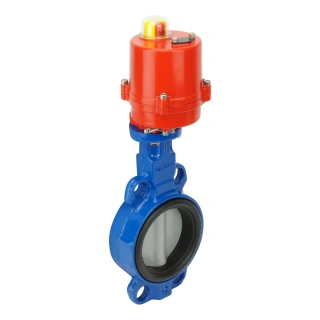
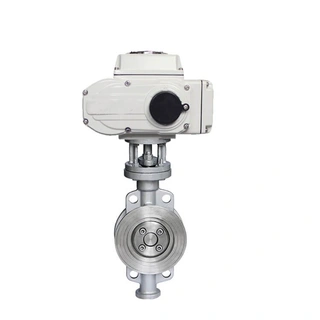
An electric butterfly valve consists of a disc-shaped butterfly plate, valve stem, valve body, and an electric actuator. It features a compact structure, lightweight design, and fast response.
Its main advantages include quick response, low weight, simple structure, and cost advantages in large-diameter applications. It is commonly used in water treatment, HVAC systems, and low-pressure fluid transport. However, its sealing performance is relatively weaker because the butterfly plate remains in the flow path, causing resistance.

1. Electric Butterfly Valve Structure and Working Principle
The electric butterfly valve uses a disc-shaped closure element installed in the diameter direction of the pipeline. The valve stem connects the butterfly plate to the electric actuator. When the actuator rotates the stem, the butterfly plate rotates between 0° and 90°.
- 0° position: fully closed
- 90° position: fully open
Some models support intermediate angles for flow regulation.
2. Electric Butterfly Valve Operating Characteristics
Electric butterfly valves have a simple and compact structure. The thin disc occupies minimal space when open, making the overall design lightweight and space-saving. The actuator allows precise angle control, enabling basic flow regulation. The opening and closing action is fast, with short response time suitable for dynamic systems.
3. Main Advantages of Electric Butterfly Valve
Electric butterfly valves offer several advantages:
- Fast response: full open/close within seconds
- Lightweight structure: reduces pipeline support load
- Simple design: fewer components and lower maintenance requirements
- Cost-effective: especially in large diameters (DN300 and above), significantly cheaper than ball valves
4. Application of Electric Butterfly Valve
Electric butterfly valves are widely used in:
- Water treatment systems (raw water transport, filtration backwash, discharge control)
- HVAC systems (cooling water and chilled water regulation)
- Low-pressure gas or liquid pipelines
- Food and pharmaceutical industries (sanitary-grade butterfly valves)
5. Limitations in Electric Butterfly Valve
Despite their advantages, electric butterfly valves have limitations:
- The butterfly plate remains in the flow path, causing turbulence and pressure loss even when fully open
- Sealing performance is lower compared to ball valves
- Long-term operation may lead to seal wear and leakage risk
- Not suitable for high-pressure systems or applications requiring zero leakage

An Overview of Electric Ball Valve
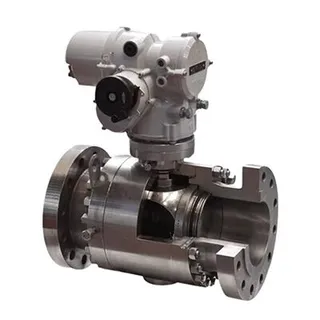
Electric ball valves use a spherical closure element with a through-hole. They provide excellent sealing performance and are widely used in applications requiring reliable shutoff and zero leakage.
Their advantages include superior sealing, high pressure resistance, high flow capacity, and wide application range. They are commonly used in petrochemical, natural gas, and high-pressure steam systems. However, they require higher torque, have higher cost in large sizes, and may trap media inside cavities.

1. Electric Ball Valve Structure and Working Principle
The electric ball valve uses a spherical ball with a central bore. The ball is connected to an electric actuator via a valve stem and rotates 90° for operation:
- When the bore aligns with the pipeline: fully open
- When perpendicular: fully closed
Sealing is achieved through contact between the ball and valve seat, assisted by preload or medium pressure.
2. Electric Ball Valve Operating Characteristics
Electric ball valves provide excellent sealing performance, making them suitable for zero-leakage applications. Full-bore designs allow the internal diameter to match the pipeline, resulting in extremely low flow resistance and minimal pressure drop. The symmetrical structure ensures no flow direction restriction.
3. Main Advantages of Electric Ball Valve
Key advantages include:
- Excellent sealing performance (up to Class VI zero leakage for soft-seated valves)
- High pressure rating (PN16 to PN420)
- High flow capacity with minimal resistance
- Wide applicability for both on/off and limited throttling control
4. Application of Electric Ball Valve
Electric ball valves are suitable for:
- Petrochemical industry (flammable, explosive, toxic media isolation)
- Natural gas pipelines (shutoff and isolation)
- High-pressure steam systems
- Pharmaceutical and food industries (clean media control)
- Automated remote control systems requiring high precision
5. Limitations in Electric Ball Valve
Limitations include:
- High operating torque requires larger actuators, increasing cost and size
- Internal cavities may trap media, causing blockage in crystallizing or particulate fluids
- Seat wear may occur under abrasive conditions
- High cost in large diameters, typically preferred for DN200 and below

Performance Comparison: Butterfly Valve vs. Ball Valve
- Sealing Performance: Ball valves provide superior sealing due to line or surface contact between ball and seat, achieving Class VI zero leakage. Butterfly valves rely on edge sealing, which is more prone to wear and leakage over time.
- Pressure Rating: Ball valves handle higher pressure ranges (PN16–PN420), making them suitable for high-pressure systems. Butterfly valves are generally limited to medium and low pressure (PN10–PN16).
- Flow Capacity and Pressure Drop: Ball valves, especially full-bore designs, offer near-zero flow resistance. Butterfly valves always introduce some obstruction due to the disc remaining in the flow path, resulting in higher pressure drop.
- Operating Torque and Drive Cost: Butterfly valves require lower torque and smaller actuators, reducing cost. Ball valves require higher torque, larger actuators, and therefore higher overall cost.
- Size Range: Butterfly valves are ideal for large diameters (DN50–DN600+). Ball valves are more economical in smaller sizes (typically DN200 and below).
- Cost Comparison: Butterfly valves have lower initial cost, especially in large diameters. Ball valves have higher upfront cost but often lower long-term maintenance cost due to longer sealing life.
Key Selection Factors and Decision Guidelines
- Sealing Requirements: For zero leakage or strict sealing applications (toxic, flammable, or hazardous media), electric ball valves are preferred. For general water or HVAC applications, butterfly valves are sufficient.
- Pressure Level: For PN25 and above, ball valves are more reliable. For PN16 and below, butterfly valves are more cost-effective.
- Pipeline Diameter: DN200 and below: ball valve preferred for sealing accuracy; DN200 and above: butterfly valve preferred for cost efficiency.
Automation Integration and System Efficiency
- Development of Electric Actuators: Modern electric actuators integrate sensors, microprocessors, and communication modules. They support 4–20 mA signals and protocols such as Modbus, Profibus, and HART, enabling seamless integration with SCADA and BMS systems.
- Energy Consumption and Operating Cost: Electric valves consume power only during operation, unlike pneumatic systems that require continuous compressed air. Studies show pneumatic systems may account for 18%–25% of plant energy consumption, while electric systems can reduce energy use by 25%–60%.
- Intelligent Monitoring and Predictive Maintenance: Smart actuators enable real-time monitoring of torque, temperature, and valve status. Predictive maintenance can reduce unplanned downtime by 20%–30%, improving overall efficiency.
- Lifecycle Cost Analysis: Lifecycle cost includes purchase cost, installation, energy consumption, maintenance, and replacement. Ball valves may have higher initial cost but lower long-term maintenance cost. Butterfly valves are cheaper initially but may require more maintenance in demanding conditions.
Summary and Selection Recommendations
- Core Selection Principles: The selection of electric ball valves and electric butterfly valves should be comprehensively evaluated based on specific operating conditions. The core selection principles include: prioritizing sealing requirements, matching pressure ratings, economic comparison of pipeline diameter, adaptability to medium characteristics, meeting installation space conditions, and matching maintenance resource availability.
- Scenarios Where Electric Ball Valves Are Preferred: In the following conditions, electric ball valves should be preferred: high-pressure conditions (PN25 and above), strict sealing requirements (zero leakage or Class VI), small-diameter systems (DN200 and below), critical process sections, frequent opening and closing operations, and control of toxic or hazardous media.
- Scenarios Where Electric Butterfly Valves Are Preferred: In the following conditions, electric butterfly valves should be preferred: medium and low-pressure systems (PN16 and below), large-diameter pipelines (DN200 and above), cost-sensitive projects, space-constrained installations, general industrial applications, and media containing particulate matter.
- Lifecycle Optimization: In practical engineering design, the proper selection of valve types not only improves system efficiency but also significantly reduces operating costs and maintenance burdens. Factors such as initial investment, operating energy consumption, maintenance frequency, and service life should be comprehensively considered to achieve better full lifecycle economy and reliability. Through scientific selection decisions, long-term stable and efficient operation of automation systems can be ensured.
Send your message to this supplier
Related Articles from the Supplier

Electric Butterfly Valves vs. Electric Ball Valves
- Jun 17, 2026

Improve EMI Resistance in Electric Butterfly Valves
- Aug 10, 2026
Installation and Maintenance of Electric Ball Valves
- Dec 14, 2024
Electric Ball Valves: On–Off vs. Modulating Types
- Jan 20, 2026

How to Fix Electric Actuator Overheating
- Aug 03, 2026
Disassembly and Maintenance of Electric Ball Valves
- Sep 03, 2025
Guide to Valve Electric Actuator Selection
- Nov 05, 2025
Related Articles from China Manufacturers

Related Products Mentioned in the Article

Zhejiang Kosen Valve Co., Ltd.
- https://www.kosenvalve.com/
- Business Type: Industry & Trading, Manufacturer,
Supplier Website
Source: https://www.kosenvalve.com/media-hub/electric-butterfly-valves-vs-electric-ball-valves.html