
Differences Between Plug Valves and Butterfly Valves
In industrial pipeline systems, valves are key equipment used to control the flow of fluids. Plug valves and butterfly valves are two common types of valves. They show significant differences in structural design, working principles, and applicable operating conditions. A correct understanding of the characteristics of plug valves and butterfly valves helps engineers make reasonable selections in practical applications, ensuring safe and cost-effective system operation.
Basic Structure and Working Principle
Plug valves and butterfly valves differ fundamentally in how flow is controlled. Plug valves rely on the rotation of a plug body to achieve opening and closing, while butterfly valves use a rotating disc. This fundamental difference determines variations in performance, application scenarios, and maintenance requirements.
1. Structural Features of Plug Valves
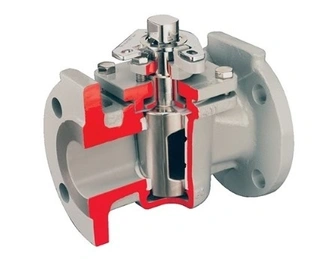
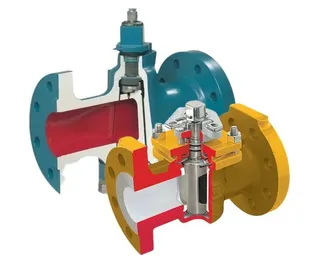
The core component of a plug valve is a cylindrical or conical plug with a through passage. The plug is installed inside the valve body, and flow is controlled by rotating the plug.
When the internal passage of the plug aligns with the inlet and outlet of the pipeline, fluid flows freely through the valve. When the plug is rotated to a position where the passage is misaligned, the flow is blocked.
This structure gives plug valves excellent sealing performance, allowing reliable tight shutoff. A plug valve typically consists of the valve body, plug, stem, and actuator. Although its structure is relatively more complex, it is robust and durable, suitable for demanding operating environments.
2. Structural Features of Butterfly Valves
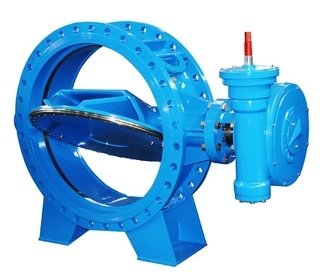
A butterfly valve uses a disc-shaped closing element mounted in the center of the pipeline. The disc rotates around a central axis to control flow.
When the disc is parallel to the flow direction, the valve is fully open, resulting in minimal flow resistance. When the disc rotates perpendicular to the flow, the valve is closed.
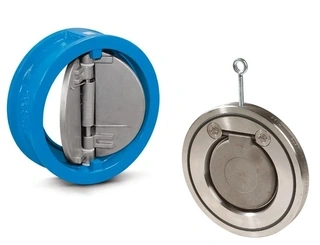
Butterfly valves are compact, lightweight, and occupy little installation space. The valve seat is typically made of elastic materials such as rubber or polytetrafluoroethylene (PTFE), and sealing is achieved by pressing the disc against the seat.
Butterfly valves can be equipped with manual, electric, pneumatic, or hydraulic actuators, making them suitable for automated control systems.
3. Comparison of Working Principles
Plug valves control flow by changing the position of the internal passage within the plug. They typically require multi-turn rotation and relatively high torque for operation.
Butterfly valves control flow by rotating a disc within the pipeline, usually with a 90-degree quick-opening and closing mechanism. They are easier to operate and faster in response.
Although their operating mechanisms differ, both types of valves ultimately serve the purpose of regulating or shutting off fluid flow in pipelines.
Performance Characteristics and Operating Conditions
After understanding structural principles, the next step is to compare their real engineering performance from three key aspects: sealing performance, pressure and temperature range, and flow capacity.
1. Sealing Performance
Plug valves achieve sealing through precise metal-to-metal contact between the plug and valve body. This allows near-zero leakage, making them suitable for applications requiring extremely tight shutoff.
Butterfly valves rely on the compression of soft sealing materials by the disc. Under normal operating conditions, they provide good sealing performance. However, in high-pressure or extreme conditions, their sealing stability is generally lower than plug valves, and slight leakage may occur.
Therefore, in systems requiring strict shutoff performance, plug valves have a clear advantage.
2. Pressure and Temperature Range
Plug valves generally have higher pressure resistance, typically suitable for pressure ranges from 150 psi to 3000 psi. Some high-performance models can exceed 5000 psi. The general temperature range is from -29°C to 232°C, and higher temperatures can be handled with special materials.
Butterfly valves are usually suitable for pressure ranges from 150 psi to 2500 psi. Their temperature range is approximately -29°C to 177°C. Metal-seated butterfly valves can reach up to about 454°C, but such applications are less common.
Overall, plug valves are better suited for high-pressure, high-temperature, and severe operating conditions, while butterfly valves are more suitable for medium and low-pressure systems.
3. Diameter and Flow Control Capability
Plug valves are typically used in small to medium pipeline diameters, generally not exceeding 6 to 8 inches. They are widely used in high-pressure systems where reliable shutoff is required.
Butterfly valves are more suitable for large-diameter pipelines, commonly used in pipelines above 6 inches. They perform well in large-flow transportation systems.
Butterfly valves also provide good flow regulation capability and are suitable for systems requiring frequent adjustment. Plug valves are more suitable for shutoff applications, although they can also perform well in precise flow control scenarios.
Material Selection and Durability
Performance differences are closely related to material selection and sealing methods. This section analyzes material types, sealing components, and long-term durability.
1. Common Materials for Plug Valves
Plug valves are typically made of stainless steel, alloy steel, or special polymers to ensure durability and reliability in high-pressure, high-temperature, and corrosive environments.
Because they are commonly used in petroleum, natural gas, and chemical industries, plug valves require high material strength and corrosion resistance. Both the valve body and plug must withstand high operating torque and fluid pressure, requiring higher-grade materials.
2. Common Materials for Butterfly Valves
Butterfly valves offer a wide range of material options, including cast iron, stainless steel, carbon steel, aluminum alloy, brass, and PVC.
In industrial fluid transport, water treatment, and HVAC systems, cast iron and stainless steel butterfly valves are commonly used. In civilian or low-corrosion environments, PVC butterfly valves are popular due to their low cost and lightweight characteristics.
3. Differences in Sealing Materials
Plug valve sealing mainly depends on precision metal-to-metal contact between the plug and valve body, although some designs use auxiliary soft sealing materials.
Butterfly valve seats are usually made of rubber or PTFE, which enhance sealing performance and extend service life. However, in highly corrosive or abrasive media, these sealing components may require more frequent replacement.
Selection of sealing materials should consider fluid type, temperature, and pressure conditions.
Operation and Maintenance Requirements
In addition to material and performance, ease of operation and maintenance cost are also important selection factors.
1. Operating Torque and Actuation
Plug valves generally require higher operating torque due to their structural characteristics, especially in large sizes or high-pressure conditions. Although electric or pneumatic actuators can be used, operational load remains relatively high in large systems.
Butterfly valves are easier to operate due to lower resistance. Manual operation is simple, and they can be easily integrated with various actuators for automated control. They are ideal for systems requiring frequent operation or fast response.
2. Routine Maintenance Considerations
Maintenance of plug valves is relatively complex. Regular inspection of sealing components and lubrication conditions is required. Lubricated plug valves need periodic lubrication to ensure smooth operation and reliable sealing. Internal structures are more complex, and maintenance may involve disassembling multiple components.
Butterfly valves have a simple structure and are easier to maintain at lower cost. Maintenance mainly focuses on the condition of the disc, stem, and sealing elements, and the overall maintenance workload is relatively low under normal conditions.
3. Service Life Comparison
Under harsh conditions such as high pressure, high temperature, and corrosive media, plug valves generally offer longer service life and lower leakage risk due to their robust structure and high-grade materials.
Butterfly valves perform well under normal conditions, but in highly corrosive, abrasive, or high-frequency operating environments, sealing components may wear faster and require more frequent replacement.
From a long-term operational perspective, plug valves offer higher reliability in demanding environments.
Installation Space and Cost Analysis
Engineering selection must consider installation conditions and life-cycle cost.
1. Installation Space Requirements
Plug valves are larger and heavier, requiring more installation space and precise alignment to ensure sealing performance. Adequate space must be reserved for operation and maintenance.
Butterfly valves feature a thin-wafer design and can be installed between two flanges. They require minimal installation space, making them ideal for compact piping systems or densely arranged pipeline layouts.
2. Initial Investment Cost
Due to their complex structure and higher material grades, plug valves generally have higher manufacturing and procurement costs.
Butterfly valves are simpler, lighter, and more economical in both purchase and installation costs, making them suitable for large-scale applications or budget-sensitive projects.
3. Long-Term Operating Economy
Although plug valves have higher initial costs, they offer excellent long-term value in high-pressure and high-reliability applications due to low leakage rates, long maintenance intervals, and high durability.
Butterfly valves have lower initial costs, but in high-corrosion or heavy-duty environments, maintenance frequency and operating costs may increase.
Therefore, life-cycle cost evaluation should include procurement, installation, maintenance, and potential downtime losses caused by leakage.
Application Areas and Selection Recommendations
Based on the above comparisons, this section provides practical application scenarios and selection guidelines.
1. Typical Applications of Plug Valves
Plug valves are suitable for applications requiring strict sealing and high-pressure/high-temperature conditions.
In the oil and gas industry, they are used in high-pressure transport systems and emergency shutoff applications to effectively prevent leakage.
In chemical processing systems, plug valves are suitable for corrosive media and high-viscosity fluids. They also perform well in high-purity systems and applications requiring in-line maintenance, as they can often be serviced without pipeline disassembly, reducing downtime.
2. Typical Applications of Butterfly Valves
Butterfly valves are widely used in water treatment, HVAC systems, municipal water supply networks, and general industrial fluid transport.
In the paper industry, they are used for slurry transport. In power systems, they are used for cooling water and large-flow media control.
They are particularly advantageous in space-limited installations or systems requiring frequent operation. Their fast response makes them suitable for dynamic flow control in large pipelines.
3. Key Selection Criteria
Selection between plug valves and butterfly valves should consider several factors:
First, medium characteristics, including type, viscosity, corrosiveness, and solid content. High-viscosity, corrosive, or high-risk media are more suitable for plug valves, while water, air, and general chemicals are suitable for butterfly valves.
Second, operating conditions such as pressure, temperature, and sealing requirements. High-pressure, high-temperature, and strict shutoff applications favor plug valves, while medium-low pressure and space-limited systems favor butterfly valves.
Third, operating frequency and maintenance capability. Systems requiring frequent operation are better suited to butterfly valves, while systems requiring high reliability and infrequent operation are better suited to plug valves.
Finally, cost and space constraints should be considered to achieve the best balance between performance and economy.
Conclusion
Plug valves and butterfly valves each have distinct structural features and performance advantages. Plug valves are known for high sealing performance, reliability, and strong pressure resistance, making them suitable for severe industrial environments. Butterfly valves are known for compact structure, easy operation, and cost advantages, making them suitable for large-flow and space-constrained applications.
In practical selection, engineers should comprehensively evaluate medium characteristics, operating conditions, installation space, maintenance capability, and budget constraints to choose the most suitable valve type, ensuring safe, stable, and economical pipeline system operation.
Send your message to this supplier
Related Articles from the Supplier
Differences Between Plug Valves and Butterfly Valves
- May 14, 2026
Use and Difference of R and G Pipe Threads
- Dec 14, 2024
Related Articles from China Manufacturers
Differences Between Plug Valves and Ball Valves
- Nov 30, 2023


Differences between Steel and Iron
- Jul 05, 2014

Related Products Mentioned in the Article

Zhejiang Kosen Valve Co., Ltd.
- https://www.kosenvalve.com/
- Business Type: Industry & Trading, Manufacturer,
Supplier Website
Source: https://www.kosenvalve.com/media-hub/differences-between-plug-valves-and-butterfly-valves.html