
Inverted Bucket vs. Float Steam Traps: What's the Difference
Steam traps are critical equipment in steam systems. Their core function is to discharge condensate (liquid water) while preventing steam loss. Simply put, the role of a steam trap is to keep steam inside the system while discharging condensate. Although this task seems simple, it directly affects the operational efficiency, energy consumption, and equipment lifespan of the entire steam system.
Selecting the appropriate steam trap is crucial for maintaining system efficiency and ensuring proper condensate discharge. Improper selection may lead to steam leakage, causing energy waste, or poor drainage, resulting in equipment damage. Among various types of steam traps, float steam traps and inverted bucket steam traps are two of the most common designs. This article provides a detailed comparison of these two steam traps to help you make the right choice for your system.
Detailed Explanation of Float Steam Traps
After understanding the basic function of steam traps, let's first look at float steam traps. This type of trap uses a float to detect the water level inside the valve. When condensate accumulates, the float rises and opens the valve to discharge the condensate while preventing steam from escaping. Float steam traps are widely used in low-pressure systems and are currently one of the most common types of steam traps in industry.
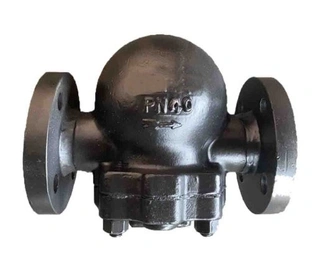
1. Working Principle of Float Steam Traps
Float steam traps operate based on the buoyancy mechanism of the float. When condensate enters the trap and accumulates, the float rises with the liquid level. When the liquid level reaches a certain height, the float actuates a valve stem connected to it, opening the valve to discharge the condensate. As the condensate is discharged, the liquid level falls, the float descends, and the valve closes, preventing steam from escaping.
This operating method allows float steam traps to achieve continuous drainage. As long as condensate keeps entering, the valve continuously adjusts its opening based on the liquid level, maintaining a stable drainage state.
2. Main Features of Float Steam Traps
Float steam traps have the following notable features:
- Continuous operation: Float steam traps can continuously discharge condensate, ensuring stable removal without disturbing steam flow. This feature is particularly suitable for processes requiring precise temperature control.
- Simple structure: The design is relatively simple, with the main moving components being the float and linkage mechanism. This simplicity results in lower maintenance requirements and high reliability.
- Energy-efficient: By discharging condensate promptly and effectively sealing steam, float steam traps reduce steam loss and improve overall system efficiency.
- High adaptability: Float steam traps can handle high condensate loads and various operating pressures, performing especially well in systems with stable condensate flow.
3. Suitable Applications of Float Steam Traps
Float steam traps are most suitable for the following applications:
- Low-pressure steam systems: Provide sufficient performance with low maintenance in low-pressure environments.
- Systems with stable condensate load: Continuous drainage is most effective when condensate flow is relatively stable.
- Processes requiring precise temperature control: Continuous drainage supports processes requiring accurate temperature regulation.
- Small to medium-sized systems: Float steam traps offer good cost-effectiveness for smaller systems.
4. Industry Applications of Float Steam Trap
Float steam traps are widely used across multiple industries:
- Power industry: Used in turbine and boiler systems to efficiently discharge condensate, ensuring continuous steam flow and preventing equipment damage.
- Chemical industry: Suitable for high-condensate-load systems, ensuring process stability and safety.
- HVAC systems: Prevents water accumulation and improves energy efficiency.
- Food and beverage industry: Ensures clean, dry steam to maintain product quality.
- Pharmaceutical industry: Helps maintain a contamination-free steam environment, meeting strict hygiene standards.
5. Key Selection Points for Float Steam Traps
When selecting a float steam trap, the following factors should be considered:
- Material compatibility: Ensure that the valve body material can withstand operating conditions and has good corrosion resistance. Common materials include bronze or stainless steel.
- Capacity and size: Must match the system's condensate load to avoid overflow or inefficiency. Correct sizing is critical: oversizing causes unnecessary energy loss, while undersizing prevents effective drainage.
- Temperature and pressure rating: Ensure the device meets system operating conditions.
- Ease of maintenance: Prefer products with structures that are easy to inspect and maintain.
Detailed Explanation of Inverted Bucket Steam Traps
After introducing float steam traps, let's examine another common type—inverted bucket steam traps. This is still one of the oldest designs widely in use today. Its structure is robust, and its principle is straightforward, so it is widely installed and stocked. Unlike the continuous drainage of float steam traps, inverted bucket traps achieve intermittent drainage based on buoyancy, performing especially well in high-pressure and high-flow systems.
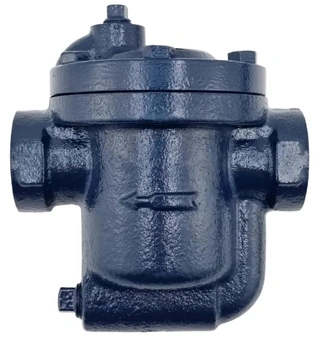
1. Working Principle of Inverted Bucket Steam Traps
The inverted bucket steam trap is one of the oldest designs still widely used. Its working mechanism is relatively simple: inside the valve body, a small metal bucket with a bottom opening is immersed in condensate. When steam enters the trap, it enters the inverted bucket, generating buoyancy that lifts the bucket. The lever mechanism connected to the bucket transfers this buoyancy to the valve, closing the discharge valve at the top of the body and retaining steam in the system.
As the steam inside the bucket gradually condenses or is displaced by condensate, the bucket loses buoyancy and sinks. At this point, the lever opens the valve, and condensate is discharged. This process then repeats cyclically.
It should be noted that this working method is intermittent rather than continuous. Condensate accumulates inside the valve body between discharges.
2. Main Features of Inverted Bucket Steam Traps
Inverted bucket steam traps have the following features:
- Mechanical durability: The structure only contains two main moving parts: the bucket and the lever assembly. There are no fixed pivots, springs, bellows, or sealed chambers, making it easy to inspect, maintain, and resistant to hard-to-detect faults.
- Water hammer resistance: The open-bottom bucket design provides better resistance to hydraulic shocks than closed float or bellows structures, suitable for main steam lines and trap branches prone to condensate shock.
- Good anti-fouling: The valve seat is located at the top of the body, away from areas of sediment accumulation. The bucket's vertical movement and intermittent discharge provide some self-cleaning effect, giving it practical advantages in aging pipelines or systems with variable water quality.
- Backpressure adaptability: Although increased backpressure reduces differential pressure and affects discharge rate, the trap can still operate because the force needed to open the valve decreases accordingly.
3. Limitations of Inverted Bucket Steam Traps
Inverted bucket steam traps also have some notable drawbacks:
- Intermittent drainage: Being cyclical rather than continuous, they are limited in applications requiring immediate continuous drainage to maintain heat transfer efficiency.
- Risk of losing water seal: This type relies on the water seal around the bucket bottom to operate properly. If the seal is lost due to sudden pressure drops, shutdowns, or intermittent operation, the trap may leak steam.
- Weaker air venting capability: Compared to other trap types, air discharge is slower, potentially delaying temperature rise and leaving air trapped during startup or shutdown.
- Sensitivity to low temperatures: The internal water seal makes it prone to freezing in outdoor or poorly insulated environments, which may damage the valve body.
- Unsuitable for frequent pressure fluctuations: Pressure changes affect the buoyancy condition inside the bucket, leading to unstable operation or loss of the water seal, making it unsuitable for systems with frequent pressure regulation.
4. Suitable Applications for Inverted Bucket Steam Trap
Inverted bucket traps are suitable for:
- High-flow systems: Can handle large condensate loads.
- High-pressure systems: Stable performance under high pressure.
- Systems with moderate pressure fluctuations: Reliable within a certain range.
- High water hammer risk scenarios: Such as main steam and branch lines.
- Systems with poor water quality or aging pipes: Anti-fouling design provides advantages in such conditions.
Comparison Between Float and Inverted Bucket Steam Traps
Previously, we introduced the working principles and characteristics of float and inverted bucket traps. So what are the specific differences in practical applications? The following comparison examines working principle, performance, cost, and maintenance to help select the right trap based on system requirements.
1. Working Principle Comparison
Comparison Item Float Steam Trap Inverted Bucket Steam Trap
Control Method Float moves with liquid level to control valve Bucket moves with buoyancy to control valve
Drainage Type Continuous drainage Intermittent drainage
Response Speed Real-time with liquid level Cyclical response
2. Performance Comparison
- Efficiency: Float traps provide continuous drainage, beneficial for processes requiring precise temperature control. Inverted bucket traps' intermittent drainage may affect heat transfer efficiency in some applications.
- Pressure Adaptability: Float traps are suitable for low-pressure systems; inverted bucket traps are better for high-pressure systems and maintain reliability under pressure fluctuations.
- Flow Adaptability: Float traps suit systems with stable condensate load; bucket traps can handle high and fluctuating flow rates.
3. Cost and Maintenance Comparison
- Initial Cost: Float traps are generally more cost-effective for small systems due to simple design and fewer moving parts. Bucket traps have more complex structures and higher initial costs.
- Maintenance Requirement: Float traps have fewer moving parts and are easy to maintain in stable systems. Bucket traps are robust but require more attention to moving parts and water seals.
- Service Life: Both can achieve long service life with proper maintenance. Continuous operation reduces mechanical shocks in float traps, while simple mechanics ensure durability in bucket traps.
4. Selection Recommendations
Choose Float Steam Traps If:
- System pressure is low
- Condensate load is relatively stable
- Continuous drainage and precise temperature control are needed
- System scale is small or medium
- Maintenance resources are limited
Choose Inverted Bucket Steam Traps If:
- System pressure is high
- Condensate flow is large or fluctuating
- Risk of water hammer exists
- Water quality is poor or pipelines are aging
- High mechanical durability is required
Key Factors in Steam Trap Selection
Regardless of the type, the following factors must be considered:
- System Pressure: System operating pressure is the primary consideration. Low-pressure systems (such as HVAC) usually suit float traps; high-pressure systems (like main steam lines in power plants) are better suited for bucket traps or other high-pressure models.
- Condensate Load: Evaluate the system's condensate generation and variability. Stable loads suit the continuous drainage of float traps; variable loads may require the intermittent discharge capability of bucket traps.
- Temperature Requirements: For processes requiring precise temperature control, float traps' continuous drainage helps maintain stable temperatures. For general heating applications, inverted bucket traps can usually meet the requirements.
- Installation Environment: Consider the environmental conditions of the installation site. Outdoor or low-temperature locations should avoid bucket traps due to freezing risk. Space constraints require attention to trap size and connection type.
- Maintenance Capability: Evaluate available maintenance resources and skills on site. Float traps are generally easier to maintain. Bucket traps, while robust, require regular inspection of the water seal and internal wear.
Conclusion
Float and inverted bucket steam traps each have distinct features and suitable applications. Float traps are simple, low-cost, and provide continuous drainage, making them ideal for low-pressure, stable condensate-load small to medium systems. Inverted bucket traps are mechanically durable, resistant to water hammer, and have good anti-fouling capability, suitable for high-pressure, high-flow, or water hammer-prone systems. When selecting a steam trap, factors such as system pressure, condensate load, temperature requirements, installation environment, and maintenance capability should all be considered. Proper selection ensures normal system operation, improves energy efficiency, reduces operating costs, and extends equipment life.
Send your message to this supplier
Related Articles from the Supplier
What are Inverted Bucket Steam Traps?
- Aug 29, 2025
Related Articles from China Manufacturers
Inverter DC Generators: Key Components and Functions
- Nov 03, 2024
Inverter Generator Failures: Causes and Solutions
- Feb 08, 2025

WHO INVENTED BALL VALVE?
- Aug 18, 2018
How Inverter Generators Work
- Mar 18, 2026

Related Products Mentioned in the Article

Zhejiang Kosen Valve Co., Ltd.
- https://www.kosenvalve.com/
- Business Type: Industry & Trading, Manufacturer,
Supplier Website
Source: https://www.kosenvalve.com/media-hub/inverted-bucket-vs-float-steam-traps-what-s-the-difference.html