Guide to the Free Forging Process of Nickel-Based Alloys
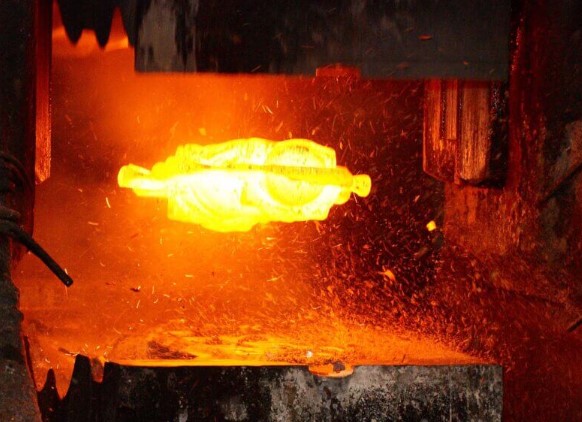
Nickel-based alloys are indispensable high-performance materials in modern industry. Thanks to their outstanding high-temperature strength, excellent corrosion resistance, and superior mechanical properties, they are widely used in critical sectors such as aerospace, petrochemical processing, nuclear energy, and automotive manufacturing. Among various processing methods, free forging stands out as a core technique for producing high-quality nickel-based alloy forgings due to its high flexibility, strong adaptability, and ability to significantly improve the internal structure of materials. This article provides a detailed overview of the complete free forging process of nickel-based alloys, offering a comprehensive understanding of this complex and precise manufacturing technology.
The first step in nickel-based alloy free forging is raw material preparation, which directly determines the upper performance limit of the final product. Manufacturers must select high-purity nickel-based alloy materials and ensure that the content of key alloying elements, such as nickel, chromium, cobalt, iron, and various trace elements, strictly complies with industry standards and technical specifications.
Quality control at this stage involves not only chemical composition analysis but also physical property testing. Before entering production, raw materials typically undergo preliminary heat treatment to eliminate internal residual stresses and improve the microstructure, thereby enhancing forgeability. This pretreatment is essential for preventing defects such as cracking and uneven deformation during the subsequent forging process.
Additionally, a comprehensive traceability system should be established during raw material preparation. Information such as the source of the material, chemical composition, and heat treatment parameters for each batch must be recorded to support later quality control and product certification.
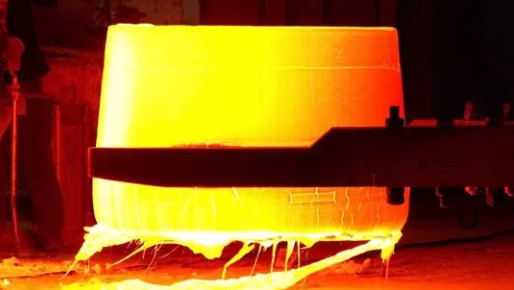
Precision Melting Process: Melting is a critical stage in nickel-based alloy production and is usually carried out using electric arc furnaces or induction furnaces. During melting, technicians must strictly control the temperature and furnace atmosphere to prevent oxidation or burning loss of alloying elements at high temperatures. Precise temperature control is essential for maintaining the uniformity of alloy composition. Excessively high or low temperatures may negatively affect the final performance of the alloy. After melting is completed, a detailed chemical composition analysis is performed using advanced instruments such as spectrometers to verify that the elemental composition fully meets design requirements. Only qualified molten alloys proceed to the next step.
Casting Formation: Based on the shape and size of the target forging, engineers design specialized casting molds. These molds must possess excellent high-temperature resistance, wear resistance, and corrosion resistance. Common mold materials include heat-resistant alloy steels and special ceramic materials. Before casting, molds are preheated to reduce the temperature difference between the molten metal and the mold, preventing thermal stress cracking. During pouring, technicians must precisely control the pouring speed and temperature while using a well-designed gating system to minimize defects such as gas bubbles, shrinkage cavities, and inclusions. After cooling, the casting undergoes necessary pre-processing, including removal of risers and gates, burr cleaning, and surface finishing, preparing it for the subsequent forging stage.
Preheating is a crucial step that greatly influences forging success. Nickel-based alloys are typically heated to a temperature range of 800–1300 °C, depending on the alloy composition and the complexity of the forging.
The main objective of preheating is to increase material plasticity and reduce deformation resistance, allowing the metal to flow more easily during forging.
Temperature uniformity must be strictly maintained during heating to avoid localized overheating or insufficient heating. Uneven temperatures may lead to defects such as cracks or folds during forging. Modern forging facilities often use advanced heating equipment such as gas-fired furnaces or induction heating systems, equipped with precise temperature control and homogenization devices to ensure consistent heating throughout the billet.
Heating time must also be carefully controlled. Insufficient heating may lead to incomplete thermal penetration, while excessive heating can cause grain coarsening, which adversely affects the final mechanical properties.
Forging Equipment and Process Selection: During the actual forging stage, either forging hammers or hydraulic presses can be used depending on the size and complexity of the forging. Forging hammers are suitable for small and medium-sized forgings and offer high striking speed and high production efficiency. Hydraulic presses are better suited for large and complex forgings, providing stable pressure and precise stroke control. The essence of free forging lies in applying deformation operations such as compression, drawing, upsetting, and elongation, allowing the metal to undergo plastic flow in three-dimensional space and gradually approach the desired shape and dimensions. Unlike die forging, free forging does not require dedicated molds, offering exceptional flexibility and making it particularly suitable for small-batch, multi-variety production.
Control of Process Parameters: During forging, controlling the deformation ratio and forging temperature is crucial. If the deformation ratio is too small, the internal structure of the material cannot be sufficiently improved. If it is too large, cracking or performance degradation may occur. Engineers usually adopt a multi-pass, small-deformation forging process based on the material's deformation resistance and equipment capacity. Temperature control is equally critical. Excessive temperatures may cause grain coarsening, while temperatures that are too low significantly increase deformation resistance and may lead to cracking. Therefore, billet temperature must be monitored continuously during forging, and intermediate reheating may be required. Through precise forging control, the product can achieve dimensions close to the design specifications, reducing machining allowance and improving material utilization.
- Annealing Treatment: After forging, residual stresses accumulate within the forging, and microstructural inconsistencies may occur. Annealing treatment is therefore required to eliminate residual stress and restore the material's toughness and ductility. For nickel-based alloys, annealing is typically conducted at 1000–1200 °C, with holding times ranging from several hours to over ten hours, followed by slow cooling.
- Strengthening Heat Treatment: To further enhance mechanical properties, nickel-based alloy forgings often undergo solution treatment and aging treatment.
- Solution treatment: The forging is heated to 1200–1300 °C, allowing strengthening phases to dissolve fully into the matrix. Rapid quenching then forms a supersaturated solid solution.
- Aging treatment: Performed at lower temperatures, usually 700–900 °C, this step promotes the precipitation of fine and uniformly distributed strengthening phases, significantly improving alloy strength and hardness.
This heat treatment combination is essential for achieving the excellent high-temperature performance characteristic of nickel-based alloys.
After forging and heat treatment, nickel-based alloy forgings have essentially taken shape and developed favorable microstructural properties. However, surface scale, forging marks, and dimensional deviations still remain. Therefore, precision machining and comprehensive quality inspection are required to ensure compliance with design specifications.
Heat-treated forgings must undergo machining operations such as turning, milling, grinding, and drilling to achieve the required dimensional accuracy and surface quality.
Nickel-based alloys are classified as difficult-to-machine materials due to their high strength and toughness. Key challenges include high cutting forces, elevated cutting temperatures, and severe tool wear.
Therefore, machining typically employs carbide or ceramic cutting tools, small cutting depths, and controlled feed rates, combined with adequate cooling and lubrication to achieve good surface quality and extended tool life.
Quality inspection is the final safeguard ensuring the reliability of nickel-based alloy forgings. Inspection procedures typically include:
- Dimensional accuracy inspection: Using coordinate measuring machines (CMM) to verify geometric dimensions and tolerances.
- Surface quality inspection: Visual inspection, magnetic particle testing, or penetrant testing to detect surface cracks, folds, and oxidation.
- Microstructural analysis: Metallographic microscopes and scanning electron microscopes analyze grain size, phase composition, and inclusion distribution.
- Non-destructive testing: Ultrasonic and X-ray inspection detect internal defects such as shrinkage cavities, cracks, and inclusions.
- Mechanical property testing: Tensile tests, impact tests, hardness tests, and fatigue tests verify whether the material meets required strength and toughness standards.
Forgings produced through nickel-based alloy free forging technology are widely used in many industrial sectors due to their excellent mechanical properties and reliability.
- Aerospace: Turbine blades, turbine disks, combustion chamber components, landing gear, and aircraft structural parts.
- Petrochemical industry: Refining equipment, chemical reactors, high-pressure valves, and pipeline connectors operating under high temperature and corrosive environments.
- Energy and power generation: Gas turbine blades, steam turbine rotors, generator components, and nuclear reactor pressure vessels.
- Automotive manufacturing: High-performance engine components such as crankshafts, connecting rods, piston pins, and turbocharger impellers.
- Marine engineering: Ship engine components, seawater desalination equipment, and subsea pipeline valves.
- Defense industry: High-performance structural and power components used in military equipment and weapon systems.
Free forging offers several significant advantages in the processing of nickel-based alloys:
- Microstructure optimization: Plastic deformation closes internal casting defects such as porosity and shrinkage, refines grains, and forms favorable fiber structures that improve density and mechanical performance.
- High material utilization: Forgings closely approach the final shape, reducing machining allowance and saving expensive alloy materials.
- Production flexibility: Without dedicated dies, free forging is ideal for small-batch, customized, large, or irregular forgings.
- Reliable performance: Forgings possess dense internal structures and uniform properties, resulting in longer service life under cyclic loads and harsh conditions.
- Quality traceability: Comprehensive production records and strict inspection systems ensure full traceability, meeting the stringent requirements of industries such as aerospace and nuclear energy.
Nickel-based alloy free forging is a complex manufacturing process involving multiple disciplines and processing stages. From strict raw material selection and precise melting and casting, to scientific preheating and forging, careful heat treatment control, precision machining, and comprehensive quality inspection, each step requires skilled technical operation and rigorous process management.
With the rapid development of advanced industries such as aerospace, new energy, and deep-sea engineering, the demand for high-performance nickel-based alloy forgings continues to grow. As a result, free forging technology is evolving toward larger scale, higher precision, and intelligent manufacturing. Mastering advanced free forging techniques is therefore of great strategic significance for enhancing the competitiveness of high-end equipment manufacturing.
