
Helical Coil Heat Exchanger: Principle, Structure & Application
In modern industrial production, efficient energy utilization and precise temperature control are key factors for ensuring production efficiency and product quality. As core equipment for achieving heat transfer, heat exchangers exist in almost every industrial process that requires temperature regulation. From petrochemicals to food processing, from power generation to renewable energy utilization, heat exchangers play an indispensable role.
Among the many types of heat exchangers, the helical coil heat exchanger has gradually become a focal point in the industrial field due to its unique structural design and excellent heat transfer performance. It can achieve highly efficient heat exchange within a limited space, making it particularly suitable for applications where space is constrained and high thermal efficiency is required. This article provides a comprehensive introduction to its structure, working principle, heat transfer mechanism, performance optimization methods, application fields, advantages, and limitations, helping readers systematically understand this important industrial equipment.
What Is a Heat Exchanger?
A heat exchanger is a type of equipment used to transfer heat between two or more fluids. Its core function is to achieve heating, cooling, condensation, or evaporation without allowing direct mixing of the fluids. In simple terms, a heat exchanger acts like a “heat carrier,” transferring thermal energy from a high-temperature fluid to a low-temperature fluid while keeping them physically separated.
Heat exchangers are widely used in petrochemical industries, HVAC systems, renewable energy systems, and food processing industries. They are also present in everyday life, such as car radiators, home air conditioners, and water heaters.
Common types of heat exchangers include shell-and-tube heat exchangers, plate heat exchangers, and finned-tube heat exchangers. Different types are suitable for different operating conditions. This article focuses on a special type: the helical coil heat exchanger.
Basic Understanding of Helical Coil Heat Exchangers
A helical coil heat exchanger is a special type of heat transfer device that uses a helical coil as the primary heat transfer element. Heat exchange is achieved through fluid flow inside or outside the coil. The structure mainly consists of two core components: the helical coil itself and the outer shell. The geometric parameters of the coil significantly influence its thermal performance.
Depending on flow configuration, it can be classified into co-current and counter-current types. In terms of materials, heat transfer tubes are commonly made of stainless steel, copper, or various alloy materials.
1. What Is a Helical Coil Heat Exchanger?
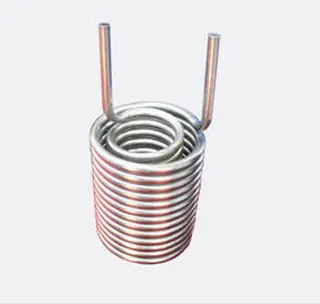
A helical coil heat exchanger is characterized by its helical tube structure. Fluids flow either inside the coil or in the surrounding shell side, enabling heat transfer through the tube wall. Because the coil is arranged in a helical form, the fluid travels along a longer flow path, significantly increasing heat transfer time and contact area.
Compared with traditional straight-tube heat exchangers, helical coil heat exchangers offer higher thermal efficiency and a more compact structure. They can provide a large heat transfer area within a relatively small space, making them ideal for compact and high-efficiency applications.

2. Main Structural Components of Helical Coil Heat Exchanger
The structure of a helical coil heat exchanger typically includes two core parts: the helical coil and the outer shell.
The helical coil serves as the main heat transfer surface. Two fluids flow separately inside the coil and in the annular space between the coil and the shell (commonly called the annulus), exchanging heat through the tube wall.
Key geometric parameters include:
- Coil diameter: affects flow path length and heat transfer area
- Pitch: the distance between adjacent coil turns, influencing flow behavior in the annulus
- Number of turns: determines the total heat transfer length
A smaller pitch and larger diameter generally improve heat transfer efficiency but may increase flow resistance and pressure drop. Therefore, design optimization requires balancing performance and energy consumption.
The outer shell provides structural support and ensures orderly fluid flow within each channel.

3. Helical Coil Heat Exchanger Flow Configuration Types
Helical coil heat exchangers can operate in two main flow arrangements:
- Co-current flow: Both fluids flow in the same direction. This configuration is simple but results in decreasing temperature driving force along the flow path, leading to lower efficiency.
- Counter-current flow: Fluids flow in opposite directions. This arrangement maintains a higher temperature difference, resulting in significantly improved heat transfer efficiency and is therefore more commonly used in industrial applications.

4. Helical Coil Heat Exchanger Material Selection
Common materials for heat transfer tubes include stainless steel, copper, and various alloys. Material selection must meet several requirements:
- Corrosion resistance: ability to withstand chemical attack
- Thermal conductivity: efficient heat conduction through tube walls
- Mechanical strength: resistance to pressure and temperature variations
Proper tube diameter design is also essential for controlling flow velocity and pressure drop. Depending on process requirements, helical coil heat exchangers may use single-coil or multi-coil configurations. Multi-coil designs provide larger heat transfer areas and are suitable for multi-fluid or high-load applications.
Working Principle and Heat Transfer Mechanism
Heat transfer in helical coil heat exchangers occurs through conduction, convection, and radiation, although radiation is usually negligible. The helical structure enhances heat transfer by promoting turbulence, extending flow paths, and increasing fluid mixing.
Performance is typically evaluated using parameters such as the overall heat transfer coefficient, logarithmic mean temperature difference (LMTD), and the effectiveness-NTU method.
1. Three Modes of Heat Transfer
- Conduction: Heat transfer through the solid tube wall from the hot side to the cold side. It depends on thermal conductivity and wall thickness.
- Convection: The dominant mechanism, occurring between fluids and the tube wall. Heat is transferred through fluid motion.
- Radiation: Generally negligible in helical coil heat exchangers.
2. How Helical Structure Enhances Heat Transfer
The helical geometry significantly affects fluid dynamics:
- Turbulence enhancement: Helical flow promotes turbulence rather than laminar flow, greatly improving heat transfer coefficients
- Extended flow path: Longer flow distance increases heat exchange time
- Increased fluid mixing: Enhanced disturbance reduces boundary layer thickness
3. Performance Evaluation Indicators
Key performance metrics include:
- Overall heat transfer coefficient (U-value): Represents total thermal performance considering all resistance factors. Higher U-values indicate better heat transfer capability.
- Logarithmic Mean Temperature Difference (LMTD): Used to evaluate actual heat transfer driving force along the exchanger length.
- Effectiveness-NTU method (ε-NTU): Analyzes performance based on heat transfer effectiveness and number of transfer units, widely used in design and optimization.
Performance Enhancement and Optimization
Improving helical coil heat exchanger performance can be achieved through structural optimization, advanced working fluids, and improved design considerations.
1. Structural Optimization
Adjusting coil pitch and diameter to improve flow behavior and heat transfer efficiency
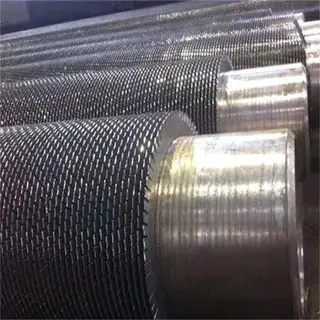
Adding fins or extended surfaces to increase heat transfer area
Using advanced materials and nanocoatings to enhance thermal conductivity
2. Application of Advanced Working Fluids
- Phase Change Materials (PCM): Store and release thermal energy during phase transitions, suitable for thermal regulation systems such as solar energy storage.
- Nanofluids: Contain high thermal conductivity nanoparticles, significantly improving fluid heat transfer performance and overall efficiency.
3. Key Design Considerations
Heat load requirements determine equipment size and configuration
Fluid properties such as viscosity, density, and thermal conductivity strongly influence performance
Fouling and maintenance conditions must be considered to ensure long-term stability
Helical geometry helps reduce fouling tendency by promoting turbulence, but proper maintenance strategies are still required.
Helical Coil Heat Exchanger Applications
Thanks to its compact structure and high efficiency, helical coil heat exchangers are widely used in multiple industries.
- Petrochemical Industry: Used in crude oil distillation, chemical reaction temperature control, and handling corrosive or high-viscosity fluids.
- HVAC and Refrigeration Systems: Applied in heat pumps, air conditioning, and refrigerant condensation/evaporation processes, improving energy efficiency and system stability.
- Power Generation: Used to transfer heat from flue gases to water, producing steam for electricity generation and improving energy utilization.
- Food and Beverage Industry: Used in pasteurization, sterilization, and cooling processes, ensuring stable and safe food processing.
- Oil and Gas Industry: Applied in crude oil heating/cooling, natural gas processing, and liquefaction systems.
- Renewable Energy Sector: Widely used in solar thermal systems and geothermal heat exchange systems for efficient energy utilization.
- Advanced Energy Systems: In compact systems such as Small Modular Reactors (SMRs), helical coil heat exchangers provide high efficiency and compact design advantages, meeting strict safety and performance requirements.
Helical Coil Heat Exchanger Advantages and Limitations
Helical coil heat exchangers offer significant advantages but also have certain limitations.
1. Main Advantages
- Compact structure: Provides large heat transfer area in limited space.
- High thermal efficiency: Large surface-to-volume ratio improves overall heat transfer coefficient.
- Lower pressure drop: Smooth helical channels reduce energy losses.
- Wide applicability: Suitable for various fluids, temperatures, pressures, and flow conditions.
2. Limitations
- Complex manufacturing: Requires advanced fabrication techniques and equipment.
- Size limitations: Not suitable for extremely large-scale flow systems.
- Higher cost: More expensive than conventional straight-tube or plate heat exchangers.
Conclusion
The helical coil heat exchanger is a compact and highly efficient heat transfer device. Its helical structure enables a large heat transfer area within a limited space, making it suitable for a wide range of industrial applications. The counter-current flow arrangement further enhances temperature driving force and improves efficiency.
With proper material selection such as stainless steel, copper, and alloys, the device can meet different corrosion resistance and thermal conductivity requirements. Through structural optimization, advanced working fluids, and new material technologies, its performance can be further improved.
Due to its unique structural advantages and excellent thermal performance, the helical coil heat exchanger plays an irreplaceable role in modern industry and energy systems. With continuous technological advancement, its application scope will continue to expand, and its performance will further improve.
Send your message to this supplier
Related Articles from the Supplier

Related Articles from China Manufacturers
Related Products Mentioned in the Article

Supplier Website
Source: https://www.fabtank.com/news/helical-coil-heat-exchanger-principle-structure-application.html