
Ball Check Valve vs. Swing Check Valve: A Selection Guide
In fluid transport systems, preventing backflow is not optional; it is essential. Reverse flow can cause pump impeller reversal, pipeline vibration, equipment damage, and even cross-contamination between media. In some cases, it may even lead to serious system failure or safety risks.
To prevent these problems, check valves are widely used in pipeline engineering. A check valve is a self-acting valve that allows flow in one direction and automatically shuts when reverse flow occurs. It does not require manual operation or external power. Instead, it relies entirely on the pressure difference of the flowing medium. Because of this simple but reliable working principle, check valves are often considered the “silent protectors” of piping systems.
Among the many types available, ball check valves and swing check valves are two of the most commonly used designs. While both serve the same basic purpose, they differ significantly in structure, operating behavior, performance, and suitable applications. Incorrect selection can result in higher pressure loss, water hammer issues, sealing instability, or increased maintenance costs. That is why understanding their differences is important for achieving safe, stable, and efficient system operation.
This article provides a practical overview of ball check valves and swing check valves, including their structure, working principles, performance characteristics, and selection scenarios.
Basic Function of Check Valves
Check valves play a fundamental role in fluid systems. Their primary function is to prevent backflow of the medium. When fluid flows in the correct direction, the valve opens automatically. When flow stops or reverses, the valve closes quickly to protect pumps, pipelines, and downstream equipment.
One of the key advantages of check valves is that they operate automatically. No manual intervention or external energy source is required. They respond directly to pressure changes in the system, making them highly reliable and low-maintenance components in most applications.
Among all check valve types, ball check valves and swing check valves are the most widely used due to their simplicity and effectiveness in different operating conditions.
Ball Check Valve Overview
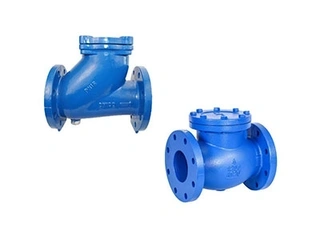
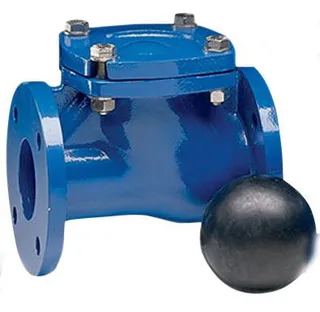
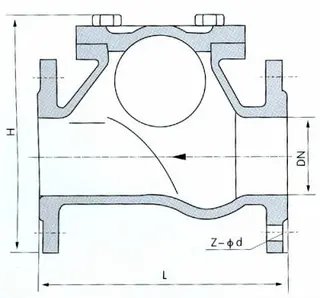
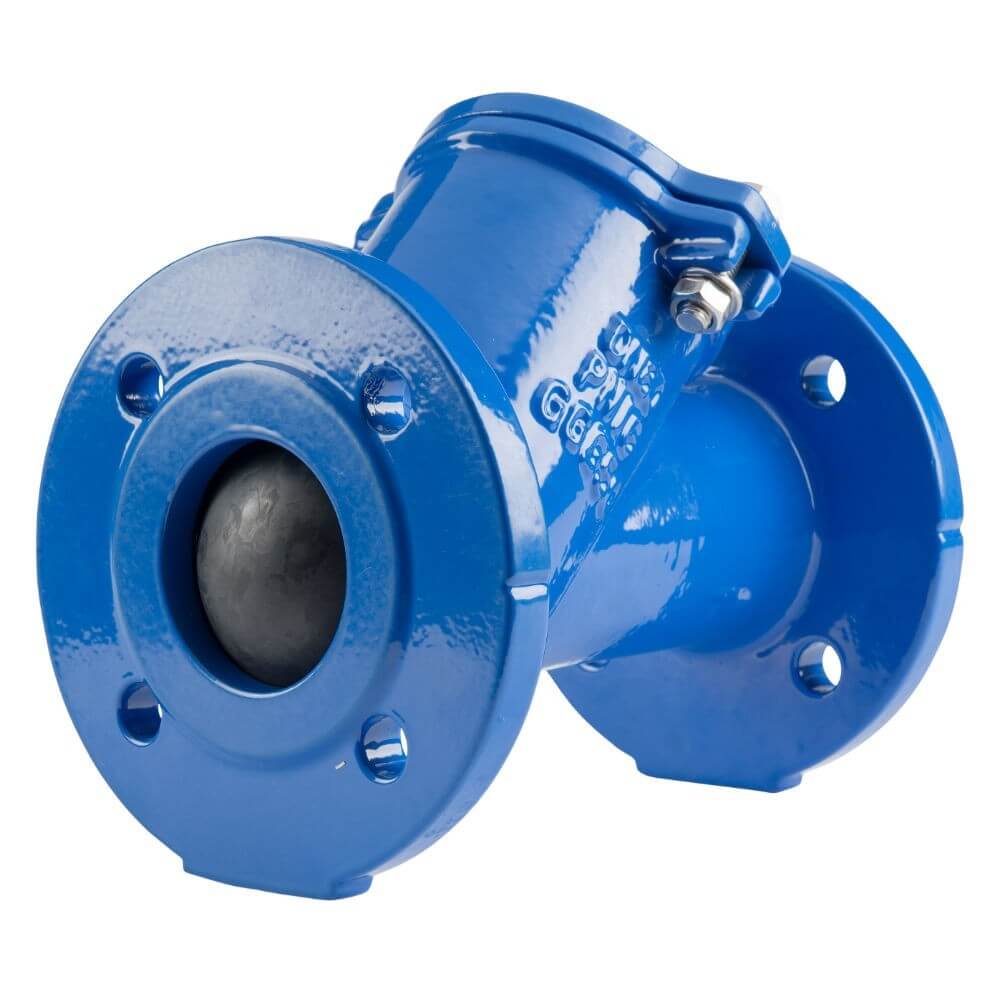
To better understand selection differences, we first look at the ball check valve. This design uses a free-moving ball as the closing element. Because of its compact structure and quick response, it is commonly used in small pipelines, low-pressure systems, and space-limited installations.

1. Ball Check Valve Structure and Working Principle
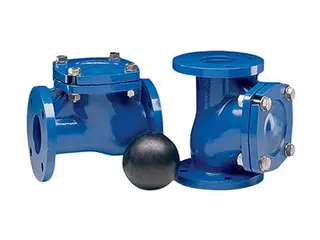
The main component of a ball check valve is a spherical ball, which can be solid or hollow. Common materials include stainless steel, brass, or PTFE. The ball is positioned inside the valve body and rests on the valve seat.
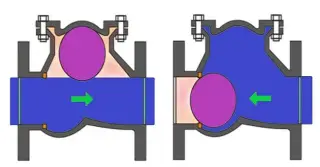
Its operation is straightforward: When fluid flows in the designed direction, the pressure lifts the ball away from the seat, allowing flow to pass through. When the flow slows or reverses, the ball returns to the seat due to gravity, reverse pressure, or a spring mechanism. Once seated, it forms a tight seal and prevents backflow.
2. Key Characteristics of Ball Check Valve
- Fast response: Because the ball travels a short distance, the valve reacts quickly to flow changes, making it suitable for systems with fluctuating pressure.
- Compact design: Its small footprint makes it ideal for tight installations such as compact equipment, laboratory systems, or auxiliary piping lines.
- Simple structure and low maintenance: With very few internal components, mainly just a ball and seat, the valve has a low failure rate and is easy to maintain.
- Self-cleaning behavior: In some operating conditions, the ball may rotate slightly during movement, helping reduce particle buildup on sealing surfaces.
- Flexible installation: It can be installed in both horizontal and vertical pipelines as long as flow direction is correctly followed.
3. Typical Operating Range of Ball Check Valves
Pressure range: low to medium pressure systems, up to approximately 1000 psi
- Size range: typically ¼ inch to 4 inches
- Cost: relatively higher in small sizes compared to swing type
A Detailed Introduction of Swing Check Valves
Unlike the ball design, the swing check valve uses a hinged disc mechanism. It is one of the most traditional and widely applied check valve types, especially in large-diameter and high-flow systems. It is known for low pressure loss, strong flow capacity, and cost efficiency in large-scale applications.

1. Swing Check Valve Structure and Working Principle
The core component is a disc (swing plate) connected to the valve body through a hinge. This disc opens and closes based on flow direction and pressure conditions.
When fluid flows in the correct direction, pressure pushes the disc open, allowing the medium to pass through with minimal resistance. When flow stops or reverses, the disc swings back and seals against the seat, preventing backflow.
The entire operation depends solely on pressure differential—no external power is needed. When upstream pressure is higher, the valve opens. When downstream pressure rises or reverse flow occurs, the valve closes.
2. Key Characteristics of Swing Check Valve
- High flow capacity: When fully open, the disc creates very little obstruction, resulting in low pressure loss and efficient flow performance.
- High pressure resistance: Its robust structure allows it to operate reliably in water, oil, and gas systems, with pressure ratings up to 5000 psi.
- Cost-effective in large sizes: For large-diameter pipelines, swing check valves are generally more economical than ball check valves.
- Simple and durable design: With fewer moving parts, the structure is reliable and relatively easy to maintain.
- Installation direction requirement: Most swing check valves are designed for horizontal installation. Some Y-type configurations allow vertical installation under specific flow conditions.
3. Typical Operating Range for Swing Check Valve
Pressure range: medium to high pressure systems, up to 5000 psi
- Size range: 2 inches to 48 inches or larger
- Cost: more economical for large-diameter pipelines
Key Differences Between Ball Check and Swing Check Valves
After understanding both types individually, it becomes easier to compare them from a practical engineering perspective.
1. Pressure Drop
Ball check valves generally produce lower pressure drop because the ball moves freely with minimal flow resistance. They are well-suited for low-pressure or sensitive systems.
Swing check valves, on the other hand, have a partially obstructing disc, which can create relatively higher pressure loss.
2. Size Range
Ball check valves are mainly used in small-diameter applications, typically from ¼ inch to 4 inches.
Swing check valves cover a much wider range, from 2 inches to 48 inches or more, making them ideal for large pipeline systems.
3. Installation Orientation
Ball check valves offer more flexibility and can be used in both horizontal and vertical pipelines.
Swing check valves are best suited for horizontal pipelines. Vertical use requires careful design consideration or special configurations.
4. Water Hammer Risk
Ball check valves generally have lower water hammer risk due to smoother closing action.
Swing check valves may generate higher water hammer effects because the disc can close more abruptly, especially in high-flow systems. Anti-slam designs are often used to reduce this issue.
5. Maintenance Requirements
Ball check valves are simple and require minimal maintenance due to their compact internal structure.
Swing check valves may require more attention over time, especially at the hinge point, which can wear or become affected by debris.
6. Media Compatibility
Ball check valves can handle a wider range of media, including viscous fluids and fluids with soft particles.
Swing check valves are better suited for cleaner media, as debris may interfere with hinge movement or sealing performance.
When to Choose a Ball Check Valve?
Ball check valves are typically preferred in the following situations:
- Low-pressure systems such as household water lines or small pumps
- Space-limited installations like compact equipment or laboratory systems
- Noise-sensitive environments such as residential or medical applications
- Fluids with viscosity or soft particulate content
- Vertical pipelines where gravity assists sealing
- Systems requiring quick response to flow changes
When to Choose a Swing Check Valve?
Swing check valves are more suitable for:
- Large-diameter pipelines such as municipal water supply systems or fire protection networks
- Medium to high-pressure systems including oil, steam, and industrial water systems
- Horizontal pipeline layouts
- Clean media applications such as treated water or gas systems
- Large-scale projects where cost efficiency is important
- Systems requiring low pressure loss and high flow efficiency
Selection Summary and Recommendations
In real engineering applications, there is no universal “best” option. The right choice depends on system conditions and operational requirements.
Ball check valves are ideal for:
- Small diameters (¼ inch to 4 inches)
- Low to medium pressure systems
- Compact installations
- Fast response requirements
- Vertical or flexible installation conditions
- Viscous or soft-particulate media
- Low noise and low water hammer systems
Swing check valves are ideal for:
- Large diameters (2 inches to 48 inches or larger)
- Medium to high-pressure systems
- High-flow, low-resistance pipelines
- Horizontal installations
- Clean media conditions
- Cost-sensitive large-scale projects
Proper selection of a check valve directly affects system safety, efficiency, and maintenance cost. Before final selection, it is always recommended to evaluate pressure, flow rate, temperature, and fluid characteristics in detail. When in doubt, consulting experienced valve manufacturers or engineers can help ensure a reliable and optimized solution.
Send your message to this supplier
Related Articles from the Supplier
Ball Valve Parts Supplier
- Aug 14, 2024


Complete Guide to Pneumatic Ball Valve Selection
- Feb 26, 2026
Related Articles from China Manufacturers

Related Products Mentioned in the Article


Supplier Website
Source: https://www.bossealvalves.com/news/ball-check-valve-vs-swing-check-valve-a-selection-guide.html