
Ball Check Valves: Design, Function, and Uses Explained
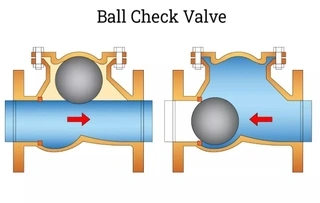
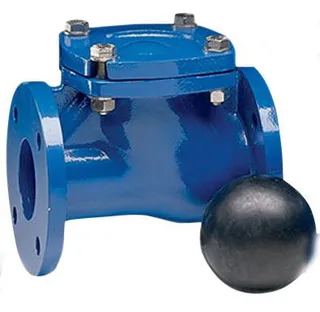
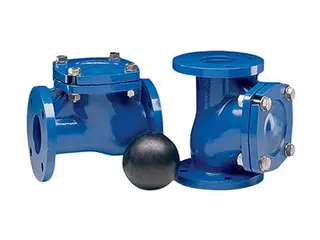
A ball check valve is a common accessory in pipeline systems, mainly used to control fluid so that it flows in only one direction and to prevent backflow. Its core component is a ball, which can be spring-loaded or freely floating, installed near the valve port on the sealing seat.
In practical applications, the role of a ball check valve is not limited to flow direction control. If reverse flow occurs in a pipeline, it may lead to equipment damage, operational interruption, media contamination, and even safety hazards. The existence of the ball check valve is intended to prevent these problems.
From a material perspective, most ball check valves use metal materials internally to ensure strength and durability, while the outer layer can be selected according to specific requirements from PVC, stainless steel, brass, and other materials. This flexible material combination allows it to adapt to various working environments.
Working Principle of Ball Check Valves
The working process of a ball check valve is completely based on changes in fluid pressure and does not require external power or manual operation.
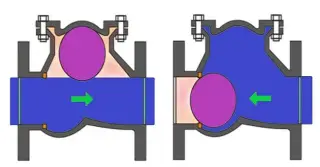
When fluid enters from the valve inlet, as long as the pressure is sufficient (this pressure is called “opening pressure”), it pushes the ball away from the valve seat, forming an open passage, allowing fluid to pass smoothly. When the fluid flow slows down or reverse flow tends to occur, the ball returns to the valve seat under the action of gravity and reverse pressure, sealing the valve and thereby preventing backflow.
Throughout the process, the opening and closing of the valve are fully automatic. The advantage of this design is fast response speed, which can block reverse flow at the earliest moment and protect upstream equipment from damage.
Difference between spring and non-spring types: Some ball check valves are equipped with internal springs. The function of the spring is to push the ball back to the valve seat more quickly when flow stops or reverses. This design is particularly useful in the following two situations: first, low-pressure flow systems, where gravity alone may not be sufficient to return the ball in time; second, systems requiring rapid response, where the spring can shorten closing time and improve sealing timeliness.
Non-spring ball check valves have a simpler structure and rely on the ball’s own weight and reverse pressure to close, making them suitable for most conventional applications.
Differences Between Ball Check Valves and Ball Valves
Many people easily confuse ball check valves with standard ball valves because both names contain the word “ball.” In fact, they are completely different types of valves.
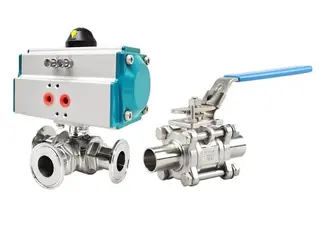
A standard ball valve is a bidirectional valve that rotates the ball through a handle or actuator to achieve opening and closing, mainly used to control fluid on/off. It usually requires a 90-degree rotation and can be manually, electrically, or pneumatically operated. Its feature is that it can both allow and completely block fluid, and the flow direction can be bidirectional.
A ball check valve, however, is a unidirectional valve. The ball only moves back and forth inside the valve body and cannot rotate. It cannot be used to actively shut off fluid but instead passively prevents backflow. The core difference between the two is: ball valves are used for switching control, while ball check valves are used to automatically prevent backflow.
Main Structural Components of Ball Check Valves
To understand why a ball check valve can automatically prevent backflow, it is necessary to understand its internal structure. A ball check valve usually consists of a ball, valve seat, valve body, end connections, and optional spring and valve cover. The material and design of each component directly affect sealing performance, durability, and application range. The following explains each key component and selection considerations.
1. Ball
The ball is the core moving component inside the valve, controlling fluid on/off through forward and backward movement. The material selection of the ball directly affects the application range:
Metal ball: such as stainless steel or brass, suitable for high-pressure and high-temperature systems, high strength and wear resistance
Rubber or elastomer ball: good sealing performance, suitable for water, chemicals, and applications requiring flexible sealing
Plastic ball: lightweight and corrosion-resistant, suitable for low-pressure or corrosive fluid systems
The size and weight of the ball also affect performance. Lighter balls are suitable for low-pressure systems, while heavier balls are suitable for high-pressure flow environments.
2. Valve Seat
The valve seat is the key part where the ball rests to prevent backflow. When fluid flows in reverse, the ball tightly contacts the valve seat to form a seal and prevent leakage. The valve seat material usually has two options: metal materials for high strength and wear-resistant conditions; plastic or rubber materials provide softer sealing effects and are suitable for systems requiring tight shutoff or handling corrosive media.
The shape of the valve seat is specially designed to guide the ball back into position accurately, ensuring good sealing each time it closes.
3. Valve Body
The valve body is used to contain and protect all internal components, and its material must withstand system pressure, temperature, and media type. Common materials include:
Stainless steel: suitable for high-pressure, high-temperature, or corrosive environments
Brass: commonly used in water supply, drainage, and HVAC systems
Plastic: lightweight and resistant to many chemicals, suitable for low-pressure and low-temperature systems
The valve body also determines the connection method to the pipeline, commonly including threaded connection, flanged connection, and welded connection.
4. Optional Components
Spring: used to assist rapid ball reset; material must match working conditions, commonly stainless steel springs
Valve cover: removable cover on the valve body for maintenance or replacement of ball and seat; not all ball check valves are equipped with a cover, but it is very useful in systems requiring frequent maintenance
Core Advantages of Ball Check Valves
- Prevention of Backflow and Backpressure Damage: The most basic and important function of a ball check valve is to prevent reverse fluid flow. When flow direction changes, the ball quickly seals the valve opening, protecting pumps and other equipment from damage caused by backflow or pressure buildup.
- Fully Automatic Operation: Because it operates based on fluid pressure, the ball check valve requires no manual intervention or external power. During forward flow, the ball leaves the seat; during reverse flow, the ball returns to block flow. This automatic function not only saves labor but also reduces human operation errors.
- High Reliability: A simple structure means fewer failure points. The ball check valve contains only a small number of moving parts such as the ball and seat, greatly reducing the possibility of mechanical failure and maintaining good reliability even under harsh conditions.
- Low Maintenance Requirements: Fewer components directly reduce maintenance needs. The rolling motion of the ball during operation also provides a certain self-cleaning effect, reducing dirt adhesion and lowering cleaning frequency. This saves time and reduces long-term operating costs.
- Wide Application Range: Ball check valves can handle various types of fluids, including gases, liquids, and even slurries. This flexibility allows them to be used in water treatment, chemical, oil and gas, and many other industries. In addition, different material combinations can further improve adaptability and durability for specific media.
- Fast Response Speed: Once reverse flow occurs, the ball immediately returns to the seat to block the passage. This fast response is especially important for systems requiring strict backflow prevention and can effectively reduce water hammer effects.
- Compact Structure and Easy Installation: Ball check valves are small and lightweight, can be installed horizontally or vertically, and are suitable for space-limited or complex piping systems. Installation only requires following the flow direction arrow on the valve body without
- Cost-Effectiveness: Compared with other valve types, ball check valves have lower manufacturing costs. Although actual prices vary depending on material, size, structure, and brand, they generally offer high cost performance.
Main Application Areas of Ball Check Valves
The advantages of ball check valves allow them to be widely used in many industries. From industrial production lines to commercial buildings and residential homes, different scenarios have different requirements for fluid control, and ball check valves can provide reliable backflow prevention. The following are specific applications in industrial, commercial, and residential fields.
1. Industrial Applications
- Wastewater treatment systems: prevent treated or contaminated water from flowing back into clean water sources, protecting equipment and maintaining system operation.
- Chemical equipment: control flow direction and avoid dangerous reactions or contamination caused by backflow. With corrosion-resistant materials, corrosive or high-temperature chemicals can be safely handled.
- Oil and gas pipelines: maintain stable pressure and flow, prevent reverse flow from causing system damage or safety risks, and ensure equipment and personnel safety.
- Food and beverage production: ensure fluids flow in the correct direction and prevent contamination while meeting strict hygiene standards and facilitating cleaning.
2. Commercial Applications
- HVAC systems: manage water or refrigerant flow, prevent backpressure from disturbing system operation, and maintain temperature stability.
- Vehicle and aviation fuel systems: control fuel flow, prevent backflow, and avoid engine problems or safety hazards.
- Compressed air systems: prevent air backflow and ensure pressure and efficiency of pneumatic systems.
3. Residential Applications
- Water supply and drainage pipelines: prevent sewage from flowing back into clean water pipes and ensure household water safety.
- Sump pump discharge pipes: prevent discharged water from flowing back into the indoor system, avoiding flooding and property damage.
- Home irrigation systems: maintain stable water flow and prevent contamination, ensuring water is delivered in the intended direction to gardens or lawns while preventing contaminants from entering household supply systems.
Frequently Asked Questions
Are ball check valves suitable for all fluids or gases?
It is necessary to consider medium type, working pressure, temperature, and flow, and ensure material compatibility to prevent corrosion or damage. Not all ball check valves are suitable for all media; selection must be matched to specific applications.
Can they be used in high-pressure and high-temperature environments?
Yes, but stainless steel or special alloy materials must be selected, and rated parameters must meet operating conditions.
How to handle corrosive or abrasive fluids?
Use corrosion-resistant materials such as stainless steel or plastic, or wear-resistant materials and coatings to extend service life.
Do low-pressure systems require spring-type structures?
Spring designs usually provide better sealing, especially when gravity alone cannot return the ball quickly. Whether to use them depends on system requirements.
Conclusion
Ball check valves are widely used in industrial, commercial, and residential fields due to their simple structure, reliable operation, easy maintenance, and low cost. Their core value lies in automatically preventing fluid backflow and protecting system safety and equipment integrity.
When selecting a valve, factors such as flow direction, pressure, temperature, fluid characteristics, material compatibility, flow requirements, connection method, and maintenance convenience should be considered comprehensively. Proper installation and regular maintenance ensure long-term stable operation and extended service life.
For pipeline systems requiring backflow prevention, ball check valves are an economical and practical solution. Whether for new systems or retrofits, they can be easily integrated to improve the safety and reliability of the entire fluid transport system.
Send your message to this supplier
Related Articles from the Supplier
Ball Valves and Butterfly Valves: How to Choose?
- Sep 02, 2025
Ball Valve Leakage: Causes, Prevention and Solutions
- Feb 13, 2026
Installation and Maintenance of Electric Ball Valves
- Dec 14, 2024
Related Articles from China Manufacturers


Related Products Mentioned in the Article

Zhejiang Kosen Valve Co., Ltd.
- https://www.kosenvalve.com/
- Business Type: Industry & Trading, Manufacturer,
Supplier Website
Source: https://www.kosenvalve.com/media-hub/ball-check-valves-design-function-and-uses-explained.html