
Guide to Valve Stem Packing for High-Temperature Application
Valves are indispensable mechanical devices in modern industrial production. In fluid transport systems across industries such as petroleum, chemical, power generation, and metallurgy, valves play a critical role in controlling the flow of media. Whether cutting off pipelines, regulating flow, stabilizing pressure, or directing flow paths, valves are core equipment ensuring both production safety and efficiency. Among the many performance indicators, sealing performance is one of the most important criteria for evaluating valve quality.
For high-temperature valves, defined as valves operating at temperatures exceeding 250°C, stem packing sealing technology has long been recognized as a significant technical challenge. Studies and industry statistics indicate that leakage from valve stem packing accounts for a high proportion of valve-related incidents. Such leaks not only result in production downtime and economic losses but also pose serious safety hazards. Leakage of flammable or explosive media can trigger fires or explosions, while toxic media leakage threatens personnel safety and environmental security. This makes the study and improvement of high-temperature valve packing sealing critical for industrial safety and operational reliability.
Basic Principles of Packing Sealing
To understand packing sealing, it is essential first to grasp its underlying working principles. In industrial practice, the function of packing is to prevent fluid from escaping along the stem while allowing the stem to move. Currently, two main theories explain how packing achieves effective sealing:
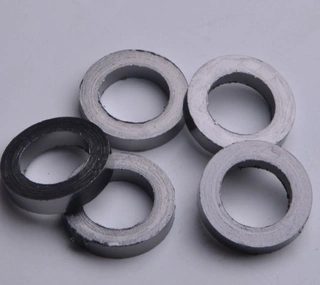
1. Bearing Effect
When packing is wrapped around a valve stem, a thin layer of liquid or lubricant forms between the packing and the stem under the influence of external axial pressure. This layer, known as a lubricating film, allows the packing to slide against the stem without direct metal-to-material contact. Essentially, this transforms the interaction into a state similar to a sliding bearing.
The bearing effect has two main advantages:
- Reduced wear: Since the packing does not rub directly against the stem, the rate of mechanical wear decreases significantly.
- Maintained seal: The film layer provides a continuous barrier, preventing leakage even while the stem is moving.
This principle is particularly important for high-temperature applications, where increased friction can accelerate packing wear and compromise the seal.
2. Labyrinth Effect
From a microscopic perspective, even the most precisely machined valve stems are never perfectly smooth. Tiny surface irregularities create micro-gaps between the stem and packing. Additionally, packing is often cut and assembled in an asymmetric pattern. These factors collectively form complex “labyrinth channels.”
When medium flows through these channels, it undergoes multiple throttling and pressure drops. This repeated energy dissipation effectively blocks or slows the escape of fluid, achieving a sealing effect.
It is critical to note that the gaps inherent in the labyrinth effect are objective and cannot be eliminated. Over-reliance on this mechanism often leads to suboptimal sealing performance, which is the root cause of porous leakage and dynamic leakage in industrial valves.
Common Packing Types and Applications
Over decades, various packing materials have been developed to meet the diverse requirements of industrial applications. These materials differ in terms of operating temperature, chemical resistance, mechanical properties, and lubrication characteristics.
1. PTFE Packing
PTFE packing is made from pure PTFE resin, processed into thin films, and braided into packing strands. This type of packing contains no additives and offers:
- High lubricity
- Non-stick behavior
- Excellent electrical insulation
- Aging resistance
PTFE packing generally operates at temperatures below 200°C and is widely used in industries with high cleanliness requirements such as food, pharmaceuticals, and paper production. It is also suitable for highly corrosive media, where its chemical inertness ensures long-term performance.
2. Expanded Graphite Packing (Flexible Graphite)
Flexible graphite packing is made from graphite yarns braided through a core. Its advantages include:
- Self-lubrication
- High thermal conductivity
- Low friction coefficient
- High flexibility and resilience
- Protection of the valve stem
Expanded graphite packing is particularly suited for temperatures ranging from 200°C to 450°C, making it a primary choice for high-temperature valve applications.
3. Reinforced Graphite Packing
To enhance the performance of standard expanded graphite, reinforced graphite packing incorporates additional materials such as:
- Glass fiber
- Copper wire
- Stainless steel wire
- Nickel wire
- Inconel alloy wire
This reinforced structure retains the benefits of expanded graphite while improving mechanical strength, extrusion resistance, and overall durability. Combined with standard graphite packing, reinforced graphite packing provides an effective solution for high-temperature, high-pressure sealing challenges.
4. Other Specialty Packing
For specialized industrial conditions, additional packing options are available:
- Aramid fiber packing: Offers strong chemical resistance, suitable for corrosive media
- Aramid-carbon fiber blends: Ideal for high-load rotating shafts
These specialty packings cater to extreme conditions where standard materials may fail.
Common Issues in High-Temperature Packing Sealing
Even with mature technology, high-temperature stem sealing remains challenging. Understanding common issues is vital for selecting effective solutions.
1. Uneven Sealing
Traditional packing structures typically include:
- Packing gland
- Gland flange
- Follower
- Packing rings
When gland bolts are tightened, the packing experiences axial pressure that causes radial deformation. Ideally, this should create uniform contact with the valve stem. In practice, however:
Uneven pressure distribution: The top and bottom of the packing box are exposed to different medium pressures, resulting in inconsistent deformation.
Local over-sealing or under-sealing: Some areas experience excessive compression while others remain insufficiently sealed.
Friction concentration near the gland: The radial compression force and resulting friction are highest near the gland, leading to accelerated wear.
2. Challenges of High Temperature
Elevated temperatures introduce multiple challenges:
- Increased wear due to thermal expansion: Graphite packing expands under heat, increasing contact pressure and friction with the stem. Poor heat dissipation accelerates wear.
- Material degradation: Springs may lose elasticity, and packing mechanical properties may deteriorate at high temperatures.
- Frequent operation wear: High-temperature valves often operate in frequent adjustment scenarios, accelerating packing wear. Traditional systems require periodic manual bolt adjustment, which is labor-intensive and difficult to optimize—too tight accelerates wear, too loose causes leakage.
Advanced Solutions: Compensated Packing Structures
To address these challenges, industries have developed compensated packing structures. These designs automatically adjust sealing pressure via spring preload, effectively maintaining seal integrity under high-temperature conditions.
1. Low-Pressure Solutions
For low-pressure, high-temperature applications, a ring spring installed at the bottom of the packing box can replace the follower.
Working principle: During installation, bolts apply a predetermined preload. As graphite packing wears due to friction, the ring spring automatically compensates, maintaining appropriate sealing pressure and preventing leakage.
Advantages:
- Automatic wear compensation without manual intervention
- Stable sealing pressure, avoiding over- or under-sealing
- Extended packing life and reduced maintenance costs
2. High-Pressure Solutions: Dual Compensation
In high-pressure, high-temperature scenarios, dual-compensation structures using both disc springs and ring springs externally are recommended. Design features:
- Dual safety mechanism: If one compensation point fails under extreme conditions, the other remains effective. Both sets operate independently while jointly maintaining sealing.
- External installation benefits: Springs located outside the packing box avoid direct exposure to high temperatures. Disc springs are enclosed to withstand harsh environments.
- Ease of maintenance: External compensation points allow replacement without dismantling the entire packing assembly, improving maintenance efficiency and minimizing downtime.
- Practical performance: Long-term industrial data shows that dual-compensation structures excel in high-temperature, high-pressure applications, preventing leakage, extending service life, and reducing maintenance frequency.
Packing Selection and Combination Strategies
Proper packing selection is crucial for effective sealing. Recommendations based on operating conditions:
|
Operating Condition |
Recommended Packing |
Structural Features |
|
Temp <200°C, corrosive medium |
PTFE packing |
Single or double layer, conventional gland structure |
|
200–250°C, low pressure |
Expanded graphite packing |
Used with compensation spring |
|
250–450°C, medium-high pressure |
Reinforced graphite packing |
Can be used alone or combined with expanded graphite |
|
High temp, high pressure, frequent adjustment |
Expanded graphite + reinforced graphite |
Dual-compensation spring structure |
Combination tips:
Expanded graphite is soft, resilient, and flexible but weak in shear resistance; ideal for the middle of the packing box.
Reinforced graphite offers high strength and extrusion resistance; suitable for top and bottom installation, protecting the central graphite from direct compression by the gland and base gasket.
Implementation and Maintenance Considerations
High-temperature packing sealing is not only a matter of material selection but also of proper installation and maintenance:
- Installation precision: Correct alignment of the packing layers and proper compression are essential to avoid uneven sealing.
- Temperature monitoring: Continuous monitoring ensures that thermal expansion does not compromise the packing integrity.
- Periodic inspection: Even with compensated structures, periodic inspections help detect early wear or spring fatigue.
- Training personnel: Proper operational knowledge reduces the risk of improper adjustment, ensuring long-term valve performance.
Conclusion
High-temperature valve packing sealing is a specialized field but directly impacts industrial safety and operational efficiency. From traditional static seals to modern dynamic compensated solutions, technological advancements are resolving the long-standing conflict between “insufficient sealing” and “over-sealing.”
For industrial operators, selecting the correct packing material and structure requires considering multiple factors: temperature, pressure, medium characteristics, and frequency of valve operation. In critical high-temperature, high-pressure applications, investing in advanced compensated sealing structures, although initially more expensive, proves more cost-effective in the long run, improving reliability, reducing maintenance, and enhancing safety.
With the continuous rise of industrial automation and stricter environmental and safety standards, intelligent, maintenance-free packing sealing technology is the future. Spring-compensated structures already in use exemplify this trend and highlight the direction for further innovation in high-temperature valve sealing.
Send your message to this supplier
Related Articles from the Supplier

The Ultimate Guide to Installing Valve Packing
- Aug 02, 2025
Complete Guide to Low Fugitive Emission Valves
- Oct 16, 2025

Related Articles from China Manufacturers
Guide to Valve Stem Packing Materials
- Feb 11, 2026
Guide to Valve Sealing Surface Repair and Grinding
- Aug 08, 2025

Guide to Valve Handwheel Operation
- Sep 22, 2025
Related Products Mentioned in the Article

Supplier Website
Source: https://www.magpievalves.com/media-hub/guide-to-valve-stem-packing-for-high-temperature-application.html