
Guide to Valve Stem Packing Materials
Valves are critical control components in industrial pipeline systems, and their sealing performance directly affects production safety and operational efficiency. Valve stem packing, as a core component for preventing medium leakage, may be small in size but plays a significant role. This article will systematically introduce valve stem packing, covering classification, characteristics, application scenarios, and selection points, helping engineers make reasonable choices based on actual working conditions.
Basic Classification of Valve Stem Packing
Valve stem packing can be divided into three major categories based on material characteristics: non-metallic packing, semi-metallic packing, and metallic packing. This classification reflects the material's different adaptability to extreme working conditions such as high temperature, high pressure, and corrosion.
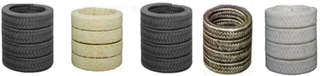
1. Non-metallic Packing
Non-metallic packing is based on synthetic materials or natural fibers, offering good flexibility and chemical stability. It is the most widely used packing type.
- Flexible Graphite Packing: One of the most widely used sealing materials, flexible graphite is made from natural graphite processed with special chemical treatments and mechanical processing, resulting in a unique layered structure. This material's most prominent advantage is its excellent high-temperature performance, able to withstand up to 2000°C in non-oxidizing media, and it can also operate stably below 500°C in oxidizing media. The low-temperature end extends to -200°C. Except for highly oxidative media like fuming sulfuric acid and concentrated nitric acid, flexible graphite can resist almost all chemical media corrosion. Flexible graphite has an extremely low coefficient of friction and excellent self-lubricating properties, meaning that valve stem operation faces minimal resistance and slight wear. Its unique flexibility and resilience allow it to bend freely along the axial direction by more than 90 degrees when making cut packing, and it will not leak due to temperature, pressure changes, or equipment vibration. This material can be reused multiple times, with a service life far exceeding that of traditional packing, and is widely used in high-pressure valves such as ball valves, gate valves, and globe valves in industries such as petroleum, chemical, power generation, and metallurgy, where the nominal pressure typically does not exceed 32 MPa.
- PTFE Packing: PTFE packing is known for its excellent chemical stability. Pure PTFE material resists corrosion from strong acids, strong alkalis, and organic solvents, with a pH range of 0-14. The standard PTFE braided packing works within a temperature range of -200°C to 260°C, with a working pressure of 5.0 MPa in rotating conditions, 15.0 MPa in reciprocating conditions, and up to 25.0 MPa in valve stem conditions. To overcome the poor elasticity of pure PTFE, expanded PTFE retains its original corrosion resistance while providing rubber-like elasticity. The temperature range for 100% expanded PTFE braided packing extends from -268°C to 288°C, and it can achieve a good seal even on worn valve stems. When graphite and high-temperature lubricants are added to expanded PTFE, it can be used for high-speed pumps with a linear velocity up to 21.8 m/s.
- Graphite-Filled PTFE Fiber Packing: This packing further improves heat conductivity and high-speed performance, with a working temperature range of -200°C to 280°C, valve stem pressure of 20.0 MPa, and shaft speed up to 22 m/s. This material, while maintaining broad chemical compatibility, addresses the high thermal expansion coefficient issue of pure PTFE.
- Carbon Fiber Packing: Made by impregnating carbon fiber braided rope with PTFE emulsion, this packing combines high strength with excellent elasticity. Carbon fiber itself has characteristics such as high-temperature resistance, wear resistance, and low density. After impregnation, it gains good self-lubrication properties. This packing works stably in air between -120°C and 350°C and can withstand pressures up to 35 MPa, making it suitable for medium-temperature and pressure chemical sealing.
2. Semi-metallic Packing
Semi-metallic packing combines the advantages of both metal and non-metallic materials, usually using metal as the framework, filled with non-metallic materials, or adopting a composite structure.
- PTFE-Impregnated Asbestos Packing: This packing is suitable for highly corrosive media, working within a temperature range of -200°C to 200°C and pressure up to 35 MPa. This structure utilizes the strength of asbestos and improves corrosion resistance and sealing performance through PTFE impregnation.
- Ceramic Fiber Packing: Made from ceramic fibers and metal alloy wires, and impregnated with graphite-talcum powder, ceramic fiber packing offers outstanding high-temperature resistance and can withstand deep-cold and ultra-high-temperature media. It also has good corrosion resistance. Ceramic fiber packing made abroad can be used at temperatures as high as 1480°C, but it is less commonly used domestically, mainly in special high-temperature conditions.
3. Metallic Packing
Metallic packing is primarily made from metal materials, suitable for extreme high-temperature and high-pressure conditions. However, it typically requires large compression forces and has relatively poor sealing performance when used alone, often combined with plastic packing.
- Metal Foil Wound Packing: This type of packing is suitable for high-temperature and high-pressure conditions. It offers excellent wear resistance, high strength, and good thermal conductivity. The specific temperature, pressure, and corrosion resistance depend on the selected metal materials.
- Lead Wire Twisted Packing: Mainly used in concentrated sulfuric acid and other strong oxidative media at temperatures not exceeding 90°C, this packing utilizes lead's resistance to sulfuric acid corrosion.
Technical Characteristics of Special Packing
In response to specific working conditions, the industry has developed various specialized packing materials optimized in terms of material selection and structural design.
1. High-Temperature and High-Pressure Specialized Packing
High-temperature and high-pressure valve packing uses flexible graphite as the structural line, with five high-temperature alloy wires reinforced inside, and externally woven with high-temperature alloy wires. This design allows it to operate in non-oxidizing atmospheres at temperatures ranging from -250°C to 850°C and in oxidizing atmospheres from -250°C to 550°C, with a working pressure up to 45.0 MPa. It is suitable for various media such as acids, crude oil, synthetic petroleum, solvents, steam, and water.
2. Wear-Resistant Specialized Packing
Ultra-wear-resistant packing is made from organic cross-linked polymer fibers and is processed with special techniques and high-speed precision weaving. Its excellent thermal insulation performance allows it to withstand flames up to 2500°C without melting or burning, and it has corrosion resistance, wear resistance, and high strength. Its working temperature is -100°C to 280°C, with valve stem pressure up to 25.0 MPa and shaft speed up to 22 m/s, making it suitable for media containing abrasive particles.
3. General and Special Purpose Packing
General Synthetic Fiber Packing: This packing is made from composite fibers, with a square-cross internal lock weave, providing high strength, wear resistance, anti-scouring, and leak prevention. It works within a temperature range of -100°C to 250°C and a pressure of up to 20.0 MPa, with a shaft speed of 12 m/s.
Clean-Type Special Packing: Made from high-strength, high-modulus meta-aramid fibers, this packing uses a square-cross internal lock weaving process and contains double the amount of lubricating agent, ensuring high lubrication and low wear. It works within a temperature range of -100°C to 280°C and pressures up to 25.0 MPa, suitable for applications in food, pharmaceuticals, and other industries where purity is critical.
Special Sealing Structure: Bellows Seal
In addition to traditional packing seals, bellows seals provide a more advanced sealing form. The bellows is fixed at one end to the valve stem and at the other end to the valve bonnet, creating a fully enclosed state between the valve stem and bonnet. This sealing method completely eliminates potential leakage points in the packing area, providing excellent sealing performance.
Bellows seals are commonly used in applications involving toxic, flammable, explosive, or valuable media, such as in hydrogenation units and LPG separation systems. Although the cost is higher, bellows seals provide significant safety value, especially in high-risk industries such as petrochemical and chemical industries.
Packing Selection, Installation, and Maintenance
After understanding the material characteristics and application scenarios of various packing types, making the correct choice and ensuring optimal performance through proper installation and maintenance becomes critical. Incorrect selection or improper installation and maintenance can result in suboptimal sealing performance, even with the best material, and may cause safety hazards.
1. Basic Selection Principles
When selecting valve stem packing, the following factors should be considered:
- Medium Characteristics: Includes the corrosiveness, toxicity, flammability, viscosity, and solid particle content of the medium. For highly corrosive media, PTFE or flexible graphite materials should be selected; media containing particles should use wear-resistant packing; toxic and flammable media should consider bellows seals.
- Temperature and Pressure: The operating temperature determines the material's temperature tolerance, while operating pressure influences packing density and strength requirements. High-temperature and high-pressure working conditions require the selection of metallic composite or specialized high-temperature packing.
- Motion Type: The reciprocating, rotating, or stationary state of the valve stem dictates the packing selection. For rotating motion, consider the friction coefficient and heat dissipation; for high-speed rotations, select materials with good thermal conductivity.
- Environmental Requirements: In industries like food and pharmaceuticals, where purity is important, select clean-type packing to prevent contamination of the media.
2. Installation and Maintenance
The performance of packing seals depends not only on the material itself but also on the installation method and packing box structure. During installation, ensure the packing ring cut-outs are staggered and tighten gradually, avoiding over-tightening that leads to excessive friction. The pre-tightening force should be moderate to ensure sealing without affecting valve operation.
Regularly check for leakage at the packing area. Slight leakage is acceptable, but over-tightening can accelerate stem wear. If leakage increases, the gland can be tightened or the packing replaced. For critical valves, it is recommended to establish maintenance records, noting the packing replacement cycle and changes in working conditions.
Conclusion
With the advancement of material science, valve stem packing technology has continued to improve, from traditional asbestos and plant fibers to modern flexible graphite and high-performance synthetic fibers. The enhancement of materials' temperature, pressure, and corrosion resistance has continuously improved sealing performance. Proper selection, installation, and maintenance of sealing packing ensure safe and reliable valve operation, extending equipment life and reducing maintenance costs. Engineers should fully understand the characteristics of various packing materials and make the best choices based on specific working conditions to ensure the sealing safety of industrial pipeline systems.
Send your message to this supplier
Related Articles from the Supplier
Guide to Valve Stem Packing Materials
- Feb 11, 2026
Guide to Valve Performance and Selection
- Oct 10, 2025
Guide to Valve Electric Actuator Selection
- Nov 05, 2025
Guide to Industrial Valve Pressure Testing
- Jan 14, 2026
Guide to Butterfly Valve Installation Direction
- Feb 24, 2026
Related Articles from China Manufacturers
Related Products Mentioned in the Article

Zhejiang Kosen Valve Co., Ltd.
- https://www.kosenvalve.com/
- Business Type: Industry & Trading, Manufacturer,
Supplier Website
Source: https://www.kosenvalve.com/media-hub/guide-to-valve-stem-packing-materials.html