
Guide to Braided Packing: Selection and Applications
Braided packing is one of the most widely used sealing materials in industrial equipment, designed primarily to prevent leakage in pumps, valves, and rotating machinery. Also referred to as compression packing or rope packing, it represents one of the most traditional and extensively applied forms of industrial sealing. The versatility, durability, and adaptability of braided packing make it a cornerstone in industries ranging from petrochemical processing to wastewater management.
Structurally, braided packing typically features a square or rectangular cross-section. It is manufactured using various fibers woven together through specialized braiding techniques. This structure provides a balance of strength and flexibility, allowing the packing to accommodate fluctuations in operating conditions while maintaining a reliable seal. The selection of appropriate braided packing requires understanding its types, materials, braiding methods, applications, and maintenance practices. This comprehensive guide explores these aspects in detail.
Types of Braided Packing
Braided packing is generally classified into two main types based on its physical characteristics: flexible packing and semi-rigid packing. Each type has specific advantages suited to particular industrial applications.
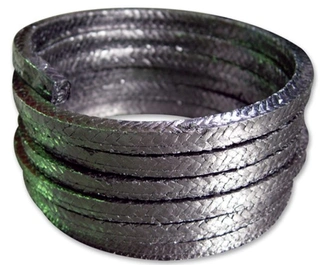
1. Flexible Packing
Flexible packing is designed to adapt to irregularities and can deform under compression to produce significant radial expansion. This property makes it particularly suitable for high-pressure pump systems or applications requiring tight sealing where equipment may experience wear.
In long-term operations, the stuffing box or shaft sleeve may develop gaps due to wear. Flexible packing compensates for these gaps through its expansion, maintaining effective sealing performance even as the equipment ages. Common materials used for flexible packing include PTFE (polytetrafluoroethylene), aramid fibers, and graphite, depending on the specific operational requirements.
2. Semi-Rigid Packing
Semi-rigid packing features a denser structure and better shape stability. It is ideal for static or low-movement sealing scenarios, such as valves. Unlike flexible packing, semi-rigid packing deforms less under compression, providing stable and reliable sealing performance. Its high dimensional accuracy and minimal deformation make it particularly suitable for new equipment where precise tolerances are critical.
Material Selection for Braided Packing
The performance of braided packing largely depends on the materials used. Each material offers unique advantages tailored to specific operating environments. The most common materials include PTFE, graphite, and aramid fibers.
1. PTFE (Polytetrafluoroethylene)
PTFE is a synthetic polymer known for its excellent chemical resistance. It can withstand exposure to strong acids, alkalis, and organic solvents while maintaining durability over a wide temperature range, from -200°C to 260°C.
In chemical processing industries, PTFE packing is widely employed for sealing corrosive media. Its smooth surface and low coefficient of friction reduce wear on shaft sleeves, extending equipment life. Additionally, PTFE packing requires minimal lubrication and can maintain sealing effectiveness under aggressive chemical environments.
2. Graphite
Graphite possesses exceptional thermal conductivity and self-lubricating properties. Packing made from pure or flexible graphite is particularly suited for high-temperature applications, such as in refineries, power plants, and high-temperature steam systems.
The high thermal conductivity allows friction-generated heat to dissipate quickly, preventing localized overheating. Meanwhile, the layered structure of graphite ensures low friction even under dry operating conditions, maintaining seal performance over prolonged periods.
3. Aramid Fibers
Aramid fibers are high-strength synthetic fibers with tensile strength up to five times that of steel, yet weighing only one-fifth as much. They offer outstanding wear resistance and tear strength.
Aramid fiber packing excels in abrasive environments containing solid particles, such as mining, wastewater treatment, and pulp and paper processing. It effectively resists particle erosion, reducing packing wear and extending replacement intervals.
The Impact of Braiding Techniques on Performance
The braiding technique used to manufacture the packing is equally critical to its performance. Braiding affects density, flexibility, radial expansion, and resistance to unraveling. Different braiding patterns suit distinct operational requirements.
1. Square Braid
Square braiding is the most common technique. In this structure, fibers cross over and under in a consistent pattern, forming a square or rectangular cross-section.
Square braided packing is soft and highly adaptable. It can carry significant quantities of lubricants and exhibits substantial radial expansion when compressed. This makes it ideal for older equipment where wear has created larger gaps in the stuffing box or shaft sleeve. Unlike tightly woven packing, square braided packing fills voids effectively, ensuring a reliable seal.
This type is best suited for high-speed, relatively low-pressure applications, such as centrifugal pumps and mixers.
2. Interlock or Lattice Braid
Lattice braid, also known as interlock, diagonal, or cross braid, features fibers woven at a 45-degree angle to create a dense, flexible structure.
Compared to square braid, interlock braid is tighter, minimizing leakage paths and providing superior sealing. However, its radial expansion is limited, making it more suitable for new equipment or components with precise tolerances.
The interlocked structure prevents unraveling and wear while retaining lubricant efficiently. Interlock braided packing finds widespread use in reciprocating pumps, centrifugal pumps, valves, mixers, expansion joints, and static sealing applications.
3. Round or Multi-Layer Braid
Round braid, also called multi-layer or "sleeve-style" braid, involves wrapping multiple braided layers around a core material. This design can produce round, square, or rectangular cross-sections.
Round braided packing is dense, soft, and capable of carrying large amounts of lubricant. Materials for this braid may include fibers, yarn, or tape. Its structural properties make it ideal for high-pressure, low-speed applications, such as valve stem sealing, expansion joints, and gland seals.
4. Twisted Braid
Twisted braided packing is formed by twisting yarns, cords, tapes, or metal wire together. Its main feature is versatility; individual strands can be separated to fit different stuffing box sizes.
Twisted braid generally provides lower strength than interlock braid and is suited for medium- to low-intensity conditions. It is often impregnated with mineral oils, graphite, or other lubricants, making it suitable for light-duty sealing.
5. Core-Cover Braid
Core-cover braid is a composite structure combining features of twisted and round braids. The core may be made of extruded rubber materials (such as fluororubber or silicone) or tightly woven fiber, with one or more outer layers covering the core.
The rubber core provides elastic recovery, allowing the packing to return to its original shape after compression. This is especially valuable in mixers and agitators, where shaft eccentricity can create uneven compression and leakage paths. The core helps maintain even sealing pressure, improves reliability, and extends service life.
In valve applications, core-cover packing may include metal wires in the covering layers to enhance compressive strength, allowing it to withstand higher system pressures.
Applications of Braided Packing
Braided packing’s versatility, material diversity, and structural flexibility allow it to be used across nearly all industrial fluid sealing applications.
1. Oil and Gas Industry
In oil and gas extraction, transportation, and processing, braided packing seals pumps, valves, and compressors operating under high pressure and often with flammable or explosive media. Graphite and metal-reinforced packing are commonly employed for high-temperature, high-pressure sealing in these environments.
2. Chemical Industry
Chemical processes involve corrosive media, including strong acids, alkalis, and organic solvents. PTFE packing is widely used for its exceptional chemical resistance. For more aggressive or specialized media, impregnated packing may further enhance corrosion protection.
3. Power Generation
In power plants, feedwater pumps, condensate pumps, and valves operate under high-temperature and high-pressure conditions. Graphite and carbon fiber packing are widely used in this sector due to their heat resistance and excellent thermal conductivity.
4. Wastewater Treatment
Wastewater equipment often handles media containing solid particles and fibrous matter, which can cause significant wear. Aramid fiber packing demonstrates outstanding abrasion resistance, reducing maintenance frequency and extending equipment uptime.
5. Marine Industry
Marine pumps and valves face challenges such as seawater corrosion, vibration, and space limitations. Braided packing’s compact structure and ease of maintenance make it the preferred sealing solution for shipboard applications.
6. Food and Beverage Industry
Food and beverage processing requires sanitary sealing solutions. Certified PTFE and synthetic fiber packing designed for food-grade applications ensures hygiene and safety while maintaining reliable sealing performance.
Installation and Maintenance of Braided Packing
Proper installation and routine maintenance are essential to ensure the long-term performance of braided packing.
1. Installation Procedures
Clean the stuffing box: Remove old packing, rust, and debris. Inspect the shaft or valve stem for smoothness; repair or replace if necessary.
- Pre-cut packing rings: Accurately cut packing rings to match the stuffing box dimensions. Use sharp tools and angled cuts (typically 30° or 45°) for tight joints. Each ring should be measured precisely to avoid gaps or excessive overlap.
- Install and compress sequentially: Place rings one by one, compressing evenly with a gland follower or specialized tool. Offset the joints by 120° or 180° to prevent leakage paths.
- Tighten gradually: Avoid over-compression at once. Excessive compression can accelerate wear, generate heat, or damage the shaft. Adjust during initial operation to find the optimal compression.
2. Routine Maintenance
- Monitor leakage: Slight dripping is normal and provides lubrication. Sudden increases or jetting indicate wear or failure, necessitating replacement.
- Check wear and damage: Inspect packing for wear, hardening, cracks, or delamination. For high-temperature applications, monitor for carbonization or sintering.
- Assess seal performance: Over time, packing loses elasticity. Even without visible leakage, replace according to preventive maintenance schedules to avoid unexpected failures.
Advantages of Braided Packing
Braided packing offers several key advantages as a classic industrial sealing solution:
- Cost-effective: Lower initial cost compared to mechanical seals, simple installation and maintenance, no need for complex auxiliary systems.
- High-pressure resistance: Proper material selection and structural design allow braided packing to handle extreme pressures, especially metal-reinforced variants.
- Customizable: Material, braid type, cross-section, and impregnation can be tailored for optimal sealing performance.
- Versatile design: Various braid types and material combinations suit temperatures from cryogenic to high heat, pressures from vacuum to ultra-high, and media from water to aggressive chemicals.
- Environmentally friendly: Modern packing uses eco-friendly materials and lubricants, reducing environmental impact while meeting regulatory requirements.
Selecting the Right Braided Packing
Choosing the right braided packing requires careful consideration of several factors:
- Operating conditions: Media type, temperature, pressure, and rotational speed dictate material choice. Corrosive media require chemical-resistant packing; high temperatures demand heat-resistant materials; abrasive media necessitate wear-resistant fibers.
- Equipment condition: New or precision-machined equipment benefits from tight-structure interlock braids; older, worn equipment may require square braid for greater radial expansion.
- Installation and maintenance requirements: For limited-space or frequently serviced equipment, opt for packing that is easy to install and maintain.
- Economic factors: Consider initial cost, service life, maintenance, and downtime costs to determine overall value.
Conclusion
Braided packing has evolved into a mature, versatile component in industrial sealing. From flexible to semi-rigid, from square to interlock braids, and from natural fibers to advanced synthetic materials, it provides reliable sealing solutions for a wide range of applications.
Understanding the properties, material options, and braiding techniques, coupled with correct installation and maintenance practices, enables industrial operators to enhance equipment reliability, minimize leakage risk, and reduce operational costs. Collaboration with professional suppliers ensures that the selected packing meets specific operational requirements, guaranteeing long-term, stable performance of sealing systems.
Braided packing remains a cornerstone of industrial sealing technology, combining economy, adaptability, and durability to meet the ever-changing demands of modern industry.
Send your message to this supplier
Related Articles from the Supplier
Guide to Braided Packing: Selection and Applications
- Mar 23, 2026



Guide to Nickel Wire Reinforced Graphite Packing
- Nov 20, 2025
Guide to Gasket and O-Ring Comparison & Selection
- Jun 03, 2026
Related Articles from China Manufacturers

Guide to Braided Packing Material and Selection
- Jun 01, 2026
Guide to Braided Packing Selection & Application
- Apr 23, 2026
Guide to Non-Ferrous Metal Forging Process
- Nov 06, 2025
Guide to Aluminum Alloy Forging Technology
- Nov 13, 2025

Related Products Mentioned in the Article

Supplier Website
Source: https://www.magpievalves.com/media-hub/guide-to-braided-packing-selection-and-applications.html