
Guide to Straight-Through Globe Valve Sealing Principle
In industrial piping systems, the sealing performance of valves directly determines whether the system can operate safely and stably. As one of the most commonly used valve types, the straight-through globe valve involves sealing mechanisms that include the contact behavior between the disc and the seat, material selection, and operating conditions. This article systematically explains the sealing principle of straight-through globe valves based on their basic structure, and further discusses the differences between soft and metal sealing, key factors affecting sealing performance, characteristics of common seat materials, and selection methods. The goal is to help readers gain a comprehensive understanding of the core sealing technology of globe valves and provide practical guidance for engineering applications.
What Is a Straight-Through Globe Valve?
A straight-through globe valve is one of the most widely used basic valve types in industrial fluid control systems. Its primary function is to regulate or shut off fluid flow in pipelines. It plays a critical role in flow management across power generation, chemical processing, water treatment, and various industrial piping systems.
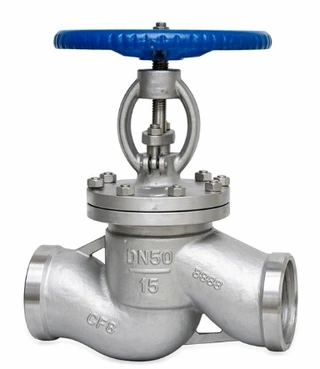
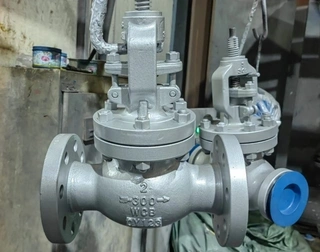
The internal structure of a straight-through globe valve is relatively simple. Its core components include the valve body, valve stem, disc, and seat. The disc is a movable component that moves up and down. By changing the opening between the disc and the seat, the valve achieves precise control of fluid flow.
When the valve is fully open, the disc is lifted above the flow channel, allowing the medium to pass smoothly. When the valve needs to be closed, manual operation or an actuator drives the stem downward, causing the disc to gradually approach the seat and finally press tightly against the sealing surface, thereby blocking fluid flow.
In electrically actuated globe valves, the opening and closing process is automatically controlled by an electric actuator. The actuator responds to signals from the control system to achieve precise positioning. This automated control method is particularly important in large industrial systems, improving operational efficiency while reducing human error.
Core Importance of Sealing in Globe Valves
Understanding the sealing principle of straight-through globe valves is essential for evaluating their reliability and suitability in real operating conditions. Sealing performance is one of the fundamental characteristics of any valve and is directly related to system safety and economic efficiency.
Good sealing performance has two major implications. On one hand, it effectively prevents leakage of the medium, avoiding resource loss and reducing safety risks. On the other hand, it ensures accurate flow regulation, allowing the entire pipeline system to operate in a stable and efficient manner. In industrial applications, sealing reliability is a key criterion in valve design and selection.
Sealing Principle of Straight-Through Globe Valves
After understanding the basic structure, the next focus is the sealing mechanism itself. The sealing process is based on surface contact logic and involves distinctions between soft and metal sealing, as well as mechanical force analysis during operation. These aspects are discussed below.
1. Basic Logic of Surface Contact Sealing
The core of sealing in a straight-through globe valve lies in the sealing contact between the disc and the seat. When the valve is closed, the stem pushes the disc downward so that it tightly presses against the seat surface. This forms a reliable physical barrier between the inlet and outlet, preventing the medium from passing through and achieving shut-off functionality. This “surface contact sealing” is the fundamental working principle of a globe valve.
The quality of sealing depends on several factors, including surface finish of the seat material, hardness, and chemical compatibility with the medium. Under ideal conditions, the contact surfaces of the disc and seat should fully conform without any gaps, ensuring zero leakage.
2. Differences Between Soft Sealing and Metal Sealing
In terms of sealing structure, straight-through globe valves are generally classified into soft sealing and metal sealing types, each with distinct characteristics and application scenarios.
Soft sealing typically uses rubber or elastomeric materials for the sealing surface. These materials have excellent deformation capability, allowing them to better conform to the seat surface. Even if there are minor surface imperfections, good sealing performance can still be achieved. Therefore, soft sealing is commonly used in food processing, beverage industries, and other applications requiring strict leakage control.
However, soft sealing also has limitations. In high-temperature or high-pressure environments, material performance is restricted, and rubber materials may age over time, leading to reduced sealing reliability.
Metal sealing, on the other hand, uses stainless steel or alloy steel materials. These materials provide higher resistance to temperature, pressure, and wear, making them suitable for harsh industrial environments. However, because metals lack elasticity, sealing performance heavily depends on machining accuracy and surface finish. If minor surface defects exist, metal sealing may not perform as well as soft sealing.
3. Mechanical Analysis of the Sealing Process
During operation, sealing is achieved through axial force applied to the disc. When the stem pushes the disc against the seat, a stable sealing force is generated, blocking fluid flow. Several key mechanical parameters are involved in this process.
The first is specific pressure, which refers to the pressure acting on a unit sealing area. This pressure is mainly derived from the pressure difference across the valve and external force applied by the bonnet. The magnitude of specific pressure directly affects sealing performance, reliability, and service life.
If the specific pressure is insufficient, the sealing surfaces cannot fully contact, leading to leakage. If it is too high, excessive wear or damage may occur on the sealing surfaces. Therefore, proper control and optimization of specific pressure are essential in valve design.
The second factor is the sealing surface width. A wider sealing surface increases the length of capillary flow paths, increasing resistance to medium penetration and improving sealing effectiveness. Therefore, selecting an appropriate sealing surface width is an important design consideration.
Key Factors Affecting Sealing Performance
Although the sealing principle defines the contact mechanism between disc and seat, actual sealing performance is influenced by multiple factors, including machining quality, material compatibility, operating conditions, surface wettability, and structural design of the sealing pair.
1. Machining Quality of Sealing Surfaces
The machining quality of the disc and seat surfaces is the primary factor affecting sealing performance. The smoother the surface, the better the contact and the lower the risk of leakage. In manufacturing, sealing surfaces are typically precision-machined and lapped to achieve specified roughness levels.
For metal sealing, machining accuracy is especially critical. Since metals lack elasticity, they cannot compensate for surface defects through deformation. Therefore, high-precision machining is required to ensure flatness and smoothness of the sealing surfaces.
2. Material Compatibility and Chemical Resistance
If the medium is corrosive, materials with strong corrosion resistance must be selected. Otherwise, sealing surfaces may be damaged, severely affecting sealing performance. Different media have different chemical characteristics, so seat materials must resist chemical attack to prevent corrosion, pitting, or degradation.
For example, stainless steel or Hastelloy is commonly used in acidic or alkaline environments. In abrasive particle-containing media, tungsten carbide is preferred due to its high wear resistance. Proper material selection based on medium properties is essential for long-term sealing reliability.
3. Temperature and Pressure Conditions
Temperature, pressure, and flow conditions significantly influence sealing performance. High temperatures may cause thermal deformation, while high pressures increase load on sealing surfaces, affecting stability.
Temperature changes also cause thermal expansion and contraction of components, altering contact stress and potentially damaging the sealing structure. Therefore, selecting appropriate sealing materials for extreme temperature conditions is critical.
In addition, temperature affects fluid viscosity, which indirectly influences sealing behavior. Gas viscosity generally increases with temperature, approximately proportional to the square root of absolute temperature. Liquid viscosity, however, decreases significantly as temperature rises.
Since permeability is closely related to viscosity, higher viscosity fluids are less likely to penetrate micro-sealing channels, resulting in better sealing performance under the same conditions.
4. Surface Wettability Characteristics
When a thin oil film exists on the sealing surface, it changes surface wettability and blocks capillary penetration pathways, significantly increasing the pressure differential required for leakage. As a result, some globe valves use sealing lubricants to improve performance and extend service life.
However, when using lubricating grease, its stability must be ensured, and periodic replenishment is required. The lubricant must not dissolve in the medium or undergo volatilization, hardening, or chemical decomposition to maintain long-term sealing reliability.
5. Structural Design of the Sealing Pair
Under force or temperature changes, the dimensions of the sealing pair inevitably vary, which affects contact force and may reduce sealing performance. Therefore, sealing structures must have a certain degree of elastic deformation capability to compensate for such changes and maintain stable sealing conditions.
Selection and Performance of Seat Materials
Among all factors affecting sealing performance, material selection is one of the most critical. Different seat materials have distinct characteristics and are suitable for different operating conditions.
1. Stainless Steel Materials
Stainless steel is widely used in water treatment, chemical processing, and food industries due to its excellent corrosion resistance, strength, and machinability. It provides stable and reliable sealing performance over long periods.
Its advantage lies in balanced performance: it meets general corrosion resistance requirements while offering good mechanical strength and moderate cost.
2. Alloy Steel Materials
Alloy steel is known for high strength, toughness, and wear resistance. It is suitable for high-pressure, high-speed, or particle-containing media applications, widely used in power generation, oil and gas, and mining industries.
In such harsh conditions, seat materials must resist erosion and wear to prevent rapid sealing surface damage.
3. High-Performance Hard Materials
Common high-performance materials include tungsten carbide, Stellite alloys, and ceramics. These materials offer extremely high hardness and wear resistance, maintaining stable sealing performance in severe service conditions.
Tungsten carbide is typically used in highly abrasive environments such as slurry or sand transport systems. Stellite alloys provide both wear and corrosion resistance, making them suitable for a wide range of harsh applications.
4. Polymer Materials
PTFE is a fluoropolymer with excellent chemical resistance, low friction coefficient, and good sealing capability. It is suitable for corrosive media or applications requiring high sealing performance.
Graphite, with its excellent high-temperature resistance, self-lubricating properties, and chemical stability, is widely used in steam and high-temperature gas systems. It maintains stable mechanical properties even under extreme thermal conditions.
5. Elastomer Materials
Rubber and elastomer materials offer excellent flexibility and adaptability. When compressed by the disc, they undergo slight deformation, allowing tight sealing even with minor surface imperfections or assembly deviations. These materials are suitable for moderate operating conditions with high sealing requirements.
Comprehensive Considerations for Seat Material Selection
In practical applications, material selection must follow a systematic evaluation approach. Decisions should consider operating conditions, chemical compatibility, hardness and wear resistance, temperature adaptability, elasticity, and cost.
- Operating Condition Analysis: The first step is to evaluate medium type, pressure, temperature, and flow conditions, as different environments impose different performance requirements.
- Chemical Compatibility: Understanding the chemical nature of the medium, including acidity, alkalinity, and corrosive ions, is essential to prevent material degradation.
- Hardness and Wear Resistance: In abrasive environments, materials such as tungsten carbide or Stellite should be used to resist erosion and surface wear.
- Temperature Adaptability: Materials must maintain stable mechanical properties under operating temperatures without phase change or thermal decomposition risks.
- Elasticity and Deformation Capacity: Materials with elasticity help maintain sealing integrity even under assembly deviations or surface irregularities.
- Cost and Supply Considerations: Finally, economic factors and material availability must be considered to balance performance and cost efficiency.
Conclusion
Although the sealing principle of straight-through globe valves is based on simple surface contact logic, its real-world application involves multiple disciplines, including materials science, fluid mechanics, and mechanical design. From surface machining quality to material selection, from temperature and pressure conditions to surface wettability, every factor influences final sealing performance.
In engineering practice, suitable sealing structures and seat materials must be selected based on specific operating conditions, medium properties, and cost constraints. Only by fully understanding the sealing mechanism and applying scientific selection principles can straight-through globe valves achieve reliable shut-off and regulation functions, ensuring safe and efficient operation of industrial systems.
Send your message to this supplier
Related Articles from the Supplier

Guide to Nickel Wire Reinforced Graphite Packing
- Nov 20, 2025
Guide to Braided Packing: Selection and Applications
- Mar 23, 2026
Guide to Gasket and O-Ring Comparison & Selection
- Jun 03, 2026
Related Articles from China Manufacturers
Guide to Non-Ferrous Metal Forging Process
- Nov 06, 2025
Guide to Aluminum Alloy Forging Technology
- Nov 13, 2025


Guide to Liquid Die Forging Technology
- May 20, 2025
Guide to Nickel-Based Alloy Open Die Forging
- Dec 09, 2025
Related Products Mentioned in the Article

Supplier Website
Source: https://www.magpievalves.com/media-hub/guide-to-straight-through-globe-valve-sealing-principle.html