
Complete Guide to Expanded Graphite Packing
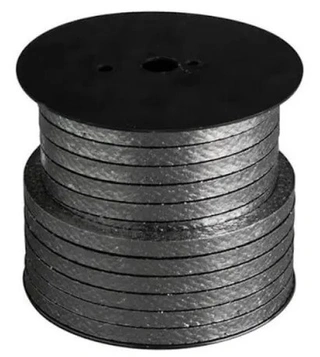
Expanded graphite packing is a high-performance material specifically used for sealing in industrial equipment. Its manufacturing process involves compressing flexible graphite yarn into dense packing rings or weaving it into rope-like structures. This material has self-lubricating properties, high thermal conductivity, and resistance to corrosion from a wide range of chemical media, making it widely used for sealing pumps, valves, flanges, and other equipment operating in extreme environments.
Graphite itself is an excellent material. Expanded graphite packing, produced through special treatment, retains the natural advantages of graphite while adding flexibility and workability. This allows it to meet the increasingly high demands for sealing materials in modern industry.
Core Performance Features of Expanded Graphite Packing
The reason expanded graphite packing is widely used across many industrial fields lies in its unique material properties. Compared with traditional sealing materials, it performs exceptionally under extreme conditions. The following details the core performance characteristics of this material.
1. Outstanding Temperature Adaptability
One of the most notable features of expanded graphite packing is its excellent thermal stability. It can operate normally across an extremely wide temperature range, from ultra-low temperatures of -240°C to high temperatures exceeding 650°C.
What does this temperature range mean? In practical applications, ultra-high-temperature steam systems, heat-transfer oil circulation equipment, and high-temperature exhaust gas treatment devices generate very high operating temperatures. Ordinary synthetic fiber materials degrade rapidly under such high temperatures, losing their elasticity and sealing performance. Expanded graphite packing, however, does not decompose at high temperatures, nor does it harden or become brittle, consistently maintaining good sealing performance.
This characteristic makes expanded graphite packing the preferred sealing material under high-temperature conditions. Whether in steam pipelines, boiler systems, or heat treatment equipment, it can reliably provide sealing protection.
2. Excellent Chemical Stability
Industrial production often involves handling various corrosive substances. Expanded graphite packing exhibits inertness to most chemicals, including acids and alkalis of various concentrations, organic solvents, and hydrocarbons.
In chemical production workshops, equipment frequently comes into contact with highly corrosive fluids. Traditional sealing materials are quickly damaged and fail in such environments, requiring frequent replacement. Expanded graphite packing can work stably over long periods in strongly corrosive environments, protecting equipment from chemical erosion. This is why it is widely used in the chemical, oil and gas, and power generation industries.
3. Natural Lubrication Protects Equipment
Unlike many traditional packing materials, graphite has natural lubricating properties. This self-lubrication provides multiple benefits:
Firstly, it significantly reduces the coefficient of friction and minimizes heat accumulation during equipment operation. Heat generated by friction is a common issue in mechanical seals; excessive temperature accelerates material aging and shortens service life. The low friction of expanded graphite effectively addresses this problem.
Secondly, this lubrication protects shafts and sleeves from wear. In pumps and rotating equipment, shafts are precision moving components with high replacement costs. Using expanded graphite packing reduces damage to shaft surfaces, extends equipment life, and lowers maintenance and replacement costs for enterprises.
4. Structural Stability Under High Pressure
Expanded graphite packing can maintain excellent structural integrity under high-pressure environments. Whether in high-speed centrifugal pumps or isolation valves that require tight closure, this packing maintains its shape, forming a reliable sealing barrier.
More importantly, even under frequent equipment start-stop cycles or vibrating conditions, expanded graphite packing retains stable sealing performance. It does not loosen due to mechanical vibration nor fail due to pressure fluctuations. This reliability is crucial for continuous industrial processes.
Manufacturing Process and Quality Control
From natural graphite to finished product: the production of expanded graphite packing begins with the chemical treatment of natural graphite. Manufacturers use specific chemical agents to induce an expansion reaction in the graphite material, forming flexible, lightweight sheets. This expansion process is a key step in manufacturing. The expanded graphite retains its original crystal structure, but its volume increases and density decreases, resulting in better flexibility and compressibility.
Subsequently, these expanded graphite sheets are processed into different product forms: some are pressed into dense packing rings, some are woven into continuous ropes, and special forms such as graphite tape can also be produced. Understanding this production process is important for procurement decisions. The chemical treatment process, degree of expansion control, and subsequent processing accuracy of different manufacturers all affect the final product performance. Choosing a reliable supplier ensures materials meet the required standards.
Quality Inspection Points: High-quality expanded graphite packing should have uniform density distribution, smooth surfaces without visible cracks, flexibility without easily breaking. When purchasing, suppliers can be asked to provide technical parameters such as temperature tolerance, chemical compatibility lists, and compressive strength.
Major Applications of Expanded Graphite Packing
Thanks to its exceptional properties, expanded graphite packing has found mature applications in multiple industries. Key areas include:
- Oil & Gas Industry: Oil and gas equipment often faces high pressures, high temperatures, and corrosive media. Expanded graphite packing ensures reliable sealing under these extreme conditions, preventing hazardous leaks and maintaining operational safety. From wellhead installations and pipelines to refining equipment and storage systems, it plays a critical role in maintaining secure, efficient operations.
- Chemical Production: Chemical processes frequently involve highly corrosive substances. Expanded graphite packing’s chemical resistance makes it ideal for reactors, heat exchangers, and towers, protecting equipment from acid and alkali corrosion. It is particularly effective when handling strong oxidizers or organic solvents, where rubber or plastic seals would degrade rapidly.
- Power Generation and Energy: Power plants operate under diverse, extreme conditions, from high-temperature, high-pressure steam systems to low-temperature cooling circuits. Expanded graphite packing adapts to these environments, providing reliable sealing in boiler feed pumps, steam valves, and flue gas treatment equipment. Its high reliability reduces unplanned downtime and improves operational efficiency in nuclear, thermal, and renewable power facilities.
- Pulp & Paper Industry: Paper machinery operates in humid, dusty environments. Expanded graphite packing enhances sealing performance, ensuring smooth production in pulp pumps, steam systems, and wastewater equipment.
- General Industrial Equipment: Beyond specialized industries, expanded graphite packing is widely used in general industrial equipment, including high-temperature valves, rotary pumps, flanges, and manhole covers. Its versatility and ease of installation make it a go-to choice for equipment maintenance and upgrades.
Product Forms and Installation Convenience
To meet the needs of different industries and applications, expanded graphite packing is processed into multiple product forms. These forms not only adapt to installation requirements of various equipment but also greatly simplify on-site operations. The following introduces product forms and installation convenience.
1. Diverse Product Forms
Expanded graphite packing can be processed into multiple forms according to usage needs. Preformed packing rings are the most common form, pressed to standard sizes and can be directly installed in packing glands. Braided packing ropes offer better flexibility, suitable for irregular sealing surfaces or applications requiring on-site size adjustment.
In addition, graphite tape provides more options for special applications. This tape can be wrapped around flanges or threaded connections to form a high-performance, corrosion-resistant sealing layer. Different forms have their respective advantages, allowing users to flexibly choose according to specific working conditions.
2. Simple Installation Process
Another practical advantage of expanded graphite packing is its ease of installation and maintenance. Whether preformed rings or braided ropes, ordinary tools can be used for cutting and adjustment. The material is uniform, feels good to handle, and does not require special installation equipment.
During installation, operators can cut the packing on-site according to actual gland dimensions. The material adapts well to the cavity shape, filling tightly without gaps. This flexibility is valuable for OEM equipment design and emergency on-site repairs, shortening downtime and improving maintenance efficiency.
Usage Considerations and Limitations
Although expanded graphite packing performs excellently and has wide applications, every material has its applicable range and limitations. Understanding these considerations helps ensure proper selection and optimal performance. The following introduces precautions and limitations for using expanded graphite packing.
1. Chemical Compatibility Limits
Although expanded graphite packing has good tolerance to most chemicals, it is not suitable for all substances. Strong oxidizing acids (e.g., concentrated nitric acid, concentrated sulfuric acid) or certain specific solvents may affect its performance.
Therefore, before selection, it is essential to understand the type, concentration, and temperature of the media in the working environment. Compare with supplier-provided chemical compatibility data to confirm suitability. If necessary, consult technical professionals to avoid sealing failure due to improper material selection.
2. Proper Installation Method
Installation quality directly affects the performance of expanded graphite packing. During installation, care must be taken to avoid damaging the material, prevent scratches with sharp tools, and avoid excessive stretching or twisting.
Before installation, sealing surfaces should be thoroughly cleaned to remove old packing residues, oil, and rust. Packing rings should be installed circle by circle, with each ring joint staggered to ensure continuous sealing. Gland bolts should be tightened evenly and symmetrically to prevent leakage caused by uneven pressure.
3. Regular Maintenance and Inspection
To ensure long-term reliable operation of the sealing system, a regular inspection routine should be established. Observe for signs of leakage at packing locations and check whether gland bolts need further tightening. If packing shows obvious wear or hardening, replace it promptly instead of waiting for severe leakage.
Regular maintenance not only ensures production safety but also extends equipment service life, making it a cost-effective long-term practice.
Selection Recommendations and Procurement Guidelines
Clarify operating conditions: When purchasing expanded graphite packing, first clearly understand the actual working conditions: what is the temperature range? What chemical components are present? What is the pressure level? Is the equipment continuous or intermittent? These basic parameters determine the appropriate product specification.
Choose reputable suppliers: The quality of sealing materials in the market varies. It is recommended to choose manufacturers with production qualifications and comprehensive quality control systems. High-quality suppliers can provide complete technical information, including material certifications, performance test reports, and application case references.
Consider total cost: Evaluate the value of expanded graphite packing not only by unit price but also by lifespan, maintenance frequency, equipment protection effectiveness, and impact on production efficiency. High-quality products may have higher initial costs but generally lower long-term operating costs.
Conclusion
Expanded graphite packing, with its excellent temperature adaptability, chemical stability, self-lubricating properties, and structural strength, has become an important material in modern industrial sealing. From oil and gas exploration to chemical production, from power generation equipment to paper machinery, it has proven reliable under various harsh conditions. Proper selection and use of expanded graphite packing can effectively prevent media leakage, protect expensive equipment, reduce downtime and maintenance, and improve production efficiency. For industrial applications that require sealing under high temperature, high pressure, and corrosive environments, expanded graphite packing is undoubtedly a proven, wise choice.
Send your message to this supplier
Related Articles from the Supplier
Complete Guide to Expanded Graphite Packing
- Mar 19, 2026
Complete Guide to Low Fugitive Emission Valves
- Oct 16, 2025
Complete Guide to PTFE Packing Selection
- Mar 10, 2026
Related Articles from China Manufacturers
Complete Guide to Forging Die Design
- Apr 03, 2026
Complete Guide to Heat Exchanger Installation
- Oct 28, 2025

Complete Guide to Infrared Sensors
- Aug 21, 2024


Related Products Mentioned in the Article
Supplier Website
Source: https://www.magpievalves.com/media-hub/complete-guide-to-expanded-graphite-packing.html