
API Valve Low-Emission Standards and Sealing Technology
Industrial valves play a critical role in process industries such as oil, chemical, and natural gas, where they regulate the flow and shut-off of process media. During long-term operation, minor leaks can occur at sealing points such as valve stem packing and flange gaskets. These leaks, known as fugitive emissions, have become a key environmental concern as global regulations tighten. In particular, the U.S. Environmental Protection Agency (EPA) has progressively enforced stricter emission limits for industrial facilities, making the control of valve fugitive emissions a vital compliance issue for enterprises.
The American Petroleum Institute (API) has developed a series of testing standards for valves and packing materials, providing a unified approach to evaluating leakage performance. Advanced sealing technologies, including low-emission packing, bellows seals, and self-adjusting packing systems, further support companies in achieving low-emission objectives. This article systematically introduces API valve low-emission control from four perspectives: regulatory background, testing standards, sealing technologies, and selection and maintenance recommendations.
Regulatory Background for Fugitive Emissions and Transition
From the U.S. Clean Air Act and EPA regulatory tightening, to the industry's shift from reactive maintenance to preventive design, and the growing demand for low-emission valves, these factors collectively drive the establishment and refinement of API low-emission standards. This section addresses these aspects.
1. U.S. Clean Air Act and EPA Requirements
Since the enactment of the U.S. Clean Air Act in 1963, the EPA and state agencies have increasingly imposed stringent compliance requirements on industrial facilities to control fugitive emissions. Fugitive emissions refer to pollutants unintentionally released into the atmosphere during normal operation due to minor leaks from valves, flanges, pumps, and other components. While single leaks are minimal, their cumulative effect in large industrial plants can significantly impact air quality and public health.
To address this, many enterprises have implemented Leak Detection and Repair (LDAR) programs. These programs require regular inspection of equipment, prompt repair of detected leaks, and reduction of overall emissions. Industry organizations have concentrated on supporting member companies in lowering valve emissions, fostering technological advancement, and refining standards.
2. From LDAR Repair to Preventive Design
In recent years, the industry's focus has shifted from repair-oriented LDAR programs toward more proactive, preventive approaches. Companies now emphasize low-emission performance during the valve design and manufacturing stages, aiming to reduce leakage risks at the source. This shift necessitates that valve manufacturers consider sealing performance during product design rather than relying solely on operational maintenance and repair.
Preventive design involves improving valve structure, selecting high-performance sealing materials, and optimizing manufacturing processes so that valves inherently exhibit low leakage characteristics before deployment. This approach not only reduces compliance costs but also minimizes material loss and safety hazards caused by leakage.
3. Market Demand for Low-Emission Valves
As environmental regulations tighten, demand for low-emission valves (LEVs) continues to grow. Buyers in the oil, chemical, and gas sectors increasingly require low-emission certification as part of procurement specifications. Valve manufacturers must therefore conduct standardized testing and certification to demonstrate compliance with stringent leakage limits.
Testing standards provide the basis for evaluating valve and packing leakage performance. Various standard organizations have developed test methods for valve packing and overall valve leakage, resulting in a diversified standards framework. API, ISO, MESC, ANSI, and TA-Luft are among the organizations that have issued valve and packing testing standards, though differences exist in methodologies, conditions, and acceptance criteria, making comparative understanding a long-standing industry discussion.
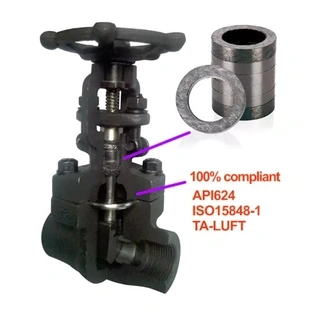
Low-Emission Valve Testing Standards
API has established several testing standards, most notably API 622 (Packing Type Test), API 624 (Rising Stem Valve Type Test), and API 641 (Quarter-Turn Valve Type Test). Each standard differs in test object, cycle count, and allowable leakage, collectively forming the core framework for valve low-emission testing.
1. Overview of Key Standards
Within the oil industry, API has developed the most widely used valve and packing emission standards. These standards provide a uniform technical basis for selection, manufacturing, and third-party testing. The three primary standards are:
- API 622: “Type Test of Process Valve Packing”
- API 624: “Type Test for Graphite Packing in Rising Stem Valves”
- API 641: “Type Test for Quarter-Turn Valves”
In many API rising stem valve design standards (e.g., API 600, 602, 603, 623), API 624 testing is either included or under consideration, meaning that valves must pass API 624 to meet the corresponding design criteria. Similarly, for quarter-turn valves (API 608, 609), API 641 testing is under review for inclusion. The revision of API 608 (6th edition) continues to discuss the exact requirements for API 641 compliance.
2. API 622: Packing Type Test
API 622 is the first standard in the low-emission valve and packing series. It focuses on the packing material itself rather than the valve, eliminating variability from valve structures. Standardized fixtures and conditions allow comparison of packing from different manufacturers.
The current second edition specifies 1,510 mechanical cycles (full open to full close) at 600 psig, with five thermal cycles. Thermal cycling involves 150 cycles at ambient temperature, 150 cycles at 500°F, and a final 10 cycles at ambient. The test fixture simulates a 4-inch, 300-pound gate valve using 1/4-inch cross-section packing and 4-inch stem travel. All details are clearly defined to ensure comparability across testing sites.
The allowed leakage is currently 500 ppmv. Adjustments to the gland bolts are permitted once during testing if leakage occurs. The upcoming third edition will further reduce allowable leakage to 100 ppmv, eliminate gland bolt adjustments, and add testing for 1/8-inch packing samples—a known challenge in valve type tests.
3. API 624: Rising Stem Valve Type Test
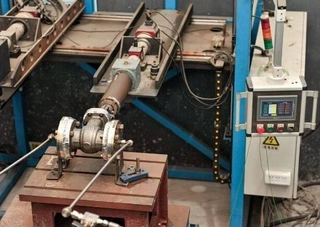
API 624 targets the full valve, including the stem seal and packing. It assesses low-emission performance under accelerated life cycles and requires the packing to be pre-certified under API 622 to ensure inherent low-emission capability.
The test consists of 310 mechanical cycles at 600 psig with three thermal cycles, periodically measuring methane leakage. Thermal cycles include 50 cycles at ambient temperature, 50 cycles at 500°F, and 10 cycles at ambient. The maximum allowable leakage for the stem seal is 100 ppmv, with no adjustments permitted. Exceeding this limit constitutes test failure.
4. API 641: Quarter-Turn Valve Type Test
Released in late 2016, API 641 is a type test for quarter-turn valves such as ball and butterfly valves, similar in concept to API 624. Quarter-turn valves differ in design, temperature rating, and sealing components, making the testing standard more complex.
API 641 specifies methane as the test medium, 610 cycles of 90° reciprocation, and 100 ppmv maximum leakage. Additional parameters such as packing material, temperature, and pressure depend on valve design and intended use. Graphite packing must pass API 622, while other materials (e.g., PTFE) are allowed for cases outside API 622 coverage.
For low-temperature components, the test temperature may be adjusted according to valve design and rated class, with pressure up to 600 psig. This makes API 641 a complex, design-dependent testing framework.
5. Key Differences Among the Standards
While API 622 and 624 share similarities, key differences include:
|
Feature |
API 622 |
API 624 |
|
Cycles |
1,510 |
310 |
|
Test Object |
Packing fixture |
Full valve |
|
Allowable Leakage |
500 ppmv |
100 ppmv |
|
Gland Adjustment |
Once allowed |
Not allowed |
API 624 evaluates valve performance over a simulated five-year life, while API 622 only assesses packing. API 641 targets rotary valves with 610 cycles and flexible parameters to accommodate design diversity.
API Valve Sealing Technology Solutions
To meet low-emission requirements, the valve industry has developed multiple sealing technologies:
1. Low-Emission Packing Materials
Effective control of fugitive emissions under high temperature and pressure requires stable sealing performance. Advanced materials include expanded graphite, PTFE, and braided carbon fiber, which maintain performance under extreme conditions. Expanded graphite offers self-lubrication and high-temperature resistance, PTFE resists chemical corrosion, and carbon fiber packing combines strength and thermal stability for high differential pressures.
2. Gasket Sealing Technology
Gasket technology is widely applied in flange connections to prevent leakage at valve-pipe interfaces. Common low-emission gaskets include graphite/PTFE wound, metal-jacketed, corrugated composite, and flexible graphite/PTFE sheet gaskets. These materials provide chemical resistance, thermal stability, and adaptability to irregular sealing surfaces.
3. Pressure-Seal and Self-Adjusting Packing Systems
Pressure-seal designs use anti-extrusion graphite packing to prevent seal extrusion under high pressure, enhancing reliability. Self-adjusting packing systems employ spring-loaded structures to maintain compression over time, compensating for wear and relaxation, thus reducing leakage risk due to insufficient compression.
4. Bellows-Sealed Valves
Bellows-sealed valves isolate the stem from the process media using flexible metal bellows welded between the stem and bonnet, ensuring zero leakage even under stem movement and thermal variation. This solution is particularly suitable for toxic, flammable, or costly media. Materials are typically stainless steel or Inconel alloys for corrosion resistance and temperature tolerance.
Selection and Maintenance Recommendations
- Material and Service Matching: Sealing solutions must match the process medium, temperature, and chemical environment. Misaligned selection may cause material degradation or failure, leading to leakage. For example, graphite is suitable for high temperatures but limited in strong oxidizers; PTFE is chemically resistant but temperature-limited; metal bellows suit high-temperature, high-pressure conditions but require corrosion-resistant alloys.
- Importance of Type-Test Certification: Type tests such as API 622 validate sealing system performance under operational conditions. Buyers should request test certificates from third-party labs and verify that specific valve models have passed relevant tests, rather than relying solely on manufacturer credentials.
- Preventive Maintenance and Compliance Management: Regular inspection, adjustment, and replacement of sealing components are critical for maintaining low-emission performance. Even advanced sealing technologies degrade over time due to wear, corrosion, or fatigue. Maintenance should include leak detection using portable gas analyzers or infrared thermography, repair per LDAR protocols, and shortened inspection cycles for high-risk valves, with spares stocked as needed.
Conclusion
The API low-emission valve standards provide a technical foundation for controlling fugitive emissions in industrial facilities. From API 622 packing tests to API 624 and 641 valve type tests, the standards cover materials to complete assemblies. Enterprises should select appropriate sealing technologies based on service conditions, prioritize type-test certification, and implement a comprehensive maintenance program. These measures effectively reduce fugitive emissions, ensure regulatory compliance, and enhance operational safety and economic efficiency.
Send your message to this supplier
Related Articles from the Supplier
Related Articles from China Manufacturers
Introduction to Major API Valve Standards
- Nov 22, 2025

API 6D Trunnion Mounted Ball Valve
- May 19, 2020
API 6D Metal Seated Ball Valve
- May 22, 2020
API 6D Duplex Steel Ball Valve
- Jul 30, 2020
Related Products Mentioned in the Article
Supplier Website
Source: https://www.magpievalves.com/media-hub/api-valve-low-emission-standards-and-sealing-technology.html