
Valve Selection for Abrasive Slurry Service
In mining operations, transporting ore, tailings, or coal slag mixed with water to form a slurry through pipelines over long distances is a highly efficient and widely used process. However, this mixture of solid particles and liquid presents complex characteristics such as strong abrasiveness, easy sedimentation, and uneven particle distribution, which impose severe challenges on conveying systems.
As the core component responsible for controlling slurry flow, shut-off, and pressure, the proper selection of valves directly determines whether the entire conveying system can operate stably. If valve selection is inappropriate, enterprises may face rapid equipment wear, frequent blockages, seal failure, and even unplanned shutdowns. These issues significantly increase maintenance costs and reduce overall production efficiency.
Based on the special conditions of slurry service, this article systematically analyzes the applicability and performance differences of common valve types used in mining slurry transportation, including knife gate valves, pinch valves, ball valves, and diaphragm valves. It also provides practical selection recommendations and service-life extension measures based on key factors such as particle hardness, temperature, pressure, and maintenance convenience, helping mining enterprises achieve safer, more efficient, and more economical slurry handling systems.
Importance of Slurry Transportation in Mining Operations
Slurry transportation is a common method used in mining operations. A slurry refers to a mixture of water and solid particles, which is transported through pipeline systems from one location to another. This method is widely applied in mining sites, mineral processing plants, and tailings treatment facilities.
Valves play a critical role in slurry transportation systems. They control the flow direction, flow rate, and on-off conditions of the slurry. If valve selection is improper, the entire system may experience frequent shutdowns, accelerated equipment wear, increased maintenance costs, and even safety incidents. Therefore, selecting appropriate slurry pipeline valves has a direct impact on production stability and cost control in mining enterprises.
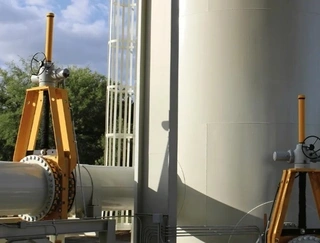
Challenges of Slurry Operating Conditions on Valves
Slurry media exhibit complex physical and chemical properties, which place high demands on valve performance. The main challenges are as follows:
1. High Solid Content Leading to Accelerated Wear
The solid content in slurry is typically high, generally ranging from 30% to 70%. As slurry flows through valves, solid particles continuously impact internal components, especially valve seats, plates, and sealing surfaces. This continuous impact accelerates wear and leads to a decline in sealing performance.
2. Non-uniform Particles Causing Erosion and Abrasion
Solid particles in slurry vary in size. Large particles moving at high velocity can cause cutting and impact effects on internal valve components. This erosion damages the smoothness of sealing surfaces, resulting in sealing failure. Long-term erosion may also reduce wall thickness, eventually causing leakage or rupture.
3. Sedimentation Leading to Blockage Issues
During slurry flow, solid particles tend to settle in low-velocity or geometrically complex areas. These deposits gradually accumulate and form scaling. Severe scaling may block valve passages, preventing proper opening or closing. This issue is particularly prominent in valves with narrow flow paths or dead zones.
4. Chemical Composition Causing Corrosion Risk
Some slurries contain acidic or alkaline components, such as mine wastewater or chemical tailings. These chemical properties introduce corrosion effects in addition to mechanical wear. When wear and corrosion act simultaneously, valve failure accelerates significantly. Corrosion may cause pitting or uniform thinning of metal surfaces, while wear continuously removes protective layers, exposing fresh metal to corrosive media.
Key Factors in Slurry Valve Selection
When selecting valves for mining slurry applications, several key factors must be considered comprehensively:
1. Particle Size and Hardness
The first step is to understand the size range and hardness of solid particles in the slurry. Larger and harder particles produce stronger erosive effects on valves. Based on particle characteristics, valves with sufficiently large internal flow passages and robust structures capable of withstanding long-term erosion should be selected. If particles are large, valves with narrow flow channels should be avoided, as they are prone to clogging.
2. Temperature Conditions
Both slurry temperature and ambient operating temperature affect valve performance. Excessively high temperatures can damage rubber or plastic sealing materials, while low temperatures may cause certain materials to become brittle. Therefore, valve materials and sealing structures must remain stable within the actual operating temperature range. Generally, long-term service temperature for wear-resistant elastomer materials should not exceed 120°C.
3. Pressure Conditions
The maximum system operating pressure is usually determined by the lowest-rated component in the system. Valves must meet both normal operating pressure and possible pressure fluctuations. Under pressurized conditions, valve closure becomes more difficult, requiring higher material strength and more reliable structural design. The selected valve pressure rating must not be lower than the system design pressure.
4. Maintenance Convenience
Ease of maintenance directly affects long-term operating costs. Key considerations include whether wearing parts are easy to replace, whether maintenance cycles are reasonable, and whether special tools or skilled technicians are required. Valves with good maintainability can reduce downtime, lower labor costs, and improve overall equipment efficiency.
Common Slurry Valve Types and Their Characteristics
In mining slurry transportation systems, the most commonly used valve types include knife gate valves, pinch valves, ball valves, and diaphragm valves. Each type has its own advantages, limitations, and applicable conditions.
1. Knife Gate Valve
A knife gate valve operates by using a sharp-edged gate that moves up and down to cut off the medium. In the open position, the gate is fully withdrawn from the flow path, allowing slurry to pass freely. Knife gate valves are mainly suitable for on-off service, where flow regulation is not required.
Advantages: Strong structure, low cost, suitable for high solid-content slurry, and low flow resistance in the open position.
Disadvantages: Not suitable for throttling control. If used in a partially open state for throttling, the sealing surface wears rapidly and leakage may occur. It is also not suitable for media containing large particles or long fibers.
2. Pinch Valve
A pinch valve operates by compressing a flexible rubber sleeve to achieve shut-off. When closing, pneumatic, electric, or manual force compresses the sleeve until the inner walls seal and block the medium. When opened, the pressure is released, and the sleeve returns to its original shape due to elasticity.
Advantages: Only the inner liner comes into contact with the slurry, while the valve body is not exposed to abrasion. This structure is especially suitable for highly abrasive or large-particle media. The straight-through flow path reduces the risk of clogging.
Disadvantages: Limited pressure-bearing capacity, generally suitable for medium to low pressure conditions. The rubber sleeve is a wear part requiring periodic replacement. Temperature resistance is also limited by elastomer materials.
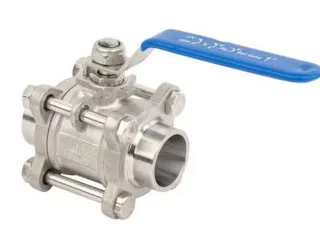
3. Ball Valve
A ball valve contains a rotating sphere with a through hole. When the hole aligns with the pipeline, the medium flows through; when rotated 90 degrees, the solid part blocks the flow path, achieving full shut-off.
Advantages: Compact structure, fast operation, and good sealing performance. Suitable for applications requiring quick shut-off.
Disadvantages: In high solid-content or highly abrasive conditions, the valve seat wears quickly. Solid particles may enter the gap between ball and seat, causing jamming or seal failure. The internal flow path is not fully straight, which increases the risk of clogging. Standard ball valves have short service life in abrasive environments; hardened seats and optimized flow designs are required for such applications.
4. Diaphragm Valve
A diaphragm valve controls flow by pressing a flexible diaphragm against the valve seat. The diaphragm isolates the medium completely from internal moving components.
Advantages: Suitable for corrosive or mildly abrasive slurry. It offers some flow regulation capability, simple structure, and easy maintenance.
Disadvantages: Diaphragm life is significantly reduced under severe abrasive conditions. It is not suitable for high-pressure applications or coarse particles. High temperatures may also accelerate material aging.
Performance Comparison of Slurry Valve Types
The following table summarizes the differences among the four common slurry valve types:
|
Valve Type |
Applicable Conditions |
Main Advantages |
Main Limitations |
|
Knife Gate Valve |
On-off control for high solid-content slurry |
Strong structure, low cost, low flow resistance |
Not suitable for throttling, sealing surface wears easily |
|
Pinch Valve |
Highly abrasive or corrosive slurry |
Only liner contacts medium, wear-resistant, anti-clogging |
Limited pressure capacity, requires sleeve replacement |
|
Ball Valve |
Medium slurry conditions |
Good sealing, fast operation, compact structure |
Short life in abrasive service, prone to clogging |
|
Diaphragm Valve |
Corrosive or mildly abrasive media |
Isolates medium from moving parts, adjustable flow |
Not suitable for high pressure or coarse particles |
In practical selection, the valve type must be chosen according to specific operating conditions. No single valve is suitable for all slurry applications.
Measures to Extend Slurry Valve Service Life
To extend valve service life in slurry applications, the following optimization measures should be adopted:
1. Select Valves Designed for Slurry Service
Standard valves are not fully designed for solid particle erosion. Valves specifically designed for slurry service should be selected, as they incorporate optimized flow paths, wear-resistant materials, and improved sealing structures.
2. Proper Valve Installation Position
Valves should ideally be installed in straight pipe sections where flow conditions are more stable and turbulence is reduced. If installation near elbows is unavoidable, flow straighteners or extended straight pipe lengths should be used to reduce turbulence impact.
3. Establish Regular Inspection Procedures
A routine inspection plan should be implemented, including evaluation of sealing surface wear, gate or ball condition, and liner integrity. Worn components should be replaced promptly to prevent minor issues from developing into major failures. Inspection frequency should be based on slurry abrasiveness and operating duration.
4. Operator Training and Standardization
Proper operator training is essential. Operators must clearly understand which valves are for on-off service and which are for flow regulation. Throttling operation using on-off valves (such as knife gate valves and standard ball valves) must be strictly prohibited to prevent unnecessary wear and damage.
5. Maintain Pipeline Cleanliness
Regular cleaning of pipeline systems is necessary to prevent sediment buildup inside valves. Deposits not only affect valve operation but also accelerate localized wear. For scaling-prone slurries, flushing systems or anti-scaling valve designs should be considered.
Comprehensive Recommendations for Slurry Valve Selection
Slurry valve selection is essentially a trade-off between operating conditions and cost. Different slurry characteristics directly influence valve selection, and cost should not be the only or primary deciding factor.
For low-temperature, low-pressure, and highly corrosive slurry conditions, diaphragm valves or pinch valves are preferred. For high-temperature, high-pressure, and heavy-duty conditions, specialized valves such as hard-seated ball valves or heavy-duty knife gate valves are required. Most standard valve structures cannot withstand long-term erosion from highly abrasive slurry.
Key slurry parameters that must be analyzed during selection include: solid concentration, particle size, flow rate, temperature range, pressure rating, and chemical composition. These factors directly determine material selection, structural design, and valve sizing requirements.
Conclusion
Slurry transportation is a critical process in mining operations, and valve selection directly affects system performance, equipment lifespan, and cost control. Slurry media are characterized by high solid content, uneven particles, sedimentation tendency, and possible corrosiveness, all of which impose strict requirements on valve design and selection.
Knife gate valves, pinch valves, ball valves, and diaphragm valves are the four most commonly used valve types in slurry systems, each with distinct advantages and limitations. Selection must be based on comprehensive evaluation of particle characteristics, temperature, pressure, and maintenance requirements rather than cost alone. Through proper valve selection, correct installation, regular inspection, and standardized operation, valve service life can be significantly extended, and operational costs in mining enterprises can be effectively reduced.
Send your message to this supplier
Related Articles from the Supplier
Valve Selection for Abrasive Slurry Service
- May 23, 2026
Precautions for Titanium Valve Selection
- Dec 14, 2024
Globe Valve Selection and Application Guide
- Mar 11, 2026

Pinch Valve Selection Guide: What You Should Know
- Jul 16, 2026
Pneumatic Ball Valve Selection Guide
- Sep 15, 2025
Guide to Valve Performance and Selection
- Oct 10, 2025
Related Articles from China Manufacturers
Valve Selection for Flammable and Explosive Media
- Jan 06, 2025

Seal Selection for Valve Design and Retrofitting
- Jul 28, 2022
Related Products Mentioned in the Article

Zhejiang Kosen Valve Co., Ltd.
- https://www.kosenvalve.com/
- Business Type: Industry & Trading, Manufacturer,
Supplier Website
Source: https://www.kosenvalve.com/media-hub/valve-selection-for-abrasive-slurry-service.html