
Stainless Steel Needle Valves for Harsh Environments
Stainless steel needle valves, though compact in appearance, play an indispensable role in precision fluid control across a wide range of industrial applications. They are primarily used to regulate the flow of liquids or gases with high accuracy. Constructed from stainless steel—a material renowned for its corrosion resistance, high-temperature tolerance, and mechanical strength—these valves ensure long-term, stable performance even under demanding conditions. They are widely applied in industries such as oil and gas, chemical, petrochemical, pharmaceuticals, food and beverage, and laboratory systems, delivering precise, safe, and reliable fluid management. Thanks to their exceptional material properties and precise structural design, stainless steel needle valves have become essential components in modern industrial piping systems.
Basic Concept of Stainless Steel Needle Valves
Before exploring their practical value, it is essential to understand the basic concept of stainless steel needle valves. Comprehending their definition, structural composition, and commonly used materials forms the foundation for appreciating their performance advantages. The discussion below covers their functional positioning, core structural components, and commonly used stainless steel materials.
1. Functional Positioning
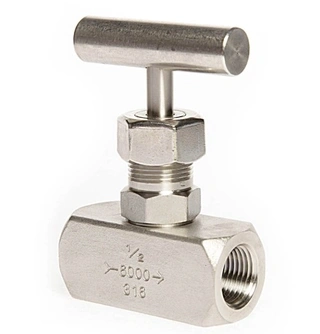
A stainless steel needle valve is a small manual flow control device designed for high-precision regulation of liquid or gas flow. Its most distinctive feature is the needle-shaped valve stem—a slender, tapered needle that gradually enters or exits a tiny orifice to modulate flow. Compared to ball or gate valves, needle valves provide much finer throttling control, making them ideal for applications requiring calibration, sampling, and flow balancing, where precise flow adjustment is critical.
2. Core Structural Components
Stainless steel needle valves are renowned for their precise control capabilities. The valve stem, equipped with fine threads, operates a needle-shaped tapered core that fits closely with the valve seat. This precise engagement allows even minute adjustments to significantly affect flow, achieving extremely fine flow control.
Additionally, these valves provide excellent sealing performance, preventing leakage and ensuring safe operation, particularly in systems handling toxic, flammable, explosive, or high-value fluids. Despite their strength and reliability, needle valves maintain a compact, lightweight design for easy installation across various equipment and piping systems. Their simple structure also facilitates transport, installation, and maintenance, reducing downtime and operational costs.
3. Common Stainless Steel Materials
Stainless steels, particularly 304 and 316/316L grades, are commonly selected for industrial needle valves due to their outstanding corrosion resistance. Stainless steel effectively resists moisture, chemicals, acidic fluids, and other corrosive media, whereas brass or carbon steel valves may degrade under similar conditions.
Furthermore, stainless steel needle valves can withstand extremely high pressures—many are rated for 6,000 psi, 10,000 psi, or even 20,000 psi—making them suitable for high-pressure industrial systems. They also maintain mechanical strength and sealing performance across wide temperature ranges, from cryogenic to high-temperature applications. With excellent wear resistance and anti-pitting properties, stainless steel valves require minimal maintenance and deliver long-term operational stability.
Working Principle of Stainless Steel Needle Valves
Understanding the working principle of stainless steel needle valves is crucial for appreciating their high-precision flow regulation. Their effectiveness stems from the unique needle-shaped core, reliable sealing mechanisms, and operational differences from other valve types.
1. Needle Core Adjustment Mechanism
Although conceptually simple, needle valves achieve highly precise flow control. When an operator rotates the valve stem via a handwheel or T-handle, the needle-shaped core moves vertically. As it gradually enters the valve seat, the flow channel’s diameter decreases, reducing the medium’s flow rate. The small incremental changes enable extremely fine flow adjustments.
When fully seated, the needle forms a tight metal-to-metal seal, achieving bubble-tight shutoff. This design allows smooth flow regulation, avoids sudden pressure spikes, and ensures stable control in high-pressure systems or precision measurement applications.
2. Sealing Principle
The valve’s sealing relies on the precise fit between the needle core and valve seat. When the needle is fully engaged, a metal-to-metal contact prevents fluid leakage, even under high pressures. This is especially important for systems transporting hazardous, flammable, explosive, or high-value fluids, reducing safety risks and potential economic losses. Some needle valves also include soft-seal components to enhance sealing performance as needed.
3. Difference from Ball and Gate Valves
Although generally small, stainless steel needle valves are irreplaceable in systems requiring accurate, gradual flow adjustments. Ball valves are primarily designed for on/off operation and are unsuitable for fine control. Gate valves mainly serve as flow shutoff devices, offering limited throttling ability. In contrast, the tapered needle design allows precise flow modulation, making needle valves ideal for calibration, sampling, and flow balancing tasks across industries such as petrochemicals, high-pressure hydraulics, laboratory instrumentation, and chemical processing.
Key Performance Advantages of Stainless Steel Needle Valves
The widespread adoption of stainless steel needle valves across oil, chemical, and pharmaceutical industries stems from their multiple performance advantages: corrosion resistance, high-temperature tolerance, mechanical strength, precise flow control, and excellent sealing.
1. Corrosion Resistance
One of the standout features of stainless steel needle valves is corrosion resistance. Stainless steel forms a dense passive oxide layer on its surface, preventing rust and other forms of corrosion. This property makes the valves suitable for contact with corrosive media, chemicals, or humid environments. Compared to brass or carbon steel, stainless steel valves demonstrate longer service life and more stable performance under harsh conditions.
2. High-Temperature Resistance
Stainless steel maintains mechanical stability and elasticity even at elevated temperatures, resisting deformation or failure. This makes it suitable for high-temperature fluids, steam systems, and applications near combustion devices. While ordinary materials may soften or warp at high temperatures, stainless steel preserves structural integrity, ensuring consistent valve operation.
3. Strength and Pressure Resistance
Stainless steel provides high tensile strength and impact resistance, allowing the valve to withstand mechanical stress and operational pressure. Many needle valves can operate at pressures ranging from low to ultra-high (up to 20,000 psi), making them suitable for hydraulic test platforms, waterjet cutting systems, and high-pressure industrial applications.
4. Precision Flow Control
The defining advantage of needle valves lies in precise flow control. Fine-threaded stems and tapered cores allow close engagement with the seat, so even minimal adjustments produce noticeable changes in flow. This precision is critical in laboratories, pharmaceutical dosing, chemical reactor feeds, and other applications demanding highly accurate flow control.
5. Superior Sealing Performance
Excellent sealing prevents fluid leakage, which is essential in systems handling hazardous or high-value media. Metal-to-metal sealing maintains integrity even under high pressures, ensuring operational safety and reliability.
Common Structural Types
The performance of needle valves relies on sound structural design. Various configurations address different installation, functional, and pressure requirements.
1. Straight-Through Needle Valves
Straight-through valves maintain inlet and outlet alignment, suitable for inline installation. This configuration is the most common, minimizing flow resistance and simplifying installation and maintenance.
2. Angle Needle Valves
Angle needle valves change flow direction by 90°, reducing the number of pipe fittings and optimizing layout. They are ideal in space-constrained environments or where directional changes are needed, minimizing potential leak points.
3. Block & Bleed Needle Valves
Block & Bleed valves integrate isolation and venting functions, commonly used in pressure measurement systems. They isolate instruments while releasing trapped pressure, facilitating safe calibration, maintenance, and replacement.
4. Integral and Bonnet-Type Needle Valves
Integral bonnet valves are compact and suitable for vibration-prone environments, while bonnet-type valves provide easier access to internal components for maintenance. Users can choose based on operational and maintenance requirements.
5. High-Pressure Needle Valves
For ultra-high-pressure applications (15,000–20,000 psi), high-pressure needle valves are designed with specialized materials and structures to ensure safety and reliability in extreme conditions.
Main Applications for Stainless Steel Needle Valves
Thanks to their performance advantages and structural versatility, stainless steel needle valves are widely used in critical industries.
- Oil and Gas: Needle valves ensure reliable flow control in high-pressure, high-temperature, and corrosive oil and gas environments. They are used in sampling, pressure relief, and instrument isolation from wellhead equipment to downstream pipelines.
- Chemical and Petrochemical: In chemical and petrochemical plants, needle valves handle highly corrosive media under high-temperature and high-pressure conditions. Their precise control improves product quality and operational efficiency in feed regulation, catalyst injection, and additive dosing.
- Pharmaceuticals: In pharmaceutical production, stringent hygiene and control standards require precise flow management. Stainless steel’s cleanliness and corrosion resistance, combined with needle valves’ accuracy, make them ideal for raw material synthesis, formulation, and purified water distribution.
- Food and Beverage: Food and beverage processes demand sanitary standards and precise flow control. Needle valves ensure consistent flow in fermentation, ingredient mixing, and dosing. Stainless steel surfaces are hygienic, smooth, and easy to clean.
- Laboratory and Research: Needle valves are widely applied in laboratories and research for precise microflow control of gases and liquids. They support chromatography, reactor control, gas distribution, and liquid sampling, enabling accurate and stable experimental outcomes.
Practical Value of Choosing Stainless Steel Needle Valves
Selecting stainless steel needle valves is both a technical and strategic decision, influencing system stability, safety, maintenance costs, and media compatibility.
- Enhancing System Stability: Precise flow control ensures smoother and more efficient operation, reducing product variation, increasing yield, and minimizing material waste.
- Reducing Safety Risks: Stainless steel’s corrosion resistance and strength lower leak risk, enhancing personnel safety and environmental protection.
- Minimizing Maintenance Costs: With long service life and high reliability, needle valves reduce replacement frequency and maintenance efforts, minimizing downtime and operational costs.
- Broad Media Compatibility: Stainless steel needle valves handle diverse media, including corrosive, high-temperature, and high-pressure fluids, simplifying inventory and component selection.
Conclusion
Stainless steel needle valves are vital in modern industrial fluid control systems, offering corrosion resistance, high-temperature tolerance, strength, precise flow regulation, and excellent sealing. From laboratory microflow adjustments to stable pressure control in high-risk industrial settings, they deliver unmatched reliability and adaptability.
Though compact, needle valves are irreplaceable when precise, stable, and incremental flow control is required. Understanding their structure and working principles enables engineers to make informed selections, improving system performance and operational stability. As industrial technology advances and flow control requirements grow, stainless steel needle valves will continue to provide efficient, safe, and stable solutions for complex fluid systems.
Send your message to this supplier
Related Articles from the Supplier
Stainless Steel Needle Valves for Harsh Environments
- May 20, 2026

Features of Duplex Stainless Steel Valves
- Dec 14, 2024
Brass Ball Valves vs. Stainless Steel Ball Valves
- Jun 02, 2026
Related Articles from China Manufacturers

Stainless Steel Grades Comparison Table
- Sep 13, 2016


Stainless steel storage tank classification
- Dec 29, 2017

Stainless steel storage tank features
- Apr 02, 2018
Stainless Steel Locks vs. Zinc Alloy Locks
- Feb 14, 2022

Stainless Steel Grades Table
- Sep 13, 2016
Related Products Mentioned in the Article

Zhejiang Kosen Valve Co., Ltd.
- https://www.kosenvalve.com/
- Business Type: Industry & Trading, Manufacturer,
Supplier Website
Source: https://www.kosenvalve.com/media-hub/stainless-steel-needle-valves-for-harsh-environments.html