
Flanged Ball Valves vs. Threaded Ball Valves: How to Choose
When selecting a new ball valve, one of the most important initial considerations is the end connection type—whether to use a flanged connection or a threaded connection. This choice directly affects installation efficiency, maintenance requirements, sealing performance, pressure-handling capability, and overall system cost.
Both flanged ball valves and threaded ball valves have their own advantages and application scenarios, but they are not fully interchangeable. In real piping systems, users must make a selection based on actual operating conditions. This article provides a detailed comparison of these two ball valve types from multiple perspectives, including structural characteristics, technical parameters, installation and maintenance, and application scenarios, to help users make the correct selection decision.
Characteristics and Advantages of Flanged Ball Valves
Flanged ball valves are one of the most widely used valve types in industrial piping systems. To fully understand them, it is necessary to analyze their basic structure, material options, maintenance convenience, and inherent limitations.
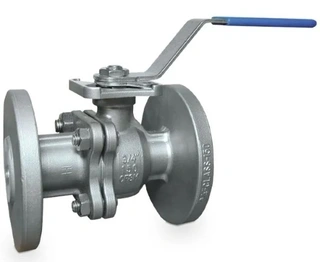
1. Basic Structure of Flanged Connections
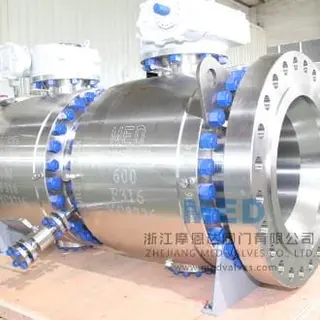
Flanged ball valves use a flanged end connection design. Both ends of the valve body are equipped with protruding flanges with standardized bolt holes. During installation, bolts and gaskets are used to connect the valve to pipeline flanges, forming a stable, strong, and inline piping structure.
Standards such as ANSI, ASME, and JIS define flange dimensions, pressure ratings, bolt hole distribution, and sealing face types, ensuring compatibility between different equipment. Flanged ball valves offer high structural strength and excellent blowout resistance, making them suitable for high-pressure, high-temperature, and hazardous media conditions.
2. Material Selection and Application Range
Flanged ball valves are available in a variety of materials, including carbon steel, stainless steel, and alloy steel, to meet different corrosion resistance and industrial requirements. Common body materials include WCB carbon steel and CF8M stainless steel, which can be selected based on the characteristics of the working medium.
3. Maintenance Convenience
Flanged connections allow valve removal without cutting the pipeline, making maintenance and replacement much easier. In systems requiring frequent inspection, this feature makes flanged ball valves widely preferred.
Maintenance personnel only need to remove the bolts to take the valve out of the pipeline system completely for repair or replacement, without causing any damage to the piping.
4. Limitations of Flanged Ball Valves
Flanged ball valves require more complex installation, involving gaskets and bolting operations. Replacing sealing gaskets can also be time-consuming. In addition, the overall cost of flanged ball valves is generally higher than threaded valves, including manufacturing cost and installation labor cost.
Characteristics and Advantages of Threaded Ball Valves
Compared with flanged ball valves, threaded ball valves differ significantly in connection method and structural design.
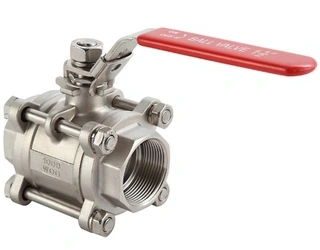
1. Basic Structure of Threaded Connections
Threaded ball valves are machined with tapered or straight threads at the valve ends, which connect to pipeline threaded fittings. NPT (National Pipe Tapered Thread) is one of the most common types.
Tapered threads achieve sealing through interference fit, usually without the need for additional gaskets or fasteners, making installation simpler and faster.
2. Compact Structure and Space Advantage
Threaded ball valves have a compact design and require less installation space. Their face-to-face dimensions are typically 2 to 4 inches shorter than flanged valves, saving valuable pipeline space. This advantage is especially important in space-constrained installations.
3. Easy Installation and Cost Advantage
Threaded ball valves can be installed and removed using basic tools, making them economical and convenient for low-pressure utility systems. Installation usually requires only applying sealant and screwing the valve into the pipeline.
A 2-inch threaded valve can typically be installed in about 15 to 20 minutes, which is significantly faster than flanged valves. Overall, threaded valves are generally lower in cost and are suitable for budget-sensitive projects.
4. Limitations of Threaded Ball Valves
Threaded connections have lower mechanical strength and are prone to issues such as thread stripping or cross-threading. Their blowout resistance is weaker than flanged designs, making them suitable mainly for low-pressure applications.
Material options are also more limited. In tight spaces, pipeline cutting may be required, reducing installation flexibility. During disassembly, threaded connections may suffer thread damage, especially in stainless steel systems where galling can occur.
Once leakage or replacement is required, corrosion or seizure can make disassembly difficult, sometimes requiring pipeline cutting, which significantly increases maintenance costs.
Technical Parameter Comparison Between the Two Valve Types
After understanding structural differences, a technical comparison provides a clearer view of performance distinctions.
1. Size Range
Flanged ball valves are typically used in pipe systems ranging from 1/2 inch to 36 inches (DN15 to DN900). Threaded ball valves are mainly used in smaller systems from 1/4 inch to 4 inches (DN8 to DN100).
In industrial applications, threaded connections are rarely used beyond 2 inches (DN50), because larger threaded joints require high torque, are difficult to install, and are more prone to leakage under thermal cycling conditions.
2. Pressure Ratings
Stainless steel flanged ball valves (such as SS316) can typically reach Class 150 to Class 2500, with working pressures approximately 285 to 6170 PSI. Threaded ball valves generally range from Class 150 to Class 800, with pressures around 285 to 1975 PSI.
Flanged structures are more suitable for high-pressure systems. Threaded connections rely on thread engagement, which becomes a weak point under high stress and is more vulnerable to stress corrosion and thermal cycling, increasing leakage risk.
Flanged connections distribute load evenly through bolts and achieve face sealing via gaskets, providing higher structural strength and better stability.
3. Sealing Methods
Flanged ball valves achieve sealing through gasket compression. Common gasket types include spiral wound gaskets, PTFE gaskets, and graphite gaskets. Proper gasket selection is critical, as materials such as EPDM, PTFE, or graphite must match the medium, temperature, and pressure conditions.
Threaded ball valves rely on thread engagement combined with sealing materials, typically PTFE tape or sealant. Proper application of sealing materials and machining quality are essential to prevent leakage or thread damage.
Installation and Maintenance Comparison
While technical parameters define performance, installation and maintenance directly affect operational experience and lifecycle cost.
1. Installation Time and Complexity
Flanged ball valves require alignment of flanges, installation of gaskets, and tightening bolts to specified torque values. A 2-inch flanged valve typically requires 45 to 60 minutes to install.
Threaded ball valves are much faster to install, requiring only sealant application and screwing into the pipeline. A 2-inch valve can be installed in about 15 to 20 minutes, making it suitable for fast construction and cost-sensitive projects.
2. Maintenance Convenience
Flanged ball valves are easier to maintain because they can be removed without damaging the pipeline, significantly reducing downtime in critical systems.
Threaded valves, however, may become difficult to remove due to corrosion or seizure. In such cases, pipeline cutting may be required, increasing maintenance cost and complexity.
3. Vibration Resistance
Threaded connections are prone to loosening in vibration environments. Flanged connections, secured by bolts, provide superior vibration resistance and are therefore more suitable for pump outlets, compressor stations, and mechanically dynamic systems.
4. Automation Compatibility
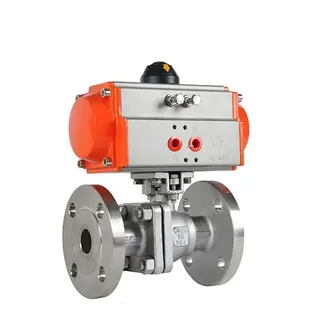
In automated valve systems, large pneumatic or electric actuators require strong and stable valve support. Flanged ball valves better withstand actuator torque reactions, making them more suitable for automation applications.
Application Scenario Analysis
Different connection types serve different engineering applications.
1. Applications of Flanged Ball Valves
Flanged ball valves are suitable for:
- Pipeline systems larger than 2 inches (DN50)
- High-pressure systems (Class 300 and above)
- Systems requiring frequent maintenance
- High-vibration environments
- Automated control systems
- Chemical, oil and gas, power plants, and process industries
Flanged connections designed according to ASME B16.5 provide stable pressure-temperature performance for long-term operation.
2. Applications of Threaded Ball Valves
Threaded ball valves are suitable for:
- Small diameter systems below 2 inches
- Utility systems, HVAC, and instrumentation lines
- Space-constrained installations
- Low to medium pressure water, air, and glycol systems
- Non-hazardous media
- Residential piping and equipment systems
In data center liquid cooling systems, 3/4 inch to 1 inch SS316 threaded ball valves are commonly used for rack-level isolation points due to limited space and relatively low operating pressure (below 150 PSI).
3. Overall Positioning of Both Types
Overall, neither type is universally superior. Threaded connections are better suited for low-pressure utility services such as air, water, and inert gases, while flanged connections are preferred for critical, high-pressure, high-temperature, or hazardous applications.
Flanged valves are more appropriate for systems requiring frequent maintenance and disassembly. Threaded valves are better for permanent, space-limited installations. Many industrial plants use both types simultaneously to meet different operational needs.
Selection and Decision-Making Recommendations
Based on the above analysis, flanged and threaded ball valves each have clear roles in engineering applications.
1. Selection Decision Matrix
Threaded connections offer advantages in maximum pressure capability (within limits), installation cost, and space saving. However, they are weaker in maintenance convenience and vibration resistance.
Flanged connections excel in high-pressure applications, system stability, and maintenance convenience, but have higher initial cost and installation complexity.
2. Key Engineering Considerations
In practical selection, the following factors should be carefully evaluated:
For flanged ball valves, gasket selection is critical. Materials such as EPDM, PTFE, or graphite must be matched to media, temperature, and pressure conditions to ensure proper sealing.
For threaded connections, proper use of PTFE tape or thread sealant is essential, along with good thread machining quality to prevent leakage or galling.
Regardless of connection type, material compatibility with the process fluid must be ensured to prevent electrochemical or chemical corrosion and extend service life.
3. Final Selection Principle
The choice between flanged and threaded ball valves is a fundamental engineering decision that affects pipeline integrity, safety, maintenance cycles, and total lifecycle cost.
Although cost and installation convenience are often primary considerations at the initial stage, long-term system reliability requires evaluation based on performance characteristics and operating conditions. Users should make decisions based on pipe size, pressure, media type, maintenance requirements, and installation space.
Send your message to this supplier
Related Articles from the Supplier
Comparison of Flanged and Welded Valve Connections
- Apr 09, 2026
Related Articles from China Manufacturers

Why Choose Forged Flanged Ball Valves?
- Mar 29, 2024
Why Choose Forged Flanged Ball Valves?
- Mar 29, 2024

FQ41F Flanged Discharge Ball Valves
- Feb 23, 2021


Related Products Mentioned in the Article

Zhejiang Kosen Valve Co., Ltd.
- https://www.kosenvalve.com/
- Business Type: Industry & Trading, Manufacturer,
Supplier Website
Source: https://www.kosenvalve.com/media-hub/flanged-ball-valves-vs-threaded-ball-valves-how-to-choose.html