
Comparison of Flanged and Welded Valve Connections
The safe and efficient operation of a piping system relies not only on the quality of the pipes and valves but also on the integrity of the connections between them. The interface between a valve and a pipeline often represents the system’s weakest link. An improper choice in connection method can lead to leaks, pressure drops, increased maintenance, or even serious safety incidents. In engineering practice, the two most commonly considered options are flanged connections and welded connections. This choice affects not only the cost and schedule of a project but also the operational safety and long-term reliability of the system.
This article provides a comprehensive review of the three main types of valve end connections, including flanged, butt-welded, and socket-welded. By examining their design principles, advantages, limitations, and typical applications, engineers can make informed decisions tailored to specific process conditions.
Flanged Connections: Flexible and Standardized
Flanged connections involve attaching circular flange discs to both ends of a valve. These flanges are then bolted to the corresponding pipe flanges, with a gasket placed between them to ensure a secure seal. Flanged connections are standardized and widely adopted in the industry, with common standards including ASME B16.5 (applicable to pipes up to 24 inches) and ASME B16.47 (for larger diameters).
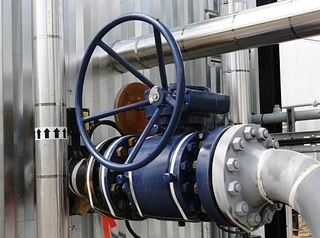
1. Key Advantages of Flanged Connections
- Ease of Installation and Maintenance: Flanged connections allow valves to be removed or replaced without cutting the pipeline. By simply loosening the bolts, the valve can be detached, which significantly reduces downtime. This feature is particularly advantageous in systems where maintenance, inspection, or valve replacement is frequent.
- Installation Flexibility: Piping systems often encounter alignment deviations due to construction tolerances. Flanges allow a degree of adjustment to accommodate misalignment, simplifying installation. Additionally, flanged connections enable the joining of components made from different materials, supporting future modifications, expansions, or upgrades to the system.
Wide Applicability: Flanged connections can be used in a variety of applications, from low- to medium-pressure systems to commercial, municipal, and industrial setups. Their modular nature makes them compatible with standardized valves, instruments, and piping components.
2. Limitations of Flanged Connections
- Potential Leak Points: The reliance on gaskets and bolts introduces potential leak points. Under vibration, temperature fluctuations, or corrosive conditions, gasket degradation or bolt loosening may occur, compromising the seal.
- Increased Weight and Space Requirements: Flanges add mass and occupy more space, which can be challenging in compact installations or on structures with weight limitations.
- Economic Considerations: Flanged connections have higher initial hardware costs due to the need for flanges, bolts, and gaskets. In harsh environments, corrosion on flange surfaces and fasteners may increase long-term maintenance costs.
3. Ideal Applications for Flanged Connections
- Systems requiring frequent inspection or maintenance
- Low to medium pressure and temperature conditions
- Systems likely to undergo future expansion or modification
- Commercial buildings, water treatment plants, and HVAC systems
- Installations with sufficient space for bolt operation
Butt-Welded Connections: Best for High Pressure & Temperature
Butt-welded connections involve welding the valve directly to the pipe, creating a continuous, seamless structure. This eliminates bolts and gaskets and effectively removes potential leak points.
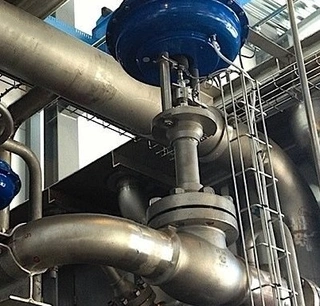
1. Key Advantages of Butt-Welded Connections
- Exceptional Sealing Performance: Butt-welding forms a continuous metal structure, providing a true leak-proof connection. This makes it ideal for high-pressure, high-temperature, and hazardous media applications, such as oil and gas pipelines or chemical process plants, where system integrity is critical.
- Compact and Lightweight Design: Welding removes the need for bulky flanges and numerous bolts, reducing space requirements and overall system weight. This is particularly valuable in constrained environments like offshore platforms, compact industrial plants, or skid-mounted modular units.
- Long-Term Cost Efficiency: Although initial welding costs may be higher, butt-welded connections require less maintenance over the life of the system, as they do not rely on gaskets or bolts. They also perform well in buried or underwater environments and demonstrate superior safety in fire conditions.
2. Limitations of Butt-Welded Connections
- Maintenance Challenges: Valve replacement or repair requires cutting the pipe and rewelding, which is labor-intensive and expensive. This makes butt-welded connections more suitable for permanent installations.
- Installation Complexity: Butt-welding demands certified welders, specialized equipment, and non-destructive testing (NDT) to ensure quality. Welding may create heat-affected zones (HAZ), potentially altering material properties. Proper material selection and post-weld heat treatment are often necessary.
3. Ideal Applications for Butt-Welded Connections
- High-pressure, high-temperature, or extreme conditions
- Hazardous, toxic, or flammable media
- Buried, underwater, or difficult-to-access systems
- Zero-leak critical process systems
- Oil & gas, petrochemical, and power generation
- High-purity applications, including pharmaceutical and food industries
Socket-Weld Connections: for Small-Diameter High-Pressure Systems
Socket-weld connections involve inserting the pipe into the valve socket and welding at the joint. This approach is stronger than threaded connections and easier to install than butt-welded connections, making it suitable for small-diameter piping.
1. Characteristics of Socket-Weld Connections:
- Ease of Installation: The pipe naturally aligns within the socket, reducing welding difficulty, which is beneficial in tight spaces. Socket-weld connections also provide higher strength and sealing compared to threaded connections.
- Consideration of Gaps: Care must be taken to control the gap between the pipe and socket to avoid issues with corrosion, wear, or weld cracking due to thermal expansion.
2. Ideal Applications for Socket-Weld Connections
- Small-diameter systems (2 inches and below)
- High-pressure service
- Instrumentation pipelines and utility service lines
Comparative Analysis of Connection Types
- Sealing Performance: Butt-welded connections provide the highest sealing reliability with no gasket failure risk. Flanged connections rely on gaskets, which may age or degrade. Socket-weld connections provide good sealing, though the socket gap is a potential weak point.
- Maintenance Convenience: Flanged connections allow easy valve replacement without pipe cutting. Butt-welded connections require cutting and rewelding, making maintenance difficult. Socket-weld connections are intermediate in ease, easier for small-diameter lines.
- Installation Requirements: Flanged connections are the simplest, requiring trained labor for bolt tightening. Butt-welded connections are the most demanding, requiring certified welders, specialized equipment, and NDT. Socket-weld connections are moderately demanding, with particular attention to gap control.
- Cost Structure: Initial hardware costs are generally lower for welded valves, but welding labor and equipment may offset the savings. Flanged connections have higher initial hardware costs but lower labor costs during installation. Over the long term, butt-welded connections reduce maintenance costs, while flanged connections require periodic gasket replacement. Space and Weight: Butt-welded connections are most compact and lightweight. Flanged connections are bulkier, especially for large-diameter high-pressure valves, and require solid support. Socket-weld connections are compact and suitable for dense small-diameter piping layouts.
Engineering Decision Framework
- Assess Process Criticality: For high-energy, toxic, or high-risk media, butt-welded connections are preferred due to their integrity. For routine or utility systems requiring frequent isolation, flanged connections provide flexibility.
- Define Maintenance Strategy: If valves require periodic disassembly, calibration, or cleaning, flanged valves are practical. For continuous operation, welded valves reduce leak points, with maintenance focusing on monitoring rather than periodic replacement.
- Verify Standards Compliance: Valve selection must meet ASME B16.34, B31.1/B31.3, and other codes. Welded connections must allow access for NDT to ensure quality.
- Consider Space Constraints: In compact modular or skid-mounted systems, flanged bolt access may be limited, making socket-weld or butt-welded connections more suitable. Large-diameter high-pressure flanged valves require robust support structures.
- Balance Project Schedule and Cost: Welding and inspection are time-consuming, requiring careful planning. Flanged connections allow faster installation for tight schedules but necessitate consideration of long-term maintenance costs.
Industry Application Examples
- Oil & Gas: Butt-welded valves dominate crude oil, natural gas, and refined product pipelines due to their reliability under high pressure and challenging terrains. Offshore platforms also prefer welded connections for space and weight considerations.
- Chemical & Petrochemical: Both connection types coexist. High-pressure reactors and heat exchanger inlets/outlets typically use butt-welding, while filters and control valve assemblies requiring periodic cleaning often use flanged connections for easier maintenance.
- Power Generation: Critical systems like main steam or feedwater piping use butt-welded connections to ensure safety, while auxiliary systems such as cooling water or compressed air pipelines use flanged connections to balance reliability and economy.
- Commercial & Municipal Buildings: HVAC, water supply, and drainage systems primarily use flanged connections for ease of maintenance. Water treatment plants select connection types based on the hazards of the medium: clean water pipelines use flanges, while chemical dosing lines may require welding.
Conclusion
Selecting the appropriate valve end connection is a fundamental and critical aspect of pipeline engineering. Flanged, butt-welded, and socket-weld connections each have distinct advantages and limitations:
Flanged connections excel in maintenance convenience, suitable for mid- to low-pressure systems requiring frequent operation.
Butt-welded connections provide superior sealing reliability and are preferred for high-pressure, high-temperature, or hazardous media.
Socket-weld connections balance ease of operation with structural strength for small-diameter high-pressure systems.
The correct choice requires a systematic evaluation of process conditions, maintenance needs, standards compliance, space constraints, and cost considerations. Consulting experienced engineers or valve suppliers is essential when uncertainty arises, to prevent future operational issues caused by improper connection selection.
Send your message to this supplier
Related Articles from the Supplier
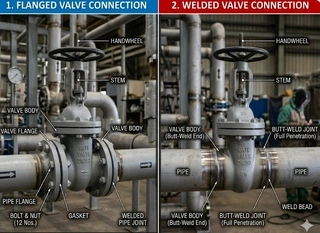
Comparison of Flanged and Welded Valve Connections
- Apr 09, 2026
A Comparison of SBB Ball Valves and DBB Ball Valves
- Feb 25, 2026
Related Articles from China Manufacturers




Related Products Mentioned in the Article

Zhejiang Kosen Valve Co., Ltd.
- https://www.kosenvalve.com/
- Business Type: Industry & Trading, Manufacturer,
Supplier Website
Source: https://www.kosenvalve.com/media-hub/comparison-of-flanged-and-welded-valve-connections.html