
API 6D Ball Valve: The Backbone of Long-Distance Pipeline
The API 6D ball valve is one of the most important components in modern pipeline systems. Whether the medium is crude oil, natural gas, refined products, or chemical fluids, the fundamental requirement remains the same, precise and reliable flow control. In long-distance transmission networks, this is not just an operational requirement, but a safety-critical function. A single valve failure can disrupt an entire pipeline section, lead to production losses, or even create serious environmental and safety risks. That is why API 6D ball valves are widely used in oil, gas, and petrochemical industries. They are built for one purpose: stable performance under continuous, high-demand conditions. Unlike general industrial valves, API 6D ball valves are designed for pipeline service. They are engineered, tested, and certified under strict international standards to ensure they can handle real-world pipeline environments, high pressure, temperature fluctuations, corrosion, and continuous operation cycles. This combination of strength, safety, and reliability is what makes them a core component in global energy infrastructure.
What Is the API 6D Standard?
To understand the valve, you first need to understand the standard behind it.
API 6D is a specification developed by the American Petroleum Institute (API), specifically for pipeline valves used in transmission systems. It defines the complete lifecycle requirements of a valve, including design, manufacturing, inspection, testing, documentation, and quality control.
In simple terms, API 6D is not just about how a valve is built—it is about how it must perform in real pipeline service.
Every API 6D compliant valve must be able to withstand demanding operating conditions, including:
- High internal pressure
- Wide temperature variations
- Continuous flow operation
- Pressure surges and transient loads
- Long service life without failure
The standard also defines multiple pressure classes, including Class 150, 300, 600, 900, 1500, and 2500 LB. This wide range allows API 6D valves to be used in everything from low-pressure distribution lines to ultra-high-pressure transmission pipelines.
What makes API 6D particularly important is that it focuses on system-level reliability. It is not just about individual valve performance, but about how valves behave as part of a continuous pipeline network.

API 6D vs. Other Valve Standards
The valve industry has many API standards, but each one serves a different purpose.
API 6A is designed for wellhead and drilling equipment. API 598 focuses on inspection and pressure testing procedures. API 602 is used for compact forged steel valves. API 608 applies to general metal ball valves.
Each of these standards has its own scope and limitations.
API 6D, however, is different. It is specifically designed for pipeline systems—especially long-distance transmission lines where flow continuity is critical and shutdowns are extremely costly.
Because of this, API 6D places stronger emphasis on:
- Pipeline integrity
- Long-cycle reliability
- Emergency shutoff performance
- Leakage prevention
- System safety under extreme conditions
In simple terms, other API standards define valve performance. API 6D defines pipeline survival.
Main Types of API 6D Ball Valves
API 6D ball valves are not a single design. They come in multiple configurations, each optimized for specific pipeline conditions and operational requirements.
1. Trunnion-Mounted Ball Valve
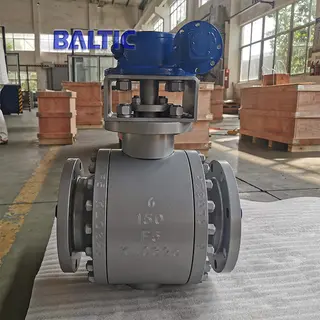
The trunnion-mounted design is built for high-pressure and large-diameter applications.
In this structure, the ball is supported by upper and lower trunnions, which fix it in place. This means the ball does not float or shift under pressure. Instead, it rotates in a controlled and stable manner.
This design significantly reduces operating torque, especially in high-pressure pipelines where force requirements would otherwise be extremely high.
Another key advantage is sealing performance. The seat is pushed against the ball by line pressure, ensuring tight shutoff even under extreme pressure conditions.
Because of these characteristics, trunnion-mounted ball valves are widely used in high-pressure transmission pipelines, compressor stations, and critical isolation points.
2. Floating Ball Valve
The floating ball valve is simpler in design but highly effective in smaller systems.
In this configuration, the ball is not fixed in place. Instead, it “floats” slightly inside the valve body. When pressure increases, the ball is pushed downstream and pressed tightly against the seat, creating a seal.
This self-adjusting sealing mechanism allows excellent tightness, even after long periods of operation.
Floating ball valves are commonly used in low to medium pressure systems, smaller pipelines, and general industrial applications where simplicity, cost efficiency, and compact design are important.
They are fast-acting, reliable, and widely used across multiple industries.
3. Top-Entry Ball Valve
The top-entry design focuses on one key advantage: maintainability.
Instead of removing the valve from the pipeline, maintenance can be performed from the top. The bonnet is removed, and internal components such as the ball, seats, and seals can be accessed directly.
This design significantly reduces downtime. In large pipeline systems, shutting down a section for maintenance can be extremely expensive. Top-entry ball valves help minimize that impact.
They are widely used in oil, gas, and chemical processing facilities where maintenance efficiency is as important as performance reliability.
4. Fully Welded Ball Valve
The fully welded ball valve represents the highest level of structural integrity.
Instead of using flanged connections, the entire valve body is welded into a single sealed unit. There are no external joints or potential leakage paths.
This makes it extremely reliable in long-term applications, especially where maintenance access is limited or impossible.
Fully welded ball valves are commonly used in buried pipelines, district heating systems, and long-distance gas transmission lines.
Once installed, they are designed to remain in service for decades without disassembly.

Structure and Working Principle of API 6D Ball Valve
Although API 6D ball valves come in different designs, their working principle remains the same.
At the center is a spherical ball with a bore through its middle. This ball rotates inside the valve body and controls whether fluid passes through or is blocked.
A simple 90-degree rotation is all it takes.
When the bore aligns with the pipeline, fluid flows freely. When rotated perpendicular to the flow direction, the solid part of the ball blocks the passage completely.
This quarter-turn operation is one of the reasons ball valves are so widely used. It is fast, simple, and highly reliable.
The main components include:
- Valve body (pressure containment)
- Ball (flow control element)
- Stem (torque transmission)
- Seats (sealing interface)
- Seals (leak prevention system)
Each component plays a critical role in ensuring safe and efficient operation under pressure.
Full Bore vs. Reduced Bore Design
API 6D ball valves are typically designed as either full bore or reduced bore.
A full bore valve has an internal diameter equal to the pipeline. This means there is almost no restriction to flow. It also allows pipeline cleaning tools (pigs) to pass through without obstruction, making it essential in long-distance transmission systems.
A reduced bore valve has a smaller internal passage. This reduces weight and cost, but introduces a small pressure drop. It is commonly used in non-critical flow applications where efficiency loss is acceptable.
Choosing between the two depends on whether flow efficiency or cost optimization is the priority.
Material Selection and Service Conditions
Material selection plays a decisive role in valve performance.
For standard applications, carbon steel such as WCB or LCC is widely used. Stainless steel grades like CF8M (316) offer improved corrosion resistance and are suitable for more aggressive environments.
However, modern pipeline systems often deal with much more challenging media.
Sour gas containing hydrogen sulfide can cause sulfide stress cracking. Hydrogen service introduces hydrogen embrittlement, which weakens metal structure over time.
To handle these conditions, advanced materials are used, including duplex stainless steel, super duplex stainless steel, Inconel, Monel, and 316L stainless steel.
These materials are designed to resist corrosion, cracking, and hydrogen penetration, ensuring long-term stability in harsh environments.
Forged vs. Cast Construction
API 6D ball valves can be manufactured using either forging or casting methods.
Forged valves are produced by applying high pressure to solid metal, creating a dense internal structure with excellent mechanical strength. They are ideal for high-pressure and high-temperature service.
Cast valves are made by pouring molten metal into molds. This allows more complex shapes and lower production costs, making them suitable for general service conditions.
Both methods are widely used, depending on performance requirements and budget constraints.
Connection Types of API 6D Ball Valve
API 6D ball valves typically use either flanged or welded connections.
Flanged connections allow easier installation and maintenance. They are bolted to the pipeline and can be disassembled when needed.
Welded connections provide a permanent, leak-free joint. They are commonly used in buried pipelines or long-term installations where maintenance is not expected.
Each method offers a trade-off between accessibility and sealing reliability.
Safety Features of API 6D Ball Valve
Safety is a core requirement in API 6D design.
Fire-safe construction ensures that even if soft seals are destroyed in a fire, metal backup sealing maintains minimum isolation capability.
Double Block and Bleed (DBB) allows isolation of both upstream and downstream pressure while safely venting trapped cavity pressure. This is essential during maintenance and inspection.
Anti-static design prevents static electricity buildup inside the valve, reducing ignition risk in flammable media such as gas and oil.
These features make API 6D valves suitable for high-risk industrial environments.
Applications for API 6D Ball Valve
API 6D ball valves are used throughout the energy sector.
They are found in upstream production facilities, midstream pipeline systems, compressor stations, and downstream refineries and storage terminals.
These systems operate under continuous load, pressure fluctuations, and harsh environmental conditions. API 6D valves ensure stable operation, reduce downtime, and improve system safety.
Final Thoughts
The API 6D ball valve is more than just a flow control device—it is a critical safety component in global pipeline infrastructure.
Its strict design standards, multiple structural options, advanced materials, and integrated safety features make it suitable for both standard and extreme operating conditions.
From floating designs to trunnion-mounted systems, from buried pipelines to high-pressure transmission lines, API 6D ball valves are engineered for one purpose: reliable control under pressure.
Send your message to this supplier
Related Articles from the Supplier

Introduction to Major API Valve Standards
- Nov 22, 2025
Related Articles from China Manufacturers
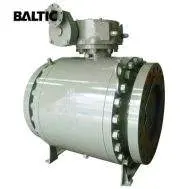
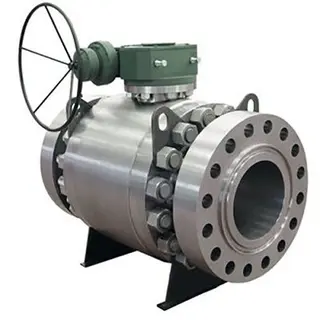
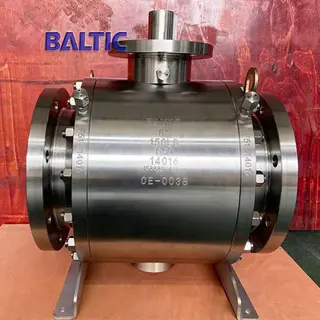
API 6D Duplex Steel Ball Valve
- Jul 30, 2020
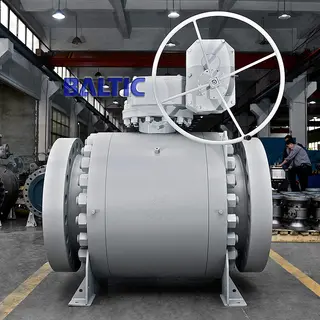
API 6D Trunnion Mounted Ball Valve
- May 19, 2020
API 6D Metal Seated Ball Valve
- May 22, 2020
Related Products Mentioned in the Article

Zhejiang Kosen Valve Co., Ltd.
- https://www.kosenvalve.com/
- Business Type: Industry & Trading, Manufacturer,
Supplier Website
Source: https://www.kosenvalve.com/media-hub/api-6d-ball-valve-the-backbone-of-long-distance-pipeline.html