Causes and Repair of Magnesium Alloy Die Casting Defects
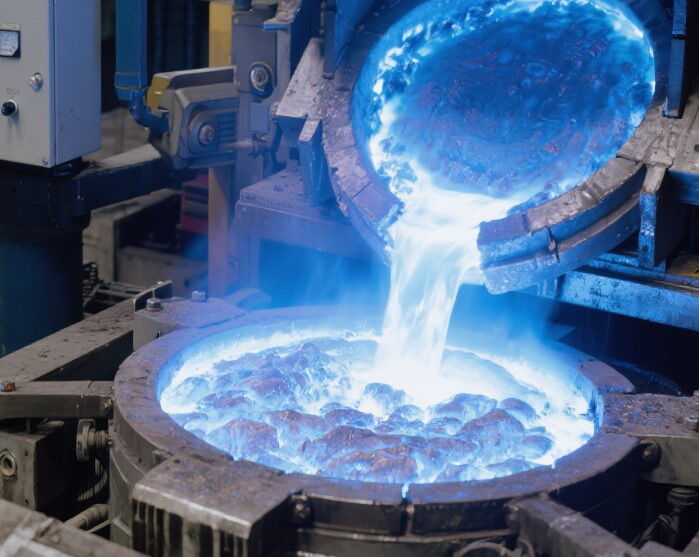
Magnesium alloys are widely used in aerospace, automotive manufacturing, electronics, and other fields due to their low density, high specific strength, and excellent damping properties. However, various defects often occur during the production of magnesium alloy die castings, severely affecting product quality and yield. This article provides a detailed analysis of the causes of common defects in magnesium alloy die castings and explores corresponding repair techniques and preventive measures, aiming to offer practical reference for professionals in the magnesium alloy die casting industry.
In the production of magnesium alloy die castings, internal defects are among the key factors affecting casting quality. These defects are usually not discovered until after machining, causing many complications in the production process. Below are common types of internal defects and their causes.
Porosity is one of the most common internal defects in magnesium alloy die castings. The main causes are:
Gas Retention in Thick Sections: In thick-walled areas, the metal solidifies slowly, making it difficult for gases to escape, resulting in trapped gas porosity. This is especially common in large castings where cooling is uneven.
Hydrogen-Induced Porosity: Hydrogen solubility in magnesium decreases rapidly as temperature drops. If the molten metal contains high hydrogen levels, it may release hydrogen during cooling, forming pores. This is often related to the purity of raw materials, materials containing moisture or hydrogen-rich compounds can easily lead to hydrogen porosity.
Common inclusions in magnesium alloy castings include magnesium oxide and other metallic impurities. Magnesium is highly reactive at elevated temperatures, forming magnesium oxide with a high melting point (2500°C) and relatively high density (3.2 g/cm³). These oxide particles are typically flake-like and difficult to remove. Metallic impurities may also be introduced due to raw material contamination or improper smelting procedures.
Magnesium alloys have a large coefficient of thermal expansion, about twice that of steel and 1.2 times that of aluminum. During cooling, thermal stresses can induce cracking. Moreover, magnesium readily forms low-melting-point eutectics with alloying elements like Cu, Al, and Ni, widening the brittle temperature range and increasing susceptibility to hot cracking.
While internal defects are critical yet hidden, external defects are more visible and directly affect the product's appearance and subsequent processing performance. The following discusses common types and causes of external defects.
Flow marks appear as shallow streaks on the casting surface and may result from:
Low Mold Temperature: If the mold temperature is below 200°C, the initial molten metal rapidly solidifies upon contact. The heat from subsequent molten metal cannot remelt the solidified layer, resulting in surface streaks.
Low Metal Temperature: Insufficient metal temperature leads to poor fluidity and premature solidification, causing visible flow lines.
Prolonged Filling Time: Extended filling increases heat loss, making it harder for metal streams to fuse, thus forming flow marks.
Excessive Release Agent: Overuse of release agents lowers the mold surface temperature, negatively affecting the metal flow and solidification, contributing to flow marks.
Cold shuts occur when different streams of metal meet in the mold cavity but fail to fuse due to insufficient temperature or fluidity. Causes include:
Low Mold and Metal Temperatures: Poor fusion occurs if either temperature is too low.
Inadequate Filling Speed and Pressure: Low speed or pressure reduces the molten metal’s velocity, leading to more heat loss before fusion.
Improper Gate Design: Small gate cross-sections, poor placement, or lack of overflow vents at convergence zones hinder smooth metal flow and fusion.
Sticking occurs when molten metal adheres to certain areas of the mold, usually in overheated regions such as holes, gates, or undercuts. Contributing factors include:
Localized Overheating of Mold: High local temperatures slow metal solidification, increasing adhesion likelihood.
Insufficient Release Agent: Improper application allows molten metal to bond with the mold surface.
Rough Mold Surface: Scratches or burrs on the mold surface increase contact area and the chance of sticking.
Common surface defects include:
Crazing Patterns: These resemble melon-skin textures and are often due to mold surface corrosion.
Surface Contamination: Residues of release agents or foreign particles on the mold surface can cause surface blemishes or roughness.
Shrinkage Depressions: Typically appear in thick sections due to localized overheating, where the delayed solidification causes the surface to cave in as volume contracts.
After understanding the causes of internal and external defects, we now turn to effective repair methods, which are essential to improving yield and quality.
Porosity: Vacuum treatment can be applied before metal injection to remove gas from the mold cavity, minimizing residual gases. Mold design improvements, such as adding more venting channels, also aid in reducing porosity.
Inclusions: Maintain strict purity control during smelting and use filtration systems (e.g., screens or filters) during pouring to trap solid impurities.
Hot Cracks: Optimize filling speed and molten metal temperature to minimize thermal stresses. In mold design, avoid drastic section thickness differences to reduce crack-prone zones.
Flow Marks: Improve mold and metal temperatures, reduce filling time, and increase injection speed. Modify release agent type or application method to reduce its temperature impact.
Cold Shuts: Raise mold and metal temperatures, enhance filling speed and pressure, and redesign gating systems for better metal flow and fusion.
Sticking: Reduce localized mold temperatures, ensure adequate release agent application, and polish mold surfaces. Avoid sharp corners and undercuts in mold design.
Surface Defects: Clean mold surfaces regularly, replace aged release agents, and enhance cooling system performance to reduce overheating and associated shrinkage depressions.
Beyond repair, prevention is key to improving overall product quality and production efficiency.
Proper Gate Design: Gate shape, size, and position should suit the casting geometry, ensuring smooth metal flow and minimal heat loss.
Efficient Cooling System: Ensure even mold temperature distribution by designing appropriate cooling channels. Match cooling rates with casting needs to reduce thermal stress.
Adequate Venting: Vent channels should be properly designed to allow trapped gases to escape and minimize porosity.
Material Purity: Use clean raw materials and pre-treat those with high hydrogen content via drying or degassing to avoid hydrogen porosity.
Temperature and Time Control: Prevent overheating (which accelerates oxidation) and underheating (which impairs flowability). Minimize molten metal exposure time to reduce gas absorption.
Appropriate Equipment: Use vacuum melting furnaces or other advanced equipment to minimize oxidation and improve molten metal quality.
Metal Temperature: Typically controlled between 650°C - 700°C, ensuring flowability without excessive oxidation.
Mold Temperature: Maintained between 200°C - 300°C, balancing filling effectiveness with solidification control.
Filling Speed and Pressure: Adjust based on casting geometry. Ideal filling speeds range from 0.5 m/s to 2 m/s; pressures between 50 MPa and 150 MPa are commonly applied to ensure proper mold filling and defect prevention.
Regular Mold Inspection: Monitor surface integrity and cooling performance to detect crazing, contamination, or shrinkage signs early.
Controlled Release Agent Use: Match release agent type and amount to casting requirements. Replace periodically to maintain effectiveness.
Process Monitoring: Track and correct anomalies in molten metal temperature, mold temperature, filling speed, and pressure in real time to maintain process stability and product consistency.
Defects in magnesium alloy die castings impact not only the appearance but also the mechanical properties and service life of the final product. By optimizing mold design, strictly controlling the smelting process, reasonably adjusting casting parameters, and reinforcing quality control during production, these defects can be effectively minimized. For defects that do occur, timely and targeted repair methods should be applied to ensure casting quality. This article aims to provide practical guidance to professionals in the magnesium alloy die casting field and promote further development and application of this important manufacturing technology.
