
The Growing Role Of Air-Cooled EV Chargers In Public And Workplace Charging
Introduction
The global electric vehicle industry continues to expand rapidly as governments, businesses, and consumers transition toward cleaner transportation solutions. As EV adoption accelerates, charging infrastructure has become one of the most important components supporting this transformation. Among the many charging technologies available today, air-cooled EV chargers remain one of the most widely used and cost-effective solutions for commercial and public charging applications.
Air-cooled DC chargers provide dependable charging performance while maintaining a relatively simple cooling structure. Compared with more advanced liquid-cooled systems, air-cooled chargers are easier to install, maintain, and operate, making them highly attractive for medium-power charging environments. These systems are commonly deployed in shopping centers, office buildings, public parking facilities, hotels, fleet depots, and other commercial locations where balanced charging performance and project affordability are priorities.
As charging demand grows across urban and suburban regions, air-cooled charging technology continues to play a major role in supporting scalable EV infrastructure development. While ultra-fast charging technologies attract attention for highway corridors and high-utilization hubs, air-cooled chargers remain the practical backbone of many everyday charging networks worldwide.
This article explores air-cooled EV chargers in detail, including their operating principles, advantages, applications, technical characteristics, installation considerations, maintenance requirements, and future market trends.

What Is an Air-Cooled DC EV Charger?
An air-cooled DC EV charger is a direct current fast charging system that uses airflow and ventilation mechanisms to regulate internal operating temperatures. Instead of relying on liquid coolant circulation, these chargers dissipate heat through fans, heat sinks, ventilation ducts, and thermal management structures designed to maintain safe operating conditions.
Inside a DC fast charger, major components such as power modules, transformers, rectifiers, capacitors, and charging cables generate significant heat during operation. If this heat is not controlled effectively, charging efficiency may decrease, component life may shorten, and system reliability could suffer.
Air-cooled chargers address this challenge by using forced-air cooling systems that continuously move air through the charger cabinet. Cooling fans draw external air into the unit, circulate it across heat-generating components, and expel warm air outside the enclosure.
This approach offers several practical advantages:
- Simpler system design
- Lower manufacturing costs
- Easier maintenance procedures
- Reduced installation complexity
- Reliable operation for moderate charging demands
Air-cooled chargers are commonly available in power ranges from 20kW to 240kW, although some higher-power models also use enhanced air-cooling technologies.
These chargers are widely used for:
- Public charging stations
- Commercial parking areas
- Workplace charging
- Retail charging
- Municipal charging infrastructure
- Fleet operations
- Hotel and hospitality charging
- Mixed-use commercial developments
Because many EV charging projects do not require ultra-high charging speeds, air-cooled systems provide a highly practical balance between charging capability and economic efficiency.
How Air-Cooled EV Chargers Work
The operation of an air-cooled EV charger involves several integrated systems working together to deliver safe and efficient charging performance.
AC to DC Power Conversion
Electricity from the utility grid enters the charger as alternating current (AC). Internal rectifier modules convert this AC power into direct current (DC), which can charge EV batteries directly.
DC charging bypasses the vehicle's onboard charger, allowing significantly faster charging compared with standard AC charging systems.
Thermal Management Through Airflow
As power conversion occurs, internal electrical components generate heat. Air-cooled chargers manage this heat using:
- High-speed cooling fans
- Air ducts
- Heat sinks
- Ventilation channels
- Temperature monitoring systems
Sensors continuously monitor internal temperatures. If temperatures rise beyond acceptable levels, fan speeds increase automatically to improve cooling performance.
Intelligent Power Distribution
Modern air-cooled chargers use smart power management systems that regulate:
- Output voltage
- Charging current
- Thermal load
- Energy efficiency
- Communication with vehicles
These intelligent systems optimize charging performance while protecting both the charger and vehicle battery.
Safety Protection Systems
Air-cooled chargers also integrate multiple safety mechanisms, including:
- Overcurrent protection
- Overvoltage protection
- Leakage protection
- Short-circuit protection
- Emergency shutdown functions
- Ground fault monitoring
These features ensure safe operation in public and commercial environments.
Advantages of Air-Cooled EV Chargers
Air-cooled charging systems remain highly popular because they offer a wide range of practical benefits.
Lower Initial Investment
One of the most significant advantages of air-cooled chargers is lower capital cost. Since these systems do not require:
- Coolant circulation systems
- Liquid pumps
- Cooling pipes
- Heat exchangers
- Specialized liquid cooling cables
their manufacturing and installation costs are generally lower than liquid-cooled alternatives.
This makes air-cooled chargers especially attractive for:
- Small businesses
- Budget-sensitive projects
- Municipal infrastructure
- Medium-scale charging deployments
Simpler Installation
Air-cooled chargers are easier to install because their cooling systems are less complex. Installation usually requires:
- Electrical connections
- Concrete foundations
- Basic ventilation clearance
- Network communication setup
The absence of liquid cooling infrastructure reduces installation time and engineering requirements.
Easier Maintenance
Maintenance procedures for air-cooled systems are generally straightforward. Common maintenance tasks include:
- Cleaning air filters
- Inspecting fans
- Removing dust accumulation
- Checking electrical connections
- Monitoring software performance
Compared with liquid-cooled systems, there are fewer components that require specialized servicing.
Reliable Commercial Performance
Air-cooled chargers provide dependable charging performance for most commercial applications. They are well suited for locations where:
- Charging sessions are moderate in frequency
- Vehicle dwell times are longer
- Extreme charging speeds are unnecessary
For many commercial operators, air-cooled systems offer an ideal balance between operational reliability and infrastructure cost.
Broad Compatibility
Most air-cooled chargers support major charging standards such as:
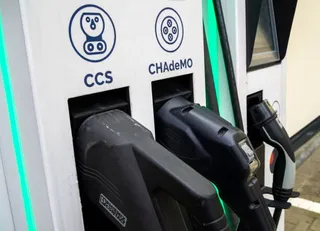
- CCS
- CHAdeMO
- GB/T
- NACS (in selected markets)
This allows operators to serve a wide range of electric vehicles.
When Air-Cooled DC Chargers Are the Better Choice
Air-cooled DC chargers are often the preferred option when charging requirements focus on practicality rather than maximum charging speed.
Retail Parking Locations
Shopping malls, supermarkets, and retail centers are ideal environments for air-cooled chargers because customers often remain parked for:
- 30 minutes
- 1 hour
- Several hours
In these scenarios, ultra-high charging power is not always necessary. Moderate DC fast charging can efficiently replenish vehicle batteries while customers shop or dine.
Hotels and Hospitality Properties
Hotels frequently install air-cooled chargers because overnight or extended parking durations allow sufficient charging time even at moderate power levels.
These chargers enhance guest convenience while controlling infrastructure investment costs.
Workplace Charging
Employees typically park vehicles for extended work shifts, making air-cooled chargers highly effective for workplace charging programs.
Businesses benefit from:
- Lower installation costs
- Reduced maintenance requirements
- Stable daily charging patterns
Public Charging Stations
Urban and suburban public charging sites with moderate utilization rates often use air-cooled systems successfully.
These chargers provide:
- Reliable charging access
- Scalable infrastructure deployment
- Affordable operating costs
Budget-Conscious Commercial Projects
For many developers and charging operators, cost management remains a critical consideration. Air-cooled chargers help reduce:
- Equipment costs
- Engineering expenses
- Installation complexity
- Long-term maintenance spending
This makes them especially suitable for expanding charging networks efficiently.
Air-Cooled vs Liquid-Cooled EV Chargers
Both air-cooled and liquid-cooled charging systems have important roles within the EV charging ecosystem.
Cooling Method
Air-cooled systems use:
- Fans
- Ventilation airflow
- Heat sinks
Liquid-cooled systems use:
- Coolant circulation
- Pumps
- Heat exchangers
- Liquid-cooled cables
Charging Power Capability
Air-cooled chargers are typically used for:
- Moderate to high charging power
- Commercial fast charging
- Standard public charging
Liquid-cooled chargers are often designed for:
- Ultra-fast charging
- Highway charging corridors
- High-utilization charging hubs
Installation Complexity
Air-cooled chargers generally involve simpler installation procedures, while liquid-cooled systems require more advanced thermal infrastructure.
Maintenance Requirements
Air-cooled systems are easier and less expensive to maintain because they contain fewer specialized cooling components.
Liquid-cooled systems require:
- Coolant inspections
- Leak monitoring
- Pump maintenance
- Thermal system servicing
Project Economics
Air-cooled chargers usually offer lower total project costs, especially for medium-power applications.
For many charging projects, the additional cost of liquid cooling may not provide sufficient operational benefits.
Typical Power Levels of Air-Cooled Chargers
Air-cooled chargers are available across a broad range of power capacities.
20kW to 40kW
These chargers are often used for:
- Small businesses
- Hotels
- Parking facilities
- Fleet charging
They provide faster charging than AC systems while maintaining lower infrastructure demands.
60kW to 120kW
This range represents one of the most common commercial charging categories.
Applications include:
- Public charging
- Retail locations
- Workplace charging
- Municipal charging stations
These chargers provide practical fast charging for most passenger EVs.
150kW to 240kW
Higher-power air-cooled systems are used for:
- Busy charging stations
- Commercial fleet operations
- Transit charging
Advanced airflow systems and optimized thermal designs help support higher power delivery.
Key Components of Air-Cooled EV Chargers
Modern air-cooled chargers consist of multiple integrated systems.
Power Modules
Power modules convert AC electricity into controlled DC output suitable for vehicle charging.
These modules are critical for:
- Efficiency
- Power stability
- Charging speed
Cooling Fans
Fans provide continuous airflow to remove heat from internal electronics.
High-quality industrial fans improve:
- Reliability
- Thermal stability
- Equipment lifespan
Heat Sinks
Heat sinks absorb and disperse thermal energy from semiconductors and power electronics.
They play an essential role in maintaining safe temperatures.
Charging Cables and Connectors
Air-cooled chargers use insulated charging cables designed to withstand environmental conditions and repeated usage cycles.
Human-Machine Interface
Most chargers include:
- Touchscreens
- LED indicators
- User authentication systems
- Payment terminals
These interfaces improve user experience and operational management.
Communication Systems
Modern chargers support:
- OCPP protocols
- Remote diagnostics
- Cloud management
- Mobile app integration
- Billing systems
Smart connectivity enables efficient charger network management.
Installation Considerations for Air-Cooled Chargers
Proper installation is essential for maximizing charger performance and reliability.
Site Selection
Suitable installation locations should provide:
- Adequate ventilation
- Safe vehicle access
- Stable electrical infrastructure
- Weather protection if necessary
Electrical Capacity
DC fast chargers require sufficient utility power supply capacity.
Electrical planning must consider:
- Transformer sizing
- Circuit protection
- Load balancing
- Future expansion potential
Ventilation Requirements
Since air-cooled systems depend on airflow, installations must avoid:
- Obstructed ventilation
- Excessive dust
- Confined heat buildup
Proper airflow significantly improves long-term reliability.
Environmental Conditions
Extreme temperatures, humidity, and airborne contaminants may affect cooling efficiency.
Outdoor installations often require:
- IP-rated enclosures
- Corrosion-resistant materials
- Environmental protection systems
Maintenance of Air-Cooled EV Chargers
Routine maintenance helps ensure stable operation and extended equipment life.
Cleaning Air Filters
Dust accumulation can reduce airflow efficiency and increase internal temperatures.
Regular filter cleaning improves cooling performance.
Fan Inspection
Cooling fans should be checked periodically for:
- Noise
- Wear
- Reduced airflow
- Mechanical damage
Faulty fans may lead to overheating.
Electrical Inspection
Technicians should inspect:
- Wiring connections
- Power modules
- Insulation conditions
- Grounding systems
Preventive maintenance reduces operational risks.
Software Updates
Firmware and software updates improve:
- Charger compatibility
- Security
- Performance optimization
- Network integration
Remote monitoring systems simplify software management.
Applications of Air-Cooled Charging Systems
Air-cooled chargers serve a wide range of industries and commercial environments.
Public Charging Networks
Cities and charging operators widely deploy air-cooled chargers to expand public charging access.
Fleet Charging
Commercial fleets use air-cooled chargers for:
- Delivery vehicles
- Municipal fleets
- Service vehicles
- Corporate transportation
Commercial Real Estate
Office buildings and mixed-use developments increasingly integrate EV charging amenities.
Hospitality Industry
Hotels and resorts use EV charging to attract environmentally conscious travelers.
Retail and Shopping Centers
Retail operators use charging stations to increase customer convenience and extend visitor dwell time.
Future Trends in Air-Cooled EV Chargers
Although ultra-fast liquid-cooled charging continues to develop, air-cooled systems remain highly relevant for mainstream charging infrastructure.
Improved Cooling Efficiency
Manufacturers continue developing:
- More efficient fan systems
- Advanced airflow management
- Better thermal materials
- Compact high-efficiency designs
These innovations improve performance while maintaining affordability.
Smart Energy Integration
Future air-cooled chargers will increasingly support:
- Smart grid communication
- Dynamic load balancing
- Renewable energy integration
- Energy storage systems
Enhanced User Experience
Charging systems are becoming more user-friendly through:
- Mobile app integration
- Contactless payments
- AI-based diagnostics
- Real-time monitoring
Scalable Urban Infrastructure
As urban EV adoption grows, air-cooled chargers will continue supporting:
- Large-scale public deployment
- Workplace charging expansion
- Commercial charging accessibility
Their lower cost and simplified infrastructure make them ideal for widespread installation.
Challenges Facing Air-Cooled Chargers
Despite their advantages, air-cooled chargers also face several limitations.
Limited Ultra-High Power Capability
As charging power increases, heat generation becomes more difficult to manage with airflow alone.
This limits air-cooled systems in certain ultra-fast charging applications.
Environmental Sensitivity
Dust, humidity, and high ambient temperatures may affect cooling performance.
Proper environmental protection remains important.
Noise Generation
Cooling fans can generate operational noise, especially in high-power charging units.
Manufacturers continue improving fan designs to reduce sound levels.
Conclusion
Air-cooled EV chargers remain one of the most practical and widely adopted solutions in today's electric vehicle charging industry. Their combination of affordability, reliability, installation simplicity, and effective commercial performance makes them highly suitable for a broad range of charging environments.
While liquid-cooled ultra-fast chargers continue expanding in specialized high-power applications, air-cooled systems provide the balanced functionality required by many everyday charging scenarios. From retail parking facilities and hotels to workplaces and public charging networks, these chargers support efficient EV charging without excessive infrastructure complexity.
As EV adoption continues accelerating worldwide, air-cooled charging technology will remain an essential component of scalable charging infrastructure development. Ongoing innovations in thermal management, smart energy integration, and charger efficiency will further strengthen their role in supporting the future of sustainable transportation.
For businesses, municipalities, and charging network operators seeking dependable and cost-effective charging solutions, air-cooled EV chargers continue to offer a highly practical pathway toward building accessible and efficient EV infrastructure.
Send your message to this supplier
Related Articles from the Supplier

The Benefits of Home EV Charger Installation
- Nov 22, 2024
The Difference Between Level 1 & Level 2 EV Chargers
- Nov 25, 2024
CCS vs. CHAdeMO – What’s the Difference?
- Dec 02, 2024
Related Articles from China Manufacturers
The Proportion of Valve Continue Growing
- Feb 29, 2016


The Principle of Backpack
- Dec 29, 2015

The 118th China Canton Fair 2015, Phase 3
- Dec 29, 2015

The Maintenance of Kids Travel bag
- Apr 25, 2016
Related Products Mentioned in the Article

Supplier Website
Source: https://ev-charger-china.com/news/the-growing-role-of-air-cooled-ev-chargers-in-public-and-workplace-charging.html