
Guide to Control Valve Trim: Types, Materials, and Design
In industrial piping systems, control valves play a critical role in regulating fluid flow, pressure, and temperature. Inside a control valve is a set of components that come into direct contact with the fluid. These components are collectively known as the valve trim. The valve trim determines the valve’s performance, service life, and control accuracy. If the trim is improperly selected or fails, the entire process system may not operate correctly and could even face safety risks.
Different industries place different demands on control valve trim. The oil and gas industry requires trims capable of withstanding high pressure and large pressure drops. Water treatment systems require corrosion-resistant trims, while chemical plants often require both corrosion resistance and precise control performance. Understanding trim types, materials, selection methods, and maintenance practices helps engineers make correct decisions, reduce failures, and lower maintenance costs.
This guide introduces common trim types, material selection, design considerations, working principles, methods of achieving flow characteristics, and routine maintenance procedures. Whether you are a design engineer, procurement specialist, or maintenance technician, this guide provides practical reference value.
What Is Control Valve Trim?
Control valve trim refers to the internal components of a valve that are in direct contact with the process fluid and actively participate in flow regulation. These components typically include the valve plug, seat ring, cage, stem, and stem pin.
The primary function of the trim is to shape the flow path, control pressure drop, and protect the valve from damage.
It is important to distinguish that the valve body, bonnet, bottom flange, guiding structures, and gaskets are not considered part of the trim. Understanding this distinction helps ensure accurate spare part selection during maintenance and replacement.
Valve trim is essential in all industries involving fluid transport, including oil and gas, water treatment, and chemical processing, where precise flow control is required.
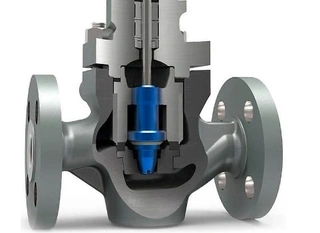
Common Types of Valve Trim and Their Applications
The most common types of valve trim include characterized trim, multi-stage trim, anti-cavitation trim, noise-reducing trim, and pressure-balanced trim.
Among these, characterized trim is the most basic and widely used type. Its core feature is the ability to produce a predictable relationship between valve stroke and flow rate, enabling accurate control.
1. Characterized Trim
Characterized trim is designed so that flow varies according to a defined relationship with valve travel. It is suitable for applications requiring stable metering or precise regulation.
It generally provides three main flow characteristics:
- Linear characteristic: Flow rate is approximately proportional to valve stem travel. As the valve opens, flow capacity increases proportionally. This relationship is strictly valid only when the pressure drop across the valve remains constant.
- Equal percentage characteristic: This is a nonlinear behavior where small openings produce small flow changes, while larger openings produce much greater changes. It compensates for system pressure variations and results in a more linear installed flow response.
- Quick-opening characteristic: Flow increases rapidly at initial opening stages and then levels off. It is used in applications requiring fast flow establishment, such as relief or emergency venting systems.
2. Multi-Stage Trim
Multi-stage trim reduces fluid velocity by dividing a large pressure drop into multiple smaller stages. This design significantly reduces noise and cavitation risk.
In oil and gas systems, high pressure and fluctuating flow often cause severe cavitation and noise issues. Multi-stage trims are therefore commonly used to handle large pressure drops while minimizing damage risk.
3. Anti-Cavitation Trim
Anti-cavitation trim is designed to delay or break up vapor bubble formation, reducing erosion damage. Common designs include multi-hole cages and staged pressure reduction structures.
By distributing pressure drop across multiple stages, the fluid pressure is reduced gradually, preventing it from falling below vapor pressure. Some designs also guide flashing toward the center of the cage to protect critical surfaces.
4. Noise-Reducing Trim
Noise-reducing trim lowers flow-induced noise by modifying the geometry of the plug and cage. The main principle is reducing turbulence intensity, which reduces acoustic energy generation.
Vertical cage flow designs can reduce noise by approximately 18 dB. Multi-hole structures split the flow and shift noise to higher frequencies, which are more easily attenuated by pipe walls. Since human hearing is less sensitive to high frequencies, overall perceived noise can be reduced by up to 30 dB in some designs.
5. Pressure-Balanced Trim
Pressure-balanced trim includes balancing holes in the valve plug to equalize pressure above and below it. This reduces actuator force requirements and prevents oversizing of actuators.
However, this design typically has lower sealing performance compared to unbalanced trims. It is mainly used in high-pressure differential or large-size valve applications.
Control Valve Trim Material Selection
Once the trim type is selected, the next critical step is material selection. Materials directly determine strength, wear resistance, corrosion resistance, and service life.
1. Common Material Types
Valve trim materials significantly affect performance and cost. Common materials include stainless steel, hardened alloys, and engineered coatings or polymers.
Stainless steel: Typically represented by 316 stainless steel, offering good corrosion resistance and toughness for general applications.
Hardened alloys: Materials such as Monel provide superior erosion resistance in high-velocity or particle-containing fluids. They maintain dimensional stability and sealing performance under severe conditions.
2. Seat Material Classification
Seat materials strongly influence leakage class and sealing performance.
Soft seats: Made of elastomers or polymers. They provide tight shutoff under low actuator force but are unsuitable for cavitation, flashing, or slurry applications. They are also vulnerable to damage from welding debris or construction residue during startup.
Metal seats: Used in high-temperature, flashing, cavitation, and slurry conditions. Common materials include 316 stainless steel and Monel. They can achieve leakage classes up to Class V.
In general process control, Class IV leakage is sufficient for most applications. For emergency tight shutoff, a separate isolation valve is often installed in series.
3. Corrosion Protection
Corrosion significantly reduces trim life, increases leakage risk, and raises maintenance costs. Corrosion-resistant materials and protective coatings can extend service intervals and improve reliability, especially in seawater, sour gas, and subsea environments.
Key Factors in Trim Selection
Trim selection requires balancing process requirements, material compatibility, and mechanical constraints.
Key parameters include:
- Fluid properties: Corrosive fluids require resistant materials, while particle-laden fluids require wear-resistant designs.
- Pressure and temperature: These determine structural strength and material stability. High pressure often requires multi-stage pressure reduction.
- Flow coefficient (Cv): Used to determine flow capacity based on maximum and normal operating conditions.
- Noise and erosion limits: Severe conditions require anti-cavitation or noise-reducing trims.
- Control accuracy: High-precision systems require characterized trim designs.
Low-pressure or high-precision systems typically use characterized trims, while high-pressure systems often require multi-stage pressure reduction.
Proper selection improves stability and reduces early wear.
Trim Guiding Types
Top-guided trim: Uses a guide bushing to align the stem. Suitable for general service but not ideal for cavitation, flashing, or high-noise conditions.
Cage-guided trim: Uses the cage to precisely align the plug and maintain concentric movement. Suitable for severe service such as cavitation, flashing, and high noise applications.
Working Principle of Valve Trim
Valve trim typically consists of the plug, seat, stem, and cage working together to regulate flow and pressure drop.
- Plug: Controls flow by changing the flow area.
- Seat: Provides sealing surface for shutoff.
- Stem: Transfers actuator motion to the plug.
- Cage: Guides the plug and shapes flow characteristics.
The actuator moves the stem, which shifts the plug and changes the flow area between plug and seat. The cage stabilizes flow and reduces high-velocity impact, ensuring predictable control behavior.
Methods of Achieving Flow Characteristics
Flow characteristics are achieved by designing the geometry of internal components so that flow varies in a controlled manner with valve travel.
In single-seat valves, plug contour design determines linear, equal percentage, or quick-opening behavior. In cage-guided designs, cage port shape and distribution define flow characteristics. In ball valves, flow behavior depends on the geometry of the ball opening.
In addition to mechanical design, nonlinear positioners can also modify valve characteristics electronically. By mapping input signals mathematically, a linear valve can behave as equal percentage or other nonlinear types. This allows flexibility without changing hardware, though accuracy may be affected by friction in the stem system.
Not all processes benefit from equal percentage characteristics. In pressure control systems with stable differential pressure, linear valves may perform better. In heat transfer systems, quick-opening characteristics may provide improved stability under changing flow regimes.
Routine Maintenance and Troubleshooting
Regular maintenance is essential for long-term performance.
Key maintenance tasks include:
- Inspecting for corrosion and erosion: Check plug, seat, and cage surfaces for wear, pitting, or material loss.
- Lubricating moving parts: Reduce friction on stems and guiding components.
- Cleaning deposits: Remove scale, particles, or polymer buildup.
Preventive maintenance reduces unplanned downtime and maintains control accuracy. Early detection of wear helps reduce repair costs and extend equipment life.
Common failure symptoms include:
- Unstable flow despite constant valve position
- Increased noise during operation
- Seat leakage under full closure
- Surface erosion or pitting
Environmental conditions such as temperature, humidity, and fluid corrosiveness significantly influence service life.
Safety and Compliance Requirements
Safety and compliance are critical in trim design and selection. They ensure reliable operation under design conditions and help meet industry standards, reducing risks and ensuring environmental and personnel safety.
Leakage performance is commonly evaluated according to ANSI/FCI 70-2, which replaces the earlier ANSI B16.104 standard for control valve leakage classification.
With advances in materials and manufacturing, modern valve trims now offer improved precision, durability, and performance. New alloys and surface treatments reduce wear and leakage, while optimized designs support wider operating ranges and stricter safety requirements.
Send your message to this supplier
Related Articles from the Supplier
Guide to Control Valve Flashing and Cavitation
- May 23, 2026
Comprehensive Guide to Control Valve Selection
- Oct 22, 2025
Guide to Pneumatic Diaphragm Control Valve
- Nov 25, 2025

A Comprehensive Guide to Control Valve Cv Value
- Jul 22, 2026
Related Articles from China Manufacturers



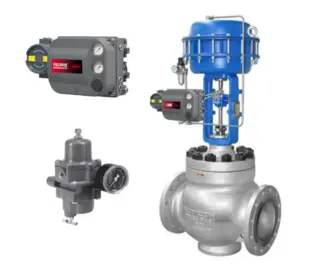
Related Products Mentioned in the Article

Supplier Website
Source: https://www.valvecontrol.cn/news/guide-to-control-valve-trim-types-materials-and-design.html