
The Impact of Computerized Jacquard Circular Knitting Machines on Textile Manufacturing
Introduction
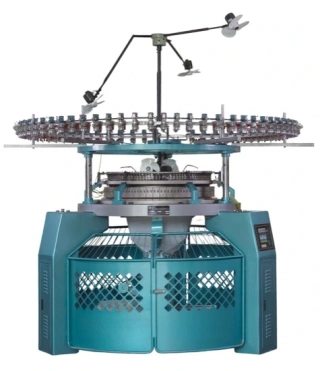
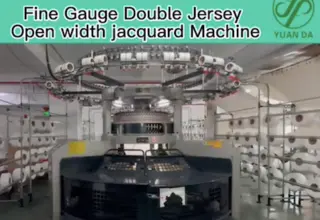
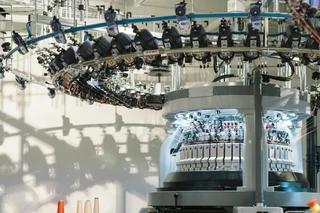
The global textile industry is undergoing one of the most transformative periods in its history, driven by rapid digitalization, automation, and the growing demand for high-performance fabrics. Among the technologies reshaping production processes, the computerized Jacquard circular knitting machine stands out as a pivotal innovation. Combining advanced digital control systems with refined mechanical engineering, this equipment enables manufacturers to produce intricate patterns, premium fabric textures, and highly customized textile designs with unmatched efficiency.
As global consumer expectations shift toward product personalization, sustainability, and shorter delivery cycles, textile factories increasingly seek solutions that enhance productivity while reducing operational costs. Computerized Jacquard circular knitting machines deliver on all these fronts, empowering manufacturers to scale production while elevating fabric quality.
This industry news report explores the evolution of computerized Jacquard circular knitting technology, its key features, applications across diverse textile segments, market growth dynamics, and the challenges and opportunities shaping its future.
Evolution of Computerized Jacquard Circular Knitting Technology
The history of Jacquard-based textile machinery dates back to the early 19th century when Joseph Marie Jacquard invented the punched-card control system, which allowed looms to create complex woven patterns. This invention laid the foundation for programmable textile machinery.
Throughout the 20th century, circular knitting machines became essential in mass production due to their ability to deliver high output, versatility, and improved fabric consistency. The integration of computerized Jacquard systems in the 1990s marked a major turning point, merging digital precision with mechanical performance. Unlike traditional knitting machines that relied on manual settings, computerized Jacquard systems enabled automated needle selection, allowing operators to create detailed designs at high speeds.
Today's advanced Jacquard circular knitting machines incorporate:
- High-speed microprocessors for precision control
- Digital patterning software for instant design adjustments
- Servo-driven actuators for rapid needle selection
- Robust mechanical frames for stability at high RPMs
These innovations ushered in a new era of flexibility and efficiency, making Jacquard circular knitting machines indispensable for modern textile production.
Key Features and Technological Advancements
Modern computerized Jacquard circular knitting machines are equipped with sophisticated features that significantly enhance operational performance. The following are key capabilities driving their adoption across global manufacturing hubs.
Advanced Electronic Needle Selection
One of the signature advantages of computerized Jacquard systems is their electronic needle selection technology. This system allows for:
- Independent selection of needles based on programmed patterns
- Complex multi-color and multi-texture design creation
- Fast switching between patterns without mechanical adjustments
Electronic needle selection enhances design flexibility and enables manufacturers to respond quickly to market trends.
High-Resolution Patterning Systems
Most modern machines come with patterning software compatible with graphic design tools, allowing designers to upload and modify patterns in real time. The system translates the digital design into precise knitting movements, ensuring accuracy even for highly detailed Jacquard patterns such as:
- 3D textures
- Gradient color effects
- Intricate mesh structures
- Traditional Jacquard motifs
The integration of CAD systems has shortened design cycles and reduced sampling costs significantly.
Energy-Efficient Servo Motors
To meet rising environmental standards and reduce production costs, manufacturers have shifted toward servo-driven systems. These motors:
- Enhance needle selection precision
- Reduce energy consumption by up to 30%
- Minimize mechanical wear
- Improve overall machine longevity
Servo motors also support faster rotational speeds, allowing factories to meet high-volume demands.
Automatic Yarn Feeding and Tension Control
Consistent yarn tension is essential for fabric quality. Advanced Jacquard circular knitting machines incorporate automated tension controls that adjust yarn feed based on real-time feedback. This ensures:
- Uniform stitch formation
- Prevention of fabric distortion or irregularity
- Increased output consistency
Some systems even feature intelligent sensors that detect yarn breaks and pause operations automatically.
User-Friendly Touchscreen Interfaces
Modern machines are designed with operator efficiency in mind. High-resolution touchscreen control panels allow operators to:
- Monitor production data
- Adjust pattern parameters
- Diagnose machine performance
- Execute maintenance cycles
The intuitive interface reduces operator training time and boosts workflow efficiency.
Smart Production Monitoring and IoT Integration
As Industry 4.0 reshapes manufacturing processes, many Jacquard circular knitting machines now support IoT-enabled monitoring. These systems allow:
- Real-time tracking of output metrics
- Predictive maintenance alerts
- Remote troubleshooting
- Cloud-based design storage
Factories using IoT-connected equipment enjoy reduced downtime, greater transparency, and improved resource planning.
Market Demand and Industry Growth Dynamics
The global demand for computerized Jacquard circular knitting machines continues to rise, propelled by several market trends:
Rapid Growth of Fashion and Sportswear Markets
Fashion brands increasingly rely on textured fabrics, multi-color designs, and personalized products. Sportswear brands require moisture-wicking fabrics, engineered compression zones, and breathable structures—all achievable through Jacquard knitting.
Rise of Technical Textiles
Technical textile production—including medical fabrics, automotive interiors, and protective clothing—demands high precision and customization. Computerized Jacquard machines deliver:
- Engineered structures
- High durability
- Improved dimensional stability
This has driven adoption in Europe, North America, and Asia-Pacific.
Demand for Short Production Cycles
Consumers expect rapid product turnover, forcing manufacturers to decrease sampling and production lead times. Digital Jacquard systems facilitate:
- Faster pattern switching
- Quick sampling runs
- Efficient small-batch production
This agility is essential for meeting fast-changing market requirements.
Expansion of Asian Textile Manufacturing
China, India, Bangladesh, and Vietnam continue to invest heavily in textile machinery to support export-driven industries. The push toward digital manufacturing has further accelerated demand for computerized Jacquard circular knitting machines.
Key Applications Across the Textile Industry
Computerized Jacquard circular knitting machines support a wide range of fabric types and applications. Their versatility makes them valuable across multiple sectors.
Fashion Apparel
In fashion and casualwear, Jacquard knitting allows for:
- Geometric patterns
- Floral and motif-rich designs
- Embossed structures
- Multi-color combinations
These patterns can be applied to dresses, sweaters, T-shirts, skirts, and lightweight knitwear.
Sportswear and Activewear
Sportswear brands rely heavily on engineered knitted structures. Jacquard knitting enhances:
- Breathability
- Stretch and recovery
- Compression zones
- Moisture control
The technology allows seamless integration of performance features within the same fabric.
Home Textiles
Jacquard techniques are widely used in:
- Bed sheets
- Cushion covers
- Mattress fabrics
- Curtains
- Sofa upholstery
Circular knitting delivers both durability and aesthetic appeal in home textile applications.
Medical and Healthcare Textiles
Applications include:
- Elastic bandages
- Compression garments
- Orthopedic supports
- Functional medical fabrics
The precision of computerized Jacquard machines ensures medical-grade consistency.
Automotive and Industrial Textiles
Jacquard knitting supports the production of engineered fabrics used in:
- Car interiors
- Seat covers
- Acoustic panels
- Technical mesh fabrics
These industrial-grade textiles demand strength and stability.
Competitive Landscape and Leading Manufacturers
Several global manufacturers have developed advanced computerized Jacquard circular knitting machines. Key players include:
- YUANDA – Known for durability, precise needle selection, and strong after-sales support
- Santoni – Specializes in seamless knitting technology
- Mayer & Cie – Leading German manufacturer focusing on high-performance machinery
- Pailung – Offers versatile machines for fashion and industrial fabrics
- Terrot – Known for fine-gauge multi-color Jacquard systems
These companies continue to innovate in machine design, energy efficiency, and digital integration.
Operational Advantages for Textile Manufacturers
Higher Productivity
Compared with traditional machines, computerized Jacquard circular knitting machines deliver significantly higher output due to:
- Faster rotational speeds
- Automated adjustments
- Reduction in manual intervention
Reduced Labor Costs
Digital automation reduces the need for specialized machine operators and minimizes the risk of human error.
Improved Fabric Quality
The precision offered by electronic controls ensures uniform texture, fewer defects, and superior fabric finish.
Greater Design Versatility
From simple geometric shapes to complex illustrations, Jacquard knitting supports near-limitless creativity.
Lower Maintenance Requirements
Servo-driven components and enhanced lubrication systems keep the machine running with minimal mechanical wear.
Challenges Facing the Industry
Despite its many benefits, the use of computerized Jacquard knitting technology also presents certain challenges.
High Initial Investment
These machines are more expensive than traditional knitting systems, potentially limiting adoption among small manufacturers.
Training Requirements
Operators must understand digital interfaces, pattern design, and troubleshooting—a step up from basic mechanical systems.
Software Compatibility Issues
Different machines use different file formats, which can lead to integration challenges across production lines.
Increasing Competition Among Manufacturers
As textile markets expand, manufacturers face pressure to produce more innovative and cost-effective machines, potentially leading to competitive saturation.
Sustainability Impact
The textile industry is under increasing pressure to adopt eco-friendly practices. Computerized Jacquard circular knitting machines support sustainability in several ways:
- Energy-efficient motors reduce electricity consumption
- Precise yarn feeding reduces material waste
- Digital sampling reduces fabric waste in development stages
- Durable parts lead to longer machine service life
Factories that integrate these machines can improve their sustainability profiles while cutting operating costs.
Customer Demand for Customization and Personalization
Modern consumers increasingly seek personalized products, such as custom-patterned apparel, limited-edition sportswear, and branded textiles. Computerized Jacquard machines are ideally suited for this trend, enabling:
- Fast pattern changes
- Minimal downtime
- Efficient small-batch production
This capability supports brands aiming to shorten product cycles and differentiate themselves through unique designs.
Digitalization and Industry 4.0 Integration
As factories modernize, computerized Jacquard circular knitting machines are becoming key components of smart textile manufacturing. Their IoT integration supports:
- Real-time monitoring
- Predictive maintenance
- Automated data collection
- Cloud-based pattern management
These features enable textile companies to increase operational transparency and optimize production planning.
Future Market Outlook
While growth varies across regions, demand for computerized Jacquard circular knitting machines is set to continue rising due to:
- Expanding technical textile applications
- Growth in sportswear and athleisure markets
- Increased demand for sustainable production
- Greater adoption of Industry 4.0 technologies
Manufacturers who invest in advanced Jacquard systems will be better positioned to meet evolving market expectations.
Conclusion
The emergence of computerized Jacquard circular knitting machines has fundamentally transformed the textile manufacturing landscape. Offering unparalleled design flexibility, superior fabric quality, and enhanced production efficiency, these machines have become essential tools for modern textile factories. As global markets continue to prioritize customization, performance fabrics, and sustainable manufacturing, the role of computerized Jacquard knitting technology will only become more critical.
Companies that embrace digital textile machinery will gain a competitive advantage through faster production cycles, improved product consistency, and increased design innovation. With ongoing advancements in patterning software, energy efficiency, and smart manufacturing integration, computerized Jacquard circular knitting machines are poised to remain at the forefront of textile innovation for the next decade and beyond.
Send your message to this supplier
Related Articles from the Supplier
Related Articles from China Manufacturers

The Impact of External Factors on Die-Casting Part
- Dec 24, 2024
The Impact of Material Defects in Forging Parts
- May 30, 2024


The Impact of Sanitary Napkin Machines
- Mar 07, 2024
Related Products Mentioned in the Article



Supplier Website
Source: https://www.xmnyuanda.com/news/the-impact-of-computerized-jacquard-circular-knitting-machines-on-textile-manufacturing.html