
Complete Guide to Check Valve Selection and Application
A check valve is a valve device that ensures fluid flows in a fixed direction and automatically prevents reverse flow (backflow). In the industry, it is also commonly referred to as a non-return valve. As an automatic closing valve, its core working principle is not complicated: a disc or flap structure is installed inside the valve body. When the medium flows forward, the fluid pressure automatically pushes the disc open, allowing the medium to pass smoothly; once reverse flow occurs, the pressure of the medium itself or the auxiliary spring force automatically pushes the disc back to the closed position, cutting off the reverse flow passage. Unlike valves that require manual operation or external power drive, the check valve relies entirely on the flow state of the medium itself to function. It requires no external control signal and no manual intervention, greatly reducing operational complexity and maintenance costs while ensuring system safety.
Main Structural Types of Check Valves
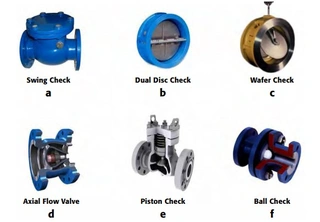
According to differences in internal structure and working principle, check valves can be divided into various types, each with its own unique operating characteristics and applicable scenarios.
1. Lift Check Valve
The movement trajectory of the disc in a lift check valve is perpendicular to the valve body passage, moving up and down in a vertical direction. This type of valve is usually applied in horizontal pipelines or vertical pipeline systems. Structurally, the body shape of a lift check valve is similar to that of a globe valve, and some products can even be interchangeable with globe valves.
In terms of working mechanism, a matching guide sleeve structure is machined on the upper part of the disc and the lower part of the bonnet. The disc guide sleeve can move freely up and down within the bonnet guide sleeve. When the medium flows forward, the disc is pushed upward by the thrust of the medium to open; when the medium stops flowing, the disc falls onto the valve seat by its own gravity, forming a seal to prevent reverse flow.
The internal disc types of lift check valves mainly include flat type, plug type, and ball type. Each type can be divided into configurations with or without a return spring. Since the check valve adopts a non-forced sealing design and relies on the medium’s own pressure to form sealing specific pressure, the difference in sealing effect between flat and plug discs is not significant and is usually determined by the manufacturer according to design habits. The ball-type disc has relatively better sealing performance but higher manufacturing cost, and is mainly used in working conditions with strict requirements for internal leakage, especially where extremely hazardous media are present.
The selection of a return spring mainly depends on the importance of the protected equipment and the operating pressure of the medium. When the equipment requires the check valve to close quickly and promptly, a return spring can be used to assist closing. However, it should be noted that for low-pressure media conditions, the return spring will increase medium flow resistance, reduce flow rate, and may even cause the valve to fail to open normally. Therefore, careful consideration should be given during selection, and if necessary, the medium pressure or the valve opening pressure parameter should be clearly specified in technical documents.
2. Swing Check Valve
The disc of a swing check valve is usually called a flap. One side of the flap is connected to a rotating shaft and can rotate around the shaft. This type of valve is generally installed in horizontal pipelines. For small-diameter products, it can also be installed in vertical pipelines, but attention should be paid to controlling the flow rate so that it is not too large.
The disc of a swing check valve is disc-shaped and rotates around the shaft of the valve seat passage. Since the internal passage of the valve is designed in a streamlined form, its flow resistance is smaller than that of a lift check valve, and it is particularly suitable for large-diameter applications with low flow velocity and infrequent changes in flow state. However, this type of valve is not suitable for pulsating flow conditions, and its sealing performance is not as good as that of lift check valves.
According to the valve diameter, swing check valves can be divided into three structural forms: single-disc type, double-disc type, and multi-disc type. The main purpose of this classification is to effectively reduce the destructive effect of hydraulic shock on the pipeline system when the medium stops flowing or reverses.
In terms of disc type, swing check valves can be divided into conventional disc type and TILTING disc type (commonly referred to domestically as the “inclined plate type”). The conventional disc is the default configuration of manufacturers. The TILTING disc, due to the balancing effect of the auxiliary plate, produces a certain delay effect during the opening or closing process of the valve, greatly reducing the impact force of the disc on the valve seat. Except for situations where the protected equipment is particularly sensitive to medium backflow and requires timely closing, it is recommended to give priority to the TILTING disc under the following conditions: liquid pipelines with DN400 and above; gas pipelines with CLASS300 and above and DN400 and above; and medium conditions with frequent pressure fluctuations and valve diameter greater than or equal to DN200.
3. Axial Flow Check Valve
In new construction and expansion projects of large-scale refining and ethylene petrochemical plants, as well as in long-distance oil and gas pipeline systems and large ethylene units, the operating conditions of pipeline systems for compressors and large pumps are relatively harsh. These occasions require check valves to have fast closing capability, lower pressure loss, and noise control performance.
Especially for gas-phase media, ordinary swing and dual-plate check valves often have problems where the valve plate cannot be fully opened, resulting in unstable medium flow, increased pressure loss, mechanical vibration, and excessive noise, seriously affecting the normal operation of large compressors and pumps. The axial flow check valve is a special type designed to solve these problems and can ensure the safe and effective operation of equipment pipeline systems.
4. Butterfly Check Valve
The installation position of a butterfly check valve is not restricted. It can be installed on horizontal pipelines as well as vertical or inclined pipelines, offering extremely high installation flexibility.
The micro-resistance slow-closing butterfly check valve is an important variant of the butterfly check valve. It mainly consists of a valve body, two semi-circular discs, a return spring, an oil storage cylinder, a slow-closing small air cylinder assembly, and a needle valve (micro-adjustment valve). This type of valve is suitable for drainage pipelines carrying clean water, sewage, and seawater. It can not only prevent medium backflow but also effectively limit destructive water hammer, ensuring pipeline safety. It should be noted that this type of valve is not suitable for media containing solid particles or with high viscosity.
From a structural advantage perspective, butterfly check valves are small in size and light in weight. The structural length is usually only about one-third of that of swing check valves, giving them obvious advantages in space-limited applications.
5. Wafer Check Valve
Common disc types of wafer check valves include axial flow type, swing type, and dual-plate type. The axial flow type is mainly used for small-diameter check valves of DN40 and below, equipped with a spring return device and simple structure. However, the disc occupies more of the forward flow passage and is not suitable for large-diameter and high-pressure (such as CLASS600 and above) conditions.
The swing type in wafer structure is also called single-plate type. It does not require spring return and is commonly used for diameters ranging from DN25 to DN200. Compared with the dual-plate type, it has a simpler structure, and the disc position avoids the center of the flow channel, resulting in better fluid flow characteristics. However, for large-diameter valves, the disc after opening will extend into the pipeline flange interior, and it is necessary to confirm whether the pipeline flange passage space meets the disc movement requirements.
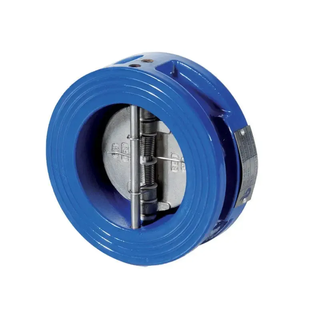
The dual-plate type is the preferred form for wafer check valves of DN50 and above and is also the default configuration of most manufacturers. It overcomes the disadvantage of possible collision between the swing disc and pipeline flange and has a wider range of application.
6. Special Types of Check Valves
Diaphragm check valves are suitable for pipelines prone to water hammer. The diaphragm structure can effectively absorb the water hammer energy generated when the medium flows backward. These valves are generally used in low-pressure and normal-temperature pipelines, especially suitable for municipal water supply systems. The medium working temperature range is usually from –12°C to 120°C, and the working pressure is less than 1.6 MPa, but the diameter can be very large, with DN exceeding 2000 mm.
Ball check valves are suitable for medium- and low-pressure pipelines and can be made into large-diameter specifications. The shell material can be made of stainless steel, and the hollow ball of the sealing element can be wrapped with PTFE engineering plastic, allowing application in pipelines carrying general corrosive media. The working temperature range is from –101°C to 150°C, the nominal pressure does not exceed 4.0 MPa, and the nominal diameter range is from 200 mm to 1200 mm.
Check Valve Selection and Engineering Application
After understanding the main types and structural characteristics of check valves, how to make the correct selection in actual engineering becomes the key to ensuring safe operation of pipeline systems. Improper selection may not only fail to achieve the check function but may also cause equipment damage, system failure, or even safety accidents. The following systematically explains the key selection points and engineering practice considerations from five dimensions: medium characteristics, installation conditions, diameter and pressure, special working conditions, and equipment matching.
1. Consideration of Medium Characteristics
Check valves are generally suitable for pipeline systems carrying clean media. For media containing solid particles or with high viscosity, ordinary check valves should not be used, because particle deposition and viscous resistance will affect the normal opening and closing action of the disc, leading to sealing failure or valve damage.
2. Installation Position and Direction
Different structural types of check valves have different requirements for installation position and medium flow direction:
- Lift check valve: good sealing performance but relatively large flow resistance; horizontal type should be installed in horizontal pipelines, vertical type in vertical pipelines
- Swing check valve: relatively flexible installation; can be installed in horizontal, vertical, or inclined pipelines; when installed in vertical pipelines, the medium flow direction must be from bottom to top
- Butterfly check valve: installation position is completely unrestricted; can be installed in horizontal, vertical, or inclined pipelines
- Foot valve: specially used in pump pipelines; generally only installed in the vertical pipeline of the pump, with medium flowing from bottom to top
3. Selection of Diameter and Pressure Rating
According to engineering practice experience, pipelines of different diameters and pressure ratings should select corresponding types of check valves:
- DN below 50 mm: vertical lift check valve and straight-through lift check valve are recommended for high and medium pressure conditions. Butterfly check valve, vertical lift check valve, and diaphragm check valve are recommended for low pressure conditions.
- DN 50 mm to 600 mm: swing check valve is recommended for high and medium pressure conditions.
- DN 200 mm to 1200 mm: wear-free ball check valve is recommended for medium and low pressure conditions.
- DN 50 mm to 2000 mm: butterfly check valve and diaphragm check valve are recommended for low pressure conditions.
4. Special Working Conditions
For pipeline systems requiring small water hammer impact or completely water-hammer-free closing, slow-closing swing check valves and slow-closing butterfly check valves should be selected. These valves extend the closing time through special buffering mechanisms to avoid pressure shock caused by rapid closure.
For incompressible fluids (such as liquids), the required closing speed should be evaluated first during selection, and a check valve type capable of meeting the closing speed requirement should be chosen. For compressible fluids (such as gases), selection methods can refer to those for incompressible fluids, but if the medium flow range is very large, a check valve with a deceleration device may be considered. If the medium flow continuously stops and starts, such as in compressor outlet pipelines, lift check valves are suitable.
5. Matching with Equipment Protection
The selection of check valves must consider the characteristics and requirements of the protected equipment. Incorrect selection may not only fail to achieve the check effect but may also damage the valve or pump equipment. Proper selection can maximize protection of key equipment in the pipeline.
In large petrochemical units and long-distance pipeline systems, the performance of check valves directly affects the operating stability of compressors and pumps. Ordinary swing and dual-plate check valves may experience incomplete opening in gas-phase media, causing unstable flow, large pressure loss, mechanical vibration, and excessive noise. Under such harsh conditions, special structures such as axial flow check valves should be selected to ensure safe and effective system operation.
Performance Comparison and Selection Recommendations
- Comparison of Sealing Performance: In terms of sealing performance, lift check valves are superior to swing check valves. The lift structure relies on disc self-weight and medium pressure to achieve sealing, and the contact surfaces between disc and seat are usually precision-machined, providing reliable sealing. Due to the rotating motion characteristic of swing check valves, sealing surface wear is relatively greater, and sealing performance may decrease after long-term use.
- Comparison of Flow Resistance: The flow resistance of swing check valves is smaller than that of lift check valves. The internal passage of swing check valves adopts a streamlined design. After opening, the disc basically leaves the center of the flow channel, causing less obstruction to medium flow. The body shape of lift check valves is similar to that of globe valves, and the flow resistance coefficient is relatively large.
- Applicable Diameter Range: Swing check valves can be manufactured with very high working pressure, with PN up to 42 MPa, and DN exceeding 2000 mm, offering extremely wide applicability. According to different body and sealing material selections, they can be suitable for any working medium and any working temperature range, including water, steam, gas, corrosive media, oil products, pharmaceuticals, etc., with working temperatures ranging from –196°C to 800°C. Lift check valves are generally suitable for small and medium-diameter pipelines. In horizontal pipelines with nominal diameter of 50 mm, vertical lift check valves are usually selected.
Comprehensive Selection Recommendations
In practical engineering applications, check valve selection should comprehensively consider the following factors:
- Medium characteristics: cleanliness, viscosity, corrosiveness, temperature, pressure
- Pipeline parameters: diameter, installation position, flow direction requirements
- Equipment protection requirements: closing speed requirements, water hammer control requirements
- Performance priority: sealing performance, flow resistance, reliability, maintainability
- Economy: procurement cost, service life, maintenance cost
For general industrial applications, swing check valves are the preferred general-purpose products due to their low flow resistance, wide diameter range, and broad applicability. For applications with strict sealing requirements, especially high-pressure small-diameter pipelines, lift check valves are more suitable. For space-limited applications or where slow-closing function is required, butterfly check valves and micro-resistance slow-closing butterfly check valves have unique advantages. For large petrochemical units and harsh working conditions, special axial flow check valves should be selected.
Conclusion
Although the structure of check valves is relatively simple, they undertake extremely important safety protection functions in industrial pipeline systems. From lift type and swing type to axial flow type, butterfly type, and various special structures, different types have their own advantages and limitations. Only by conducting systematic analysis based on medium characteristics, working conditions, installation environment, and equipment protection requirements can truly scientific and reliable selection be achieved.
In practical engineering practice, the value of check valves is not only reflected in the basic function of “preventing backflow,” but also in their ability to ensure the long-term stable operation of pumps, compressors, and entire installations. Proper selection can reduce water hammer impact, decrease vibration and noise, optimize system pressure loss, and effectively extend equipment service life.
Therefore, during the design and procurement stages, the principles of “safety first, matching as the foundation, and economic rationality” should be adhered to, combined with standards and on-site working conditions for comprehensive evaluation. Only with reasonable structural selection, accurate parameter matching, and standardized installation and use can check valves truly play their role as a safety barrier, safeguarding the stable, efficient, and long-cycle operation of pipeline systems.
Send your message to this supplier
Related Articles from the Supplier
Complete Guide to Selecting Three-Way Ball Valves
- Mar 23, 2026
A Complete Guide to Metal Seated Butterfly Valves
- Feb 09, 2026
A Complete Guide to Lubricated Plug Valves
- Apr 02, 2026

A Complete Guide to Double Flanged Butterfly Valves
- Jul 13, 2026
What Is a Wafer Check Valve: A Complete Guide
- Apr 15, 2026
Related Articles from China Manufacturers

Related Products Mentioned in the Article


Supplier Website
Source: https://www.valvepackingsealkits.com/news/complete-guide-to-check-valve-selection-and-application.html