
Packing Seal Technology: Principle, Type & Application
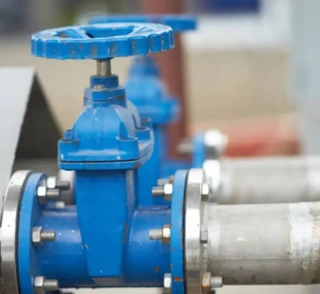
Packing seal, also known as stuffing box seal or compression packing seal, is one of the most widely used dynamic sealing devices in industrial equipment. It is commonly applied to the rotating shafts or reciprocating rods of centrifugal pumps, compressors, vacuum pumps, valves, and other machinery. The primary function of packing seals is to prevent internal liquid or gas media from leaking outward along the axial direction while also preventing external contaminants from entering the equipment.
Packing seals have a long history. Although modern sealing technologies such as mechanical seals have emerged, packing seals remain irreplaceable in many industrial scenarios due to their simple structure, low cost, convenient maintenance, and strong adaptability. In particular, packing seals demonstrate unique advantages under severe operating conditions such as high temperature, high pressure, and corrosive media environments.
Structure of Packing Sealing Systems
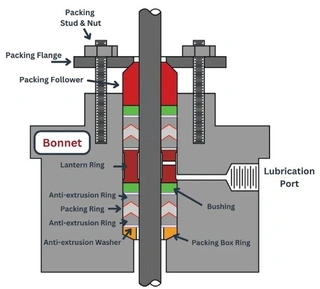
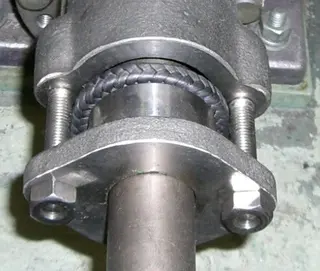
A typical packing seal device mainly consists of the following components:
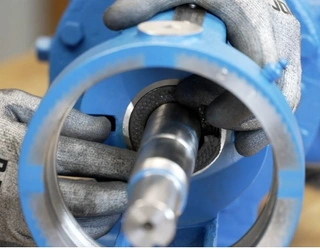
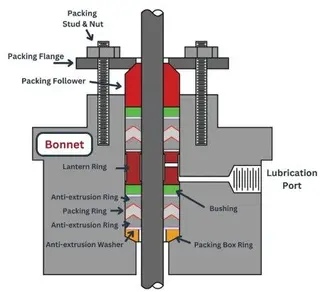
- Stuffing box (packing chamber): Installed on the equipment housing, the stuffing box provides a cavity for accommodating packing material. The inner wall of the stuffing box must be smooth and flat to ensure uniform compression of the packing.
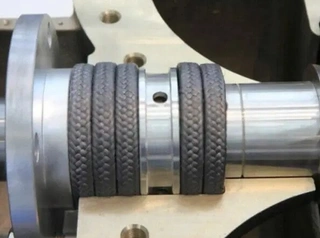
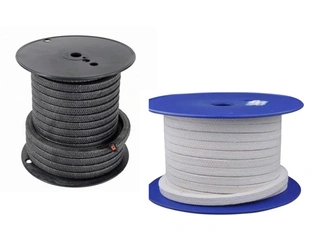
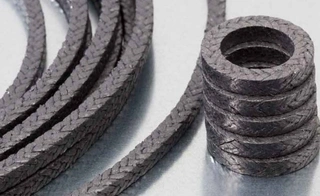
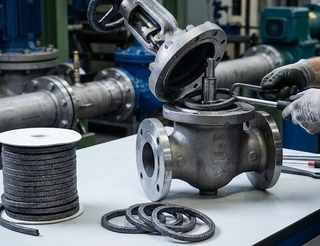
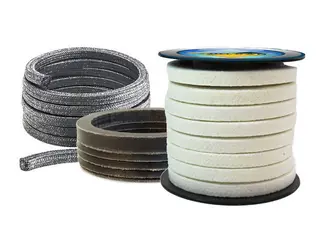
- Packing material: This is the core sealing element and is usually braided or compressed from various fiber materials. Common materials include asbestos fiber, carbon fiber, aramid fiber, polytetrafluoroethylene (PTFE) fiber, and flexible graphite. Packing is typically preformed into rings or strips, and some types are impregnated with lubricants during manufacturing.
- Gland: The gland applies axial pressure to the packing and is secured to the stuffing box using bolts.
- Fastening components: These include bolts and nuts used to connect and secure the gland while adjusting compression force.
In some designs, spring structures are also added to automatically compensate for packing wear or volume changes, maintaining stable sealing performance over time.
Working Principle of Packing Seals
The sealing effectiveness of packing seals relies on the combined action of two key effects: the labyrinth effect and the bearing effect, both of which are fundamental to understanding packing sealing technology.
1. Labyrinth Effect
From a microscopic perspective, no shaft surface can be perfectly smooth. Even with high-precision machining, microscopic irregularities always exist. When the packing is compressed against the shaft surface, these surface irregularities prevent complete contact between the packing and the shaft, forming numerous tiny gaps that interconnect like a labyrinth.
When pressurized media attempts to leak outward from the equipment, it must pass through these tortuous passages. During flow, the medium experiences repeated throttling and directional changes, gradually losing pressure energy and reducing velocity until leakage is effectively controlled. This energy-dissipation mechanism through curved flow paths is known as the labyrinth effect.
The strength of the labyrinth effect depends on the contact tightness between the packing and the shaft surface. Tighter contact creates more complex leakage channels and improves sealing performance. However, excessive compression increases friction, so a balance must be maintained between sealing effectiveness and wear resistance.
2. Bearing Effect
When the packing material contacts the shaft surface and moves relative to it, friction is generated, similar to the operating principle of a sliding bearing, which is why this phenomenon is called the bearing effect.
When axial compression is applied, the lubricant impregnated in the packing during manufacturing is squeezed out, forming a thin lubricating film between the packing and the shaft contact surface. This film reduces friction and wear, thereby extending seal service life.
Due to microscopic surface irregularities of the shaft, the contact state is uneven. At protruding surface peaks, the lubricant film is very thin, forming boundary lubrication conditions. In recessed areas, thicker lubricant films are formed, acting as small oil reservoirs that store lubricating oil. This uneven contact state ensures lubrication while maintaining the labyrinth sealing mechanism.
High-quality packing seals must maintain both the labyrinth effect and bearing effect simultaneously. Poor lubrication or excessive compression can cause lubricant film rupture, leading to dry friction between packing and shaft, which results in shaft overheating and severe wear. Conversely, insufficient compression weakens the labyrinth effect and increases leakage.
3. Compression Force Transmission and Distribution
The compression force of a packing seal is generated by tightening the gland bolts. Since packing materials are elastoplastic bodies, axial compression produces frictional resistance, causing compression force to gradually decrease along the axial direction.
Meanwhile, axial compression is converted into radial compression, forcing the packing to tightly contact the shaft surface. The distribution of radial compression pressure typically shows a rapid decrease from the gland end toward the inner end, followed by a gradual flattening trend. In contrast, the media pressure distribution decreases from the inner side toward the outer side.
When the medium pressure at the outer end drops to zero, leakage becomes minimal. If the outer-end medium pressure remains positive, leakage may occur. Therefore, proper design of packing length and compression force distribution is crucial for leakage control.
Material Characteristics of Packing Seals
Packing materials must possess the following properties:
- Elastic–plastic deformation capability: The material should undergo significant radial deformation under compression to fill sealing gaps. At the same time, it should retain a certain degree of elasticity to compensate for equipment vibration, shaft runout, or eccentricity, ensuring adaptive sealing performance.
- Chemical stability: Packing materials must resist corrosion or swelling caused by the medium and should not contaminate the process fluid. Different operating media require different packing materials. For example, PTFE packing is suitable for strong acid environments, while flexible graphite or ceramic fiber packing is preferred for high-temperature conditions.
- Low permeability: Since most fibers are somewhat permeable to fluids, packing materials must have dense structures. Manufacturing processes often include lubricant impregnation and filler treatment to improve structural compactness.
- Self-lubricating property: A low friction coefficient and good wear resistance are required to reduce shaft wear and energy loss.
- Thermal resistance: The material must withstand frictional heat and high process temperatures.
- Manufacturability and economic efficiency: Packing seals should be easy to install and dismantle, simple to manufacture, and cost-effective.
Main Types of Packing Seals
According to structure and material differences, packing seals can be divided into several major types:
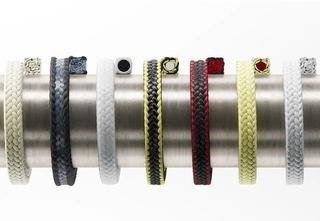
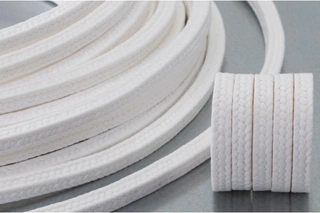
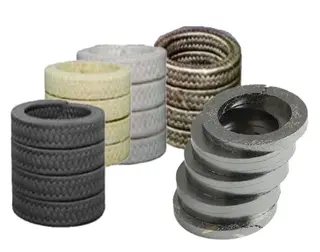
- Braided packing: This is the most common type, made by braiding fiber materials into rope-like forms and then cutting them into rings or winding them for installation. Depending on the braiding method, it can be square-braided, round-braided, or sleeve-braided. Common materials include asbestos, graphite, PTFE, aramid, and carbon fiber.
- Molded packing: Fiber materials are mixed with binders and pressed into shape using molds. This type has uniform density and good sealing performance but relatively poor flexibility, making it suitable for low-vibration environments.
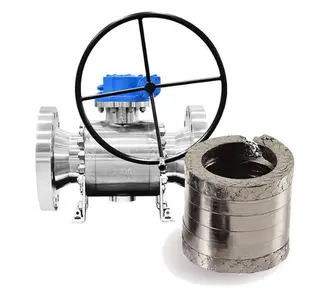
- Metallic packing: Made by combining metal wires or metal foils with flexible materials, metallic packing offers excellent high-temperature and high-pressure resistance and is commonly used in high-temperature valves and furnace equipment.
- Felt sealing: This structure is simple and low-cost but provides relatively poor sealing performance. It is mainly used for dust prevention sealing under low-speed, low-pressure, and clean environmental conditions.
Application Characteristics of Packing Seals
Packing seals are widely used but must be selected based on comprehensive operating conditions.
1. Applicable Operating Conditions
Packing seals are suitable for:
Temperature range: From low temperature to very high temperature (some materials can withstand above 800°C)
Pressure range: Vacuum to high pressure (oiled asbestos packing can reach approximately 12 kg/cm²)
Media types: Liquids, gases, steam, and corrosive substances
Equipment types: Pumps, compressors, valves, and agitators
2. Relationship Between Speed and Pressure
One notable characteristic of packing seals is the inverse relationship between pressure and rotational speed. Packing materials are generally not highly wear-resistant and have large contact areas with the shaft under high compression force, resulting in significant frictional heat generation.
When sealing pressure is high, greater compression force is required to prevent leakage, which increases friction and heat generation. Therefore, rotational speed must be reduced under high-pressure conditions. Conversely, higher rotational speeds are permissible under lower pressure conditions.
For example, when used in water pumps, the upper speed limit for packing seals is typically around 6 m/s. If both pressure and rotational speed are high, packing wear and aging will accelerate, shortening seal service life.
Leakage Failure Analysis of Packing Seals
Leakage in packing seals may be caused by multiple factors:
- Improper material selection: The chosen packing material may not resist media corrosion, temperature extremes, pressure, or vacuum conditions. For instance, using ordinary asbestos packing in strong acid environments may lead to rapid degradation.
- Insufficient compression force: If the gland bolts are loose or compression force is too small, radial deformation of the packing will be limited and unable to fully fill the clearance between shaft and stuffing box. This problem is often associated with gland bolt loosening or loss of elasticity due to packing aging.
- Improper packing dimensions: Packing that is too thin may not deform sufficiently under compression. If packing rings are cut too short, the joint surfaces may not match properly. Too few packing rings may fail to create an effective labyrinth sealing structure.
- Incorrect installation: Excessively large or small cutting angles (typically 30° or 45° bevel cuts are recommended), misaligned ring joints, and improper joint positioning can all cause sealing failure.
- Lubricant problems: Improper or degraded lubricant may prevent adequate impregnation of the packing, leaving fiber voids unsealed and reducing lubrication during shaft rotation. Packing aging, cracking, and drying are typical signs of lubricant failure.
- Packing aging: Improper storage or exceeding service life may cause packing to harden, crack, and lose elasticity, preventing sufficient radial deformation.
- Component mismatch: The gland and stuffing box may not be properly matched. If the gland thickness is too small relative to the packing chamber width, compression efficiency is reduced. Additionally, damage to the inner wall of the stuffing box or shaft surface (corrosion, wear, or scratches) will increase surface roughness and compromise sealing effectiveness.
- Shaft problems: Severe shaft wear, bending, or eccentricity can cause uneven clearance distribution, preventing local sealing. Asbestos-based packing materials are particularly prone to causing shaft wear.
- Operating condition variations: For centrifugal pumps operating at constant speed, reducing flow rate may increase head pressure and internal media pressure, potentially disrupting the original sealing balance and causing leakage.
Conclusion
Packing seals remain a classic sealing technology that continues to play an important role in modern industrial systems. Understanding the labyrinth and bearing effects, selecting appropriate materials, following standardized installation procedures, and performing proper maintenance are essential for ensuring long-term stable operation. With the development of advanced materials such as high-performance fibers and nanocomposites, as well as innovative structures such as composite sealing and self-compensating designs, the performance and application scope of packing seals continue to expand. For engineering technicians, mastering packing seal technology is a fundamental skill for ensuring safe, reliable, and economical equipment operation.
Send your message to this supplier
Related Articles from the Supplier
Guide to PTFE Packing for Pumps and Valves
- Jan 30, 2026
Installation and Maintenance of Packing Seals
- Feb 04, 2026
Guide to Braided Packing Selection & Application
- Apr 23, 2026
Related Articles from China Manufacturers
Packing Seal: Principles, Problems and Optimization
- Sep 08, 2025

Packing Leakage of Control Valves
- Apr 28, 2022
How to Select Packing Materials?
- Jun 20, 2025
Related Products Mentioned in the Article

Supplier Website
Source: https://www.valvegasketboltnuts.com/news/packing-seal-technology-principle-type-application.html